ACT II: In which we begin our explanation of the world of Clair Obscur, in the hopes of understanding its artistic priorities, themes, and aspirations
I’m still not entirely sure how I want to tackle this section. I would normally prefer to avoid spoilers, but we can’t very well talk about the world of Clair Obscur without spoiling what you’ll find there, and we can’t talk about it without also talking about the plot and lore of the game. And, further complicating the matter is the fact that I’m writing this with people who can’t play it in mind. I want to share how awesome this game is with friends and family who really won’t ever have an opportunity to play it, because they don’t play video games, are don’t play these kinds of video games.
So we’re going to do something fairly unprecedented—at least for me and my essays.
I’m going to treat this as an adaptation. I’m going to effectively try and transmute the experience of playing the game to prose. I will walk through the major plot points, and the major areas of the game. I will describe, as best I can, the locations and beats.
That means that this will be all spoilers going forward, but I will be intentionally staggering them, since I’ll be following the game’s own story and plot and revealing what happens in chronological order.
BUT:
We will save the major major plot spoilers (i.e., the endgame) to Act III of our essay.
We will break up this section by the organization of the game’s own Acts, so you can ditch the essay anytime we get too spoiler-y for your liking. (Hopefully, I’ll also be able to sell at least some of you on the game while we go…)
AND:
CONTENT WARNING: Things are going to get pretty dark here. This is a violent game about the ways people react (and overreact) to grief and loss. There are multiple depictions of suicide, trauma, waning mental health, and physical disfigurement. I think the game handles these subjects with understanding and maturity, and I hope to do the same, but use your judgment going forward.
Alright. Let’s do this.
Prologue: Lumière
Lumière is Paris—though the Belle-Époque Paris in that state of static-disintegration we discussed earlier. The top of the Eiffel Tower is smeared to one side; the Arc de Triomphe’s shattered peak floats in a rough arch over its two legs. Nondescript Parisian apartment buildings line crowded streets. But the city is surrounded by the sea, and in the distance you can see a giant monolith, and, at its base, the form of a woman with long ash-gray hair, huddled into the fetal position. Above her head glows a number: 34.
We are introduced to Gustave and Maelle. Gustave is man in his early thirties, wearing an elaborate dark purple suit; Maelle is a young girl in her teens, wearing a stereotypically-French horizontal-striped shirt and red kerchief. They talk together like brother and sister: she teases him about the fact that he is throwing rocks ineffectually at the distant monolith; he plays along, wry and kind. We get a combat tutorial, and traverse the rooftops of Lumière together.
The greater heft of the scene is only gradually revealed, though. Gustave is in the rooftop garden to avoid going to see Sophie, an ex-girlfriend he’s lost touch with. Today is her gommage—and that means that this is Gustave’s last chance to set things right. He has a flower for her—this is apparently traditional—and she thanks him for it. It comes out that they separated over some pretty important differences in perspective. Gustave has been working hard, preparing for this year’s Expedition onto the dangerous continent; Sophie has been trying to enjoy this last year of her life.
Because here’s the thing: the gommage means the death of Sophie, and everyone else her age.
As the characters watch, the woman at the faraway monolith—the Paintress, they call her—wipes away the “34” inscribed on the stone and replaces it with a new number: “33.” And when she does, all the citizens of Lumière over the age of 33 (including Sophie) slowly dissolve into red-and-white flower petals: gone forever.
Hence our call to action, and our title. Gustave (and Maelle) has committed himself to joining Expedition 33—not the 33rd Expedition, but closer to the sixtieth or seventieth, with each Expedition naming itself after the number on the monolith when it set out—and the mission of these Expeditions is to travel to the unknown continent across the sea, confront the Paintress, and kill her, so the gommages will stop and the citizens of Lumière can live their lives without fear.
But Expedition 33 is an unmitigated disaster. Immediately after landing on the shore of the continent, they are confronted—impossibly—by an old man (why hasn’t he gommaged…?!) in the company of the monstrous Nevrons (Nevrons come in many varieties: these are nightmare creatures with no head or eyes but two hands composing a kind of face), who start to lay utter waste to the Expedition with power beyond anything they could have prepared for. There’s a frankly harrowing cutscene where all the characters we’ve met are positively wrecked.
Gustave tries desperately to find safety. Eventually, though, he is knocked unconscious and blacks out.
We rejoin Gustave as he wakes up—but nobody else is around. He’s been relocated from the horrible beach—where the massacre took place—to a glowing blue tree, but he’s completely alone. Dazed, he walks for a little while, calling out for the others, but nobody comes. He eventually arrives at a cave full of the corpses of past Expeditions (it would seem theirs was not the only one to be immediately thwarted by terrible powers), sits down, and withdraws a pistol to end his own life.
But he is stopped. Lune—one of the other Expeditioners—takes his hand. He is not alone. Others have survived, but presumably only a few. Together, Gustave and Lune will try to find the survivors and continue the mission together.
Prologue – Debrief
OK, so we’re barely an hour into the game and it is already more emotionally harrowing than most full games I’ve played. The folks at Sandfall pull no punches with their emotional beats, but it is also not just some grim-dark tragedy-porn experience either. The scenes in Lumière especially are buoyant and lively; even the festival leading up to the gommage is full of surprisingly-rich characterization. These are people trying to figure out how to live their lives in the shadow of this terrible situation. They have traditions. There are little kids running around. Sophie even has a bit of a tense conversation with a mother about whether or not it is responsible (or, indeed, imperative) to have children in light of the gommage (most of these children are orphans, after all—including Maelle).
During the send-off celebration for the Expedition, in particular, many of the characters confess their hopes and dreams. Some are apprehensive; others defiantly resolute. Lune herself, if you notice her among the crowd, comes off as a bit of a space cadet. She can be found sitting on the pedestal of a statue, playing her guitar and singing, barefoot, before the gommage. They’re people—not props. The situation is terrible, but they are trying to make the best of it anyway. Because that’s what people do. This is a game about grief, sure. That much is clear even from this first hour of play. But specifically, this is a game about how we deal with grief. And I think the game wants us to notice that the people of Lumière have made a certain amount a peace with their situation. They don’t consider the broken fragments of buildings strange or disruptive, even though they are the result of a historical catastrophe only dimly-remembered. Their surreal situation has become normal, even if it is strikingly abnormal to the player. Sophie and Gustave disagree about whether they should accept, or fight against this situation (which itself serves as a good indication of normalcy to the player – we’re not going to question the floating bricks, but we are going to question the arbitrary mass killings that also serve as a death-clock for the whole society). Gustave intends to fight, but Sophie intends to accept. It isn’t clear who is right; it will, after all, get much, much worse by the end.
Still, the scene with Gustave—this lively, wry, caring character—sitting down to commit suicide…? It has to be one of the most affecting scenes in any video game I’ve ever played. Even in the one short hour we’ve had to get to know him, he’s been characterized as standoffish, warm, protective, creative, and a little irritating. For him to lose all hope so quickly is both understandable and horrifying. As he walks toward the cave, reduced to a stupor, eyes blank and staring, I feel all that despair and loss and helplessness, even from a man who had said that he would do all he could “for those who come after.”
This doesn’t read like a plot point, orchestrated by some writer for shock value. This reads like an actual human being, reduced to despair by unfathomable trauma.
(It’s almost a shame I’m not still running my “The First Hour” series—because this should be on the short list for “most impressive first hour of a video game ever.)
The World To This Point
This is intended to be an essay about world-building, and, as such, I want to make sure we circle back around to the world at every stage of our discussion.
But there isn’t a whole lot to say at this point. So far we have only seen the town of Lumière (which is very nice, don’t get me wrong), the beachhead where the massacre took place (which we only see in a cutscene), and a little bit of the verdant—if alien—meadow and macabre cave where Gustave faces his despair. We’ve only fought Maelle in a tutorial sparring match, possibly a rogue mime in Lumière, and a Nevron or two along the path to the cave. We haven’t seen much, in short.
But that doesn’t mean it isn’t important. Lumière is festooned with red-and-white for the gommage: the people about to gommage wear garlands of red flowers, and the dominant landmark (even Gustave and Maelle draw attention to it) is a massive red-and-white tree in the square where Gustave meets Sophie. It isn’t “lore,” exactly, but every part of the design of Lumière resonates with and anticipates the gommage that’s about to happen. By contrast, the sending-off celebration for Expedition 33 takes place at night, and we are introduced to the stark, snappy-looking black-and-purple-with-gold-trim uniforms of all the Expeditions past. Here, again, the color palette reinforces the theme. Red-and-white for lost innocence, grief, and aborted happiness; purple-and-black for resolution, purpose, and sacrifice.
When we do reach the continent, the beach is a barren, ashy stretch of sand and debris. The mysterious old man wears a white beard and a severe black suit (and seems to resemble an older Gustave). The entire cutscene is nearly monochromatic: the Expeditioners wield colorful pictos, but the enemies fire devastating bursts of pure white energy that light up the black sand.
Then there is the glade, with its verdant greens and alien blues. And the cave, its ashy-gray bodies lit blood-red by some trick of the light filtering into the cave.
This isn’t what we usually mean when we talk about “world-building” in video games. Instead, we’re used to thinking of lore, or environmental storytelling, or details that add up to a larger picture of social complexity or backgrounds for character development. When I wrote about Morrowind, I emphasized that its believability as a place derives from its complex social dynamics, which are foregrounded, but have to be learned. In some of my other favorite worlds (say, that of Bioshock or Batman: Arkham City), much of the world-building is rooted in environmental details: Bioshock’s bloody messages scrawled across walls, or Arkham City’s villain-related details spread across Gotham.
Here in Clair Obscur, though, world-building is almost always in service to the emotional weight of the scene. Like any good surrealist work, we are not speaking to the conscious mind, but to the unconscious mind. These spaces aren’t necessarily logical, don’t have to make pragmatic sense, and don’t typically invite analysis for the purpose of piecing together a puzzle. You are, in a very real sense, supposed to feel these places. Walking through Lumière, the experienced video-game explorer is likely alert to details that describe the day-to-day lives of its people. And there are some: Gustave and Sophie remark that the piles of furniture (that conveniently block access to alleys the game doesn’t want you to explore) are the belongings of people about to gommage—now free to anyone who wants or needs them. And there’s a café where people have congregated to eat, performances (like Lune’s song) by its denizens, and even a dance that uses the colorful Pictos you’ll use in battle for visual spectacle. But it isn’t really a livable space, the way some other games (like Bioshock) would emphasize. It’s a vibe. And it’s less important to convince the player of its reality than to anticipate the emotional value of this place in the game to come. Lumière doesn’t need to make sense as a lived-in space; it needs to stick in the player’s mind: a symbol of life, normality, and grief that must be protected and saved in the player’s travels. Likewise, the beach doesn’t need to make topographical or geological sense; it needs to represent horror, death, and despair—and, hopefully, scare the player away from it for the foreseeable future (you can go back and get your butt kicked there only later in the game). And, most glaringly, the blood-red light of the cave doesn’t need to make sense; it needs to highlight Gustave’s own bloody despair and failure in his darkest hour.
That’s what makes this so frustrating to discuss: this is a carefully-crafted world, but it exists in service to the experience—to the emotional heft of the story, the characters’ suffering, and to the themes of grief and survival. It is not a world that can be dissected into its speculative elements, but it is no less calculated, no less intricate. Here on The Continent, we will discover, and we will explore, but we will rarely be intellectually satisfied. Instead, we will feel—and that is a noble, if underappreciated goal of the world-building craft.
Act I: Gustave’s Journey
I’m not going to summarize the whole game in this kind of detail. But I felt it necessary to explain the emotional weight of the world here, where we can get into the specifics, and let this be our default understanding of the rest of the world as well. There will be specific locations I want to investigate in more detail, but certainly not all of them.
Leaving the cave, Gustave and Lune quickly find themselves in a forest of these alien-blue trees. Night is falling, it seems, and we have to find a safe place to camp where the Nevrons can’t reach us. This is made especially urgent when we encounter our first Nevron boss—who kills one of the other survivors in front of us, just to drive home the stakes. Beat him, and Gustave and Lune discover a message scrawled at the top of a massive blue tree: Maelle is alive, and has been carried away by someone determined to protect her—but not an Expeditioner, it seems. They aren’t following protocol.
The trail leads us to our first encounter with the world map, where we are given a little bit of space to explore. (And a few world-map enemies to challenge!) But our next destination is one of the truly spectacular and memorable places on the continent: a canyon of rock populated by a forest of coral and kelp. Whatever surrealist elements we may have seen before, this is an idea that would seem right at home in a Magritte painting. The land even has little spouts ejecting bubbles into the air—I honestly couldn’t tell in my first game whether I was supposed to be underwater, or on land, or what. The characters are also a bit mystified, but press on. (Surreal-as-normal, remember? We’re on a mission; no time to figure out the physics…)
In the middle of the coral caves we find more oddities. First, one of the Gestrals: a supposedly-mythical race of paintbrush people. This Gestral’s name is Noco, and he’s a traveling merchant who would also love to fight you, if you’re interested (most Gestrals love a good fight). Second is an out-of-place ornate black-and-gold door in a pillar of rock. Go inside, and you will find the Manor, where it seems Maelle has become quite comfortable. She’s met a strange, but not hostile, denizen of the Manor she calls The Curator—he has a blasted hole where his face would be and speaks only in hollow grunts, but he has apparently been helping her, and will join the party to help us manage our resources and strengthen our weapons (but not fight).
From here, Maelle and Noco lead us to the Gestral village, where we are attacked by autonomous Gestral guardians (who turn out to be massive mechanical armor suits being tested by Gestral engineers). We meet the leader of the village, who encourages us to seek out Esquie, and offers us passage to Esquie’s lair, but only if we go a few rounds in the Gestral arena and confront their new champion. That champion turns out to be the fourth (and final) survivor of the beachhead massacre: Sciel, who will in fact fight us before joining the party properly (she, too, just loves a good fight).
Esquie turns out to be a big, silly, masked guy who would normally have the power to ferry us over the water, but has recently lost his stones that allow him these powers (this apparently happens). He asks us to get his rock-traversal stone from François, his cantankerous turtle-esque neighbor, who attacks us with his “Strongest Ice Attack Ever”—but he isn’t really much of a threat, and seems a bit fond of Esquie despite his grumpiness.
Once Esquie has his stone back, he asks us to help him find Florrie, the stone that allows him to swim over the sea. He believes he dropped it in a cave network nearby, which is our next destination. It’s a massive, sprawling area with lots of smaller caverns and tough enemies, and when we finally find Florrie, it’s guarded by the Lamplighter—a terrifying, multi-armed enemy who attacks us with its lamps, and who resurrects after he is beaten. Once he is finally put to rest, we restore Florrie to Esquie, and he offers to swim us to the next land mass.
But just as we’re about to embark, with half the party in the water below and Gustave and Maelle still in the cave, the mysterious old man from the beachhead suddenly appears and impales Gustave. Gustave urges Maelle to leave and confronts the man in a heroic last stand, but is killed. Maelle is likely to be next, but she is saved by another mysterious outsider with a wild mane of graying hair, who confronts the old man and rushes the party out onto the sea.
Act I ends with the party disheveled: Gustave is dead; Maelle is rattled, and the newcomer, Verso, is little more than an enigma.
Act I: Debrief
Gustave’s loss is devastating, and will haunt the rest of the game. There aren’t many games daring enough to kill off the primary player character (though the death of 2B in NieR: Automata comes to mind), but this seems especially heartbreaking because Lune saved his life at the cave. There is something senseless, tragic, and wasteful about his death, even if it is, also, a kind of heroic last stand. And you’ll often be reminded of it: Gestral merchants will still list Gustave’s cosmetic items in their inventory with the message that you’ll need to find a missing party member before they will sell to you. Many times in the rest of the game you’ll be reminded of his absence. And Maelle will take over his responsibility of writing in the Expedition journal “for those who come after.”
It also seems like the last straw for poor Maelle. Throughout the first act, when the party camps for the night, Maelle suffers from dreams or visions of a similar-looking girl with a ruined face. Sometimes she is confronted by the mysterious old man in these visions, who speaks to her as a familiar, but not in any way loving or friendly. Her relationship with the Curator, too, seems strange: she is the only one who understands his moans. Gustave was her anchor to herself, to her former life, and to her sanity. Gustave was like a brother, but also her caretaker and protector through the Expedition. Now that he is dead, she begins the next Act devastated, and it will take some time before she recovers.
Verso, by contrast, is pure enigma at this point. He slots into Gustave’s spot in the party without any trouble (he even uses all of the weapons you’ve collected for Gustave), but he is slow to trust the rest of the party with personal details, and they are slow to trust his advice and insight. Like the old man, Verso should not be here—he should have gommaged by now, or been killed by the many hostile Nevrons. His very existence is somehow wrong, and the other characters worry that his help may hide ulterior motives.
Esquie, too, is more than he appears. When he first meets the party, he mentions that he has met Sciel before, but she does not remember it. The party has heard stories of Esquie (there’s even a statue in Lumière), but assumed (like the Gestrals) that he was just a myth. But where Verso is immediately suspicious, Esquie is impossible to suspect. His awkward intonation and mannerisms, his goofy affectations, and his plump, huggable, velvety body seem totally unthreatening. He’s not designed to be familiar or inviting, but he has all the otherworldly childlike charm of the laughing Buddha.
We’ll have a lot more to say about Esquie later.
The World of Act I
Compared to the strictly linear path of the Prologue, Act 1 offers a lot of room to explore. The World Map is littered with collectibles and enemy fights; many of the individual locations hide secrets down optional paths (especially in the cave system where Gustave meets his end), and all are just as evocative as the locations from the prologue.
But along the way there are some particular details I’d like to point out:
The Gestrals
Once you meet Noco and visit the Gestral village, you’ll start finding Gestrals everywhere. And they are delightful. Noco is child-sized, and has a child’s temperament: rowdy, inquisitive, and eager to explore. His stated mission is to become “the greatest merchant ever!” which will apparently involve exploring the far corners of the continent. But the rest of the Gestrals are equally enthusiastic, equally rowdy, and equally bumbling. As much as the big Gestral constructs (sakapatate!) present real threats to the player, the area where you fight them is serene—a red forest known as the “Sanctuary” which the Gestrals consider sacred. And the music that plays when you fight these sakapatates is upbeat, cheery, and wistful, not at all menacing like the other combat music so far. (The title of the track is literally “Gestral Summer Party.”) Fighting the Gestral merchants, too, is framed as a fun side activity: you have to duel with only one party member, and neither Gestral nor party member risks death in the encounter. Outside of the Sanctuary (and the arena) you will rarely find Gestrals who are hostile, but most are still spoiling for a fight if you’re willing.
I want to emphasize this because the game is careful to walk us through our different emotional reactions on The Continent. Our first encounter with the old man makes the Continent seem terribly threatening, but the mysterious, beautiful, and alien places we experience next suggest that this is just as much a place of wonder, beauty, and serenity. The Gestrals in particular add a layer of whimsical fun to that feeling. Coming off of the strange undersea canyon, the Gestral community feels odd, but comfortable and lived-in. They like to fight, but their aggression is posture, not threat. You can even challenge the village leader (who will immediately whup you at this stage of the game), but it’s not personal or anything. Gestrals are also apparently immortal. When they are killed—for whatever reason—they are reborn, though without their memories. You will see dead Gestrals on the world map from time to time, and their tell-tale (paint) jars with brushes sticking out of them as they wait to reincarnate. But that just helps to explain why they seem so unconcerned with fighting and dying—it is all just a kind of game to them. These are comic relief characters, essentially, though their endearing sincerity overrides their buffoonery. It’s easy to fall in love with the silly little guys.
The Nevrons
At this point in the game, there is no single aesthetic that describes the Nevrons. The monstrous hand-faced creatures of the beachhead echo the whirling arms of the Lamplighter, but we also encounter the diamond-headed spearmen of the world map, massive club-wielding bruisers with porous, pumice-like bodies, and smaller, quicker Nevrons that dodge traditional attacks. In the coral canyon there are skinny floating Nevrons wearing what look like diving helmets, holding old-school porcupine-like sea mines like balloons floating over their heads (shoot them in combat and they’ll explode, damaging all the enemies in the fight). Some seem stone-like and heavy; others are spry, floating in place or flying across the battlefield to attack. Most seem distinct to their environments: stony four-legged eyeless brutes with luminous hexagonal crystals in the caves by the sea; divers and anchor-wielding toughs in the coral canyon; spear- and swords-men on the world map. There is something suggestive about them, like the sexually-themed monsters of Silent Hill 2, but the theming is rarely so obvious. They may well be the most surreal element of this surreal world—insofar as they are hostile, but conscious, automatic, and not social like the Gestrals or people of Lumière.
Some, though, are not hostile at all. By this point in the game, you may have found several “white Nevrons,” who don’t attack you and will offer you quests. Usually they are missing something—the white Nevron who wields a lamppost as a weapon wants to light the lamp like his friends. The miniature Nevron in an optional area near the coral canyon wants to be huge like the massive, hulking monsters who loom over the landscape (and who Esquie advises you avoid, at least for now). When you help them, they will clue you in to the origin of the Nevrons (and their creator…?), but you will also always have the option to fight them (instead, or after finishing their quests). I never took the game up on the option—there seemed to be enough violence and death going on, thank you very much—but I think the game wants this choice to be deliberate. It won’t be the last time that we mix up our friends and enemies, after all.
And, of course, there are the Chromatic Nevrons—palette-swapped variants of familiar Nevrons, but much stronger, and often with radically different attack patterns. Chromatic Nevrons tend to hide down optional paths or in optional areas, and while you may have beaten several by this point in the game, you’ve probably been beaten by several as well. They are nasty tough, compared to their counterparts.
The Fallen Expeditions
The cave where Gustave considers suicide is littered with bodies of fallen Expeditioners, but we’ll find more as the game progresses. They leave behind flags, which serve as the game’s save points, and will also refill your health and supplies (though at the cost of respawning all the defeated enemies in the area). Some leave behind journal entries as well, which helps to explain the circumstances of their final hours in audiolog style (like Bioshock). Gustave and Maelle also remark on the goals of Expeditions past: one installed all the grapple points you encounter throughout the game; one made the rough maps we use to navigate The Continent. One employed giant Ferris Wheels to traverse the land. It is important to remember that so much of your ability to progress depends on those who have gone before: as much as this is a game about grief, the sacrifices of the foregoing are rarely vain. Every time you save, every time you climb the ledges installed in a wall, you have other Expeditioners to thank. Much as your party is left alone by the disastrous beachhead landing, you are protected by the efforts of the fallen and the lost.
Mimes and Petanks (sic)
In addition to the typical run of Nevrons blocking progress, you’ll also occasionally encounter (with a little exploration), weirdo mimes and ball dudes running around the locations. These critters tend to mind their own business (you actually have to trap the Petanks by chasing them into dead-ends before you can fight them), but offer up pretty great rewards if you do in fact fight them. Leveling up in Clair Obscur is a pretty boilerplate affair, but real strength comes from finding Pictos and the Lumina you need to equip them. So it is usually worth your while to fight the Petanks for their goodies, and you may as well fight the Mimes for their cosmetic items while you’re at it. These fights are also tests: unlike the usual Nevrons, which can typically be brute-forced into submission, Mimes tend to be very high-powered, but they all share the same predictable attack patterns (which can be easily dodged or parried), and Petanks all have unique defense patterns that must be overcome before they run away (denying you rewards). These are tricky fights, and the satisfaction of winning is matched by the wealth of rewards.
Optional Locations
I didn’t actually spend much time exploring optional areas outside the plot-related locations during the first acts of the game: I felt the urgency of the plot necessitated my progress, and I also liked playing the game a bit underpowered, so each new area pushed me to get better at learning attack patterns and employing Pictos strategically. I always felt a little weak, and that’s how I thought the game should feel. But there are several little areas you can visit to find collectibles and pickups. Many are simple one-screen affairs (like the 2D pictures you traverse in the PS1 era of Final Fantasy), and only have a single music record or other doodad to find. Others feature quest-giving white Nevrons in a limited space. The truly deep and complex optional areas remain mostly gated off at this point, but the game is training you to look for them and wonder about the places you can’t access, even now.
The Manor
When we first find the Manor in the coral canyon, it is an ornate gold-and-black mansion, in a style that’s art-deco-by-way-of-Baroque detailing. We can walk throughout the manor’s main halls, but all the doors are locked. As we explore the world, we will find more doors to the Manor, and each one places us in a different room of the manor, usually with a collectible, cosmetic item, or journal entry as a reward. Many of these rooms have obvious, familiar purposes: bedrooms, bathrooms, a kitchen, a library; but the decorations are often strange: statuettes and paintings of Nevrons or other locations on The Continent. Without more context, it’s hard to say what it means, beyond a kind of “hallways under the Matrix” or “Ways beyond the World” vibe. But it’s no hub: you only ever come in and out of the Manor in the same place. You cannot use it as a shortcut across the Continent, and while you may find yourself dumped in a bedroom or kitchen when you encounter a door on the Continent, walk through that door and it will only ever take you to the manor’s main hall, and its main door, which will drop you off at the very same place you entered. It’s as good as a save point, and you are safe as long as you are inside, but there’s no explanation for its presence in a world it does not seem to belong to.
The Faceless Residents
Like the Curator, you will occasionally encounter other human-like beings with broken faces as you travel from location to location. It’s unclear what exactly they are: they aren’t hostile, speak in riddles, and go silent after they’ve made their meditation on life, art, or grief. It’s also unclear how many there are. There are several distinct models—a long-haired woman, a short-haired woman, a boy in a jaunty hat, a man in a top hat—but they recur, and it’s unclear whether you are meeting the same ones over and over, or if they are all supposed to be different persons. Chalk this one up to “needs more context,” too.
Music
Now that we’re starting to pick up records, we should probably talk about Clair Obscur’s frankly incredible score.
It’s not terribly atypical of RPGs like this to have different music for different areas, but it is unusual (at least in my experience) for them to have different combat music for different areas as well (like the “Gestral Summer Party” for the Sanctuary). Clair Obscur also indulges in a lot more sung music than is typical of a game like this. The Lumière theme, Gustave’s theme, the Lamplighter boss fight music (yes, most of the boss fights get their own unique themes, too), and even some of the routine combat encounters feature singing—in French—over the orchestral score. Plainly, a lot of time, effort, and money went into the composition of the score, and I believe it pays off—it is a masterpiece on its own merits.
Most notably of all, the climactic encounter between Gustave and the Old Man features an incredibly dramatic piece: “Une vie a t’aimer” (= “One life to love you”), which evolves from heartfelt piano music to a rock ballad duet of vying pleas—all, again, in French.
And, look. I speak a little bit of French, and could pick up on some of what was saying, but not much. And I think that’s actually intentional. Because if you understand the lyrics of “Une vie a t’aimer,” it kind of spoils what is going on behind the scenes of the game so far. It is meant to be dramatic and emotional, but not necessarily understandable to the majority of Clair Obscur’s audience. Like the opening music to an animé, the Latin chanting behind a Final Fantasy boss, or the nonsense ballads of NieR: Automata, it is meant to be evocative, but the foreignness is intentional. We are supposed to intuit the stakes, but not understand them.
What you need to know is that the music is ambitious, striking, beautiful, dramatic, and also weirdly direct in its discussion of the deep lore of the game. We’ll circle back around when it’s appropriate.
Though maybe now is as good a time as any to mention that “Clair Obscur” (a phrase often repeated in the game’s musical score, as well as its title) translates literally to “Light Obscured”—which could mean “twilight,” but is also the French term for the Italian “chiaroscuro”—the technique of employing sharp contrasts between light and shadow for effect in post-Renaissance painting.
All three of these translations seem relevant, and I have no doubt that the ambiguity of the term is intentional, however lost to non-French-speaking audiences. Again “light obscured” seems especially relevant here: we can intuit the emotional weight of what’s going on, but we can’t understand it.
For now, we should keep moving. There’s still much to do.
Act II: Verso’s Journey
Verso is cagey about revealing his past to the party, but he does explain enough to give the Expedition new purpose. He explains that the Old Man, Renoir, is his father. They were part of the first Expedition (Expedition Zero), which penetrated deep into the heart of The Continent, but Renoir, Verso, and his sister Alicia were granted immortality by the Paintress, and have lived on the Continent since. Renoir has taken to annihilating the Expeditions, lest they defeat the Paintress and end his immortality, but Verso has decided to oppose Renoir, and aid the Expedition, even if it means death. To do this, the party must destroy the Paintress’ Heart, which Renoir protects, so they can travel beyond the otherwise-impassable barrier that protects the Monolith.
Our first stop after the death of Gustave is a battlefield. According to Verso, some of the earliest Expeditions mustered massive armies to invade the Continent and challenge the Paintress directly, but they were all thwarted by the armies of Nevrons that roamed the area, and, in particular the Dualliste—a devastatingly fast and powerful Nevron who could single-handedly decimate armies with his powerful swords. Maelle, already traumatized by the loss of Gustave, seems especially fragile in this place, but Verso assures her that there is a tranquil glade beyond the mountains of dead Expeditioners where they can lay Gustave to rest.
That’s little consolation. This area is full of grueling fights, twisting paths, and dead ends. Then, finally, with the glade just over the horizon, the team is ambushed by the Dualliste, who destroys the bridge we are trying to cross and plunges us into a hellish void of bloody water and mountains of fallen Expeditioners. Maelle, her face covered in blood, seems on the verge of losing what little grip on reality and hope remains to her, but Verso and the other Expeditioners swoop in to combat the Dualliste—certainly the most challenging fight so far—and carry Maelle out of this horrible place.
There is great, terrible catharsis in finally laying Gustave to rest beneath a gold-leaved tree, where the graves of many other Expeditioners dot the landscape, their numbered armbands flapping in the breeze. The trials were many, and unkind, but Maelle may finally start to heal.
From there, we must pass through the mountains to Old Lumière, where we can finally confront the Old Man—Renoir—and destroy the heart of the Paintress (which he protects). First, we must cross the Mountain pass and meet Monoco, a grouchy, hair-covered Gestral who lives in a strange train station near the mountain summit. He apparently has a long history with Verso, and he challenges us to a fight before joining the party (our last member). Interestingly, Monoco can transform into Nevrons when he attacks—an ability reminiscent of Final Fantasy’s Blue Mages—but we’ll discuss that when we break down each character in the next essay.
Beyond the mountain pass lies Old Lumière, a blackened ashy wasteland littered with the ruins of Parisian city blocks—like Lumière itself. Verso explains that the city was sundered in the cataclysm that destroyed the world: half remains here, but the other half lies across the sea (where we started our game). Standing amongst the ruins are glowing golden swords, presumably a token of whatever force destroyed the city. The Nevrons here are also martial: swordsmen who impale themselves before attacking the whole party with many sweeping blows. Beyond the ruined city lies The Manor—nestled between two gardens, its distinct black and gold aesthetic is a familiar contrast to the broken city we just left. And there we confront Renoir again—after he rebukes Verso for being an ungrateful son.
It’s a tough fight, and the party doesn’t “win” so much as “survives.” The disfigured, masked girl—Alicia—intervenes with Renoir, and Maelle discovers a power that threatens Renoir enough that he transports himself, the Manor, and Alicia away, beyond the barrier.
But Verso has another plan. He suggests the party should destroy the Axons—two terribly-powerful beings on islands near the monolith—and claim their essences. With them, the Curator can make a weapon that will penetrate the barrier.
The player can fight the Axons in any order they choose—the game offers more of these freedoms (and more optional areas) the farther the player proceeds. The easier of the two Axons (or so Verso suggests) lives on the island of Visages: a stony outcrop composed of endless stone masks. In addition to challenging the Axon directly, the party may overcome three masked minibosses: one expressing rage, another expressing joy, and a third expressing grief. The Axon itself seems to be a three-faced giant (weakened if you defeated the optional minibosses), but in fact the giant just supports the true Axon, a faceless messenger who uses the giant’s power to unleash devastating attacks. The second Axon is Sirene, a faceless dancer in a sandy tower; her dance entrances the party at first, and they must resist falling into a stupor watching her. Here, too, the party can overcome an optional boss to weaken the Axon, but must ultimately face a difficult fight against the boss proper.
Both Axons, though, are powerful surreal symbols with greater depth than the usual run of enemies so far. In Visages, each mask-miniboss has its own area, and the enemies change according to the mask. The rage mask’s enemies will attack one another, ignoring you unless you get too close; the other masks’ enemies will be too preoccupied grieving or dancing to interact with you at all—unless you attack them outright. Each time the characters voice their misgivings: if the enemies aren’t hostile, why are we attacking them? In the case of the Dancer, the approach to the boss is populated by miniature dancing enemies, all of whom are dangerous, and will attack you on sight, but there is also a wistfulness to the music both in- and outside-combat that suggests you don’t belong here—and that you are destroying something worthwhile and beautiful by fighting here. Combat against the Nevrons is usually framed as a matter of necessity and survival; combat against the Gestrals is a fun challenge—it is strange that combat here should feel just as necessary, but still wrong somehow.
Having defeated the Axons, you can forge Maelle’s barrier-breaking sword, pass beyond the barrier around the monolith, and confront the Paintress. First you must overcome her heart. Then you are challenged by Renoir again in his last defense. Finally, after a long journey through a pastiche of familiar locations with familiar enemies, you confront the Paintress herself.
It’s a tough fight: she has many powerful attacks and, like the Axons, she seems to come in two forms: a faceless homunculus like the Curator, and the giant avatar we first saw sitting at the base of the monolith. At one point, to reach her, Verso suddenly reveals that he has Esquie’s flying stone (how long has he been holding onto that?), and the whole party takes to the sky. But when she is defeated, she does not give up, but instead starts healing and buffing the party as we lay down the final blows.
When she is finally cut down for good, Esquie flies the party to Lumière. But the celebration is quickly cut short. The Paintress was not the one gommaging the citizens of Lumière—she was protecting them. Her painted numbers were not a death sentence, but a warning: she could only protect those under the age inscribed on the monolith from the power of…
…The Curator.
Act II Debrief:
There’s a lot of heavy-duty spoilers up ahead, so let’s take a moment to recap.
There is a marked shift in tone between Act I and Act II of the game. The locations become darker, bleaker—starting with the battlefield where the party fights the Dualliste, and proceeding through the ruined city of Old Lumière. There are upbeat moments, too—like when Maelle sees snow for the first time on the slopes of Monoco’s mountain—but the world is growing more hostile the closer we get to the Paintress, and that reflects the grave stakes that we discover as more of the story is revealed. Visages and Sirene aren’t as bleak or hostile, but our relationship to their beauty has changed: now we are the destroyers and they are the victims. Power, it seems, has come at a cost. At the beginning of Act II we are woefully outmatched by threats like the Dualliste. By the end of Act II we are making real mistakes about how we use our power: the Paintress and the Axons seem more like innocents, and our destructive efforts have proven ultimately self-destructive: we have in fact freed the Curator to gommage all the surviving citizens of Lumière—including Lune and Sciel.
There is also a deeper intimacy to the story at this point. Gustave set out to destroy an existential threat to his community, but now we’ve found that Verso, Renoir, and Alicia were living rich, full lives under the protection of the Paintress. Verso has deep friendships with Esquie and Monoco, and his conflict with his father smacks as much of personal rebellion as ideological disagreement. There is love there, but a love ruined by divergent convictions. As much as Renoir has been the villain throughout this game, he acts out of sadness and grief—to protect his family and his world. He is not evil, and not even all that short-sighted. Like Gustave and Maelle, he fights to protect the ones he loves. But he also loves them according to his terms: he cannot capitulate to Verso’s choice to opt out of immortality, presumably out of a wish to protect Verso from himself. Renoir will have security at the price of freedom. And that is a valid choice, though one still worth fighting against.
We also learn much more about the world during this Act, thanks to Verso’s insights. Verso and Renoir both remember the Fracture that broke the world and killed most of its inhabitants. That first Expedition was not a venture based in Lumière, but a rescue mission to save as many survivors as possible, and had the unexpected consequence of Verso, Renoir, and Alicia’s immortality. Verso knows the world, too. He’s been everywhere. He’s fought the Axons (and failed) many times before. Even into Act III, when you start taking on some of the most impressive threats in the world (like the dragon, Serpenphare), he mentions that he’s been beaten by them hundreds of times before.
But more than anything, this act leaves us conflicted. We have grown much more powerful, but seem even more helpless to save Lumière, our friends and family, or complete our mission. As powerful as we become, it seems the sense of it all is slipping away. How much more will we lose in order to “win”? Gustave is dead. Verso’s relationship with his father is irreparably damaged. Now Lune, Sciel, and all of Lumière are gone—what is left to lose? What have we actually gained? Was the yearly gommage really so bad that we should risk destroying all Lumière for the hope of something better? And, now that it’s happened—now that Lumière is lost—what can we possibly do next?
The World We Found
Obviously we have much more to say about the plot and themes of the game, but I would like to conclude this part of the essay with some discussion of the world as it stands, here at the end of Act II. Our relationship to that world is going to change dramatically with the revelations of Act III, and we’ll have plenty to say once we’re ready to have that discussion. But for now, we should discuss the world as it has been presented to us so far, without that complicated contextualization.
First, and most obviously, the world of Clair Obscur is beautiful. I doubt my screenshots do justice to the place as a world to explore, traverse, and interact with, but it is clear that the developers and artists put a lot of time and effort into crafting the landscape, the non-linear paths, and the vistas stretching out to the horizon. Some of these vistas are clearly intended: the game often uses bottlenecks, area entry points, or high ground to show off its most impressive visions of the world. Sometimes this feels a bit manipulative, but more often it’s just gorgeous. And the unplanned views are often equally impressive. There is a clear mastery of visual design on display here.
But I should stress that even the manipulation happening as developers funnel players into especially scenic areas is a part of the world-building efforts I see here, which brings us to our second point. As I mentioned earlier, this is a game that uses its world to deliberately heighten the emotional effect of the plot. Color, light, and texture are all carefully applied to evoke a specific emotional reaction in the player that dovetails with whatever is going on around them. Perhaps the clearest example occurs at the beginning of Act II. We fight our way across the desolate battlefield, full of grueling fights on a dusky, burning plain. We are dropped into a dark mass grave by the attack of the Dualliste, and must fight the most difficult battle so far. Then we are treated to the tranquil gravesite for fallen Expeditioners. We are, through the design of the world, the plot of the game, and even the basic symbolism of descent and ascent, led on an emotional journey in parallel with Maelle’s despair and regained hope. Start to finish, this has been an emotionally harrowing experience, and every step of the way has been carefully plotted by the art team behind the game.
I stress this because I don’t think it’s a craftsmanship we gamers are likely to appreciate otherwise. Gamers tend to be a left-brained lot, more enamored with logic and science than emotional earnestness. We tend to resent emotional manipulation when we are able to detect it. And we tend to associate the skill of world-building with a game’s lore, rather than its effect on the player. When we write thinkpieces or film YouTube videos about our favorite games, we tend to emphasize these lore details, and how they add up to richer stories or more sophisticated metaphysical systems. We prefer the sorts of worlds that convince us they do not need the player, rather than appreciating when the whole world conspires to perfectly evoke certain player reactions. We like our fantasy complex and nuanced, like Brandon Sanderson or Tolkien, with only a limited appreciation for the fact that the latter can lead us to tears where the former cannot. We poo-poo the craftsmanship of Steven Spielberg, ignoring his pitch-perfect emotional manipulation in movies like E.T. or Close Encounters of the Third Kind.
Clair Obscur has its lore, and there is plenty for the left-brained gamer to appreciate about the characters, themes, and story details embedded in the text. But, like the great works of surrealism, it is also a work more interested in engaging with our subconscious, with our emotional life, and with mysteries we cannot explain. Much of this world will be “explained” in our coming discussion, but much will not. The mimes and petanks, the strange doppelgangers we find across the world, the logic of Verso’s immortality or Esquie’s ability to fly: we are not invited to answer or solve these questions. They are here because, on some level below logic, they should be. They are here because the artistic and emotional logic of the game demands them, even if that breaks the rules of the game world.
There are many reasons to want to dwell in a fictional world, and many qualities that could draw us to those worlds. We may want a fantasy full of verisimilitude, like Tolkien’s languages or cultural histories. We may want a fantasy full of sophisticated rules to follow, like Sanderson’s metaphysical complexities. We may want a realistic social fiction like Morrowind, or a plausibly grand speculative experiment like the future described by Cixin Liu. We may want fun characters to hang out with, like the heroes of the Marvel Cinematic Universe. We may want to dwell in a particular historical period, like those offered by Assassin’s Creed. And we may want to feel the sort of catharsis offered by Clair Obscur. Some of these are easier to praise in prose; others are more difficult to explore, since we run up against the limits of a linguistic medium. I worry that, like E. T., Clair Obscur may be underappreciated by future gamers, simply because it is considered “emotional” and therefore less valuable or important to our masculine, stoic, logic-driven tendencies.
Clair Obscur is a masterpiece, and its world, however illogical and contrived, should be held up as one of the greatest this medium has produced. Perhaps because it isn’t typically the sort we appreciate. And because we tend to de-prioritize the works of art that speak to our emotions rather than our logic, or that resist explanation in words.
Beauty is an audacious enough goal, after all.
So let’s take a minute to appreciate the world on its own terms, before we reckon with its underlying meaning.
I am looking forward to reading–a familiar feeling for me, but with an unusually heightened clarity and specificity at the moment–several things this month. Towards the end of October in this year of our Lord 2025, the third volume in Philip Pullman’s Book of Dust is set to release. About 40 years after we first met Lyra and Pan in The Golden Compass, we might finally be seeing their final adventure. For years (albeit many fewer), I’ve made it my scholarly hobby-horse to commentary-write, read, interview and podcast on Pullman’s work, and I’m eager to pick up where I left off, now that there is a kind of boundedness to his latest project. My pet theory is that this new book, and the series of which it is a part, is closely linked to his earliest published writing, two novels for adult readers of literature which are largely forgotten… but who knows.
This photo from The Bookseller website suggests some of what we might expect The Rose Field to include (or to open onto, if the picture dates from after the book’s composition), to judge based on the stack of books on the desk in front of the author: Baudelaire, Wallace Stevens; Pullman’s own Northern Lights; dictionaries of modern English usage (Oxford, naturally) and of Merleau-Ponty; All That Is Solid Melts Into Air; The Reader Over Your Shoulder; 101 Middle Eastern Tales and Their Impact on Western Oral Tradition, and a couple of books and loose sheets of paper too small to tell what they are, as well as a big book at the bottom of the pile whose spine is obscured by a tape dispenser. Another reference work? A Bible? And what about all the other books ready to hand over his shoulder? I wonder.
Where do ideas come from? How do we decide which ones to give room in our mind? These are questions which Pullman (and his young readers) and Persona 4 both seem interested in, and to which they give unusually thoughtful responses in the form of their stories. At least part of an answer, though, is suggested by the books we place in front of us, aids and distractions in equal measure as we sit down to write. It’s always tempting to read more instead of writing. In particular, I’m thinking of what Pullman is reading, and yet I’m sure that neither reading that stack of books nor an nth read-through of his own books would prove as effective an apprenticeship as the work of writing three pages a day and telling stories aloud, from memory, to children. Or anyhow this was his practice as a writer and teacher, as he recounts more than once, and it seems to have served him well.
The long-awaited Historiographies of Video Game Studies, while I read it over the summer, insofar as it is possible to read anthologies like this cover to cover, will certainly bear revisiting soon as I set to work on a submission for the zine follow-up to my virtual talk at The Manchester Game Centre. As Jacob Geller recently gave an interview on GSSB, I’m reminded again that both he and Cameron Kunzelman have other essays and books, too, that I’ve been meaning to read.
I still owe Aaron Suduiko a piece on EarthBound in response to the “Comprehensive Theory” series on his website. It’s been a year already since I talked with him and the writer, Max Gorynski. I wonder what they’re up to.
Brian Eno, in conversation with Ezra Klein and evidently in his book, defines art as something like play for grown ups, which must be at least partly true.
Nel Noddings, contrasting the rule-bound and relational in her foundational work on the ethics of care, comes close to refuting Kierkegaard and Sloek alike, with her readings of the binding of Isaac and the myth of Demeter. And Benjamin (Walter, not Kozlowski) might come close to undercutting Tolkien on myth and fairy tales, though I take solace in not quite being able to understand what he is saying towards the end of his essay on Leskov, “The Storyteller.”
Friends and students who I flatter myself I’ve inspired in some way have been sending me things they are writing, and I look forward to reading more and sharing them with other readers, if I can, soon.
Most pressing, though, there is Moses Norton, aka The Well Red Mage or Red for short, who has just released his Definitive Book of SNES RPGs (vol 1). While it has yet to ship, I’ve got the pdf here and am eager to read it and interview the author. Biased as I am, I have to believe the book itself will matter more than what any of us might say online, and I can’t wait to see it take up space on my desk and time in my mind.
Welcome to our humble Video Game Academy, and welcome back if you’ve been here before. For our part, we sure have. We know it all too well: the familiar feeling of nerves and excitement, the prospect of introducing ourselves all over again, and the challenge of learning everyone’s name. It’s time for the obligatory back to school post once more.
Professor Kozlowski has been busy as anything, consolidating a summer of reading widely in the political, economic, and social sciences into a course which he plans to wrap up shortly, lecture-wise, with the philosophy of language which undergirds any foray into rule-making, though in real time The History of Social Thought, along with the murderer’s row of other classes he’s teaching this semester, has only just begun. Yet he somehow makes time, every week or two, to chat on the Academy discord about games; games also feature prominently in the suggested readings for his students to chose from for their short presentations at the start of every class session. Last week we talked about FFVIII, picking up in Winhill with Laguna, where his long essay on the black sheep of the franchise leaves off.
With a whole series of podcast discussions on FFVII and, some years later now, FFVIII completed at last, the inimitable Alexander Schmid, all-but-dissertation away from his doctorate, and I, your faithful Moogle-like amanuensis, have just launched into a playthrough of FFIX. The course page will be up momentarily in the Current Semester, where you might also notice several more or less unfinished discussion series still lingering. Sooner or later, we’ll get around to them! But we’ve also been reading and talking about books, working on a sort of monograph on literary modernism and the video game medium, in a segment we sometimes record under the moniker Night School.
In a moment here, I’ll finally get around to posting some writing on virtual worlds from a guest speaker and Spokane-area neighbor, Greg Bem, which he has kindly shared. We met through his helping me with a project my students were doing about AI last spring, and he shepherded an anthology of their writing through publication with his very own Carbonation Press.
For all my regular interlocutors, Ben, Alex, and Steve (who’s been on a well-deserved late-summer vacation), guests old and new like Pat and Greg, and all you readers, thanks for your time. I’m in awe that you’d find it worthwhile to visit this digital Video Game Academy, to pause and think for a spell about the possibilities of imagined worlds with us, and feel like that time is well spent upon returning your attention to the wild, inescapable world of natural sunlight and analog continuity. Long may it last!
Jess (photo credits), Ben, and I capitulated to William’s preference for the park over the museum
So as to establish some sort of structure by which to embrace the world in all its complexity and learn about it as deeply as possible through the mediation of a shared, relatively safe and replicable experience, for a long time now we’ve been leaning on this lens of play and games here at The Video Game Academy. And yet it cannot have escaped anyone’s notice who might be following along that what we are up to is rather different from, say, the dream of “gamification” in education that various figures of wide-ranging levels of influence might talk about, or even “game studies” in any strictly defined sense. In fact, our courses, such as they are, are remarkably old-fashioned in many ways. Essentially, we play games and talk about them; or we take a larger theme, such as “mythology,” this year’s focus, and explore it through games and other recommended readings.
In the spirit of Pullman’s advice to “read like a butterfly, write like a bee,” we remain open-minded about the selection of readings that would ultimately find inclusion in our course of study. And because all this remains speculative and hobby-horsical, we don’t have to limit ourselves to fixed curricula and syllabi, as interesting as it is to think about these things from time to time (see recent episodes of “Unboxing” and our own Professor Kozlowski for reflections on some of the work that goes into professional academia).
But in the words of Buzz-Buzz, “a bee I am… not.” Much as I strive to keep up with the writing that is meant to accompany and give expression to all this reading (reading in the loose sense of listening and playing and so on), I find that weeks and months go by with little to show for all the ideas I intend to share out again. The occasional post, to say nothing of new courses or published pieces, is only with great effort and continual procrastination ever finished (again, in the loosest possible sense of the word). Still, as another artistic hero said to yet another, “work, always work” (Rodin to Rilke): the work is ongoing, the reading is happening, the notes are jotting, and thoughts thinking. If nothing else, a conversation on FFVIII is forthcoming more or less weekly.
Is it at least somewhat convincing to plead that I’m waiting for Pullman’s new book to release before diving into that podcast project again? Or that I’m collaborating again with Moses aka Red on a follow-up to his Gamelogica project, though what form that might take remains to be decided? Perhaps I’ll talk about the Nobel winners I’ve been reading, or attempt a playthrough of MOTHER 2 in Japanese…
Meanwhile, in brief reviews and commentaries, I’ll keep tracking the connections between games and literature as best I can. From my attempt at putting The Sirens’ Call by Chris Hayes into dialogue with Deep Work by Cal Newport and Saving Time and How to Do Nothing by Jenny Odell, I arrived at the conclusion that for all their insights into the critical importance of attention, these contemporary authors seem to me to be completely missing the point. Instead of writing these popular sorts of books, long on citations and case studies and strikingly short on the deep reading they purportedly are calling for, they should have done better to craft a single reflection on the example that was most exemplary in each case. Lacking any demonstrable rootedness in their points of departure–whether Homer and Plato for Hayes, Jung and Montaigne for Newport, or Bergson and Benjamin for Odell–to say nothing of any perceptible religious or otherwise philosophical groundwork for their arguments, their books diffuse themselves into the culture as distractedly as any other media phenomenon, and will likely prove as ephemeral. And so I suggest readers turn instead to those sources in literature from which they are drawing, and abide in the original works for themselves. For a better guide as to how to do this, I could lift up Weil on the use of school studies; Bakhtin on Dostoevsky; and someday, perhaps, my own efforts on video games.
To connect this all to video games, then, can we do better than Jenny Odell’s reasoning behind her structuring of Saving Time? As she explains in this BOMB interview:
… I actually didn’t have the idea to structure the book that way until halfway through writing it. I landed on the idea because I was playing the video game, The Legend of Zelda: Breath of the Wild. I was spending a lot of time in a spatially dispersed story in which you understand that certain things can only happen in certain places, and you have some idea of something that’s coming both narratively and geographically down the road. You can see it, it’s in the distance.
At the time, I was thinking about how everyone’s experience of playing that game—even though it obviously suggests some routes to you—is pretty different, and thus, their memory of the story is going to be different. I was just really fascinated by that. So I think it made me look twice at these places that I was spending time in and it got me thinking about how I could string them together.
Odell is extremely close here to digging into the power of place for memory as represented in video games writ large. While she focuses on the differences among players, my mind goes as usual to EarthBound, and to the ultimately unified story it tells. No matter in what order the sanctuaries are visited, or in the case of Zelda, the memory locations, Koroks, shrines, etc., there are certain themes, timeless and universal, such as love, courage, and the joy of adventure, which these games will reliably lead players to consider.
It almost makes me want to go back and read her book again in light of this revelation!
In passing, I’ll note that Hayes and Newport each do make a few interesting references to video games, too. Apropos of Socrates’ critique of writing in the Phaedrus, Hayes remarks, “It seems safe to say in hindsight that writing was a pretty big net positive for human development, even if one of the greatest thinkers of all-time worried about it the same way contemporaries fret over video games” (6). And he later acquaints the reader with Addiction by Design, by Natasha Dow Schull, and the prevalence of loot boxes via this inarguable clickbait from The Washington Post: “Humankind Has Now Spent More Time Playing Call of Duty Than It Has Existed on Earth” (52-3).
Besides becoming bywords for the perennial moral panics accruing to new technologies and for the irresistibility of slot-machine-style addiction, video games, again exemplified in Call of Duty, return one more time towards the end of the book to provide Hayes with fodder for a brief rant: “Online interaction, which is where a growing share (for some the majority) of our human interactions now takes place, becomes, then, almost like a video game version of conversation, a gamified experience of inputs and outputs, so thoroughly mediated and divorced from the full breathing laughing suffering reality of other humans that dunking on someone or insulting someone online feels roughly similar to shooting up a bunch of guys in Call of Duty” (233-4).
A different paradigm shows up in Newport: “In MIT lore, it’s generally believed that this haphazard combination of different disciplines, thrown together in a large reconfigurable building, led to chance encounters and a spirit of inventiveness that generated breakthroughs at a fast pace, innovating topics as diverse as Chomsky grammars, Loran navigational radars, and video games, all within the same productive postwar decades” (129). The absence of a descriptor there, or if you like, the way in which “video” is returned to the role of descriptor of “games” according to the parallelism of Newport’s construction, is extremely interesting. I could gripe all day about the narrowness and specificity of the video games Hayes seems to have in mind; whereas for Newport, video games are a product almost without qualities other than their novelty and mythic origin in “MIT lore” and “haphazard…inventiveness.” Whatever he may think about particular games, Newport’s mention of them at least has a positive valence.
Eeriness,an ink drawing by J. R. R. Tolkien. Photo: Museoteca.com – via New Criterion.
By chance, the one episode of Newport’s podcast that I listened to so far (no. 288, on the recommendation of this article I was considering assigning next school year) includes towards the very end some reflections on Tolkien which might finally get me to segue back to the ostensible premise of this post. Specifically, a curator of medieval manuscripts at one of the libraries of Oxford sent Newport a quote that is found in a letter from Tolkien to Stanley Unwin: “Writing stories in prose or verse has been stolen, often guiltily, from time already mortgaged…”
Before addressing–or indeed quoting–the quote, Newport riffs on “The Consolations of Fantasy” exhibit (reviewed here) and pulls up some of the art for his youtube viewers. He read in a recent biography about Tolkien “being overwhelmed by…the stresses of being in a field–philology–transforming into modern linguistics,” noting that “he was on the old-fashioned side of that.” Repeatedly, he characterizes Tolkien’s art and writing as abounding in “almost childlike, fantastical images” and takes his desire to spend more time in the “fantastical worlds” of his “childlike,” albeit “sophisticated,” imagination, as another explanation of his acute sense of stress–along with his worries about money.
Newport may or may not have ever read Tolkien–it isn’t clear–but he sees his art anyhow as being illustrative of his own recent work on “Slow Productivity.” He argues that Tolkien’s success selling books is what allowed him to spend more time on his writing and worldbuilding and to worry less about his other responsibilities; again, though, Newport seems to completely miss the point. What is it about Tolkien’s books that so captivates readers? It has less to do with a yearning for time in which to daydream and more to do with his insights about myth, drawn straight from his studies of philology and given voice in a much more famous quote from Gandalf: “All we have to decide is what to do with the time that is given us.” In his fiction, both in major works like Lord of the Rings and in small masterpieces like “Leaf By Niggle,” as well as his scholarship (talks on Beowulf and Fairy-stories are essential) Tolkien touches on just those emphatically moral dimensions so absent from Newport’s pursuit of excellence.
Now reading widely and breezily in the literature of attention is as fine a way as any to pass the summertime for a none-too-disciplined teacher like me. But make no mistake: setting aside my personal affection for Pullman, not entirely shared by my colleagues, I should clarify that second to none among our professorial and scholarly lodestars, we at VGA also count JRR Tolkien and CS Lewis. Both were eminent in their fields of language and literature, and both were theorist-practitioners of the arts of teaching and of fiction alike. And their work is at the heart of the 20C turn to myth-making which continues most vivaciously in the video game medium to the present day, and which is particularly evident in the 90’s JRPGs we never tire of playing and studying.
If it may be objected, quite fairly, that discussions of classic game series like Final Fantasy and The Legend of Zelda have been done ad nauseum, whether as podcasts, video essays, or even books, so what do we mean by proposing continually to return to them anew; much more so discussions of Tolkien and Lewis, who are the subjects of innumerable books, articles, videos, podcasts, and courses? Even a cursory glance at the literature suggests that the influence of Tolkien, Lewis, and their circle and successors on video game development and reception has been immense, as is well understood. From the very first PhD dissertation on video games by Buckles to more recent work aimed at scholars (Young), hobbyists and serious fans (Peterson), and a popular audience alike (Kohler), it is clear we would be far from surprising anyone with our discoveries about the deep ties between the seemingly dusty “Lang and Lit” debates of the early 20C and the “ludology/narratology” tug of war or “magic circle” duck duck goose of near-contemporary game studies.
To my (admittedly very incomplete) knowledge, however, what remains little noted or discussed is the role of play within the work of the Inklings and Inkling-adjacent, their predecessors (ie. Chesterton and Morris), and their major intellectual heirs (whether imitators, who are legion, or virtual parricides, in Pullman’s case). What happens when we go back to their writing the hindsight afforded by reading them in the light of video games’ subsequent developments of the themes of mythopoesis so powerfully instaurated by the dynamic give-and-take between Tolkien, Lewis, and their fellows and followers?
To illustrate just a few potential starting points:
Tolkien’s thoughts on “faerian drama” in the light of video games (Makai); the impression made on him by the play Peter Pan in his early Cottage of Lost Play writings (Fimi); games as mythopoeic narratives (Fox-Lenz) and the riddle game at the heart of The Hobbit (Olsen).
Lewis’s language of “checkmate” and “poker” to describe his conversion (Dickieson), and the ways in which imagery of play and games functions elsewhere in his apologetic writings, fiction, and scholarship:
“Very often the only way to get a quality in reality is to start behaving as if you had it already. That is why children’s games are so important. They are always pretending to be grown-ups—playing soldiers, playing shop. But all the time, they are hardening their muscles and sharpening their wits so that the pretense of being grown-up helps them grow up in earnest (Mere Christianity)
The discovery, creation, and defense of Narnia are all couched in terms of play, ie. “I’m going to stand by the play world” (The Silver Chair); and for some reason “The Great Dance” at the end of Perelandra is also called “The Great Game”
In his analogy of Milton asking “What kind of poem do I want to make?” with “a boy debating whether to play hockey or football,” Lewis likens the game rules to the poetic form (Preface to Paradise Lost)
To my mind, there is ample material here for a course and a curriculum. But as I say, this summer I’m spoken for, reading in the backlists of the Nobel Prize laureates from a century and more. But keep an eye out for the follow-up to Moses’ Gamelogica channel, tentatively to be known as Legendaria!
At some point in April, I had just managed to finish grading the mid-semester papers, Spring Break was well behind me (but semester’s end still well ahead), and I had a bit of extra time evenings and weekends between classes and e-mails to students. Alienated by my displacement from my condo and my president’s war on our National Parks, too poor and too busy to manage a proper vacation (and still smarting from the failed camping trip recently recalled by my earlier essay), but still spoiling for some kind of muted revolt against my responsibilities, I found I wanted to go to Morrowind.
Not play Morrowind, mind you. But visit Morrowind. Go to the place.
I want to make that distinction very clear, because I intend it to be both the conceit and the thesis of this essay: I was drawn to Morrowind as a place that I could visit, on the cheap—not just for five dollars a day, but for the five dollars I spent years ago buying the Game-of-the-Year edition on GOG for 75% off. I wasn’t going in order to feel heroic or powerful (though those are nice side-benefits), but because I wanted to be there. I wanted to walk beneath the giant mushrooms of the Pelagiad valley, to straddle the river Odai on a walk from Balmora to Hla Oad, and to swim through the scattered islands of Azura’s Coast.
This is not a new feeling for me—I’ve played Morrowind start-to-finish at least four times before now—but it was the first time that I felt, distinctly, that it was less about the story or the collecting of relics or the joy of building a new character, and specifically about the going-there. And my play experience reflected that desire: I made a deliberate, conscious effort to wander—to fill in the pixilated map, square by square, as I strode through the blasted foyadas surrounding Red Mountain, or wandered across the rolling hills of Ashlander country, south of Tel Vos. I spent extra time talking to scouts, familiarizing myself with the regions of Morrowind (Bitter Coast, Sheogorad, Ascadian Isles) so I could consciously notice the changes from biome to biome. I tried to make sense of the ecology of the place, and did.
I didn’t quite fill in the whole thing, but I did get closer than ever before
At time of writing, my play-through ran to about 120 hours over these last several months: 100 for the main game (and the bulk of my wanderlust); 10 each for the expansions: Bloodmoon and Tribunal. It was a leisurely play-through, though I had my moments of determined focus, especially toward the end of the game as my completionist tendencies kicked in to collect the last few donations to the Mournhold Museum of Artifacts, or the remaining propylon indices.
In short, I took a vacation. A vacation that required no airfare, no hotel bills, and no passport. And, like every obnoxious tourist, I’d like to tell you about my visit—though less as an exercise in bourgeois wealth-flaunting, and more as a not-so-subtle encouragement that you should do the same—or at least consider the potential of video games as destinations. (Again, $5 on sale…)
But First, Some Anticipated Objections
So a couple of strange things happened during my play-through of Morrowind that seem to be worth mentioning here, since they were both coincidentally hilarious, and because they address one of the key questions one might ask about my strange decision to revisit Morrowind (only the third Elder Scrolls game, well overshadowed at this point by its sequels: Oblivion and Skyrim).
Specifically, I was running through my lecture on research and writing technique for my Humanities students this semester, and happened to accidentally leave my google search history visible for a moment, which included the incriminating entry:
morrowind mehrunes dagon
At which point, one of my cannier students called me out for it and asked:
Dude, why don’t you just play Skyrim?
To which I replied:
F*** Skyrim.
This was an intentionally flippant response: it conveniently allowed me to proceed with the scheduled lecture rather than exploring the tangent that will almost certainly cost me the twenty pages I’m about to write, and woke up the students in the back with a glimpse of my humanity (which my students tend to like).
But it is also an exaggeration. Skyrim is a perfectly good game that I have had very little inclination to play since it first came out and I first played it to its conclusion. I found its world compelling, its vistas beautiful, and its jank endearing. Skyrim is fine. I just like Morrowind better. I would (and will) argue that it is the better game, but, more importantly, it was absolutely the game I wanted to play at that moment—much more than Skyrim.
They say on a clear day, you can see Skyrim from here. Too bad it’s never clear…
Even more relevantly, I was mid-Morrowind when the Oblivion Remaster came out and took over the Internet for a hot minute or two. And I’ve played Oblivion at least twice at this point, and even entertained the possibility of buying the remaster and playing it after finishing Morrowind—but then thought better of it because I really don’t think a Remaster is going to salvage my relationship to Oblivion. It’ll need more than a coat of next-gen paint to redeem that mess.
Professor Kozlowski vs. Bethesda
So let’s talk for a minute about this.
Morrowind is one of my all-time favorite games ever, period, the end. I’ve given up on having a decisive list of all-timers since Lobotomy Corporation broke my brain, but I’m pretty sure Morrowind would take a top-five spot, no question.
But I’m not sure Skyrim, Oblivion, Fallout 3, or any of the other Bethesda favorites would make the top-100 in my estimation. If any, Skyrim, but I would make no guarantees—I like a lot of games, and I have no reservations about slotting a tight and beautiful nine-hour game above the janky (yet endearing) multi-hundred-hour mess that is Skyrim.
The truth is, I don’t need multiple Bethesda games in my favorite-games rotation. There are plenty of games that fulfill my fantasy of independently wandering across a beautiful open world and shaping it according to my will. It’s a fantasy I want to experience fairly often, but I can realize that fantasy in Morrowind, in Fallout: New Vegas (that wonderful Bethesda/Obsidian hybrid), in The Signal from Tolva (look it up, it’s great), in most Assassin’s Creed games (which I find scratch a similar, but not identical, itch), in NieR: Automata, in No Man’s Sky, in most Zelda entries, and even in some of the 3D Mario games. My unplayed backlog includes even more: Dark Souls (and its many successors), Tears of the Kingdom, Dragon’s Dogma: Dark Arisen, Monster Hunter (pretty much all of them), Just Cause 2, FarCry (again, pretty much all of them), pre-Morrowind Elder Scrolls games like Arena and Daggerfall—the list goes on.
So I can afford to be choosy here.
But where else can you build pretty weapon mosaics?
Now, not all of these games fulfill precisely the same desires or fantasies, but that’s just my point. There is a specific niche fantasy fulfilled by Bethesda’s games—but they nearly all fulfill the same specific niche fantasy, and I am therefore less inclined to settle for the efforts that less fully realize that fantasy.
That’s not to say that Oblivion and Skyrim are unequivocally worse than Morrowind. Oblivion has some famously great set piece moments—the climax of Sheogorath’s quest, the locked-room mystery for the Dark Brotherhood, or the big final mission to steal an Elder Scroll for the Thieves’ Guild: these are all favorites of mine. Morrowind lacks these big moments—the engine is not designed to handle them as well—but it also lacks the tedious lockpicking and persuasion minigames that make up a much larger proportion of Oblivion’s playtime. Oblivion has great moments nestled among pretty lackluster gameplay; Morrowind is great between the moments. And if you want great moments in video games, well—there’s even more competition for that than with our earlier list of great open-world exploration-fantasies.
There’s also one other major consideration that led me to favor Morrowind over its sequels—but this one really is a matter of taste.
Relaxing vs. Exciting Vacations
My ideal vacation is one where I get to sit and read without interruption for a solid week or two. Sure, I’d like to do it in a nice place, maybe with a good hiking trail or three, and a couple used bookstores within walking distance—but I’ll absolutely take that trip before I go on some cruise, or go on some busy vacation with schedules and timetables to do things that are otherwise exciting and novel—spelunking, scuba diving, amusement park rides, etc.
Morrowind is my kind of vacation. I take the walk from Seyda Neen to Balmora, take over Nerano manor (by long tradition more than anything), and venture out on the occasional long walk to Caldera or Ald’ruhn between visits to Jobasha’s Rare Books in Vivec using the Mages’ Guild teleportation system. And when I’m out and about, I can be reasonably sure that nothing too terribly urgent will interrupt my walk through the countryside. Maybe I’ll get conscripted into delivering some pile of junk to a nearby town, or finding a healing potion for yet another stranded pants-less Nord, or end up escorting some hapless pilgrim to a holy site, but if I want to drop everything and wander into some bandit cave to see what I find, I can.
Some Nords just own it.
But I think this was perceived as kind of a problem by Bethesda when they were making choices about Oblivion and Skyrim. A problem that they ended up addressing in two different ways. The first and most obvious addition in future games was the fast-travel system, but that’s not what I want to talk about just now, even if it’s the more contentious change.
What I want to talk about are Dragons and Oblivion gates.
See, when you’re on a good long wander through the forests and plains of Cyrodil in Oblivion, there’s always the chance that you’ll be interrupted in your ambulations by the appearance of an Oblivion Gate. They show up with a whole bunch of drama and violence, and start spitting out high-level enemies which terrorize the countryside. So, naturally, you will want to drop everything you’re doing and go take care of it—which means navigating the long, hostile dungeon through the Oblivion wastes, picking up a bunch more loot (inevitably exhausting your carrying capacity—ever the bugbear of Bethesda’s game design), and straining your resources in the process.
And most of these dungeons just suck. They’re time-consuming, hostile, frustrating, repetitive, and unrewarding. Never mind the fact that you were just trying to find that dang Nirnroot you heard chiming, and had to do this whole big thing—and weren’t you supposed to be looking for some lost NPC or something? Players hated these dungeons on the whole, and the Bethesda team took note.
So when you’re on a good long wander through the mountains of Skyrim, you won’t get sidetracked by obnoxious dungeons popping up, but you will get occasionally interrupted by dragons. And Dragons are cool: they show up with a big musical cue (like Oblivion gates), and they’re a sudden, dramatic threat to the countryside (like Oblivion Gates), but the fights against dragons tend to be exciting and legitimately threatening in the early game, while becoming relatively trivial and quick to beat in the late-game. Some of my favorite experiences in Skyrim involved me hiking up the side of a mountain in a blizzard, looking for some dungeon or quest or something, when the dragon music starts up and I’m suddenly in a fight for my life. That’s pretty cool, and algorithmic storytelling at its best.
But the tenth time it happens, it’s just dang annoying. Less annoying than Oblivion Gates, but still—as the old joke goes about golf—just a way to ruin a good long walk. And the fact that dragons are more effective versions of the Oblivion Gate means that the designers are iterating on what they perceive as a problem: namely long walks. Bethesda wanted to “fix” long walks.
When I wanted to visit Morrowind this past spring, at least part of the reason was because I wanted to go on some good long walks, without the threat of Oblivion Gates and Dragons interrupting me.
Pictured: A good long walk
Not Just a Walk
I’ve presented this as a pretty simple conflict of priorities: Bethesda doesn’t want me getting bored on my long walks, while I actually want to go on long walks without interruption—but this plugs into a much more complicated discussion about the way an open world is presented to us. See, Bethesda (1) wants us to feel like this world they’ve built is huge and full of possibilities to explore, while also (2) remaining within their budgets, and (3) allowing the player to access as much of this huge world as quickly as possible, for convenience’s sake.
Because while I keep talking about wanting to go on long walks, the truth is that I don’t just want to go on a long walk around a made-up world. I want there to be things to do in that world. I want there to be obstacles to my progress. I want there to be things to find. In short, I want a reason to go walking, and I want my walk to be interesting.
Dragons and Oblivion Gates are meant to make walks more interesting, but they frustrate my desire to go on a walk altogether. Now my walk is too interesting, and it isn’t even really a walk anymore, because by the end of it I have to give up on my walk and dump all my swag back at the hotel so I can try this walk again—hopefully without getting too sidetracked this time.
But there are also problems if the walk isn’t interesting enough. I am a pretty staunch defender of “walking simulators” like Dear Esther, Gone Home, and Ether One (and plenty of others), but that was not what I wanted to play on my vacation. I wanted a bigger place, with longer walks, more open exploration, and more obstacles to make the walk interesting
Bethesda is pretty much perfect when it comes to providing a reason for a good long walk, though. There is a gentle insistence that you should fulfill your quests, but rarely urgency, and then only in specific situations.
Consider, by contrast, No Man’s Sky. A few years ago I took a stab at the game and logged a solid 70 hours or so before falling off of it. And it, too, scratches much the same “going on a walk” itch that Morrowind does—but eventually I got pretty tired of going on walks without any promise of a reward. Goals and quests in No Man’s Sky are almost entirely player-driven, and while I thought it might be cool to have a bigger spaceship, a bigger house, the sheer number of mechanics and options and obstacles involved eventually became too overwhelming for me to care. Sure, No Man’s Sky is functionally infinite in size, but it’s just algorithmically-generated, nice-looking planets, all the way down. And as much as there is a lot of cool stuff to find, after seventy hours of the same rocks and critters and biomes and mysterious obelisks, I was no longer interested. It was beautiful, but soulless and uncurious.
Or consider Grand Theft Auto—that most iconic of open-world franchises—and a game series I pretty much care nothing about. Grand Theft Auto’s urban open worlds are busy and exciting places full of goings-on and player-driven questing, but they also tend to discourage exploration-for-the-sake-of-exploration. You’ve always got multiple quests, your quest markers are always at the edge of your minimap, vying for your attention, and the game is always pointing you toward the next objective (and, in more recent iterations, always showing you the fastest route, GPS-style). At this point, the reason for the walk obliterates the joy of the walk itself—the better choice is to get in the car and go to your destination as quickly as possible. (Red Dead Redemption has always been more about “moseying”, and I’ve always liked them more than GTA as a result.) I can get behind this kind of game design—I’m a big fan of No More Heroes and Saint’s Row for taking almost all the emphasis off the open world and sticking to fun, engaging missions instead—but that’s a different niche, fulfilling a different desire.
So this is always a balance, and a tricky one. And it tends to be easily thrown off by seemingly-trivial decisions.
The Size of Your World
Take the famous fast-travel debacle. Some design team at Bethesda looked at the long hours spent walking around idly and thought “we can fix this. We can eliminate all this pointless travel time.” So Oblivion provides a generous fast-travel system where you can automatically zip yourself to any big city, whenever you want, right from the beginning of the game.
And players hated it. Which is weird: it is a convenience that enables players to move more quickly through the game world, and you don’t have to use it, right? But the fact that it was there to be used meant that gamers would, optimally, use it, and that meant that the big, sprawling world became, effectively, optional content. The reason to go walking just up and vanished.
Bethesda tempered the system for Skyrim by requiring the player to visit each new location before being able to automatically zip to any found location—both more generous, and encouraging exploration—and it tends to be much better-loved by players. It required those long walks and rewarded curiosity, but also enabled players to get around quickly during the late game, when they just wanted to get there already!
And this is part of the balance: since Bethesda games are so long and their worlds so huge, they are exciting to explore in the early game, but tedious to navigate in the late game. Skyrim effectively fixed that problem, threading the needle of early- and late-game needs, but at another major cost:
It makes the world shrink.
Remember that Bethesda’s priority isn’t to make a huge, sprawling world—it’s to make that world feel huge and sprawling. And as much as I’m grumpy about the Dragons and Oblivion Gates, they do contribute to making the world feel large. Going on a long walk from one town to another and being interrupted by a dragon makes the walk feel longer, even if it isn’t. Just as the cliff racers harassing you in Morrowind makes the walk from Ald’Ruhn to Ghostgate feel interminable—even if it’s actually a pretty short distance.
Speaking of ruining a good walk…
The history of actual world size in Elder Scrolls games is a fascinating one: according to GameRant’s page on the topic (https://gamerant.com/every-elder-scrolls-game-ranked-map-size/), Vvardenfell (the location of Morrowind) clocks in at a mere 16 square kilometers—a little over one-fourth of the size of Manhattan Island, even if it feels like it should be roughly the size of Ireland. Oblivion is the largest of the three we’ve discussed, at a whopping 41 square kilometers, still well short of Manhattan’s near-60. And yet it feels reversed: players often think that Morrowind is the largest of the three games, and Oblivion the smallest, at least in part because Oblivion’s fast-travel system makes traversal unimportant, while Morrowind requires a lot of walking due to the limitations of its fast-travel. By the same logic, Skyrim’s size changes from early to late-game: it feels expansive and large in its first hours, when walking is mandatory, but it feels cramped in its final hours, when you’re zipping around the map without walking.
But Arena and Daggerfall, Morrowind’s predecessors, use algorithmic generation in roughly the same way that No Man’s Sky does, providing enormous game spaces. Daggerfall manages over 160,000 square kilometers, making it roughly twice the size of actual Ireland, and approaching the size of Great Britain (just under 210,000 square kilometers) while Arena boasts nine million square kilometers (it just repeats—and glitches out—after long distances). I can’t speak to how large they feel (the interfaces for both games are too cumbersome for me to get into them), but I can say that these algorithmically-generated worlds are rarely explored in their entirety. Daggerfall may be huge, but the actual business of playing and beating the game requires a tiny fraction of that huge game space.
So let’s talk about how the smallest game in the mainline Elder Scrolls franchise manages to feel so dang big.
Why Walk, When You Can Ride?
Clearly threading the needle between convenience and necessary exploration is a tricky business, but I don’t think anyone has done it as well as Morrowind. And, in the process, Morrowind achieves a rare feat in these games:
Fast-travel in Morrowind is entirely diagetic.
Like any actual transit system, in any actual place (contemporary or historical), Morrowind has multiple means of getting from place to place.
Obviously, you can walk and/or swim to wherever you are going.
You can also take the silt strider: a kind of giant, long-legged insect domesticated by the Dunmer to connect major cities across the island of Vvardenfell. Even in your starting town of Seyda Neen—where the Imperial customs and excise office provides the only legal port of entry for the island—there is silt strider service to the nearby cities of Balmora and Vivec. When you first land in Seyda Neen and are given your first mission—deliver a package to Caius Cosades in Balmora—the officer recommends you take the silt strider (a recommendation I usually ignore). Clearly, the game wants to familiarize players with the silt strider fast-travel system, and to make use of it regularly.
There are also ships, which work the same way as the silt strider. In both cases, you talk to the operator, pay a small fee, and the game automatically takes you to your destination (as in-game time passes). But where the silt strider services the inland cities (Balmora, Ald’Ruhn, Gnisis), the ships service the outlying island towns (Sadrith Mora, Gnaar Mok, Dagon Fel). Which means that these partially-overlapping transit systems make an awkward network, with hubs that allow for transfer between one system and another (like Vivec or Khuul, which connect to both Silt Strider and shipping services)—much like switching from subway to bus in a modern city.
And, of course, there is magic. The Mages’ Guild provides teleportation services to each guildhall (Balmora, Vivec, Caldera, Sadrith Mora, Ald’Ruhn), and tends to be cheaper and instantaneous (no game time passes). So you’ll often find yourself employing a combination of all three services to get from place to place—take the silt strider to Balmora, walk through town to the Mages’ Guild and teleport to Sadrith Mora, then ship out to Vos—it’s almost certainly the fastest way to get there.
But if you, too, cast spells (and why wouldn’t you?), you can learn teleportation spells of your own (or buy scrolls from a trader, if that’s more your speed). Specifically, you can use:
Almsivi Intervention—which will take you to the nearest Tribunal Temple
Divine Intervention—which will take you to the nearest Imperial Cult Shrine
And Mark/Recall—which allows you to set a teleportation location (Mark) and return to it (Recall) whenever you like.
These also double as an excellent exit strategy—the game even encourages you to carry Intervention scrolls if you find yourself in a dungeon with no way out, or even to get you out of an overwhelming fight. (I suspect they might also be intended as a kind of inelegant soft reset if you find yourself stuck in the world geometry, which does happen from time to time…)
So travel in Morrowind is simultaneously restricted and freeform. There are huge sections of the map that will require walking to explore, but the major urban centers tend to be spaced out across this sixteen-kilometer island, and you can get from one to another pretty easily, so long as you are willing to engage in some creative transit use. For example, when I started in on the Tribunal expansion, I would typically use the Mages’ Guild to teleport from my home in Balmora to Vivec, use Almsivi Intervention to quickly reach the south side of Vivec, use Divine Intervention to teleport to the cult shrine at Ebonheart, where I could find the one mage who could transport me to Mournhold for the expansion content. All very quick and convenient, but still rooted in the logic of the world and paying homage to the reality of its spaces. The world still feels big, the cities still feel real; you’ve just figured out how to navigate them effectively, the same way you might figure out how to shave minutes off your commute by using a different bus line or cutting through an alley.
Balmora’s Mages Guild – Fast, Cheap Access to all* of Vvardenfell!
“Walking,” too, is a relative term. There are roads that connect all of the urban centers—and many of the dungeons—throughout the world of Morrowind, and they’re great for wandering and exploration. But if you need to get to Kogoruhn in a hurry, it might be to your advantage to cast a levitate spell and just float your way over the mountains north of Maar Gan. Or if you need to get to Tel Fyr—where the reclusive Divayth Fyr keeps his wizards’s tower deliberately disconnected from the shipping services—you might want to bring along a potion of water walking, so you can run over the waves and avoid all those irritating slaughterfish.
And, ingeniously, you will gain more options the more powerful you become. Silt-strider fees that seem punishing in the early game become effectively trivial when you’re sitting on thousands of gold. Flying over mountains (or through the stair-less halls of Telvanni wizards) may require serious forethought and planning when you’re level two or three, but becomes routine after you’ve got your Wizard’s Staff from your promotions in the Mage’s guild—or when you’ve collected enough alchemical unguents to craft your own potions of levitate.
In short, the game never shrinks, except when you’ve gotten big enough to warrant it. Travel is as much a measure of your power growth and mastery as your ability to fight bigger, scarier enemies or venture into more dangerous dungeons. And the world never violates its own logic to accommodate you: fast-travel is always a matter of using the same tools that were always available, since the very beginning of the game.
The Boots of Blinding Speed
Yes. The Boots of Blinding Speed gets its own whole section.
The “Speed” stat is, like Strength or Intelligence, a measure of your growth in the game, and affects your abilities like in any RPG. But your walking speed is mapped directly to this statistic—the higher it goes, the faster you walk. Your running speed is additionally affected by a second statistic—Athletics—which is a skill just like your proficiency at teleportation magic (Mysticism) or ability to wield a bow (Marksmanship). And all of these statistics are increased—as in Oblivion and Skyrim—with use. Keep using your bow and your Marksmanship will go up. Keep running and your Athletics will go up. Level up your skills ten times and you’ll be able to level up your statistics (like Strength and Speed)—with bonuses for how many times the related skills were used. So if you keep running, you’ll raise your Athletics, which will raise your Speed, which will make you run even faster.
But stats can also be artificially raised—using spells or potions or items. So if you want to walk quickly, you can always down a potion that increases your speed, or cast a spell, or what have you.
Or you can equip the Boots of Blinding Speed.
There are many cool, unique items in Morrowind, but none seem so transformative to a playthrough as the Boots of Blinding Speed. These light boots increase your speed statistic by a whopping 200 points as long as you keep them equipped—but, hilariously, the name is more telling than might first appear. In addition to raising your speed, they blind you—completely.
Just one of many mystical items now on display at the Mournhold Museum of Artifacts!
This is the kind of brilliant design that I love about Morrowind. On the one hand, this is just a joke—a bad pun, that contributes to the silly, janky, and rich humor of the game and its lore.
On the other, these boots are totally usable, if you know what you are doing. Many items confer magic resistance on the player, which will mitigate the blindness effect of the boots. Players who build magic-proficient characters will probably deliberately choose star signs that provide inborn magic resistance. And especially sneaky players can enchant their own gear to offset the negative effects of the boots (like, hypothetically, enchanting a robe with Nighteye). I played most of my recent run through the game with these boots equipped, sprinting absurdly across the long distances of Morrowind at competitive-cyclist speeds, and just raising the contrast on my computer screen to accommodate the darkness before I managed other, in-game solutions.
And even if you’re no mage, there’s always the option to equip the boots, run blind in a straight line for a while, take them off to deal with attackers, and repeat until you reach your destination. It’s inconvenient, but a viable (and world-consistent) option.
Travel as Puzzle
See, this is part of the reason I love Morrowind so much more than its successors.
As with many things in Morrowind, travel is a kind of puzzle, and requires thorough understanding of the world, its systems, and the ways you can circumvent them. And while the teleportation and levitation may be fanciful, the logic of travel is realistic—it corresponds to the way I might find my way home from Boston after a long semester (subway to train station to bus line to different train station) or how one might coordinate travel abroad. And, as with travel in the real world, it is just inconvenient enough to make optimization interesting.
The first time I played the game, as a teenager in 2003, I laid the map (included in the box for the PC version) on my floor and used pieces from a board game to mark my different destinations, based on the instructions of the different NPCs—color-coded according to the faction offering the quest. When enough pieces congregated in a given area, I would make the journey to the region and complete as many quests as I could—just as one might plan to pick up dinner from the Chinese restaurant because you were already in the same strip mall or shopping plaza as the cable company where you went to return your modem, or the Kohl’s where you made an Amazon return. This sounds mundane and boring—I don’t deny it—but there is a joy to the coordination that arrives from the basic realities of the game world. If you’re going to go all the way up to Ald Velothi for the Imperial Legion, you might as well stop over at that Dwemmer ruin Edwinna Elbert asked you to check out—and isn’t the Urshilaku Ashlander camp up there, too? Might as well swing over that way and talk to them about the Nerevarine prophecies…and so on.
And the game encourages this behavior. There are eight different factions you can work for simultaneously, not even counting the vampire quest lines or the main storyline, and each faction has multiple quest-givers—so you could have twenty or more active quests at any given moment. And while many of these quests are pretty small and mundane—find this book, give this person this object, talk to this person—plenty more are fairly involved or unspecific. It’s not uncommon for a quest-giver to tell you to go to some tomb or ruin “somewhere West of Ald Velothi” and expect you to figure it out once you get there. And if you’ve got a couple quests in roughly the same vicinity, you can save a lot of time stumbling into any one location while looking for the other.
Why can’t you just go get your own dang Dwemer crap?!?!
Sometimes this can be annoying—I was definitely told to find a Dwemer ruin “West of Vos” (an instruction comparable to someone saying that Kansas City is “West of New York”), and spent an inordinate amount of time wandering over the wickwheat fields of Northeastern Vvardanfell, wondering whether or not I should keep going West over the mountains into the ashlands. But these unspecific instructions also urge exploration and accidental findings—while looking for that mysterious Dwemer ruin, I definitely stumbled across some high-powered Daedra in a region where they didn’t belong, and found a tower full of wizards and magical loot.
And Morrowind is packed with these finds. It may be the smallest map of the modern Elder Scrolls game, but it is almost certainly the most dense with tombs, caves, ruins, and treasures—all hand-crafted, and many with their own environmental-storytelling mini-narratives, or links to other quests or treasures. For example, one of the earliest quests you’re likely to take—a Fighter’s Guild quest to take care of a rat that’s taken over the basement of a local Balmora resident, has a whole weird narrative spun out of it: the beleaguered Dunmer woman who made the request mentions, in passing, that she’s worried the rat will destroy her pillows. And when you walk into the basement room, all of the baskets and chests are full of—dozens of pillows. Talk to her again after you’ve killed the rats and she’ll mention that she was waiting for another shipment of pillows that hasn’t arrived—like this woman needs more freaking pillows.
But if you’re wandering off the coast of Sheogorad, you’ll find a ship wrecked on the rocky coastline that contains—you guessed it, even more freaking pillows. And an invoice from the now-deceased captain listing this crazy lady’s overseas pillow order. This isn’t a quest, mind you. And there’s no loot but pillows. But it just makes the world that much richer.
That’s too many pillows.
Morrowind is a People, and a Place
When I say that I want to visit Morrowind, it’s as much because of its people as its vistas. Because, for me, one of the main selling points of this game—the thing that elevates it so far above Oblivion and Skyrim—is the way it builds a sense of the community of Morrowind.
But I think this is going to be a hard sell, so I want to back up and talk about verisimilitude for a moment.
In case you don’t know, “verisimilitude” is a fancy literary word for “seeming like the truth”—like that’s literally the word: verity meaning truth, similitude meaning similarity. In fiction, this is usually characterized by sneaky details that make the writing sound factual. Realist writers like Dostoevsky will occasionally include partial names like Mr. M—— or Baron von B—— to make it sound like these are real people whose identities are being protected by the narrator/author out of some kind of consideration for their status and anonymity.
But verisimilitude in video game is a trickier beast, depending very much on the objectives of the individual game. Morrowind clearly has no intention to emulate real-world rules in some ways (you can cast spells, after all, and no attempt is made to explain why this is possible), but it is very invested in making the world a believable place—because, remember, that’s the whole fantasy they are catering to.
By Oblivion, Bethesda starts experimenting with algorithmically-determined social mechanics. The finished game features characters with pre-determined day/night cycles: shops open and close at certain hours of the day, characters will cycle through predictable habits like getting up, going to certain places at certain times, and going to bed at certain times. But there were rumors (possibly apocryphal—my source here is hardly trustworthy) that Bethesda was experimenting with much more dynamic social systems based around the different factions in the game, such that there were earlier iterations of the game where roving bands of townsfolk would attack one another in what was basically unintended procedurally-generated gang wars.
This seems…extreme—but seeing as similar procedural conflicts occur in Bethesda’s later games (like Fallout 3 and New Vegas, released shortly after Oblivion), it’s clear they were working toward this kind of dynamic, procedurally-determined social interaction. And since there are multiple set pieces in Oblivion where guards will fight bandits (or Daedra), I’d say that they were clearly working toward this kind of simulated society.
I also don’t think it’s terribly effective. Much as the procedural scheduling of Oblivion was a big deal at the time—groundbreaking even—I remember playing the game and thinking that it was basically just a less-effective version of what Majora’s Mask had done with the townsfolk in Clocktown back in 2001 (and on the N64, no less…). Sure, it was an interesting system to navigate, but more annoying than immersive. It didn’t make you believe that Tamriel was a real place with real people—it just meant that you had to sleep in a bed for a while if you needed to sell something. That’s not incorporating the player into the game world—it’s driving the player to do un-immersive actions for the sake of a game world simulating a reality the player doesn’t participate in. There’s no reward for following the day-night cycle, but there sure is a punishment for wanting to go shopping at the wrong hour.
Morrowind does not try to simulate community mechanically—it can’t. The technology just isn’t there. So instead it does the same thing Majora’s Mask does—it scripts community.
I’ve dwelt in Morrowind long enough to know its people as well as its land. I know that if you need some weird book—usually because some spacey mage like Ald’Ruhn’s Edwinna Elbert asked you to find it and couldn’t possibly be troubled to leave their work—you can almost certainly find it at Jobasha’s Rare Books in the Waistworks of Vivec’s Foreign Quarter. And I know Jobasha occasionally deals in illegal books—he’s got a copy of the Dissident Priests’ Progress of Truth—which has been formally condemned by the Tribunal Temple—which might be why the Temple Ordinators are posted on every floor of his shop. But Jobasha is a shrewd operator—he’ll never admit that he owns a book, even as he sells it to you on the sly—and good luck sweet-talking him into a better price: he must have one of the highest personality stats in the whole game. But he’s also just a good dude—when he hears that one of your friends-of-a-friend is suffering from Moon Sugar addiction, he’ll recommend the controversial treatise Confessions of a Skooma-Eater, with a comment that—like most Khajiit—he knows that skooma-addiction is incurable, but “maybe Khajiit know things that are not true” (and you have to figure that, as a rich, successful Khajiit working in a mostly-legitimate business, he’s probably one of the most important figures in the Vvardenfell Khajiit community, and knows plenty of Khajiit suffering from addiction). He’s also almost certainly connected to the abolitionist movement in Morrowind (Khajiit and Argonians are the most common slaves in Morrowind), though he won’t talk about it unless you’ve managed to raise his disposition toward you, even after you rescue an Argonian from a racially-motivated bar fight with some of the native Dunmer by bringing him to Jobasha’s shop.
Jobasha: Bookseller, Salesman, Smuggler, Abolitionist, and Person of Interest to Temple Guards
Or consider Baladas Demnevanni, the reclusive Telvanni wizard who has set up a wizard tower in Gnisis, far from the Eastern shores of Vvardenfell that the Telvanni tend to favor. Baladas is probably the most knowledgeable person in Vvardenfell about the Dwemer—he’s even managed to animate a Dwemer Centurion as his personal guard—and he’s one of only two people in the whole game who can figure out how to read the Dwemer language itself—assuming you find the Dwemer book Hanging Gardens of Wasten Coridale—the Rosetta Stone text that allows him to translate the Dwemer texts The Egg of Time and Divine Metaphysics Adapted to the Meanest of Intellects (another worldmaker’s joke—it’s “Godhood for Dummies”). But Baladas is utterly immersed in his work. If you join up with the Telvanni, Master Aryon of Tel Vos—another decent guy, as Telvanni wizards go—will ask you to get Baladas to join the Telvanni council. If you find some other Dwemer books for him, he will, but begrudgingly: “at least for the next century or two…”
The more time you spend in Morrowind, the more you will come to see its characters as a tightly-knit community of people, and learn to understand the dynamics of that community. You’ll learn to check in with Percius Mercius of the Ald’Ruhn branch of the Fighter’s Guild before claiming any bounties from Lorbumol gro-Aglakh, because they might be coming from the criminal syndicate, the Camonna Tong, which currently controls the Guild. You’ll learn to ignore the quests from the Archmage of the Mages’ Guild, Trebonius Artorius, because he’s an idiot who was dumped into the job by an uncaring Duke on the mainland. You’ll learn that Crassius Curio of House Hlaalu will almost always be willing to help you in your dealings with the house—but he’ll usually expect some sexual favors in return.
And then, if you’re paying attention to the context—the big picture, and not just the day-to-day quests—you’ll start to notice the larger patterns. You’ll notice that the Camonna Tong seems to be smuggling a whole lot of the same ash statues employed by Dagoth Ur’s Sixth House—which isn’t terribly surprising, given that Dagoth Ur is basically a Dunmer Nationalist calling for the expulsion of other races from Vvardenfell, and the Camonna Tong rarely accepts recruits from outside the Dunmer. Or you’ll notice that the lowest-level quest givers in the guilds are Khajiit and Argonians, while the top positions all seem to be held by Imperials, Nords, and Redguards; whereas only House Hlaalu among the Dunmer Great Houses has quest-giving non-Dunmer members. You’ll notice that the Tribunal Temples tend to be deeply integrated into the cities of Vvardenfell, while the Imperial Cult shrines tend to rest in the Imperial castles on the outskirts of the same cities. You’ll notice that the Morag Tong guildhalls in the cities tend to be populated by Dunmer, while the secret headquarters in Vivec holds a much more diverse crowd of Orcs, Bosmer, and other outlanders.
None of this is algorithmic. None of this is procedurally-generated. None of this is mechanical, except insofar as it is reinforced by some pretty subtle touches—like the fact that members of your own race will always have a higher base disposition, or that certain factions will have significant disposition penalties against you, based on your race, faction membership, or other behind-the-scenes statistics.
It’s all scripted. It’s all written. Because, here in Morrowind, that was the best way to simulate a real, believable community. The developers and writers at Bethesda had to script the interpersonal relationships between the NPCs. They had to refer the player to other characters, or change disposition statistics according to manually-programmed conditions, or allude to details left spread around the world like bread crumbs.
On Talking to People
(1) Don’t
Video game developers and publishers talk a lot about immersion, but there seems to be a deep confusion about the way we reach that immersion.
Sometimes, we absolutely want our immersion to be rooted in mechanical interactions. SimCity is “believable” exactly because it simulates basic social considerations like simulated people commuting from home to work, or economic factors like land value fluctuations and changes in the market. The crowds in Assassin’s Creed are believable because they behave according to mostly (but not wholly) predictable rules. But I think every effort made by Bethesda to “simulate” real people since Morrowind has been a significant step backward. Morrowind’s tacit lie of all these scripted NPC’s referring back and forth to one another is much more believable than procedural scheduling.
But even more importantly, I think some of the most basic features of Morrowind and Oblivion expose some traditionally-held mis-beliefs about immersion.
Take the obvious: in most of Bethesda’s games from this period (i.e., since Oblivion), conversations with characters involve a jarring animation transition that puts the player and NPC directly facing one another, with the NPC staring directly at the player, delivering dialogue in response to a fairly limited (and console-friendly) list of dialogue options. All the dialogue is voice-acted, but the acting varies pretty wildly (especially given Bethesda’s habit of hiring one or two big-name voice actors like Patrick Stewart for Oblivion or Liam Neeson for Fallout 3, and relying on a pretty narrow pool of professional voice actors for all the rest of the voice-work).
And I say this knowing full well that I am in the minority, but hear me out:
I want it all gone. All of it. I want to go back to Bethesda games where there is little-to-no voice work. And I say this knowing full well that I’m basically talking about Morrowind and a few spin-offs like Battlespire and Redguard that I haven’t played. But I don’t think any of the gains from fully-voiced characters in Oblivion and Skyrim are worth the obvious sacrifices made on their behalf.
Let’s start with a practical example.
The first person you talk to in Morrowind (besides Jiub, your fellow prisoner, and a few guards on your ship) is Socucius Ergalla, chief agent at the Seyda Neen Census and Excise office. His job (in-game) is to process your paperwork and release you into Vvardenfell proper. His real job (functionally) is to get you to build your character and introduce you to the world you’re about to explore. The role is crucial, and understated compared to similar characters in later Bethesda games—but just as effective in my opinion.
Ergalla has five lines of scripted, voiced dialogue. Added to the lines of the guards (and Jiub, who achieves weirdly cult status after this, mentioned in Oblivion as “Saint Jiub, who drove the Cliff Racers from Vvardenfell”), you’ve got maybe a dozen, total. That’s it. The first five-to-ten minutes of the game is a dozen lines of voiced dialogue, some spreadsheet character building, and then Ergalla kicks you out the door to start the game. You run through a few little tutorials with the menu, and then you’re faced with Sellus Gravius, an Imperial Soldier who explains your first mission (deliver this package to Caius Cosades in Balmora). But unlike Ergalla (who you can talk to after building your character, and who figures in a side quest for the Seyda Neen explorer, but who doesn’t have much to say in either case), Gravius has something like thirty different topics you can ask about.
Sellus Gravius – The Helpful Customs Agent
See, now that you’ve got a quest, the game is quietly encouraging you to play with the dialogue system. Ask about Balmora, and he’ll give you pretty involved instructions on how to get there on foot, though he recommends you take the silt strider instead. Ask about “law in Morrowind” (one of the few topics he shares with Ergalla) and you’ll get a stern reminder that attacking random people in the street will get you arrested or killed. Ask about Morrowind itself and you’ll get some lore about the province, the Emperor Uriel Septim, and even some puckish wall-breaking allusions to your new status as a player: “Morrowind has been part of the empire for 400 years…You haven’t been in prison that long, have you?”
This—a character who can introduce you to dozens of new ideas using a dialogue menu—is just not possible in Bethesda’s more recent entries. This is old-school CRPG design, where you’ve got a mouse-and-keyboard (or, older still, just a text parser), and can choose to ask about any of dozens of possible topics. Oblivion retained the menu (at least for the PC version), but drastically cut down on the dialogue options, because Oblivion couldn’t voice every one of those dialogue lines—and even if it somehow managed to record all that voice-acting, it would be obnoxiously long to actually listen to the voiced line—at least compared to quickly reading (or skimming, in some cases) the paragraphs of text on the screen. Counter-intuitive as it sounds, reading the unvoiced dialogue was far more immersive than hearing it spoken in Oblivion. And being able to pick Sellus Gravius’ brain to learn about the world does immense work in making Morrowind a believable, immersive place.
But in the age of console dominance, text-on-a-screen is not a feasible solution to your dialogue problems. Who knows how big the TV screen is? Or how far the sitter is from the screen? You’ve got to voice the line, because that’s the only way you can ensure that your player will receive it.
Now I should mention: Morrowind was released on Xbox as well as PC—in fact, that’s the first place I played it—but the interface was cumbersome. It was clearly a PC game ported to console, and it was predictably clumsy as a result. But Oblivion was the last Bethesda game to treat consoles as a secondary platform: Fallout 3, Skyrim, and their successors were all designed with consoles in mind, with the PC audience settling for consoles’ streamlined (and simplified) mechanics.
Wrong-Headed Immersion
I realize that picking on Oblivion’s dialogue system is like shooting fish in a barrel, so let’s blow this discussion out a bit to talk about the other missteps in immersion made between Morrowind and its successors.
Consider the dialogue process itself. In Morrowind, you can literally walk up behind people and initiate a dialogue with them while they’re facing the wrong direction. The game completely freezes, you go into the dialogue menu, select whatever options are relevant to you, and exit at your discretion. The world resumes its usual behavior and you go back into running-around-fighting-monsters mode.
This sounds utterly awful, and un-immersive. Which is probably why Oblivion insists on snapping into these rigid animations where the NPC faces you and addresses you.
But, honestly, that is so much less immersive. Sure, it’s realistic, but it makes dialogue a whole ordeal, interrupting the game for the animation to catch up to whatever weird pose the NPC was in when you addressed them, slowing down the pace of the game to accommodate the voice dialogue, then snapping you back to reality with another animation. The Internet has highlighted this silliness with memes—characters talking blandly about a quest while a monster, frozen in mid-swing, tries to decapitate them. My understanding is that Fallout 4 “fixed” this problem by letting the world carry on during dialogue, but that just makes for even sillier interactions where dialogue keeps getting interrupted by attackers or accidental movement by the game engine, or any number of other issues—and each time dialogue is interrupted, you have to go into the same animation cycles of face-to-face turning, again and again.
Thanks Kryptnyt at r/Oblivion for the best version of this picture
Or consider the famously-bad Skyrim mining animation. Your character has to slowly drift into position, then bend over—sometimes comically hunched—to accommodate the pickax animation.
In Morrowind, you go up to a vein of ore and it opens the same little menu you get when you loot a treasure chest. Then you just transfer the ore to your inventory. Realistic? No. Effective? Yes.
Or consider the incorporation of physics engines. Ever since Oblivion’s opening moments where the game shows off by asking you to shoot a dangling bucket with an arrow, Bethesda has clearly been proud of its physics engine. But physics in the original Oblivion were comically bad—you’d shoot a deer and it would go somersaulting down a hill, forcing you to chase after it. Or in the first days of Skyrim, you’d get smacked by a giant and ragdoll into the air, plummeting for thirty seconds or more before smacking into the ground.
And honestly, I love this stupid janky physics in Bethesda games. I love it even more in Fallout, where the VATS system turns its absurdity into glory-kills. But it is not immersive. It’s silly and fun, but it detracts from any belief you might have in the reality of the world around you. In general, I think it is very rare that a physics system contributes to immersion through realism. More often, it just highlights the absurdities of the video game world—objects stuttering as they erroneously clip through the environment, bodies flying idiotically through the air after being shot, awkward shapes getting caught on world geometry—all the usual absurdities of physics engines. Our physics systems are getting better, and I think games like Death Stranding and Outer Wilds are starting to harness video game physics toward immersion—but Bethesda isn’t making that kind of game, and Skyrim is definitely not immersive because it has physics.
Morrowind—nothing. You can absolutely place objects on top of one another, then remove the supporting objects to leave the others floating in space. In my first play-through, I did this deliberately: I left a gaggle of floating skulls at the entrance to Nerano Manor in order to scare off intruders like the Dark Brotherhood assassins who kept trying to kill me during my naps. (It did not work, but it was still fun to do and to have.)
Physics and Realism are for SUCKERS!
Immersion—as I understand it—has less to do with “realism” than “belief”. It’s the difference between the correspondence and coherence theories of truth. I can appreciate a game that accurately simulates real physics—like the excitement of seeing the well pail bounce when hit by an arrow—but I honestly dislike playing them because they tend to be unpredictable. Immersion for me is about a consistent set of rules—being able to make interesting choices, informed by an understanding of the game world and its systems, to produce predictable, deliberate results.
In short, I find Morrowind immersive not because it is realistic (it most definitely is not that), but because I understand its rules and can use them to do fascinating things.
There are two different things I mean by this business of immersion-as-rule-consistency: one mechanical, and one oriented to story and lore. But the mechanical one is, predictably, easier to explain, so let’s start there.
Breaking the World, Immersively
As I’ve mentioned, one of the things you can do in Morrowind is enchant items with magical effects. It’s a cumbersome, tedious system, but it is also incredibly powerful if (mis)used correctly. And if you took anything away from my love letter to Final Fantasy VIII’s Junction system, it is that I am all about powerful, cumbersome systems.
There are two statistics that influence your ability to enchant items in Morrowind: an “Enchant” skill and the Intelligence stat. “Enchant” is terribly difficult to raise, as it requires you to repeatedly enchant items or use soul gems to recharge existing enchantments—neither of which are common or easy actions to conduct in-game. So the more viable solution is to find trainers to teach you to raise the Enchant skill—which is expensive.
Moreover, even if you do raise your Enchant skill to high levels, the best enchantments will remain tantalizingly out-of-reach. Sure, you can enchant an item to be able to cast spells, which is cool, but the holy grail of item-enchantment is to produce an item with a “constant effect”—that will raise stats or confer bonuses perpetually, so long as the item is equipped.
But this is a ludicrously complicated feat. There are only two kinds of monsters: Golden Saints and Ascended Sleepers—two of the most dangerous enemies in the game—who consistently yield souls powerful enough to produce “constant effect” enchantments. And only the most valuable and powerful items in the game—usually Daedric weapons and armor, or “exquisite” (read: super-expensive) rings and clothes—can sustain these kinds of enchantments. And when you try to produce an enchantment, the game will effectively “roll the dice” to see if you are successful, based on those two statistics—anything but the most basic “constant effect” enchantments will fail more often than succeed, even if you’ve maxed out both statistics to 100. More complicated enchantments, like, say, enchanting a Daedric shield to give you a permanent summoned Dremora companion, are frankly impossible.
In my first play-throughs of Morrowind, I considered this limitation stupid, and shamelessly cheated my way to successful item-enchantment. I opened up the in-game console and changed my statistics to accommodate my designs, only to find that I needed an intelligence statistic well over 5000 (remember, the maximum is supposed to be 100) in order to produce my more complicated enchantments.
But I have grown much cleverer since then.
This April my character build was a dorky magic-wielding Breton. I gave him specialties in heavy armor, restoration, and conjuration, with the plan of summoning monsters to deal with my enemies while I tank damage and perpetually heal. But my other skills were utilities—alchemy for potion-making, alteration for navigation, and enchant for making cool magic items. (According to my head-canon, he was basically Charles Darwin, wandering around collecting plant samples and studying the wildlife while ignoring the monsters and tombs that attract most explorers—since, as I said, I’m here for a vacation.)
Alchemy sounds pretty boring to the inexperienced player, but I’ve loved the skill since my second run, because it allows you to brew potions and sell them for an inexhaustible source of money. And, more importantly, the shrewd alchemist can make fortify intelligence potions to raise the same stat that governs potion-making to make those same potions exponentially more potent (and valuable).
Conveniently, though, intelligence also governs enchanting.
So one day, about midway through my play-through, I got the mischievous desire to see how far I could push this system, and began incrementally brewing fortify-intelligence potions (and quaffing them, making the next potions more potent), until I had raised my intelligence stat to a whopping 16,000 (again, out of a 100 maximum). Then I made my Dremora-summoning Daedric shield on the first try, along with a pair of strength-raising rings (for carrying heavy loads), a belt that gave me constant water-walking, and my “Lucky Pants” which gave me a constant luck boost.
(The other one definitely summons a constant effect Storm Atronach friend…)
It was dumb. It was silly. It broke the game.
But I did not have to cheat.
This silly, ridiculous, game-breaking choice was all well within the rules set by the game world. It was, in point of fact, terribly immersive. Not at all realistic, and absolutely treating the game as a series of numbers and statistics and probabilities rather than actual real-life talents and abilities and predilections—but that’s like saying that physicists and mathematicians aren’t immersed in the work of solving equations and conducting experiments in quantum mechanics.
Morrowind has its own natural laws, and my little experiment to potion myself into an uber-genius capable of constructing a Dremora-Summoning Daedric Shield was no more absurd or unreal as the Manhattan Project or search for the Human Genome.
Honestly, I suspect it was less absurd—I didn’t have to work nearly as hard as those scientists did, after all.
Maybe being able to break the world is just a part of how realistic worlds work.
So What Even Is Immersion, Then, Anyway?
Like I said, every game has its own aspirations to immersion. This is not a hard, fast rule. But I am immersed in Morrowind when I’m allowed to plan long walks through the wilderness to check off a list of chores or errands without being interrupted by otherworldly threats. And I am immersed in Morrowind when I figure out how to bend the rules of the world to accomplish my goals quickly and effectively, or to just see how far I can push them.
I am not immersed when the game intrudes upon these desires. When the game slows down my progress with clumsy animations or tedious voice-acting. When the game interrupts an otherwise-satisfying quest with an admittedly-memorable but bespoke set-piece moment. When the game insists that a certain power (Tom Francis once suggested this “might be the saddest phrase in game design”)—does not stack. And, consequently, I find Oblivion and Skyrim much less immersive than Morrowind, even if they aspire to an increased realism. Call it a cousin of the uncanny valley effect—Morrowind, with its mechanical coherence and indifference to correspondence achieves immersion by avoiding the uncanny valley of quasi-realism; Oblivion and Skyrim, reaching toward realism with their graphics upgrades and painstakingly half-baked animations and voice-acting, fall headlong into the valley, rushed all the faster by their mechanical incoherence.
And if there are any game designers out there reading this, I really want to drive this point home: employing new technology into your game is rarely an unqualifiedly good idea.
Technologically, both Morrowind and Oblivion were ground-breaking games employing new techniques. But Morrowind’s 3D environments were little more than a one-to-one adaptation of CRPG techniques well-worn by game design conventions and experience. And it succeeds because it cuts out much of the technological ambitions of its predecessors (no procedurally-generated dungeons, no aspirations to huge worlds) in favor of hand-crafted environments and carefully-written dialogue. Whereas Oblivion “improves” on Morrowind by sacrificing much of its depth for the sake of superficial aesthetic advances: physics engines and spoken dialogue and a larger map with glossy graphics (for the time, anyway—I suspect they’ve aged even more poorly than Morrowind’s graphics, ironically enough).
Meanwhile, Morrowind’s density of dungeons and rich, well-populated world remains uniquely engaging and fascinating. Its janky systems of spells and statistics accommodates a much wider variety of play because it avoids setting limits on its own rules, and allows the player to break its difficulty. Oblivion’s tailored experience as often fails as succeeds, but Morrowind is consistent, providing a space for the player to truly play—experimentally and creatively.
Y’all look like ants from up here
Bioware vs. Bethesda
I said there were two ways that I understand and can use the rules of Morrowind. It’s time to talk about the second. But I feel like you should be able to predict my argument at this point:
To understand Morrowind and properly affect it is to understand not just its mechanics—the physics and metaphysics of the world—but also to understand its society. And I think this is kind of unique among video games—or at least very, very rare.
I have sort of mixed feelings about the trajectory of the CRPG as a genre. I am no purist: Morrowind was almost certainly my gateway to the genre, and I still haven’t gone back and played some of the greatest games the genre has to offer. I’ve played (and loved) Planescape: Torment, but haven’t even tried Baldur’s Gate (1 or 2). I’ve enjoyed my outings with modern Obsidian offerings like Pentiment, Tyranny, or The Outer Worlds, but bounced hard off of their first Fallout games and haven’t tried their tentpole Pillars of Eternity franchise, either. And I can’t, for the life of me, get into Bioware’s back catalogue: I still haven’t played Mass Effect 2 or 3, or any Dragon Age games beyond the first half of Origins. And, obviously, I’ve got pretty mixed feelings about Bethesda’s career, even if I absolutely love Morrowind and are more familiar with their games.
But Disco Elysium and Shadowrun: Dragonfall are both among the best video games I’ve every played, full stop. And I’ve watched enough Noah Gervais videos to have tremendous respect for the storytelling chops of these studios, even if I can’t always appreciate them first-hand.
But I think at least part of the problem dividing me from this genre is that these games tend to prioritize character relationships over social dynamics. By which I mean that these games are often about persons where I’m better at dealing with people.
This taps into a whole complicated network of ideas for me—Dostoevsky’s portrayal of hypocrites who somehow claim to “love all mankind” but who also hate every individual person around them; Kierkegaard’s radical claim that God wants us to “love our neighbor” regardless of their personal characteristics; the usual academic preference to treat “humanity” as a subject of study rather than building interpersonal relationships with actual human beings. And this all taps into my own deep-seated misgivings about whether I’m actually a decent, caring person—or just very good at convincing myself that I am decent and caring because I’ve read a lot of books.
But I want to lay the complicated personal morality aside for a moment and raise an idea.
I suspect that modern CRPGs prefer to depict personal relationships—i.e., between the player character and a select handful of NPC companions—than social dynamics—i.e., between the player character and their community.
And I, for better or worse, favor the latter.
Now I suspect that this is atypical, and that I’m writing from the perspective of a minority of CRPG-players here. My friends and students who love Mass Effect, or Baldur’s Gate 3, or other contemporary CRPGs tend to do a lot of shipping, and dive deep into the romantic options offered by these games. They have strong feelings about individual characters and will get pretty worked up talking about the decisions these characters made—whether with the player’s guidance or without it—in describing their experience with the game. They have clear preferences for some characters and not others.
Meanwhile, I cannot remember, for the life of me, any of the player companion characters in the original Mass Effect, despite playing it twice. I can barely remember any of the companion characters in Fallout: New Vegas, though I’m pretty sure I’ve played it at least three times. People will literally ask me who I romanced in Mass Effect, or what choice I made in a particularly important scene—and I have to shrug and tell them I seriously don’t remember.
But I can tell you all about Divayth Fyr in his tower with his four daughters who are actually some kind of weird clones who he also uses for sex…? Even though he’s just one relatively-minor character in this game with its cast of dozens of similarly-minor characters.
I definitely owned the strategy guide for Morrowind at one point and read it obsessively. And the author was especially interested in paraphrasing these kinds of relationships in much the same way as I do here, such that Jobasha or Divayth Fyr or Percius Mercius became properly contextualized for me outside of the confines of the game.
Caveat: I definitely did not own the guide for Tribunal, but I can also tell you all about Helseth and Almalexia’s rivalry, which is every bit as real and vivid to me.
I am almost certainly a visual learner, and the move from text to voice is actually kind of disorienting to me, beyond the argument made above that voiced lines are typically less immersive and more resource-intensive to game design.
Caveat: There are definitely voiced characters in other games (in other genres) that I have similarly-strong feelings about. The best counter-example I can think of is the anarchic redneck driver of the missile buggy in Red Faction: Guerrilla—you literally never see him in-game as a character (i.e., no visual component), but his voice is distinctive and his personality is larger-than-life. The mission where he turns on you (spoiler alert) freaking breaks my heart every time I play it. And this is in a stupid, stupid game about blowing up buildings.
I am just a heartless sociopath who cannot connect to actual human beings as human beings (see above thinking re: Dostoevsky/Kierkegaard, etc.)
Caveat: Do sociopaths know they are sociopaths? Would you even trust me if I said I wasn’t? Would you trust my wife? But in all seriousness, I think I may not be able to engage with video game characters in quite the same way as many people do, even if this isn’t sociopathy. Hence my questions/concerns.
I am only able to engage with video game characters when they serve a distinct mechanical or thematic function in the game somehow.
At the risk of leaving my sociopathy undiagnosed, I’m going to argue for (4) here.
Because I understand and relate to the characters of Morrowind according to their role in Morrowind society, according to their function in the game world, and according to their relationship to one another. There is a sense of position here, and I can keenly understand each character’s positioning relative to the other characters, better than I can understand their “relationship” to those same characters. That is to say: I can’t tell you jack about who I romanced as Shepherd in Mass Effect, or what our romantic connection was based on, because the emotional content of this relationship was jettisoned from my brain as soon as I turned the game off—but Jobasha makes all kinds of sense to me because he’s the guy with all the book connections, and I have to visit him every time I need a new book. He is a part of the game’s world, and you associate him with his function in that world. “I need to go see Jobasha” is something you will think often in this game.
I’m also pretty good at understanding characters relative to some kind of philosophical perspective they hold—so Red Faction redneck anarchist guy makes sense to me because he represents a sort of extremist foil to the main character’s pragmatism. The companions from Planescape: Torment make sense to me in terms of their relative ideological orbit to the Nameless One—inflexible Justice Armor dude, chaotic Thieving Tiefling girl, the literally flaming guy who is basically just the personification of destruction, etc.
As much as there is a ton of ideology and lore behind the various companions of Mass Effect—paragon or renegade, representatives of dying races or outcasts—this ideology and lore is always secondary to the main plot. You have to complete their quests as distinct activities, separate from the functioning of the world and its mechanics.
This is subtle to the point of being just imagined self-justification, but I think there is something very important at stake here.
In Morrowind, understanding character is crucial to progress through the story and world. You need to build a network of contacts in order to complete quests effectively and navigate the world. You need to juggle their priorities and interests in order to make progress in the game. In short, there is a mechanical reason for getting to know this society and community, and understanding these relationships.
It’s all about who you know, right?
Whereas, in most CRPGs (and especially Bioware games), understanding character is just a matter of listening to them talk about themselves for a while before doing a quest utterly-unrelated to the dialogue (shoot the thing, bring to the place). You don’t actually have to listen—you just have to follow the quest marker and do the thing. (And I’m apparently too impatient or stupid to care about anything besides going to the place and doing the thing, such that I need Morrowind to take away the quest markers before I start paying attention to these things.)
Now this is not to dump on Bioware. My understanding is that, by clicking through the dialogue and doing the thing, I’m actually very much playing Mass Effect wrong. Serious fans play through these games many times, and have a clear understanding of how specific choices affect later events in the game, such that they’ve built a kind of map of cause-and-effect that transcends the game’s run-time. They will play—as I play Morrowind—with a plan in mind that includes certain decisions to explore or ensure certain outcomes.
Just as I play Morrowind from a God’s eye perspective, trying to see how the various people interact, they see Mass Effect or Dragon Age in terms of selecting which of the many “possible worlds” they want to make real.
Story vs. Place
But the disadvantage to this style of writing is that it requires peering behind the curtain to understand. When you ask me why I’m flying over the mountains West of Balmora, my answer is diagetic: “I’m going to use the Hlormaren propylon chamber to teleport to Berandas, because that’s the fastest way to get to Gnisis, and I want to see if Baladas Demnevanni has anything to say about this Dwemer book before I report in to Edwinna Elbert.”
Whereas if I ask you why you’re picking Drack for this mission in Mass Effect, the answer might be: “Because it’s the only way to get a certain cutscene to play so I can fulfill his loyalty mission in a later game.” And that’s cool and all—actions with long-reaching consequences are what make Bioware games great—but it’s a very different kind of immersion.
Again, I find it immersive when I understand the world well enough to make interesting, informed choices that affect that world. And Bioware games fall on the two sides of that immersion: either you don’t know what the outcome of your decision will be, for dramatic reasons (which is a valid choice, but does not facilitate the kind of immersion I’m trying to pinpoint in Morrowind), or you have to understand the game as a game in order to be immersed in the choice and understand your influence. Either you’re invested in the uncertainty (“I don’t know how the world will respond, but let’s find out.”), or you’re invested in choosing a known outcome from a known script of possibilities (“Based on my certain knowledge of what happens in the distant future, this is the right choice.”).
Mass Effect, by this logic, isn’t a place. It’s a story. Which is fine—I’m just not going to go vacationing there. Retelling (or having a story retold) is a fine way to spend one’s time, but it doesn’t have quite the same effect as going to a familiar place.
In Morrowind, character is always subservient to the place. And in most Bethesda games, that is true. That is the fantasy they are trying to deliver, after all. And we can debate whether the decisions made by one game or the other effectively contribute to that fantasy—whether the interface of Morrowind is too archaic to be enjoyable, or whether Daggerfall is superior despite its own technological limitations, or whether the voiced dialogue in Oblivion is more or less immersive than Morrowind’s text-on-a-screen. But I really don’t think it’s the key reason I keep coming back to Morrowind, rather than the other games in the series.
The real reason is that Morrowind is so much more utterly immersive in its place-ness.
There is a care to its worldbuilding that I don’t think I’ve ever seen in any game since, and you are more welcome to explore its every corner in a way that even Oblivion and Skyrim do not achieve. Morrowind can be understood, and the deeper you dig the richer its secrets become.
Take another superficial, aesthetic detail for an example.
In Oblivion and Skyrim, each major town has a distinct design from all of the others. The style of architecture, the location of the city—these are all unique from one another.
I like this choice. I think it’s a clever way to make clear to the player where they are at any given moment.
I think it’s also a step down from Morrowind’s take on the same idea.
Provinces of Vvardenfell
If we take Morrowind’s Mages Guild transit system as our guide to the largest cities in the game, we are left with five radically-distinct urban environments.
Balmora, Ald’Ruhn, Sadrith Mora, Vivec, and Caldera.
But these distinctions are tied to the deep lore of the game.
Balmora, Jewel of the Odai River
Balmora is the seat of Great House Hlaalu, the merchant house, who has started rapidly expanding due to their allegiance to foreign powers like the Empire. Their buildings are squarish, utilitarian, and familiar (it’s no accident that this is the first major town you’re sent to in the game), often with roof porches and balconies, or outdoor staircases connecting separate apartments on different floors. Balmora itself is a major trading hub, located on the River Odai, and most Hlaalu councilors live in similar buildings dotted around the temperate regions of Southern Vvardenfell (Bitter Coast, Ascadian Isles), especially as plantations presiding over smaller towns (Gnaar Mok, Suran) or farms (Dren, Arvel Plantation).
Scenic Ald’Ruhn – Don’t like the weather? Neither do we.
Ald’Ruhn is the seat of Great House Redoran, the conservative warrior house, stagnating in central Morrowind’s ashlands, but also most embattled by the blight-laden ash-storms and excursions of Dagoth Ur. Redoran uses the shells of dead silt striders as inspiration for much of their architecture (you can see these abandoned shells across the ashlands), and tend to employ elaborate underground basements to protect themselves from the harsh weather, but this makes the architecture seem alien and unfamiliar. Furthermore, most Redoran towns also grow up around important Tribunal Temples or pilgrimage sites—which makes sense, since the Redoran are by far the most pious of the three Great Houses. The entire Redoran council (with one exception) lives under-Skar, a massive complex of manors under an enormous shell in Ald’Ruhn, and Ald’Ruhn itself sits dangerously close to the Ghostfence—the magical barrier that encircles Red Mountain and imprisons Dagoth Ur—and is by far the closest major town to Ghostgate—the last bastion of the Temple protecting Vvardenfell from Dagoth Ur. In a very real sense, Redoran towns like Ald’Ruhn are designed to blend into the hostile ashlands of Morrowind, and (both literally and figuratively) weather the storm.
Tel Vos – I hope you brought your levitate potions
Sadrith Mora is the seat of Great House Telvanni, the wizard house—but the wizards are flighty and reclusive, and inhabit a series of towers on islands throughout the Azura’s Coast archipelago, and the bordering Grazelands region (where Master Aryon’s Tel Vos resides). Wizard towers are grown, not built—and they rarely use staircases, protecting their privacy by requiring visitors to levitate up the central shaft of the tower in order to reach them. They also tend to be reclusively academic and elitist, a tendency effectively symbolized by their hostile, labyrinthine architecture. Additionally, rumors abound of rogue Telvanni wizards engaging in aggressive expansion toward Vvardenfell’s center. This rumor is made especially believable by the fact that Master Aryon’s Tel Vos is a tower planted in the middle of an Imperial Legion fort—one of the most remarkable architectural wonders of the entire game: twisted vines and bulbous Telvanni porches spring from the square gray crenellations of a medieval castle. It’s a perfect architectural symbol of Aryon’s ambitions: his aggressive interest in expanding the Telvanni into unfamiliar territory pairs with a willingness to try newfangled and creative magic to achieve his ends.
Majestic Vivec City – Home of the world’s most hypocritical deity!
Vivec is the seat of the Tribunal Temple, and home to Vivec himself, the warrior-poet god-man who stole immortality from the heart of the Dwemer construct god in the citadel now named Dagoth Ur. Vivec city is a series of “cantons” (conveniently justifying a series of loading screens for this largest of cities in Morrowind)—huge, square structures that loom out of the Ascadian Isles with temple domes and rounded archways and ramps. Temple architecture in the other towns is similar: the internal layout tends to employ the same stacked-ramp style as is used in the cantons—and the temple city of Molag Mar on the edge of the Molag Amur region is described as “a lost canton,” separate from the others in Vivec. But the cantons unsubtly divide the inhabitants between upper and lower: rich citizens live in top-floor manors; middle-class traders and craftspeople favor the “waistworks,” on the next floor down; outlaws, criminal organizations, and the occasional impoverished loner will hide out on the lowest level, the “canalworks;” and the truly desperate or antisocial (including several daedric shrines) camp out in the rat-infested “underworks,” which are little more than sewers. This striated housing reflects the strict, conservative stranglehold of the Tribunal Temple over the lives of its citizens: Vivec is patrolled by Temple Ordinators, possibly the most powerful city guards in the game, who tend to be extremely surly with you (unless you’ve joined the temple and performed the requisite pilgrimages). Vivec’s lower levels are also home to ancestral tombs—the Tribunal worship has wrapped earlier ancestor-worship traditions into its liturgy—so tombs found in the countryside share similar architectural characteristics. The rounded archway doors familiar to Temple buildings also resemble Redoran architecture (again suggesting the connection between the two). And just as Vivec is the largest and most imposing city in Morrowind, so should you intuit its authority over the whole island.
Caldera – pillaging Morrowind’s rich natural resources for over fifty years!
Caldera is the oddest of the five—not connected to silt strider or shipping services, and smallest by far in size. But Caldera is a new colony, built by the East Empire Company (yes, it’s what it sounds like) to mine ebony from the local mountainside. The architectural style is rare on Vvardenfell, though recognizably similar to the thatched roofs and rounded towers of Seyda Neen (you know, the Imperial census and excise town) and Pelagiad (another recent colony with no silt strider service). These are colonial towns: Caldera doesn’t even have many native Dunmer residents. Instead it is inhabited almost exclusively by Imperials, orcs, and other outlanders. These towns are a symbol of the powers challenging the traditions of the Tribunal Temple and infiltrating the homelands of the native Dunmer. This world is not only rich in detail and diversity, but we are seeing at a specific historical moment, poised at an instant of waxing and waning powers.
My name is Kagrenac, King of Kings. Look on my works, ye mighty, and despair!
And there are other distinct architectural styles as well: the imperial forts like Buckmoth and Moonmoth, integrated into empire towns like Pelagiad and Ebonheart, but on the outskirts of Dunmer towns like Balmora, Ald’Ruhn, and Sadrith Mora; ruined Dwemer architecture where Dwemer cities once stood—massive spires of stone and metal often found rising from lava pits, filled with inscrutable steampunk machines and telescopes; Daedric shrines representing the ancient traditions of Daedra-worship with their aggressively-disorienting uneven brickwork and mesmerizing ornamentation, typically housing one (or more) statues of the various Daedric gods and inhabited by fanatical, violent worshippers. And we shouldn’t forget Dagon Fel, the lone town still inhabited primarily by Nords who stayed in Vvardenfell after the rest were driven back to Skyrim. Nor should we forget the Ashlander camps—clustered yurts utterly removed from major towns or transit services.
Start long-lasting relationships with despotic ancient gods at any of our many Daedric Shrines!
But these styles are not isolated to a given town—they are, as I hope I’ve communicated—a part of the worldbuilding and storytelling, and you can make informed conjectures about the world and the people who live there just by looking at these buildings and their arrangement. You can tell that the Imperial Conquest of Morrowind is still a fresh wound—Seyda Neen’s towering census and excise office is the center of a bustling town, but also overshadows a shantytown of hastily-erected shacks owned by poor displaced residents. Similar towns have sprung up along the Bitter Coast in major smuggling centers like Hla Oad and Gnaar Mok, often overshadowed by Hlaalu manors, and as frequently controlled by Camonna Tong goons (who have close ties with the Hlaalu). The major Great House centers—Balmora, Ald’Ruhn, and Sadrith Mora—are all, individually, uniform in their architectural style and are home primarily to Dunmer residents (Balmora excepted), but each also has a nearby Imperial fort watching over them menacingly. And Vivec, that most important religious center in Morrowind, is adjoined by the Imperial administrative center, Ebonheart (don’t miss the clear implication that the Imperials only value the province for the Ebony trade—there’s even a prominent statue of an Imperial dragon circling a massive stone of Ebony in the center of town).
Symbolism!!!
The astute player will notice that this particular detail: the holy city of Vivec neighbored by a massive colonial fortress/administrative center – should remind us of another famous holy city and its neighboring city of landlords: specifically, the Roman city of Caesarea a stone’s throw from Jerusalem.
The Meta-Lore
This is not an isolated historical reference, either. Seeing as this is my first time through the game since I became an amateur historian of ancient cultures, the references and their implications were a constant fascination of mine this time around. The Imperials seem an obvious reference to the Roman Empire (even if their architecture is more medieval), what with their recent conquest of Morrowind and insistence on the divinity of their emperor. Daedric architecture smacks of ancient Assyrian or Babylonian designs, though more surreal and off-putting (the names, though, are a dead giveaway; I definitely found one shrine literally named Assurdirapal, which is far too close to the name of the famous Assyrian king Ashurbanipal)—and the Daedric religion (like Roman Zoroastrianism) is nominally forbidden but tacitly tolerated. And the Nords are, well—Nordic. Y’know. Vikings. Anglo-Saxons. With meadhalls and thatched roofs and runed swords, etc., etc.
The Ashlanders, though, are a tricky bunch. The obvious point of reference seems to be medieval Mongolian society: like the Mongols, Ashlanders are nomadic, following the guar herds—but there are clear connections to Native American traditions as well: multiple quests reach toward an acknowledgement that Ashlander culture is being snuffed out by the competing interests taking over Vvardenfell—the Ahemmusa are justly wary of the Mages’ Guild’s efforts to make contact with them (not hard to think of Colonial American pseudo-scholars stealing indigenous artifacts on the dubious grounds of studying these people) and there are several missions (of varying sensitivity) that feature Ashlander warriors at odds with Imperial traders and missionaries.
They’re not exactly welcoming, but they’ve got good reasons not to be
Read some of the books scattered around Morrowind, and even more layers to this picture begin to emerge. Follow the plot, read some of the dissident priests’ proscribed texts, and it just grows richer and richer. Morrowind has centuries of history: a successful war to drive the Nords (with only partial success) from Dunmer lands; a cataclysmic war of Dwemer against Dunmer, in which the Dwemer mysteriously vanished altogether; an unsuccessful Dunmer war to repel Imperial invasion; and here, now, the colonization and exploitation of Vvardenfell for its taxes and ebony. The setting of this game is dense with these histories: centuries-old Dunmer Great Houses try to survive in this complicated political environment, even as Imperial institutions like the guilds muscle in on their territory; Imperial mining operations for the East Empire Company employ Khajiit and Argonian slaves despite the outlawing of slavery outside Morrowind; Dunmer antipathies toward all outsiders manifests in the xenophobic Ashlanders, nationalist Camonna Tong, and racial supremacist Sixth House; religious schism simmers within the Tribunal Temple as Dissident Priests challenge doctrine, all while the Temple tries to withstand the incursions of the Imperial Cult; House Hlaalu struggles to forge uneasy alliances with the Camonna Tong crime syndicate and Twin Lamps abolitionists—the first, presumably to build a thriving trade in smuggled goods as an assertion of Hlaalu independence from Imperial control, the second, a convenient, morally-unobjectionable method of currying Imperial favor while undercutting the expansion of rival House Telvanni.
This is what I mean by a place. This is what I mean by a community, or society. This is a world carefully wrought of countless competing interests, using history as a guide to understand the various complicated interrelationships among all of these factions, and architectural design as one (of many) keys to unlocking the deeper meaning behind all of these ideas, all of these people. Someone, somewhere, asked themselves what it meant to be a penniless Dunmer of an Ald’Ruhn noble house and how that could be turned into a player quest—and then fit that into the overall picture of this world. Or how to decorate the apartment of a Khajiit skooma addict on the lowest level of the St. Olms canton in Vivec. Or what the manor house of a bunch of nouveau-riche orcs in Caldera should look like. And I believe it. Sometimes it’s silly. Sometimes it’s a wink and a nod to the player. But it rarely ever breaks character. There are always reasons for these people to be living here, always an explanation behind the seeming-absurdity.
Guys, you’ve got to keep the Creeper from getting drunk and passing out on my lawn. It’s bringing down the land values.
That’s why I believe in this place. So much time and effort has been dedicated to portraying this big-picture world of titanic forces at odds and in tension, but only one dialogue, one character, one domicile at a time. Because that’s how the world works. History is composed of people. Great movements and political shifts are nothing more than many, many individual people making decisions based on their own understanding of their own individual circumstances. Dukes and councilors and miners and traders and slaves all try to make a bit of sense of the world and eke out the living they believe they’re owed, or have earned, or have had entrusted to them by generations past.
But that just shines the spotlight on the most important choice of all…
On Becoming a Savior
So we’re thirty pages in and just now starting to talk about Morrowind’s story?
Yup. But this won’t take long. I promise.
Morrowind’s story is about a savior. Perhaps even the Messiah.
This is not subtle. Dagoth Ur is frequently referred to as “the devil,” especially by Temple faithful, and the Nerevarine (player character) is framed as Saint Nerevar, reborn—the same Saint Nerevar who first teamed up with the Dwemer to drive out the Nords, only to end up fighting against the Dwemer when he found out they were messing with divine powers and endangering all of Morrowind. The same Saint Nerevar who (according to the Dissident Priests) was stabbed in the back by the same Tribunal (Vivec, Almalexia, Sotha Sil) the Dunmer now worship as gods.
Awkward, that.
Recent history in Morrowind has also been littered with “false Nerevarines” who claim the title but fail for one reason or another—usually when the Temple finds out about the blasphemy and straight up kills them. There’s even a mission you can take for the Temple where you silence one of the false Nerevarines in Suran (though there are several possible interpretations of “silence” in this case).
And, like the Bible, prophecies about the Nerevarine are obscure, and even possibly-contradictory. Dagoth Ur seems to believe that he will team up with Nerevarine to drive the outlanders from Morrowind (i.e., much like Roman-era Jews believing Messiah would kick out the Roman Empire—again, the connection is not subtle). The Tribunal Temple, when it isn’t denying the existence of Nerevarine altogether, seems to think he’ll show up to oust Dagoth Ur and restore godhood to the Tribunal (though, again, the Dissident Priests seem to think that the Tribunal betrayed Nerevar). And the Ashlanders have an oral tradition that says Nerevarine will destroy the Tribunal (who the Ashlanders see as false gods) along with Dagoth Ur, and effectively rule Morrowind.
And then you show up.
But here’s the hiccup in the whole grand plan:
You were picked to be Nerevarine.
Caius Cosades intimates this to you pretty soon after you reach Balmora. Things are getting bad in Morrowind; Dagoth Ur is moving to take over the whole province, and the Emperor knows just enough to know that this is very bad. But the Emperor apparently also knows about these mysterious Nerevarine prophecies, and has sent you—some rando in his dungeons—to go be the prophesized Nerevarine and fix everything.
I cannot tell you how much I love this choice. I cannot stand the typical “chosen one” narrative, where it’s just “destiny” that this person has to be the prophesized savior—and here is a game where a character straight-up tells you that he’s grooming you to be a savior, that you’ve been maneuvered into this role by a bunch of shadowy secret agent types—and it’s basically your job to go fulfill all the prophecies so people will take you seriously (and also save the world).
It’s also perfect for Morrowind’s aspirations. Bioware games prioritize player choice and end up having to bend over backwards to accommodate the ways that a player might choose (and possibly interrupt the trajectory of the story). But here is a game that cannot afford to do this. The story must not change. So we are told, from the outset, that this is what’s going to happen: you’re going to fulfill some prophecies, go to Red Mountain, and kick Dagoth Ur’s butt. This is what you have to do to beat the game.
And now the question becomes: why?
This is literally a question multiple characters ask you over the course of the game. Azura herself probes the idea in the opening cutscene (which you likely dismissed as a dream). Caius Cosades, your Imperial handler, muses at one point that he’s starting to believe you actually are the Nerevarine, despite the fact that he’s in on the plot. When you go to curry support from House Redoran, you’ll find that the Temple has started circulating a scandal sheet exposing your connections to the Empire, and one Redoran councillor will rather die fighting you than accept you as Nerevarine. (But does this scandal really disqualify you from fulfilling the prophecy?)
Nibani Maesa, wise woman of the Urshilaku, wonderfully summarizes the situation with this line:
You are not the Nerevarine. You are one who may become the Nerevarine. It is a puzzle, and a hard one. But you have found some of the pieces, and you may find more. Do you choose to be the Nerevarine?
Vivec poses similar questions when he officially acknowledges you before the Temple, and accepts the end of his godhood. And, of course, in the final confrontation with Dagoth Ur, you finally get to provide an answer. He asks, “Are you really Nerevar reborn?”
And you can answer:
I am Nerevar reborn
I’m a loyal servant to the emperor
I make my own fate
I don’t know
All that changes is Dagoth Ur’s dialogue response (voiced, tactfully in this case), but I think the question is more important than the consequences here. Here, in this massive world of conflicting ideas and ideologies, where beliefs define the factions in their struggles and tensions with one another, it stands to reason that we must ask: why? Why do what we do? Why did you take on the mantle of savior? Why did Azura accept you as her champion? Could it have been different?
In a sense, no. This is the game, folks. You can play it or not; those are your choices.
The Path Less Traveled
But in another sense—yes, you totally can.
There’s a famous meme from this game: if you accidentally (or intentionally; you do you) kill someone crucial to the plot of the game, a little message pops up on the screen:
The Vvardenfell Society for the Preservation of Decency says Hello, you sick son of a…
With this character’s death, the thread of prophecy is severed. Restore a saved game to restore the weave of fate, or persist in the doomed world you have created.
So there is, clearly, an intended experience.
But as long as you fulfill a few little early-game criteria, you can still defeat Dagoth Ur and beat the game. It gets super-weird. Rather than fulfilling prophecies, you have to kill the Tribunal god Vivec himself and take Wraithguard from him, survive the unprepared Wraithguard’s magic effects, and then steal Sunder and Keening without his help. But it can be done.
You get to make your own destiny, after all. Be the savior your way.
Or don’t. It’s a vacation, right?. Maybe you futz around killing vampires and freeing slaves until you get bored and play something else. Maybe you decide to actually do Archmage Trebonius’ quest to count all the things in Morrowind. Maybe you kill all the guards in Fort Buckmoth and fill it up with pillows instead—wall-to-wall pillows—and then hack the game and relocate what’s-her-name from the Fighter’s Guild quest to your new pillow-paradise forever.
Or, better yet, you take the Elder Scrolls Construction Kit—included with every copy of Morrowind on PC—and you build your own dang game. Plenty have. And others used the Oblivion (and Skyrim) engine to re-make Morrowind altogether.
It’s a place, remember. Your place. That’s the Bethesda hallmark, after all. If you think you’ll enjoy the vacation more with mods, or by going on a murder spree, or by collecting all the ash statues and drowning them at the fallen shrine of Boethiah, who’s going to tell you not to?
On the one hand, it’s easy to revel in this freedom. On the other, I’m not sure it makes for a great approach to the game.
After Morrowind, I think Bethesda realized that its player base was just as happy futzing around in the world and playing it their own way as it was going through the intended experience, and accommodated that. Fallout 3 is very laissez-faire about player decisions, up to and including letting you nuke an entire town. Fallout 3 is just sandbox, and Skyrim follows suit, to a point. Stretch the line further and you can see Minecraft as the apotheosis of this idea: all sandbox, no story.
But it’s hard for me to square this unfettered freedom with the richly-realized world Morrowind offers. I have no problem breaking the game by drinking intelligence potions until I can make a shield that gives me a permanent daedra friend, but I have never made the deliberate choice to go around murdering campaign-critical characters just for funsies. I get a certain schadenfreude out of following Larrius Varro’s veiled recommendation to basically perform a mob hit on the Camonna Tong at Balmora’s Council Club, and even more from wiping out the thugs at Dren plantation (and freeing all the slaves while I’m at it), but these follow the logic (and the morality) of the world in front of me. You might (rightfully) question the morality of these decisions, but they are consistent with what the world of Morrowind asks of you—it’s a pretty messy place, after all. But without these believable factions, my actions have no meaning. Without the world of Morrowind with its complicated network of characters, relationships, and interwoven lives, there is no value to the choices I make in a quest, even if that quest is scripted.
One of my favorite of these morally-messy non-decisions comes, not in the main game, but at the end of the expansion, Tribunal. The expansion is set in Mournhold, the capital of Morrowind on the mainland of Tamriel, and largely features a microcosmic power struggle of the same sort so common on Vvardenfell. Almalexia (the Tribunal goddess) and the Mournhold Temple are engaged in a pretty tense little cold war with the newly-crowned King Helseth. Both Almalexia’s priests and Helseth’s guards will offer you quests, each subtly undermining the other faction, but the Temple is kind and deferential to you while the guards are haughty, curt, and unhelpful. It becomes increasingly clear the Helseth poisoned his way to the throne, murdering the last king and his intended heir—the guard captain doesn’t even bother to deny it if you ask. He doesn’t even suffer a disposition penalty.
But as the expansion continues, Almalexia’s requests begin to reveal her insanity: she reacts to a cult leader prophesizing the end of the Tribunal by causing unprecedented (and destructive) ash-storms in Mournhold, destroying and poisoning its people. Turns out, she murdered Sotha Sil and unleashed his monsters on Mournhold just so she could sweep in and save the city (another interesting example of someone choosing to be a savior, though this time for absolutely the wrong reasons). You fight her in the last confrontation of the game, and destroy her, leaving only Vivec of the Tribunal gods.
But if you tell anyone about what happened, they will deny it. They will be offended, even. There are some few exceptions—Barenziah, the Queen mother, or the dissident Temple Informant in the infirmary.
Most notably, though, Helseth takes it completely in stride. Yes, he’s a poisoner, and assumed the throne through cunning and murder—but here in Morrowind, that seems like a pretty good resume for kingship. It’s not hard to think he’s a scumbag, but by the end of the expansion the why becomes the more interesting question. He’s an effective tyrant, greedy for power, but unflinchingly pragmatic and rational in a way that the mad gods of this world simply aren’t. He will protect the people of Mournhold well, if only because he knows that’s how to best preserve his reign.
I mean, he only accidentally tried to assassinate you. It was all a misunderstanding.
You can kill him (and I have), but I think it is more satisfying to let him live (not that it matters much; the expansion ends with Almalexia’s death, either way). You’ve built your own little political tension here. He dismisses you to go back to Vvardenfell and protect your people—not as his puppet, maybe as his rival, but with respect for your prowess. He’s just another player in the game of Houses in Morrowind—like the Camonna Tong, the Morag Tong, the Empire, and Dagoth Ur’s Sixth House. And that’s the story. You can change it if you really want, but why would you? What threat does he pose to you, the player—or even to the world around you?
This is the story. The real question, then, is how do you choose to interpret it? Is this a tragedy, in which Almalexia’s insanity dooms Morrowind to the whims of a tyrant? Or is this a victory—the old guard falls as a new, ambitious, competent leader takes their place? Maybe you write a new ending—wipe out Helseth and his guards and leave Morrowind with no leadership but you—but that’s still just your interpretation of the story that has been told. Almalexia’s fall and Helseth’s rise are not choices, from the game’s perspective. This is just history. The more important question is what you do with that history—how you turn the isolated events of the story into a narrative.
And you can’t make these kinds of choices or interpretations without the rich, believable world that Morrowind provides. Oblivion and Skyrim (and Minecraft) may provide a more fun sandbox, but without a believable world, the sandbox cannot have stakes or significance beyond what you lend to it. NPCs in Minecraft are just empty homunculi; NPCs in Oblivion strain toward humanity, but fall short. NPCs in Morrowind exist in a community, and make the place into a proper world. Yes, you can break the story, kill characters, violate the spirit of the game’s rules, if that’s what you want to do. But if you do, it’s your own fault: you broke your own immersion. And if you don’t: if you choose to honor the story and the world…well, that’s exactly what makes this game so dang immersive. In giving you the freedom to break the world, Morrowind gives you the obligation to protect it. In showing you the path to follow (and the choice to stray), Morrowind makes it your choice to complete the game as-intended. And as much as there is no room for Dagoth Ur to triumph, or the Nerevarine to fail, or Almalexia to conquer Helseth, there is plenty of room for you to reflect and make meaning of your decisions and of the world.
Missteps
And, look, I’m not saying that Morrowind is some kind of unassailable masterpiece. It has a lot of problems. And not just the usual endearing Bethesda jank (though there’s plenty of that, too…).
For sure it is subject to same critiques of fantasy-racism as Dungeons & Dragons, or Lord of the Rings, or most fantastic properties which propose to deal with racism. There is justification for the criticism that Khajiit are basically stereotypes of Arabic culture. And that the orcs are code for black people. There are definitely problems with the whole structure of the story—where you can walk in as a white-as-the-driven snow Breton (because you can choose your own race), and be held up as the savior of the dark-skinned Dunmer. Heck, the story of the Dunmer even includes a scene where they are “cursed” with being dark-skinned—they were originally the light-skinned Chimer and condemned by Azura for the betrayal of Nerevar.
The game also doesn’t always encourage a player morality as complicated as its world design would require. Walk into a dungeon and most of the characters will attempt to kill you on sight, obligating you to kill them: even if there might be a narrative reason to spare them. Join any one of the Great Houses, and while you begin building your own stronghold, you’ll be asked to visit the rival strongholds and assassinate the leader, with a fairly weak justification that these strongholds are illegal (yours is always the legal one).
Or take the Raven Rock quest line in Bloodmoon. The native Nord Skaals insist that the Imperial colonists are destroying the ecosystems of Solstheim because they fail to respect its natural order. This is kind of a major plot point for the whole expansion—though it doesn’t really factor into the big climax where nature-God Hircine collects each faction’s champion for his big end-game hunt. But then the Imperials recruit you to help build the new Raven Rock colony—a really fun line of quests that has you build a settlement from the ground up, in true social dynamics fashion—but one of those quests includes a mission where you have to poison the local tree spirits who keep attacking the colony, and you kind of…have to do this pretty dodgy thing…that the Nords have been warning you about since the game began…if you want to see the whole quest play out.
Come visit Raven Rock! Now with 50% more colonialism and 100% less tree spirits!
To see all the game’s story and plot, you’ll probably have to do a little murder. And a little colonialism. And a little racism. And possibly a little slavery. But I find it hard to get too mad at any of this, just because it is all so well contextualized. Even the criticism that the quests require bad behavior is contextualized by the fact that every faction is kind of terrible. Sure, they tend to be benign on their face: Percius Mercius is a better choice for Fighter’s Guild Grandmaster than Sjoring Hard-Heart, that’s for sure—but he still has no questions about collecting bounties or wiping out cultists, so long as they are orders coming from legitimate Imperial authorities and not Camonna Tong bosses. If you’re working for the Telvanni and they ask you to put down a slave rebellion—well, they’re the Telvanni—they have 100% built their wealth on the slave trade and slavery: what did you think they were going to ask you to do? (And, by the way, I totally skipped that quest as my Breton and ended up head of the guild anyway.)
John Gardner argues in On Moral Fiction that immoral art and bad art are typically one in the same. A failure to be compassionate or understanding or decent is as much an artistic critique: the writer or artist failed to appreciate the perspective of a certain character, or minority, or the justification behind a certain philosophy held by that character.
And in Morrowind, I think this is very clear. Since the game understands and contextualizes so many of these complicated relationships and rivalries; since the game offers conversation after conversation, book after book of lore and historical explanation, the actions of the characters—including the scripted path of the player character—are justified. Even when the game depicts immorality, the game is true: an accurate depiction of what that character would do, in that place and in that time. You can criticize the game for making you complicit in colonialism with the Raven Rock quests, but there’s no doubt that Falco and Carnius would, unapologetically, poison the tree spirits to ensure the survival of their ebony operation.
Furthermore, there are even more abundant examples of the game paying attention to these moral decisions. If you’re a member of the Fighter’s Guild and Thieves Guild, you’ll find yourself in multiple situations where you’ll find your Fighter’s Guild (and Camonna Tong) masters ordering you to turn against your Thieves’ Guild allies (and in one case, you’ll be literally called upon to choose sides). Join either House Hlaalu or House Redoran, and you’ll often find yourself attacked on sight when you encounter rogue Telvanni wizards in their towers in the wilds of Vvardenfell; join House Telvanni instead and those wizards will be reasonably friendly (though their minions will still attack you on sight; Telvanni assume that you should be able to take care of yourself if you come visiting unnanounced). Many of the quests dealing with ashlander relationships have a wide varitey of possible outcomes: do you side with the ashlanders? Do you side with the Imperials? Have you already completed the relevant Nerevarine quests for this particular camp? All of these factors may play in to the possible outcomes, leading to surprisingly sophisticated solutions.
Fictional Historiography
And, more importantly—we’re having these conversations. The game, tacitly or explicitly, clumsily or effectively, raises these questions. It invites us to wonder and explore the world, not just to win loot and scour tombs, but to interact with this world as a real, living place. It’s why I feel compelled to respect the sanctity of tombs, to forego quests enforcing slavery, or declare a vendetta against the Camonna Tong—because these decisions mean something in the world of the game, even if they aren’t explicitly rewarded or acknowledged. Like Saint Jiub, the hero who drove the cliff racers from Morrowind, I want to leave behind a legacy, and I want to shape that legacy into something personally meaningful:
Nerevarine, who freed all the slaves of Vvardenfell.
Nerevarine, who saved the Thieves’ Guild and Fighters’ Guild from the control of the Camonna Tong.
Nerevarine, who avenged the Ashlanders and drove the Imperials from Vvardenfell’s shores.
Nerevarine, who stole everybody’s pillows and stockpiled them in Fort Buckmoth.
Leave me alone. I’m on vacation. I can do what I want.
When Dagoth Ur asks the question: “Are you Nerevar reborn?” It isn’t a question that can be answered by the plot, or by the actions you’ve taken in the game. It’s a question of interpretation. Why did you do what you did? What did it mean? The story is rigid; the plot fixed. The game doesn’t want you to ignore or reject the guardrails set for you by its developers. It wants you to go through the motions—fulfill the prophecies—and then, afterwards, when the game is nearly-done, ask yourself what it meant. Why did you do these things. Because you were told to do them? (By Caius Cosades, Imperial agent? By Vivec, Mehra Milo, and the Temple prophecies? By Azura? By the game developer?) Because you wanted to do them? (For self-aggrandizement? For the sense of completionism? To see what would happen?) Because it was moral or right to do them? (By whose standard? Would the Camonna Tong agree? Would the Imperial Cult? Would Azura? Would Sheogorath?)
The story of Morrowind—and the world of Morrowind—invite interpretation and understanding. We are presented with a galaxy of different in-game interpretations: the game’s many factions trying to make sense of themselves in the context of their world—and we are left to make our own sense: decide who are the heroes and who are the villains. But the end of the game does not change based on our behavior. There are no Fallout-style epilogue slides to show the future we’ve made. Oblivion and Skyrim will mention the events of Morrowind in passing, but the legacy left behind will not be of Nerevar-the-pillow-collector, but of Nerevar who destroyed Dagoth Ur and ended the Tribunal (you know, the same legacy that predates your actions in the prophecies of the Ashlanders). This is history: fixed, fated, immutable.
But what does it mean? Was this the heroism of a savior? The monomania of a tyrant? The ambition of a collector? The whim of a visitor?
That’s left up to you.
Applications
This would be the logical time to talk about applications.
Morrowind, by encouraging us to think sociologically about the world it depicts, invites us to explore and consider the ideas and interests that shape our own world.
Morrowind, unlike its successors, is the product of painstaking personal creative work—scripting and consideration rather than procedural generation or slapdash design—and is therefore a compelling argument for the superiority of human art over AI soullessness.
Morrowind prioritizes the believability of its society over graphical fidelity or modern video game conventions like voice acting and realistic animation, and thus shows us what we have lost by adopting new technologies without careful consideration.
Morrowind diverges from other CRPG design to emphasize realistic social dynamics among peoples and races, rather than individual relationship dynamics between characters, and thus presents a more compelling picture of a video game world as a place.
Morrowind’s rigid storytelling may limit the freedom of the player compared to other games like it, but, in doing so, provides a more accurate depiction of life in a world that provides little opportunity for social mobility or political influence.
…but that would be missing the point, wouldn’t it?
Morrowind doesn’t tell us what to believe, or how to interpret what is presented to us. Instead, it asks those questions, leaving it up to us to answer. It does an amazing job in making us believe in this world, and thus invest in the answer to these questions, but it does not answer them.
Morrowind is a playground. It is a place to explore and wander. It is a place to experiment and test the bounds of its design. It is a place to rest from the rigors of a world where the consequences of our choices are all too irreversible, and where those consequences ripple out from us, resulting in unforseeable effects. And, in true playground fashion, it is a place where we can—if we bother to look—begin to see the way the fabric of our society is woven together. The playground is where we, as children, begin to learn about cliques and rivalries, greed and kindness, authorities and rebellions. It is—perhaps more than in our classrooms—where we first begin to build a picture, an understanding, of how the world works, and how to understand our place in it.
But these are not lessons you are taught, except in some cosmic or divine sense of the word. Learning, after all, is typically more effective when no teachers are present, or are well hidden.
Morrowind invites us to learn. To understand. To play, but not in the pejorative sense. It fires our curiosity, and sates it when asked. Like the real world, it rewards our efforts to understand it. And like the real world, it only gives what we ask of it. You will only get out of Morrowind what you invest in it.
Because Morrowind is a place. Inert, yet reactive. Logical, yet whimsical. Predictable, yet surprising. Real to its marrow. Believable. Immersive.
With plenty else to do this weekend, being as it is at once the end of MAR10 week and the day after pi day, the ides of March and the eve of St. Paddy’s, I’m popping in here at the humble video game academy just to direct your attention to a few other wonderful reads.
An imaginary video game, a Kentana Cold Snack.
First, Professor Kozlowski is back with his long-awaited, long-form essay on Library of Ruina, which will be serialized here for the next little while. In this first post, he sets the groundwork for future anthropologists interested in the MAGA, redux era in which we find ourselves, and lays out the stakes for the commentary to follow:
I came to Library of Ruina with more expectations than were reasonable. I wanted it to be more than a game—I wanted it to be life advice, solace, and wisdom.
As it happened, I was not disappointed.
In a similar vein, I find myself turning to games and their mythological content for solace, but also to getting outside to walk and play in nature now that we are beginning to thaw. I think back to unfinished posts from past summers about then-unfinished games, like Kentucky Route Zero, and how I imagined a mod of it for every state, like Sufjan Stevens’ quixotic project of musical albums.
“Soulful, evocative, and one of the most important games of the last decade” – Elise Favis (Washington Post). That’s the 2010’s, the decade in which I played Undertale, Kentucky, and not much else that was new.
Only I would start not, like Suf, with Michigan, but with Montana, our next-state-but-one neighbor with its “Hiawatha names” (CS Lewis by way of Philip Pullman), its bike route along the repurposed train tracks, its trestles and tunnels and tales of sleeping car porters and frontier towns, like the town of Falcon. Placards along the trail, just as in an RPG or as in liner notes to an album, contribute to the worldbuilding, the sense of depth and history. While the treetops down below exhale their leaves’ water toward the sky, somewhere a driver on the highway is worrying how he’ll pay a medical bill; a trickle of water runs downhill. Call it Montana Exit Zero.
I first encountered the (actual) game at an exhibit at the Seattle Museum of Pop Culture (MOPOP; then known as the EMP). Similarly, Tim Summers, in a presentation on games and music as ritual space, notes: “the museum sequence of Kentucky Route Zero found an additional parallel when the game featured in the exhibition Design, Play, Disrupt held at London’s V&A Museum, an exhibition intended to illustrate the connections and interplay between video games and other art forms.” While he references work by Dorothea von Hantelmann, who in turn cites other artists and scholars including Chinua Achebe and Pierre Bourdieu, I can’t help but wish there were more substantial engagement with mythic language, which games speak and make space for at least as well as they foster ritual engagement. Thinking of course of Sloek, but also of a classic text like Jenkins’ “Complete Freedom of Movement,” as transmitted via Alyse Knorr’s Mario 3.
Fundamentally, though, I think Summers is on the right track. To quote from the conclusion:
If the theatre is too homogenizing and restrictive, and the museum too isolating, then games occupy a middleground of play. Kentucky Route Zero’s depictions of museums and performances make this middleground particularly telling, but the example merely provides an explicit manifestation of aspects of engaging with games more generally evident in games. It is helpful to recognize the ritual qualities of games, their structural framework, social functions and connectedness to past forms of ritual. These ritual discussions can then help to illuminate how games create a powerful and compelling aesthetic experience, and how music is an important part of this experience.
His “Mother/EarthBound Zero and the Power of the Naïve Aesthetic: No Crying Until the Ending,” (chapter in Music in the Role-Playing Game) was why I became interested in Summers’ work, directed to it by the references in the anthology Nostalgia and Video Game Music. There, too, he makes a point about the effects of diegetic music (drawing on the work of a film critic named Winters, which I find delightfully serendipitous given the EarthBound connection) very similar to the approach I take in my discussions of moments of artistic ekphrasis and self-consciousness in games such as EarthBound, Xenogears, and most recently Final Fantasy VIII.
What’s more, he cites an article in comic form by Keiichi Tanaka: “A Tapestry Woven from the Words of Shigesato Itoi and the ingenuity of Satoru Iwata,” wherein Itoi’s inspiration for the conceit of including the player’s name in the credits, following Tanaka’s line of questioning, reveals itself on Summers’ reading to be a a key point of departure for the use of diegetic music in the MOTHER games. The relevant portion of the manga interview is recounted as follows:
If you could only see the manga-level big emotions on my face, “smiles and tears,” as I’m over here processing this. Maybe I should start twitch streaming myself reading and writing…
Part of what makes this such a revelation (to me at least; the top commenter on the video knew 10 months ago and more–
So chalk another one up to the power of the collective internet hive mind over against, say, sensitive scholarly types like your author and Clyde Mandelin, my main resource for Itoi knowledge)–part of what makes this such a revelation that I can’t get a coherent sentence together is that it strikes me as uncannily akin to the experience JRR Tolkien had with the stage version of Peter Pan.
According to Carpenter’s biography: “In April 1910 Tolkien saw Peter Pan at a Birmingham theatre, and wrote in his diary: ‘Indescribable but shall never forget it as long as I live. Wish E. had been with me'” (53). “E” is Tolkien’s muse and future wife, Edith Bratt. Carpenter goes on immediately to another early influence, “Catholic mystic poet Francis Thompson” and especially his Sister Songs, but it is worth dwelling–and no doubt plenty of Tolkien scholars have dwelt–on Tolkien’s connection to Peter Pan and this particular version of it, which he could not describe for all his poetic, sub-creative powers of description, and regarding whose inexpressible contents he had a particular audience or rather companion in mind. Particularly in light of his discussion of “faerian drama” as “Enchantment” in his essay On Fairy-stories, Tolkien’s experience of the audience participation in reviving Tinkerbell by applauding (or not) and Itoi’s of the audience cheering and singing along with the Tigers make for a fascinating comparison.
Tigers also provides an equally illuminating contrast with the film influence that I did know about when I was really studying Itoi’s games, thanks to Mandelin and his Legends of Localization:
The Traumatic Inspiration Behind Giygas’ Dialogue Shigesato Itoi has stated that the mixture of pain and joy that Giygas speaks about was inspired by a traumatic childhood memory. As a young boy in the 1950s, Itoi visited a movie theater but accidentally went into the wrong screening room. He saw a scene from Kempei to Barabara Shibijin (“The Military Policeman and the Dismembered Beauty”), a mystery film with elements that were considered dark and appalling at the time.
The scene in question involved a woman being murdered while making love to her fiance. The sickening mixture of pain and pleasure greatly disturbed the young Itoi, who ran home and barely spoke a word that night. Itoi wanted players to experience that same feeling during the final battle of Mother 2, so he wrote Giygas’ text to include a combination of pain, pleasure, and more.
Itoi recalls another incident that inspired Giygas’ dialogue:
Gyiyg snaps and loses his mind, as you know. Well, this probably isn’t the nicest topic to bring up, but a long time ago I happened to witness a traffic accident. A young woman was lying on the ground, but instead of saying “I can’t breathe!” or “Help!”, she cried out, “It hurts!” That really disturbed me. I felt that having Gyiyg say this same line would make you reluctant to attack him, even though he’s the enemy. He’s even calling your name the entire time. As for the line “It’s not right”, it means “What you’re doing isn’t right, and what I’m doing isn’t right.” I have to say, a chill went through me when I was coming up with all of these lines.
Whereas, Summers points out in his analysis, with the “Eight Melodies” theme Itoi not only has indelibly marked a generation of players of the original game with a distinctly childlike and “naive” impression of the power of art, but this song has even been included in Japanese elementary school music textbooks for decades, touching a generation that perhaps has never played the original game. Here are Itoi, Suzuki, and Tanaka in conversation about it: “MOTHER’s music was demonic” 😮
With that, I’ll go back to my own reading and writing and touching grass. As Thompson has it:
From its red leash my heart strains tamelessly, For Spring leaps in the womb of the young year!
Hope you enjoyed your St. Paddersday, and here’s to spring!
What would the original LARPer make of his afterlives literary and metaphorical, and most recently of the propagation of gaming vernacular into the halls of power?
Doing my best Dostoevsky imitation, I take my theme this time straight from the headlines. In The Washington Post Opinion, George F. Will writes, comparing apples to orange one’s lackeys with most infelicitous aplomb:
Not to be outdone, other pundits have turned to ludic rather than literary idioms, drawing their points of reference for the unfolding debacle from video games, and especially from the virulent online parlance surrounding and stemming from them.
Ezra Klein writes in The New York Times Opinion about “The Republicans’ NPC problem — and Ours.” The article from February 16, 2025 is paywalled, but audio and video versions may still be freely available. There, his intro is intercut with a montage of right-wing voices echoing the phrase and ringing the changes on it: “non-player character,” “non-playable character,” used as a “new epithet for liberals.”
Egoistic and a little hurtful to be sure, but in The Atlantic, the stakes are raised even higher. There I find Charlie Warzel, Ian Bogost, and Matteo Wong shouting into the void that “DOGE HAS ‘GOD MODE’ ACCESS TO GOVERNMENT DATA“:
Doge has achieved “god mode.” That’s according to an employee in senior leadership at USAID, who told us that Elon Musk’s Department of Government Efficiency now has full, unrestricted access to the agency’s digital infrastructure—including total control over systems that Americans working in conflict zones rely on, the ability to see and manipulate financial systems that have historically awarded tens of billions of dollars, and perhaps much more. (Feb 19, 2025)
That’s… not good. At least, it doesn’t look good from the point of view of us lowly mortals and ostensible NPCs. But maybe that’s our own small-mindedness and blindness to the bigger picture. Maybe we had better just get good.
Obligatory Picasso sketch of Quixote. Is it good? Is he cancelled? I mean, I prefer Velazquez’s Meninas and Cezanne’s Bathers to Picasso’s, respectively, but he’s, well, Picasso (credit: pablopicasso.org)
Dreary sarcasm and ripped-from-context headlines aside, I actually think that going back to the literary exemplar of Don Quixote here might be a valuable way to get at the largest possible context for what is taking place in our time politically and economically as well as culturally, and that the “Poor Knight” of Cervantes and his re-interpreters will help us make sense of this sudden salience of a crude video game idiom in the halls of power and among its commentariat.
To begin working our way backwards: consider the last time that video games and politics intersected, to the glee of the trolls and the chagrin of the social-justice crowd. Well-known to the point of cliché, there was the outsize impact of “Gamergate” in the 2010s. Core to Alt-Right Playbooks and books like Black Pill, by Elle Reeve, still operative in the background of the current discourse, this was when the language of politics (“-gate”) and social justice infiltrated the discords and boards. And the reaction was fiery. “Keep your politics out of my games!” a tribe of neckbeards shouted, spewing doritos locos and dew. Less caricature-prone gamers, on the other hand, welcomed the incursion. Plenty of academics and other cultural elites, as well as people of all backgrounds and identities, play video games, and many of them evidently are not shy about their progressive-to-radical politics and aren’t afraid of breaking the proverbial lance with their normative antagonists.
The Pentagon discord leak; the high profile of gambling on the outcome of the 2024 election (and gambling in every aspect of life, especially professional sports); and still more recent instances like those cited above from the media make clear that just as political discourse has propagated itself into the video game cultural space, games have had their revenge, inserting their discourse into the political arena, cranking up its volume on either extreme of the ideological spectrum.
This is where Don Quixote comes in. By stepping back from the contemporary fray with the aid of a figure who so beautifully links the literary and the playful, perhaps we can trace a longer historical process at work, in which the logic of the market and politics to race to the bottom morally and intellectually nevertheless cast up such imaginative cultural artifacts and enduring personalities as to make their excesses and the ecological devastation that is their byproduct almost worth it. As Spariosu’s work along these lines has shown, there are many illustrative exemplars we might study with profit, but Quixote is certainly among them, and he offers a starting point which has the benefit of a sense of humor, however complex and at times jarring it may be.
Don Quixote in Limbus Company. Image credit: Reddit.
To continue working our way reverse-chronologically to the source of the legend, in the remainder of this by-now-much-belated post we’ll touch on a few of the major instantiations of Don Quixote in media across the centuries. Most recently, as far as I know, he is depicted in video game form as one of the playable ensemble in Limbus Company. Intriguingly, her pronouns are she/her, and like Frog in Chrono Trigger, she speaks in a psuedo-old English, knight-errant register. We await impatiently Professor Kozlowski’s monograph on Limbus Company to unpack what is going on with this one, but unmistakably, given the wild premise of the game, a power fantasy of some kind is at play!
…the drama of Don Quixote isn’t in the text. The drama is in the reading. Quixote as character is one of the most famous literary heroes for a reason. And I think Cervantes wasn’t even sure what to do with him – not really. He’s clearly designed to be the butt of a joke; Cervantes uses Quixote to satirize and condemn the silly medieval romances of his day, pointing out the absurdity of these fantasies in his realistic modern context. But Quixote is too powerful for that. His mad dream of being a knight somehow transcends and transforms the realistic world Cervantes sends to confront him. We want Quixote to be right. His dream is more important than reality.
(Apropos of which, this is why I have such a problem with the comparison of Musk/Ramaswamy to Quixote and Sancho. I don’t see Musk in that light at all. If anything, he is more like the Duke and Duchess of the second volume, powerful figures who try to manipulate Quixote (idealistic voters or public servants, in this analogy) for the lolz.)
And Prof Ben on Don Quixote the character in Limbus Company:
So I wasn’t sure how I felt about Project Moon tackling Don Quixote’s chapter. Of all the characters in Limbus Company, Don Quixote has been, since the beginning, my absolute favorite. As filtered through Project Moon’s distorting lens, she (yes, she; Don Quixote is gender-swapped, like Raskolnikov, Ishmael, and Odysseus) is spunky, excitable, and idealistic. Where Cervantes’ Quixote idolizes knights, Project Moon’s Quixote idolizes fixers – the corporate mercenaries of the city; a surprisingly apt and deft adaptation. But this Quixote, like Cervantes’ Quixote, fails to see the hypocrisy underlying the fantastic tales of their exploits, and insists instead that the fixers are noble, heroic people, always defending and protecting the downtrodden, despite all of the overwhelming evidence that they do not. Where the other characters of Limbus Company are jaded, pessimistic, traumatized, or even unhinged, Don Quixote has remained fiercely, defiantly virtuous. And in a world as grim and miserable as the one Project Moon designed, this – perhaps unintentionally – makes Don Quixote surprisingly close to an audience POV character. The others accept the the wretched state of the city as given, resign themselves to the senseless loss of life and cruel realities of the corporations. But Don Quixote insists on fighting back, righting wrongs, and reforming the city. It may just be my bias, but it is easier for me to identify with the one character who does not countenance or tolerate the widespread destruction and loss of life, and who calls out the others for their callousness.
But in the lead-up to this chapter, it is revealed that Project Moon’s Quixote is, in fact, a vampire.
…But, more importantly, it is revealed that our Quixote is not the original Quixote. Our Quixote is actually Sancho Panza,…
It’s all typically-convoluted Project Moon storytelling, but the emotional throughline is this: faced with the reality of her origins, Sancho-Quixote must choose whether to accept or reject the dream that was offered to her.
Dear Ben, if you are reading this: I must know more! Would you consider publishing your thoughts on your Limbus Company playthrough in regular installments? Your work on Project Moon is far and away the best-performing content on our humble Video Game Academy!
Adaptations of the Quixote seem to have a way of going sideways. See also: Terry Gilliam’s Lost in La Mancha. Arguably even stranger, though, is Jorge Luis Borges’ Pierre Menard, Author of the Quixote, which recounts the tale of a writer who so enters into the soul of the novel that he rewrites it, word for word. Transposing back into literature, then, the process of emulation (of books of chivalry in Quixote’s case, of Quixote itself in Menard’s) that sent the old man on his knight-errantry in the first place, Borges’ story raises profound, slightly silly questions in truly quixotic fashion: What is an author? (Fortunately, Foucault can tell us! Oh, no, wait, this just in from Barthes…) And what is originality? What is it to live out one’s dream?
Forthcoming: Prof Schmid’s article on quixotic and Iliadic elements in Final Fantasy VIII. The windmill atop the hill makes a cameo in our recent Side Quests pod. (LP Archive)
Nor was Project Moon’s Limbus Company the first to transpose Quixote and Sancho Panza. Franz Kafka has a retelling, too, based on this conceit. Of course he does; though it hardly feels right to call it a mere conceit, given the prophetic weight of Kafka’s insight. First translated in a volume called The Great Wall of China, it comes from his collection of “parables and paradoxes,” and is brief enough to be given here in full:
Without making any boast of it Sancho Panza succeeded in the course of years, by devouring a great number of romances of chivalry and adventure in the evening and night hours, in so diverting from him his demon, whom he later called Don Quixote, that his demon thereupon set out in perfect freedom on the maddest exploits, which, however, for the lack of a pre-ordained object, which should have been Sancho Panza himself, harmed nobody. A free man, Sancho Panza philosophically followed Don Quixote on his crusades, perhaps out of a sense of responsibility, and had of them a great and edifying entertainment to the end of his days.
Given the serenity of the old man’s death at the end of Cervantes’ book, I suppose I agree: that for all his mad exploits, Don Quixote harmed no one, not even himself, and brought joy, if that is not putting it too strongly, “a great and edifying entertainment,” to many, Sancho included. For all his bruises and lost time, and despite never getting his promised island, Quixote’s squire is indeed immortalized through his adventures. Not for nothing does he crystalize the Spanish language’s rich store of proverbs and quips and unite them with a reenactment of the wise judgments of Solomon. Despite his master’s return to sanity at the close, their knight-errantry does in its small, strange way contribute to the cause of truth, which is to say, in video game parlance, saving the world.
Ultimately, I would have to read the whole book again in light of this parable-paradox of Kafka’s to see what I make of the Quixote-as-Sancho’s-demon theory. Maybe we can make a video essay about it. Imagine the numbers, the comments from the Limbus Company stans! See above: niche content, when politicized, can still break out and seemingly break the world.
We could follow it up with another on the deathbed retraction motif, stretching back to Solon in Aristotle’s Ethics, and Chaucer’s Canterbury Tales, and Tolstoy’s abjuration of his great novels, and perhaps Shakespeare’s via Prospero in The Tempest, and how many others? Even Aquinas called his philosophical works chaff at the end.
Likewise, this whole quixotic bit about reenacting books: that certainly deserves another, more extensive treatment. Spariosu would direct our attention, rightly, to Tristram Shandy and Uncle Toby’s bowling green, where the good man whiles away his time playing at war. What do we make of the remarkable resemblance to another, historical rather than fictional Quixote figure, St Ignatius Loyola, whose inspiration to found the Order of the Jesuits was born of reading replacements for books of chivalry? “In order to divert the weary hours of convalescence, he asked for the romances of chivalry, his favourite reading, but there were none in the castle, and instead, his beloved sister-in-law, Magdalena de Araoz brought him the lives of Christ and of the saints” (wikipedia). Or the resemblance of Uncle Toby and St Ignatius alike to the mythical Wounded King of The Waste Land? I mean, It can’t be a coincidence that The Fisher King is another Terry Gilliam movie!
To wrap up this deranged little essay, though, we have to mention The Idiot. Dostoevsky, having killed it with Crime and Punishment and yet to reach the tragicomic heights or depths of Demons and The Brothers Karamazov, plays upon references to Don Quixote for its hero’s unconventional social graces and compelling insights into the secret hearts of those around him. Beautiful, earnest, and a little boring at times, The Idiot was reportedly Dostoevsky’s favorite book in some ways: “the book in which he embodies his most intimate, cherished, and sacred convictions,” according to Joseph Frank; and those who appreciated it he would have found “kindred souls.” In Prince Myshkin, he “approximates the extremest incarnation of the Christian ideal of love that humanity can reach in its present form, but his is torn apart by the conflict between the contradictory imperatives of his apocalyptic aspirations and his earthly limitations” (577).
Still more, Dostoevsky later prefigured Borges, writing a chapter in imitation of Don Quixote that was only revealed much later to be his own and not translated from Cervantes. I can’t track down the page number in Frank on that, but I know it’s in one of those five volumes somewhere! And as he says, “We tend to take Dostoevsky’s comparison of Don Quixote with Christ more or less for granted, but it was still a novelty at the time he made it. In his highly informative study, Eric Zioikowski singles out Kierkegaard as ‘the first and, aside from Turgenev, the only person before Dostoevsky to compare Christ with Don Quixote’ (94)” (274).
Kierkegaard. Now there’s someone who knew about reduplication, which I take to be something akin to reenactment as we’ve been discussing it. That, however, would really take us pretty far afield.
And then there is Jesus, the son of Mary: the original of Don Quixote and Prince Myshkin alike, reenacting the prophets and fulfilling the scriptures down to every jot and tittle of the law.
To this day, we’re all doing our best to imitate him; though some look like they’re more just trying to cosplay him.
PS: Now that it’s spring break, I sat down to read the rest of Itoi’s conversation with the MOTHER games’ music composition and sound design duo, Hirokazu Tanaka and Keiichi Suzuki, interspersed with what look like email messages from fans, which Tim Summers’ paper put me onto. In section 10, we get the following exchange (per google page translation):
Tanaka: Children don’t just play with parts of their body, they play with their whole body and feel things with their whole body. My child was born when “MOTHER” was released, so he wasn’t around in real time, but he played “MOTHER 2” when he was in elementary school. Around that time, while eating dinner, he would say to me , “Dad, Mr. Saturn… he really is a great guy.”
Itoi: Wahahaha!!
Suzuki: That’s a good story (lol)!
Tanaka: I was really like, “What?!” for a moment. He was completely normal and serious. And, not just once, but “Hmm… he’s really a good guy…” over and over again. And for some reason, it was always around mealtimes.
Itoi: That would make me cry (lol)!
Tanaka: So my wife was like, “What?! Who is that? Where are you friends from?” (laughs)
Itoi: Well, I said in a previous interview that Mr. Saturn is a symbol of innocence, but there’s also another background to it. It’s Dostoevsky.
–Dostoevsky? [I’m unclear on who this fourth interlocutor is]
Itoi: Yes (laughs). It’s Prince Myshkin from Dostoyevsky’s novel “The Idiot.” When I read it, I thought, “Prince Myshkin is a really good guy!” Akira Kurosawa also made a movie out of it, but I tried to include him in Mr. Saturn. However, it’s really hard to portray a “really good guy.” It’s not something you can usually portray. So to express a “really good guy,” I added another character to the background. That’s the penguin from “Passionate Penguin Meal” (a manga written by Shigesato Itoi and illustrated by Teruhiko Yumura). If I don’t do that, I probably won’t be told by Hirokachan’s son that he’s a “really good guy.” He’ll just be “a fun, interesting guy.”
They go on to discuss other references, in the music, especially, and circle back to the idea of borrowing from Dostoevsky:
Itoi: So it’s the same with Dostoevsky! No one will feel anything like Dostoevsky, in the end. Not even Mr. Saturn. But there might be a chance that some Dostoevsky fan out there will think of something. In the same sense, something Dostoevsky-like might be conveyed to children who don’t know anything about it.
Playing fast and loose as usual with the connections, often tenuous but ever-present, between games and literature, this time let’s nevertheless open with a fairly straightforward question: Why are the Genji Gloves a recurring peak item in the Final Fantasy series?
And a little reading and searching provides at least three possible literary references.
I’ve just been rereading this book and I won’t stop telling everyone how much I love it: it’s as good and better than I remember. Look, I tell them, if you’re at all interested in mythology, theology, philosophy, language, culture, education–practically anything relevant to the inner life, and the possibility of cultivating and expressing it in any way–you should read Devotional Language, by Johannes Sloek. I’ll send you a pdf that I found, since the book is expensive and hard to find, and it’s not even all that long; you can read it in few sittings; you can sit with it a lifetime. Just ask! So far exactly one person has taken me up on this belated enthusiasm for the preeminent 20th-century Kierkegaard scholar’s work, my friend and co-founder of this humble Video Game Academy, Ben, known online and to his students as Professor Kozlowski.
I have yet to choose my 12 games, one for each month, to try to complete this year, but I appreciate the stipulations that make the challenge seem a little more within reach. For example, games one has started but never beaten are allowed, so both my file of Pokemon FireRed, started at the tail end of 2024, and my long-dormant FF8 save, which I’m spurred by Ben’s essay to pick up again, are fair game. The rules also specify that all “beating the game” entails in this case is reaching the end of the main story. The completionist in me is torn, then, between wanting to participate–finally playing through the rest of Planescape: Torment, perchance?–and knowing that to do so is to accept that my runs are likely to be cursory, fragmentary, and rushed, even if I do complete the historic challenge. I recognize from the outset that it isn’t very likely that I will.
Red’s list, shared on social media and discord
A similar spirit of fraught completionism is animating my scholarship this year, such as it is, here at the Video Game Academy, where I’m intending to write up all the unfinished drafts I have lying around. Cleaning the digital shed is how I think of it, looking forward to such light as might come along through the process.
We have been known to favor story-driven games, RPGs as well as visual novels, in our courses, and in our reading and theory-building we tend towards the myths at the roots of those stories. In the occasional writing meant to accompany and record all this playing and reading, it is natural that we should circle around the same themes time and again–innocence and experience, language, wisdom, courage, and friendship–rather than proceeding with an argument straight forward to its end. So often, that end is really to invite readers to contemplate anew what has seemed only a distraction or entertainment. And given that I am a halfhearted completionist at best, it is no wonder that I have so many stray essays only half begun, and that finishing them will mean putting them in the bare minimum of readiness to be read.
As a theme for the year, halfhearted completionism doesn’t really have the ring, however, that The Year of RPGs, or even The Year of Myth in Games properly does. So let’s go with that, understanding between ourselves that what we’re bound to deliver might not quite live up.
Along the way, sooner rather than later, I trust, we’ll get to that brief outline of Sloek’s Devotional Language I’ve been promising and attempt to explicate its bearing on the project of reading games mythologically. It’s not an easy book to find, but it’s one that we revere enough to shell out the textbook-high price for a used copy (or in a pinch, to scour the web for a pdf). Professor Kozlowski has been known to name-drop Sloek in his lectures, too.
Should you choose to review the extant literature rather than awaiting updates from us, however, a myriad of resources await the student of myth in games. Alarmingly, the wily Spariosu, who has been there long before us, tallying up philosophers and fiction writers from Homer to the late 20th century, hasn’t yet managed to transform the academy with respect to its stance towards games. And yet it is thanks to the far from mythically inclined Game Studies Study Buddies that I ever heard of his work. See also their discussion of what might be the first dissertation on storytelling in games, “Interactive Fiction: The Computer Story Game Adventure,” by Mary Ann Buckles, and their proposal for a countervailing archetypal work of game studies to supplant Huizinga and Caillois, Beyond a Boundary, by CLR James.
Contemporary broadly Jungian interpretations which might be of interest include two recent doctoral dissertations from Pacifica Graduate Institute, “Myth in Translation: The Ludic Imagination in Contemporary Video Games,” by Robert William Guyker, Jr, and “The (Virtual) Myth Conservancy: A Framework for Virtual Heritage and Game-Based Learning,” by Ashland Pym. On the assumption that anyone willing to read a blog post about such tomes would also be willing to at least skim the originals, a review of these is probably not forthcoming. But that is the beauty of abstracts, like this one from a conference in 2022, or the endless rollout of hits for a search of “keywords: myth and games” at (the admittedly very spammy) academia.edu. Video essays, likewise, are an endless trove of far more polished content than we’re ever likely to produce.
I wonder what ever became of this project of a “virtual myth conservancy”
To conclude for now: the myth at the heart of this project of ours at the Video Game Academy has always been the myth of the Lewisian light-looker-along and Tolkenian mythopoetic seeker of truth. It’s the Augustinian longing for a paradigm of a story to apply to our own lives, rather than an accumulation of facts, however playful. It’s the myth of creation, of the garden and the fall, of the exile and return to the land and the faith of our homes, where the TV glows with game systems and the local library and school cafeteria shelves are well stocked. It’s a certain blend of the erstwhile American Dream and the perennial search for meaning: the quest for the grail and the fight against the dragon, the legend with a core of literal and metaphorical truth in the midst of extravagant lies and beside-the-point problems, the poetry of the god-shaped absence in a culture where God has been said to be dead for a long time, and yet we act as though he lives. Our party has gone ahead and killed him time and again at the end of the main story of plenty of RPGs, and still there are countless others to play.
Call it cliché, call it poetry if you like, though rhetoric or ideology are also apt. When it comes to quibbling over words for getting at the relationships between games and myth, we have all day, all year, and more.
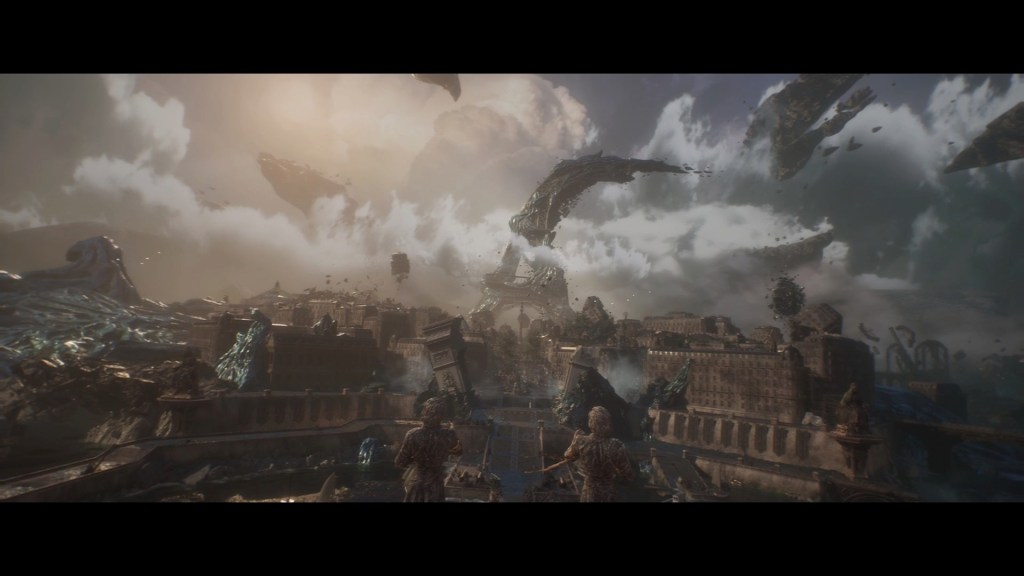
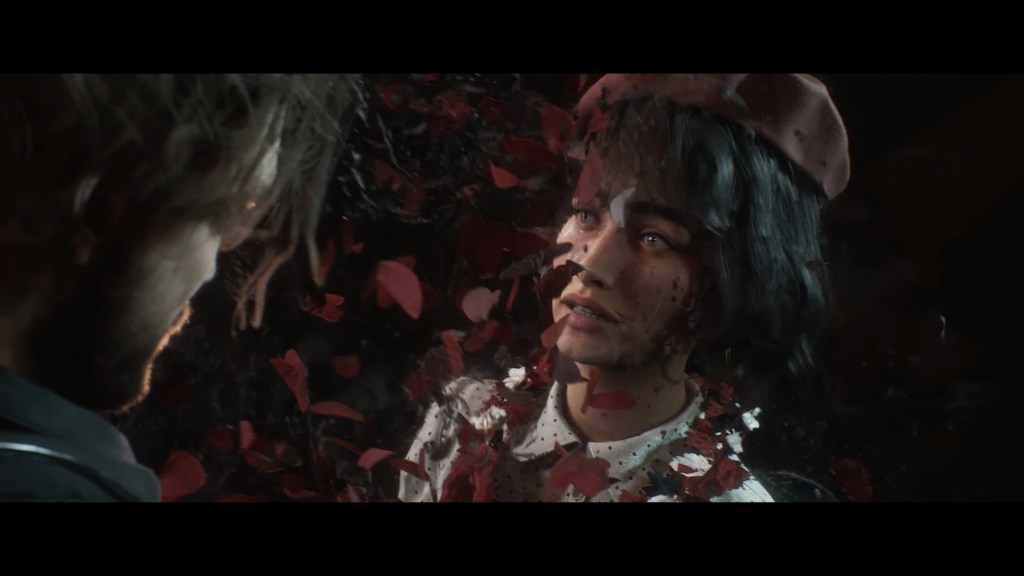
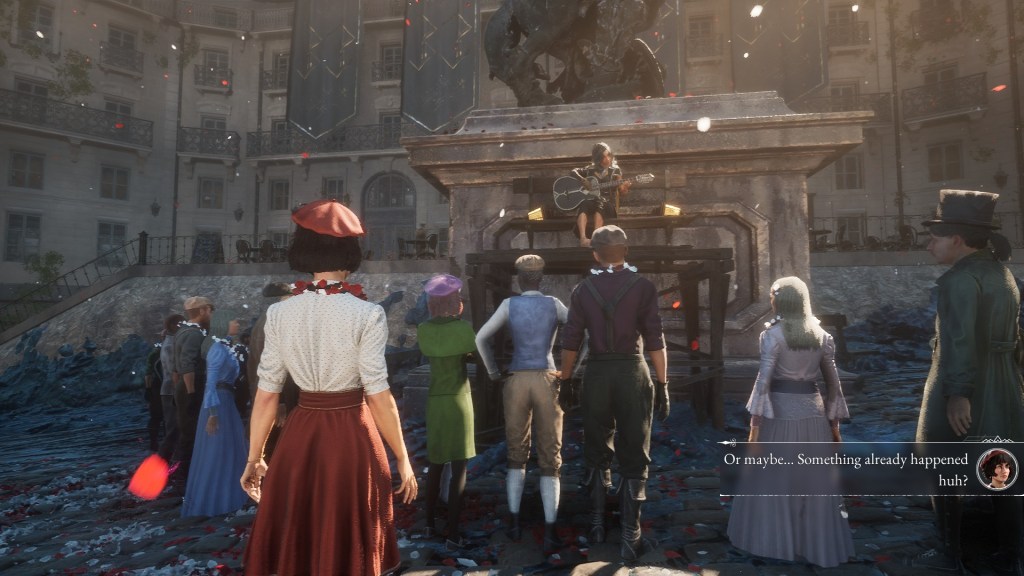
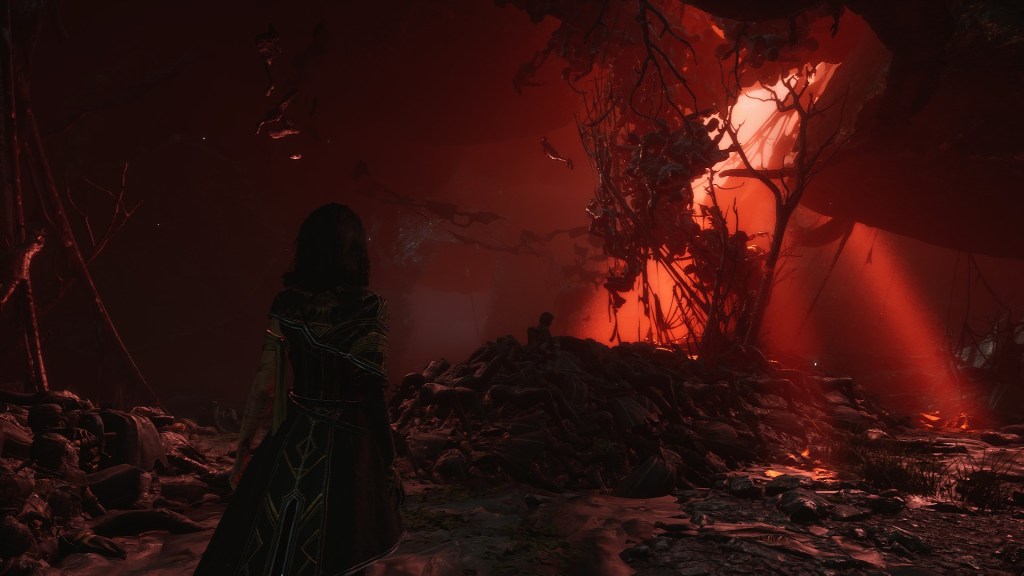
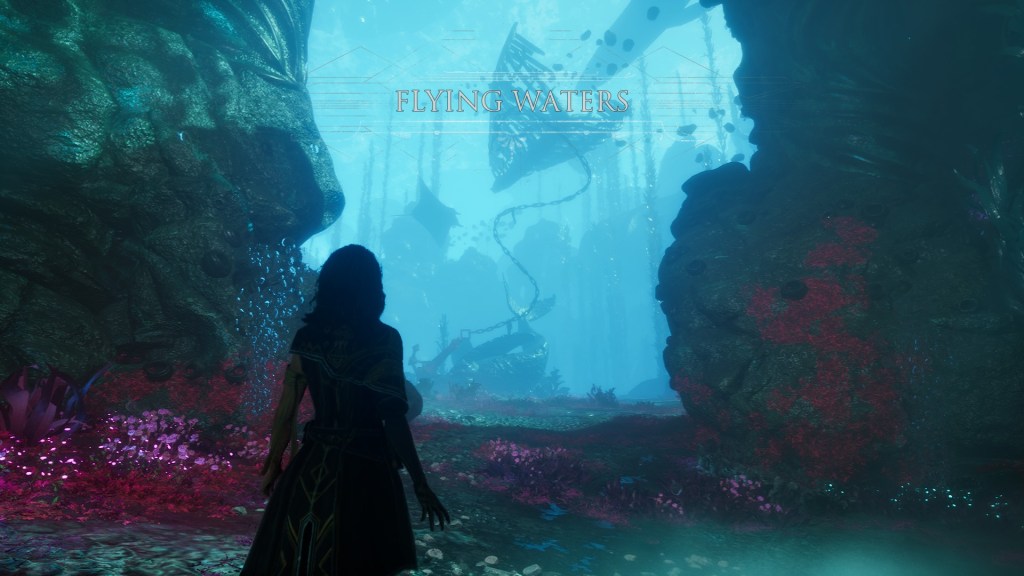
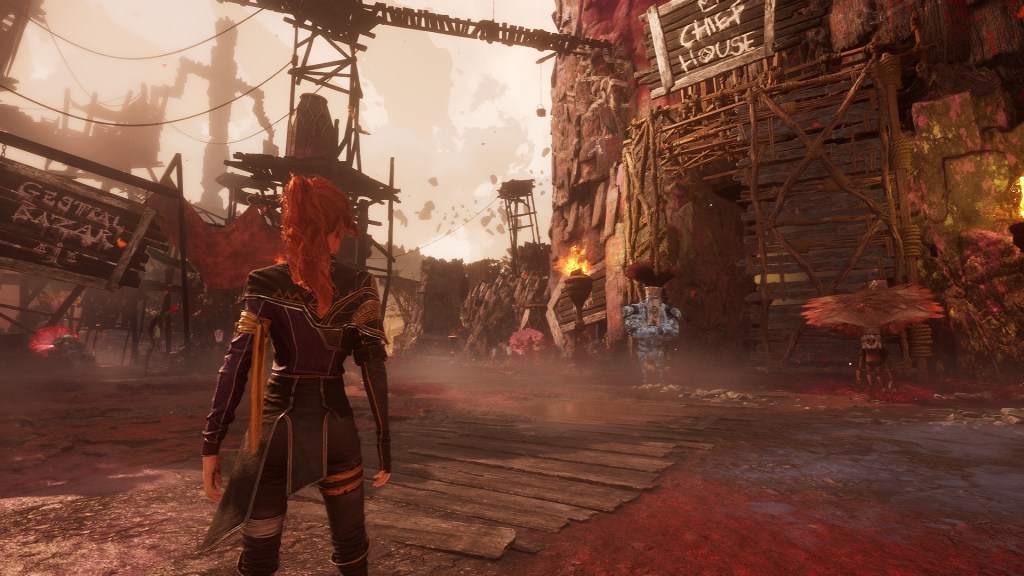
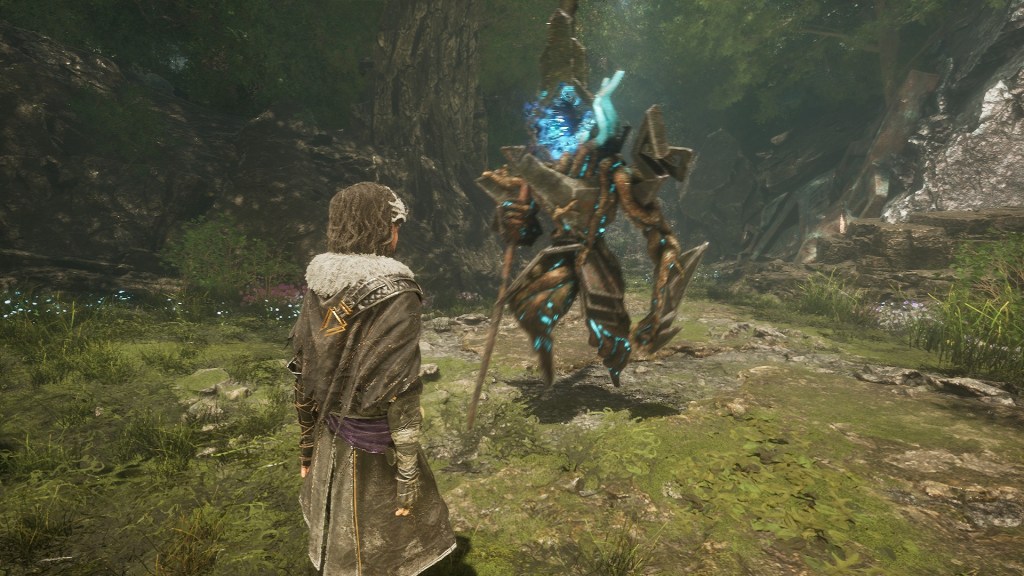
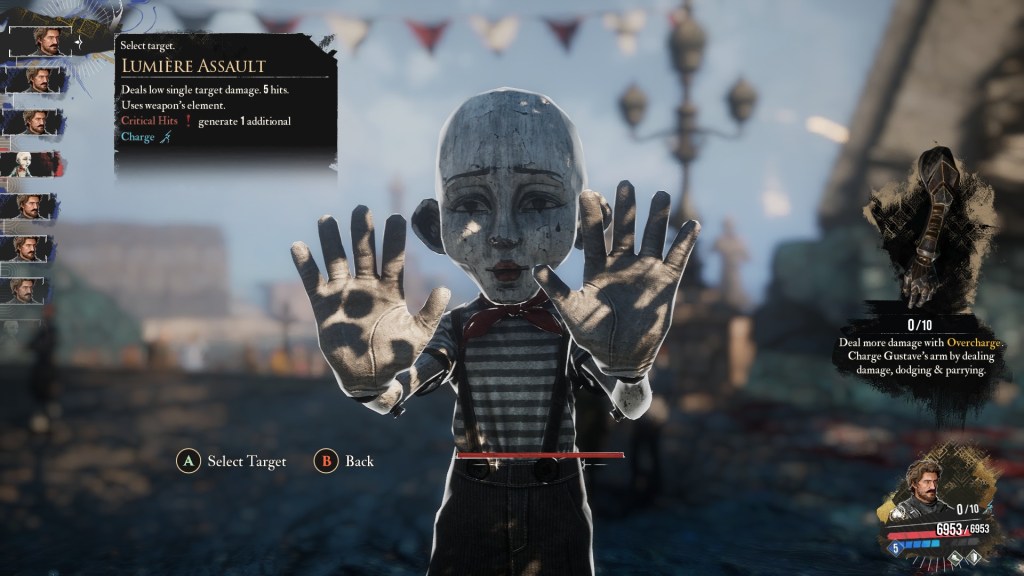
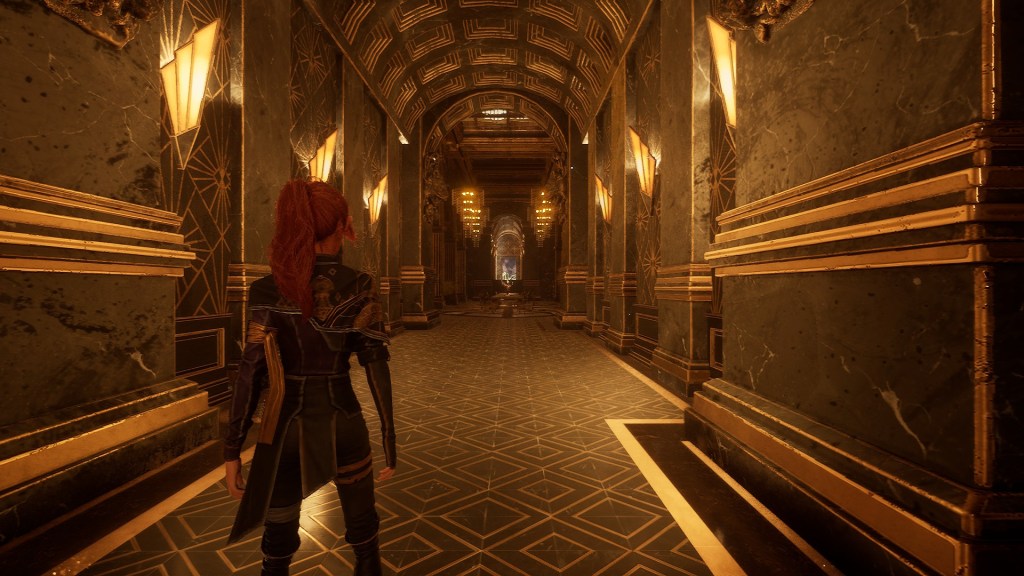
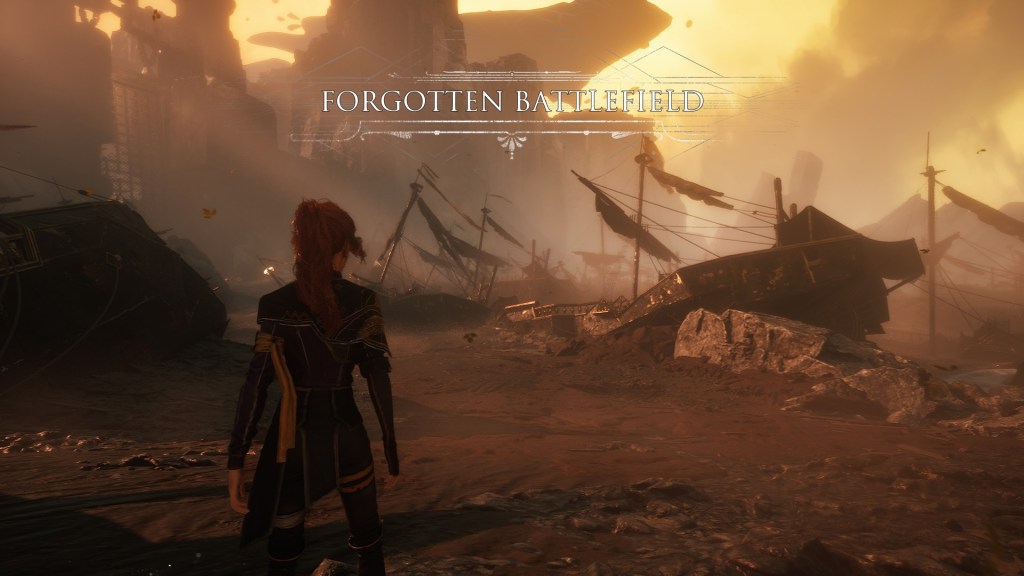
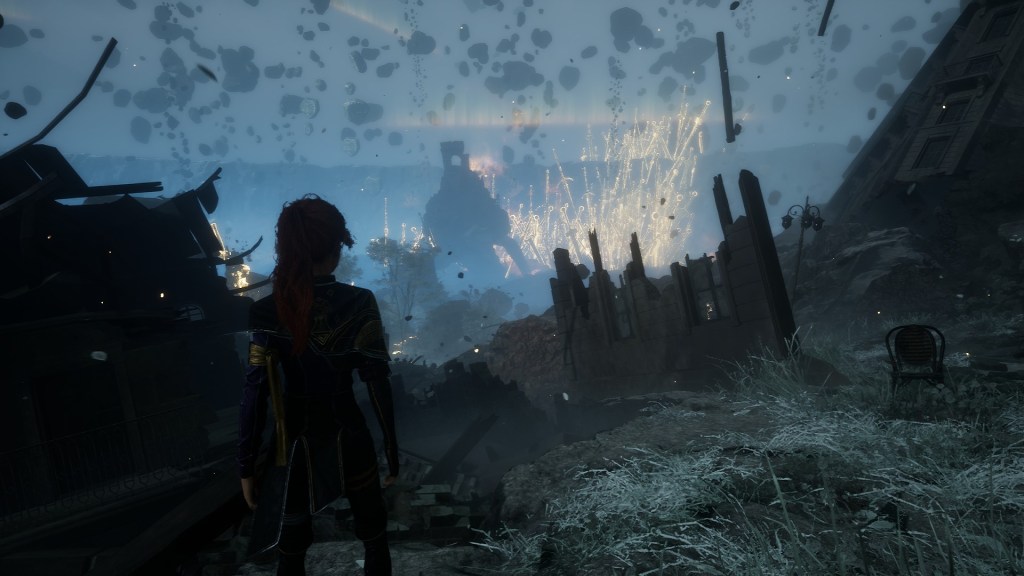
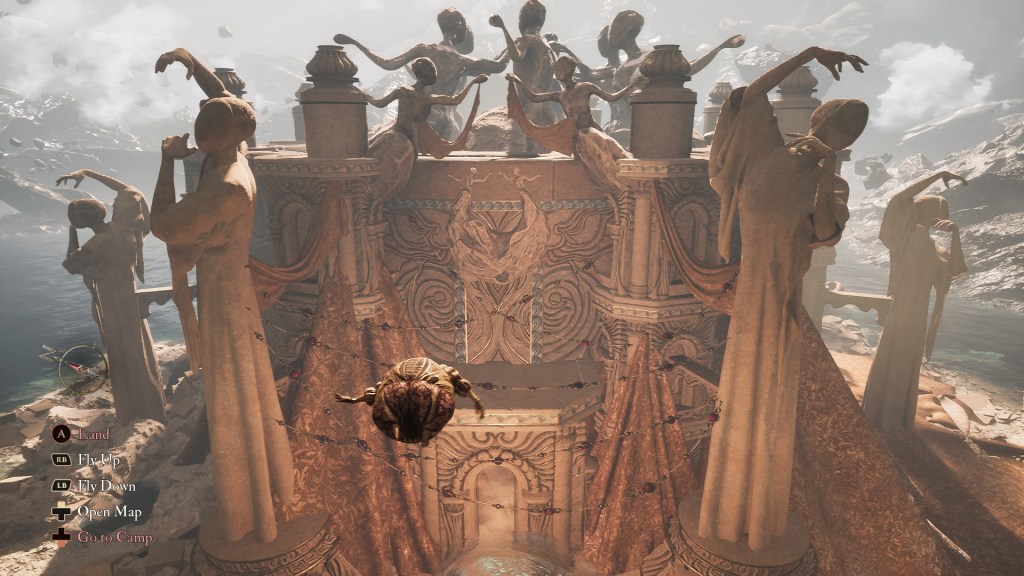
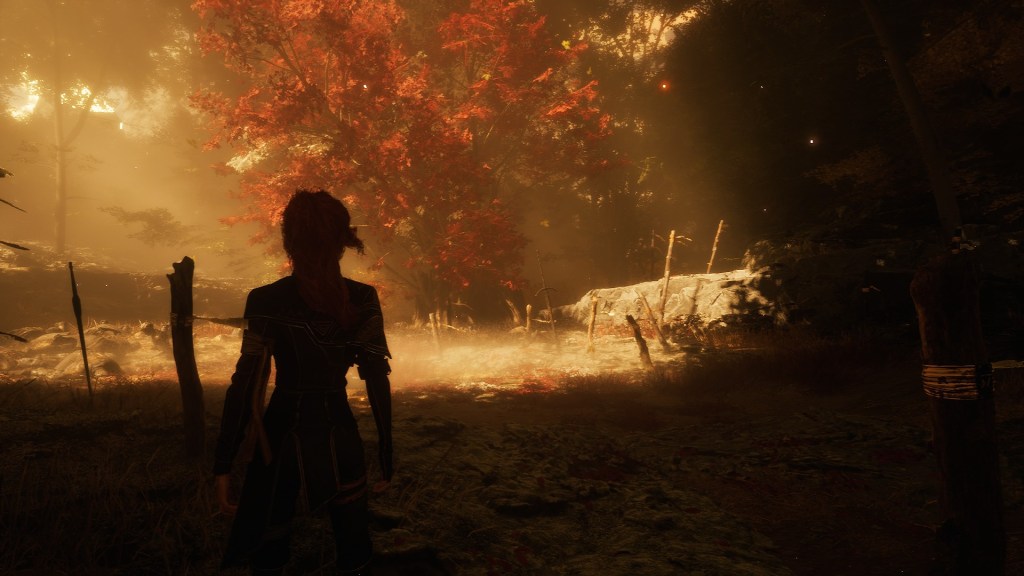
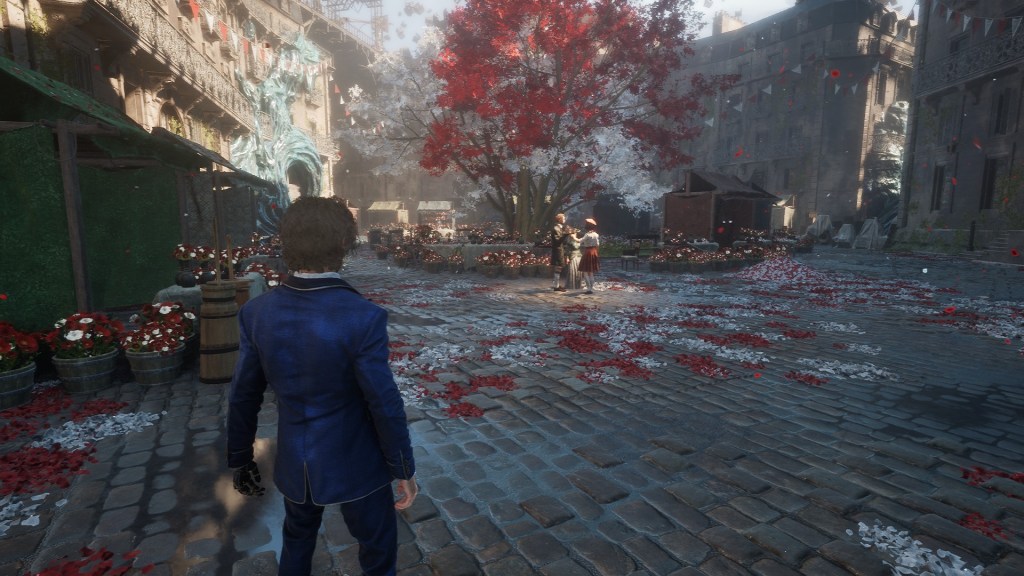




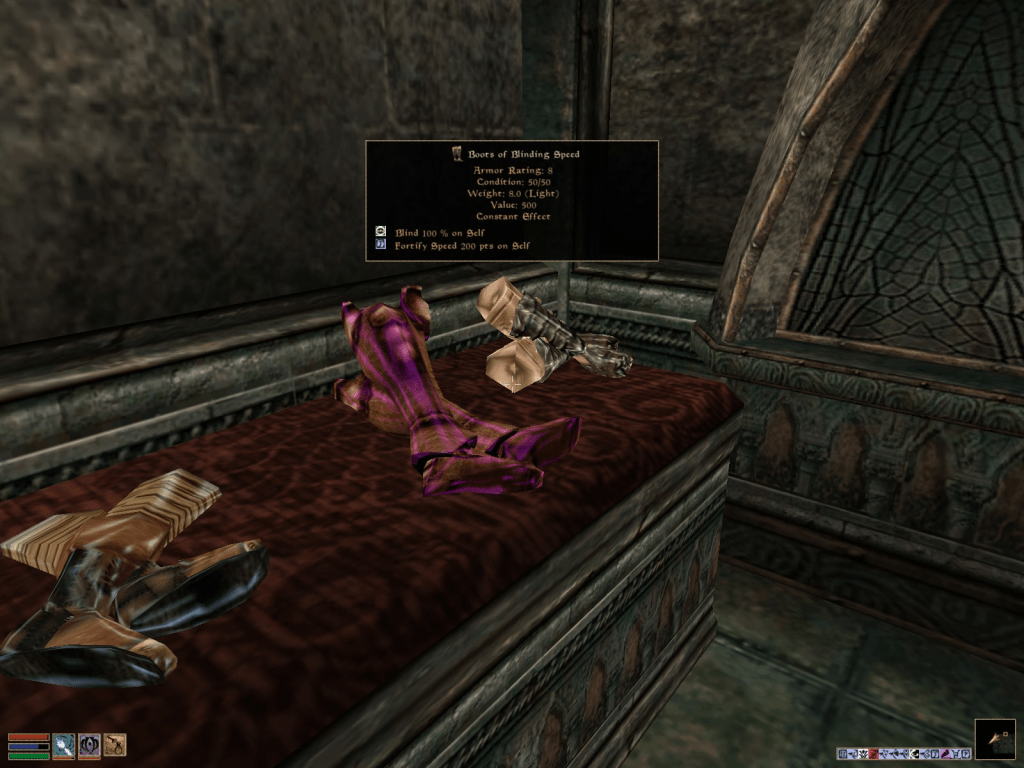


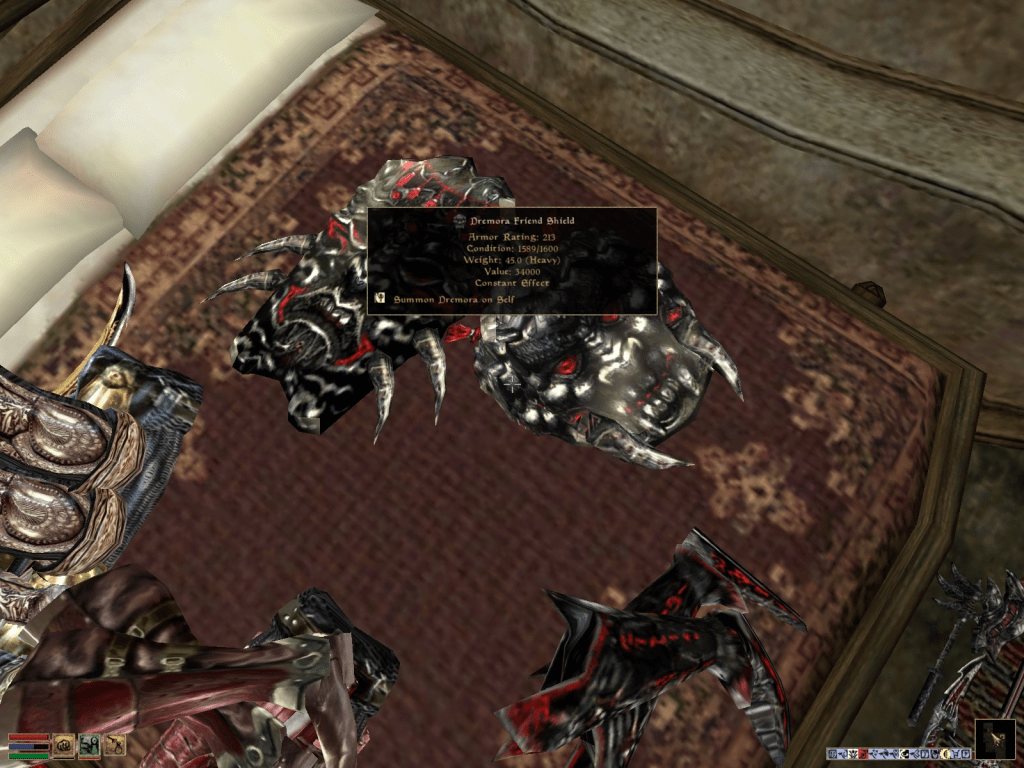


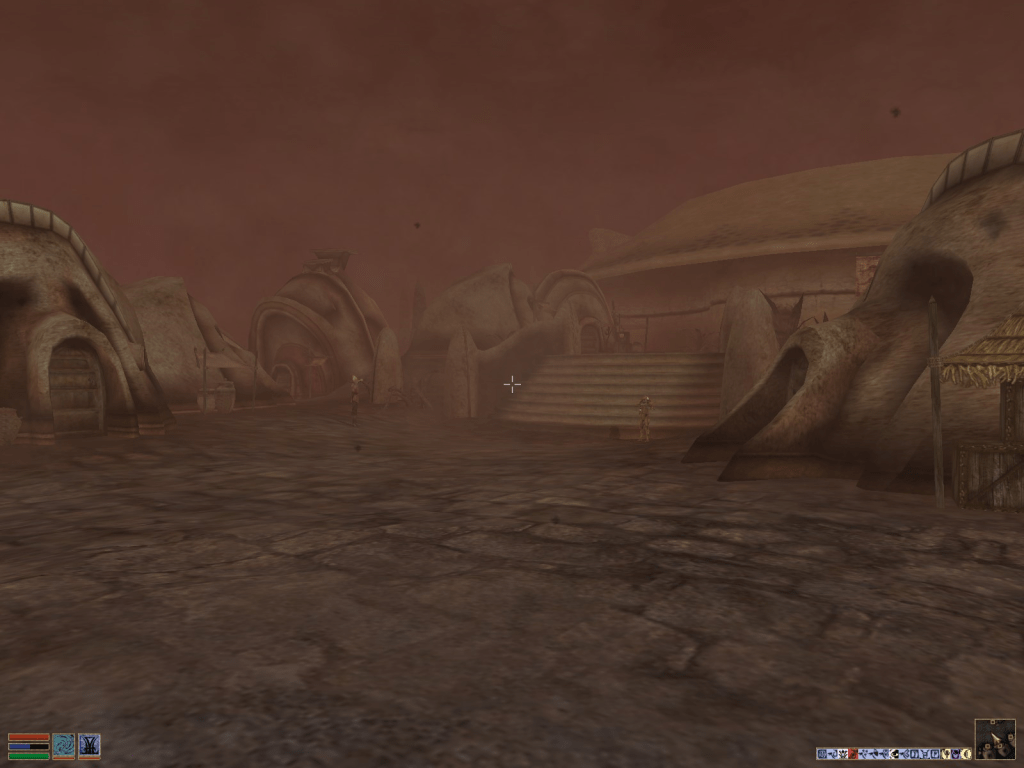


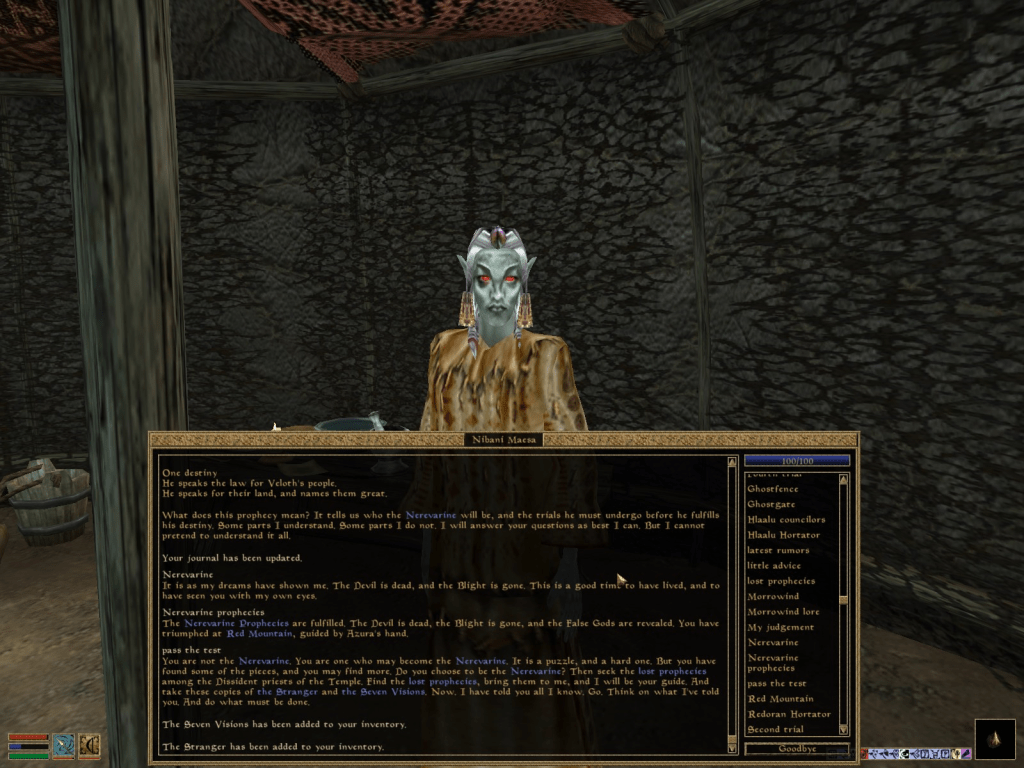










 Video Game Academy