The idea of learning from video games could take us to some unexpected places. It’s not too much of a stretch for me to say (with Toby Fox, so I feel like I’m in pretty good company) that playing old RPGs taught me to read. Even a fighting game like Street Fighter II, besides the hand-eye coordination it builds up and the discipline it instills, has an element of geography to it.
And spending enough time reading online, in turn, leads back to video games. For whatever reason, lately academia.edu has been recommending papers to me via email, like this one on teaching Final Fantasy X. (Be careful about clicking any of these links if you have an account on academia, because their overeager algorithm will probably start sending you a bunch of emails, too.) I don’t mind so much, but it’s a little stressful to realize just how much is out there. And I worry that the more I read, the more rabbit holes I’ll fall down.
Oddly enough, the majority of the papers on video game studies turning up in my inbox have been from outside the US, hailing above all from Brazil. My reading knowledge of Portuguese is very limited, but the convention of including an abstract in English provides a glimpse of the content at least. And there’s always google translate.
If nothing else, skimming through them and browsing their references turns up other material undergirding the arguments, suggesting authorities in the field and unexpected connections.
Reading just the epigraph to that one sent me to find the lyrics to this variation on Terra’s Theme, and then to the Pray vocal compilation. Uematsu’s message there is reminiscent of Itoi’s beautiful “What EarthBound Means to Me,” and both of these seem to recall the function of prayer in EarthBound, so crucial to the message of that game as a whole.
Which brings us back to Undertale… so more on that next week.
One last essay in this connection, “The music is the only thing you don’t have to mod” takes its title from the ROM-hacking and modding community. Music and modding, of course, are key for the development of Undertale, and both are high on my personal list of things I wish I knew more about.
I can’t think of a better way to keep on learning than by playing the Zelda theme on the piano and reading everything about game design that comes my way.
Earlier this summer, Outschool put the word out to teachers that one of the most sought-after class topics, based on search frequency, was Zelda. They were also requesting summer camp-style courses for their upcoming advertisement push. For me, it was a golden opportunity. Maybe it could be for you, too–now they’re looking for semester-long course offerings!
For a long time, looking up to people like Corey Olsen, the Tolkien Professor, I was interested in trying to teach online classes about video games. The work he and others are doing with fantasy literature, philology, and classics at Signum University led me to get involved with their programming for kids. Over the past few summers, we’ve offered the model of live, interactive discussions of fantasy literature to a wider audience of all ages through Signum Academy.
Connecting people wherever they are around shared interests like hobbits and wizards and writing has been delightful and rewarding, since my day job substitute teaching tends to involve considerably less interesting topics. The pace of events since everything shut down (except for Animal Crossing and Twitter, it seems) only rendered that leap from in-person to online education more urgent. Now we meet on Twitch every other week to talk about storytelling.
The Signum motto, learn what you love, has a slightly different meaning in that context. For adults, it means learning more about what we love already and sharing that with others; for kids, it’s more about learning what it is that they love, in company with others.
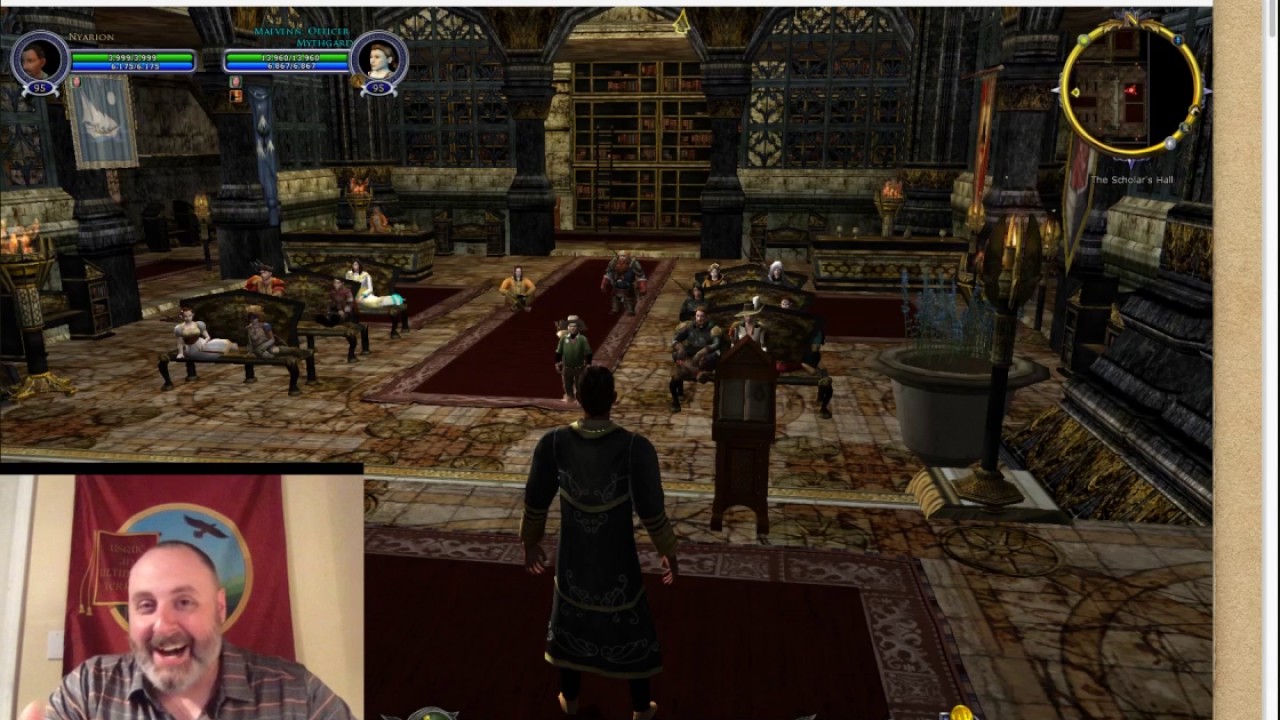
The good professor teaching from within The Lord of the Rings Online
The idea of discussing video games the way we do fantasy books, with a certain amount of rigor but also playfully, by suggesting fun activities to engage with the story, doesn’t entirely fit within the Signum Academy mission, which is primarily about promoting reading–reading books. Plenty of games do involve reading and interpreting text, but others, though well worth discussing, really don’t. Perhaps it’s a matter of broadening our understanding of reading to include the kind of imaginative participation that playing video games entails. There may be room for that in your local school, library, church, or non-profit. At all events, there are plenty of platforms to try it out on your own. Podcasts, Twitch, and YouTube are all ways to release content relating to video game discussions. They’re relatively low-barrier to entry. Plenty of people around Signum and The Well-Red Mage have good advice about how to get started. Patreon and Kickstarter can help monetize your project and provide that extra source of motivation.
For a more structured academic experience with more freedom to teach classes about video games, I’ve found Outschool to be a great balance. On Outschool, I started out teaching Tolkien under the Signum banner, since they initially reached out to Corey for content within our wheelhouse, but soon I found that I could branch out and pursue my other interests, too. Now, along with literature classes I also teach Spanish conversation and, as of this past summer, courses on classic video games.
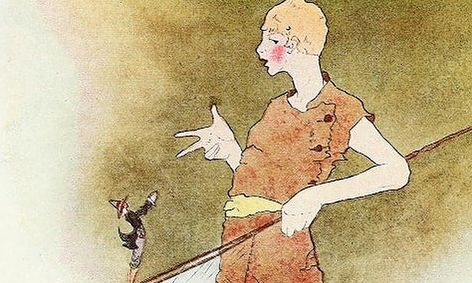
Public Domain Review is a great resource for quirky, out-of-copyright images to accompany the course description
In the three-week Camp Zelda course I came up with in response to the search-query-attested demand, groups of up to nine students at a time explored with me the history and development of the series from the NES original up to the present. I spent the summer learning just enough about Shigeru Miyamoto and programming to be able to talk at least a little about cultural and technological aspects of the games. Of course, simply tracing changes in the gameplay and story from one game to the next provided more than enough material for our three hour-long sessions.
I also had an excuse to get around to playing Breath of the Wild, since I figured it would be a good idea to devote a whole class period to the most recent and popular game with the kids. The prior two classes, on the original Zelda and then highlights (and low points) from intervening sequels, showed them some ways to approach the games and set a tone for the discussions. Then in the final class, the students were encouraged to take the floor and teach me about the gameplay, the open world, the recipes and outfits and tricks they’d discovered in their hours within the world of BotW.
Applying to teach, creating your courses and getting them approved, scheduling class sections–all these steps precede actually teaching the live sessions. Once you jump through those hoops, you can approach the class however you like. Some people just get together and play games. For my discussion-based classes, I use screenshot images and thematic questions to guide the conversation. I like to start with a warm-up question, just to get everyone talking: have you played the original Zelda? What did you think? Then I scale things up with comparisons–how do elements from the first Zelda recur in BotW?–and steer us into analysis: how do the memories help connect gameplay and story?
Even having set some ground rules for the conversation up front–raise hands please, listen to one another–it’s still occasionally necessary to mute a student if they’re interrupting or talking over people, or going on and on about Lynels… I always let them know they can use the chat to raise other topics among themselves, but monitoring that is still a good idea.
As far as the platform goes, Outschool has a policy about secular, age-appropriate, objective content. There’s no grading required, no disciplining–basically, you get all the good parts of teaching, and none of the headaches. Generally, classes tend to be about enrichment, not replacing core curricula, though there are still plenty of math and English classes. The platform has begun partnering with local districts and offering financial assistance to appeal to more families. They take a 30% cut of teacher earnings, but with the recommended $10/hr/student rate, proceeds from a few full class sections a day compare favorably to a real job (with no benefits, of course).
Overall, it’s been a great summer job, and I’m planning to keep teaching with them if my schedule permits. The next course I’m offering is an ongoing format, where students sign up week to week if they’re interested in the topic. We’ll be starting out with a three-week module on Undertale and EarthBound, two of my favorite games. But I expect the enrollment will really take off once Breath of the Wild 2 comes out.
Following up on this summer’s Camp Zelda, a new discussion of games old and new beings Wednesday. Undertale, EarthBound, and Beyond will take place weekly in an ongoing format, meaning students can sign up for as many sessions as they’re interested in attending. Everyone can access the course page for extra resources, but to join the live discussion, be sure to sign up on Outschool.
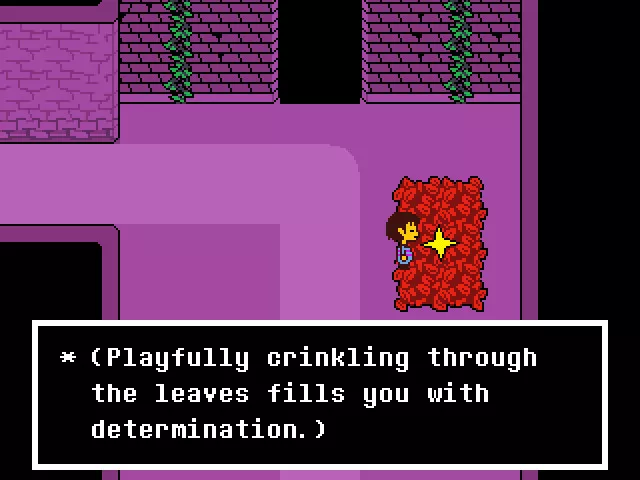
Wherever home is for you, pull up a chair and make yourself comfortable
NB: Outschool courses are designed for younger students–see course page for suggested age ranges. In the patreon classroom page, and in most of our podcasts, we’ll have room for the grown-ups to talk about video games.
Our current semester features deep dives into Pony Island and The Hex. Digging into these two with you will be just the latest part of our project bridging popular culture and academic discourse about video games.
For about a year now, we’ve brooded over it in blog form here. All these posts and teaching materials remain freely available to use and share as you see fit. We suggest reading them 🙂
Along with incubating the blog, we’ve been at work on our flagship long-form podcast content, available most anywhere you get your podcasts. The initial productions, including three episodes on Little Inferno and twenty on Final Fantasy VI, provide something for the nostalgic and indie gamer alike.
Meanwhile, Ben has been teaching philosophy and mythology in higher ed and Wes has been tailoring video game courses to younger players. You can see more of that work here and here.
On the patreon page, you’ll be able to keep up with what we’re playing and contribute to the discussion, if you so desire. Just make a contribution to gain access to the live sessions, bonus special topics seminars, and personalized tutorials. Thanks for helping us continue to make academic discourse about video games.
Cribbing and quoting loosely from the tail-end of this lively, expletive-laced Bonus episode of Ben’s podcast, where you can also find lectures on mythology and philosophy, here are some great starting points for the aspiring video game academician.
Obviously, the first one is Extra Credits. If you want to know anything about history or mythology, there’s some fascinating stuff, but they started as a video game show. Their list of recommendations highlights games in the weird, alternative indie scene.
I can’t recommend Crash Course enough. Series on world history and philosophy, but also history of science… Even more to the point, explore their series on navigating the internet. If you want to know how to distinguish good news from BS, go watch that.
Errant Signal is a web series dedicated to deep dives into themes and gameplay, with insights on big new games and games from otherwise unknown developers. The work is meticulous, treating both the business of making games and the question of what games can say and do.
Innuendo Studios’ flagship, the alt-right playbook, explores how bad actors dominate the media and manipulate people. To understand how social engineering functions and how to get your voice heard, or how to protect yourself from those who do, is invaluable, whichever side of the political spectrum you’re on.
Just as a fun one, Super Bunnyhop uses video games to talk about really smart stuff in the industry and the world at large.
For a while now, we’ve been making podcast courses as we play through great video games together. We’re running our first live course now, an Intro to Video Game Studies. Another thing we like doing here at the Academy, and that we want to do more of in the future, is reading great books together. It’s awesome to see the whole world catch on to the possibilities of online discussion, though the circumstances are not ideal. Perhaps there’s something about getting to talk in person which doesn’t come across in a video chat, and we’ll all be glad when we’re allowed to see our friends again face to face, but there are still wonderful kinds of connections we can make across the distance that separates us. Books, which have always found a way to speak to us through time and space, are more valuable than ever, particularly well-suited to the demands of distance education.
“Here is a ‘you’ in which my ‘I’ is reflected; here is where all distance is abolished.” –Stefan Zweig, Montaigne
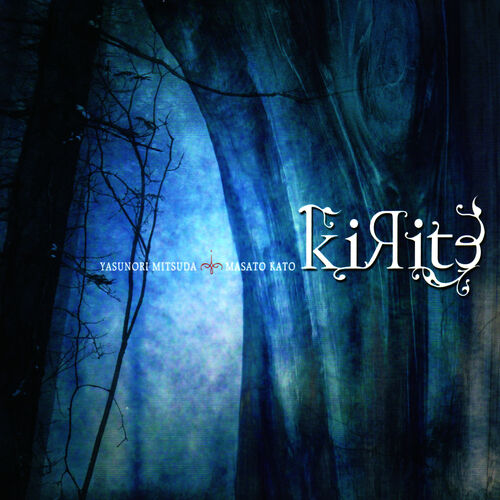
If only I could read Japanese, the Kato-Mitsuda collaboration Kirite would be an open book to me
The more we study games, the more it behooves us to familiarize ourselves with the existing scholarship on them, and with people currently engaged in it. So this is the main kind of literature we have in mind to review. There’s never been a better time to access the wealth of information out there; our aim is to make it better known and applicable for those, like us, just starting out in the field.
Patrick Holleman, one of those scholars we’ve been fortunate to talk to on the Xenogears podcast, very graciously sent his shortlist of video game studies resources to add to our own. He singled out Jon Peterson’s Playing at the World for the student of RPGs and recommended the research gathered at the Critical Distance Compilation. In terms of the peculiar intertextuality Xenogears invites, he suggested a range of works of literature, psychology, mysticism, and popular culture to consider, which we’ve added to the course page. And though he didn’t list them, rest assured that his own books on games such as Chrono Trigger and Final Fantasy VI and VII are on our shortlist to read.
In the coming weeks, we’ll begin offering our takes on more of the major texts in video game studies, classic and contemporary alike. If you’d like to participate, keep an eye out for courses on ludology and intertextuality inspired by playing games and dedicated to promoting the old-fashioned joys of reading books.
Mario and Zelda: hearts and 1-ups. The opera scene, the music box. A god the final boss. An open world…
Image taken from a lovely essay, ‘Breath of The Wild and The Emptiness of Ma,’ by The Bokoblin
A few times over the years I’ve started writing and re-writing Raccoon Tail Opera, my philosophical treatise on video games. Or that’s the working title; those are just some of its possible chapters.
It’s been on my mind lately, and with the time freed up by schools being closed I wanted to give it another look. But this time around I thought I’d start at the other end of the academic world. Instead of writing dense, orotund paragraphs for scholars and cognoscenti, I thought I had better try out my ideas with school-aged kids. It won’t be any easier, but it will mean I have to make sure what I’m saying is not only interesting, but also makes sense. I’ll have to hold their attention, and they’ll keep me honest.
Our first meeting is today on Outschool; check out the course page and follow along.
Lucca at home, hard at work
The first thing we’ll want to get straight is what we’re all doing here. The goal of becoming a programmer, or otherwise getting involved in making games, while admirable, is a little beyond my abilities. All I can speak to is the history of video games so far–unless that includes within it some hint of guidance about the sorts of games we might want to see in the future. I can give some context, some cultural and theoretical points of reference for anyone who likes playing games and thinking about them. Hopefully, that would also include people who want to make games one day, but it could serve just as well to help others enjoy them, and lots of things in life, a little more deeply.
My first serious foray into game studies came with the Humble Bundle by MIT Press a couple of years ago. An alternative to the expensive journals and impenetrable specialization that render most scholarship intentionally inaccessible to most people, the book series on video games fit in nicely with a like-minded project doing the same thing with the university as a whole: Signum U, founded by Corey Olsen, The Tolkien Professor. Around the same time, I started my EarthBound podcast in imitation of his Mythgard discussions, and began looking around for other people doing work along the same lines to collaborate with and to learn from. That led me to writing for The Well Red Mage, and eventually to getting back in touch with Ben. Now we’re putting together this Academy as a way to set out what we’ve found.
In the first class, aside from brief introductions to get to know one another, including what we’re each hoping to learn, we’ll look at some philosophical underpinnings of video game studies. In short, what do we mean by ‘games’ and ‘play’? What can we point to as the important turning points in the history of video games? And who has shaped our understanding of that history? We’ll try to establish a conceptual framework, putting terms like ludic and narrative, art and violence, gamification and the magic circle into our own words, giving examples from our own experience of gameplay and flow states. And having fun while we’re at it.
Each the following weeks, we’ll look at a couple of games in depth. One newer, one older, they will provide the basis for our discussion of the elements that make video games fun to play and to study. In the process, we’ll encourage one another in our individual endeavors, whether blogging, reading and researching, making youtube videos, designing games… or writing books.
It can be a scary time, but there’s plenty of reading to catch up on these days. Consider spending some time with the likes of Boccaccio, Defoe, Poe, or Camus wherever it is you’re hunkered down. The classics make good company if you’re lonely, and the virality in their pages is not the kind that gets you sick–though no doubt the pandemic is helping to spread word of them at present.
Harry Clarke’s illustration for Poe’s immortal Masque.
For those who’d prefer a more interactive visitation during the quarantine, we at the humble pages of Video Game Academia have a few suggestions.
Of the many other games with a thematic relevance, from Parasite Eve, with its chilling opening sequence, to Plague Inc., recently banned in China, perhaps one of the best to turn to now would be That Dragon, Cancer.
That other dragon, The Jabberwock, illustrated by John Tenniel
As always, you can check out our other courses and resources and head down the rabbit holes awaiting you there. Drop us a line if you find something you like, and “Beware the Jabberwock, my son!”
Imagine my delight, hearing over the morning announcements–on the intercom, no less, anachronism that it is in this age of video!–that the student-run Video Games and Literature Club would be meeting at lunch to discuss The Legend of Zelda: Majora’s Mask.
With some self-consciousness, I’d asked the teacher whose room the club uses for their meetings, would it be OK for me to sit in? He said why not, it should be fine; but just to make sure I talked to the kid who ran the club, who even looks kind of like me, gawky and smiling, and he all but pulled up a chair for me. He’d had an article about The Witness published on a website whose name was something too long for me to recall, and he was riding high. Still, I felt somehow uncomfortable being the oldest person there, and a teacher, albeit just a sub, so I let the kids discuss amongst themselves without speaking up again.
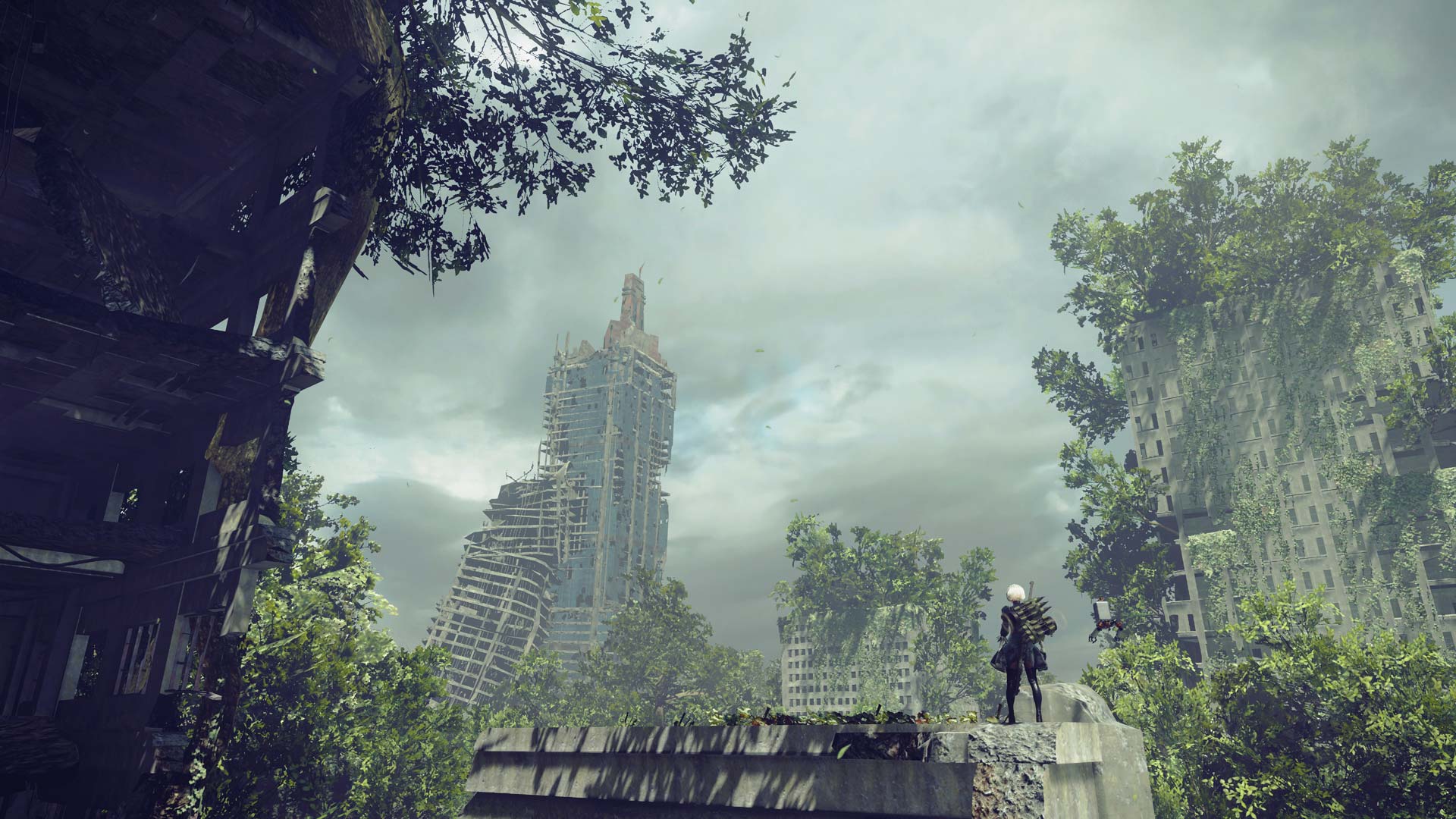
On other days they’d met to talk about the connections established between players of NieR: Automata and, in a different way, of Death Stranding. For their Majora’s Mask discussion, the focus was on the Song of Healing and its effects, both within the game and upon the player. A brilliant discussion it was! The organizer framed the question: How does the song help convey the theme of the game? And briefly summed up the relevant story, playing videos of the song and its various transformations and eliciting ideas from the other members of the group. All in all, it restored my faith in the youth. And it made me wish, more than ever, that this could be the way that games were taught, right alongside the great books cramming the shelves and the art decorating the walls.
With that, let’s invite any readers out there to share your own local clubs and organizations discussing video games in an academic setting. If there’s a course on games in their literary, cultural, or historical context you know of, please bring it to our attention. Whether you’re an organizer or participant, a teacher or student, we’d like to put you all in touch with one another and pool resources. We might even want to interview you about your experience!
This concludes the announcements. Have a great weekend!
Our secret Valentine’s Day card goes out, only about five years too late, to the participants in the “Teaching Game Studies Workshop” at the 2015 Digital Games Research Association (DiGRA) conference, and to Ben Richmond at Vice, for posting their report and reading list. Thanks to them, here are some thoughts from the professionals about how to get started teaching and studying video games.
Picturesque Luneburg, host of the DiGRA 2015 conference
Embedded in the report are higher-level questions of methodology and concrete suggestions for assignments and course design, but the immediate takeaway, for this amateur scholar, anyhow, is how differently it seems texts and games have been treated in the academy. The recommended (or, as organizers Consalvo and Paul put it, “popular”) readings are specific, suggesting the outlines of a recognizable canon, albeit with a looseness about how much of each text to read; the section of the report dealing with “gameplay in the classroom,” however, does not cite a single specific game. Instead, there’s a smattering of general ideas about ways to incorporate whatever games the instructors might choose, be they “sites with free games, browser games,” “African traditional board games,” or “Tarot cards to teach narratives”–or even just to “have students pick the games to play.”
There’s a remarkably cavalier approach to the selection and incorporation of games for you, and yet, with the right students, as ever, all will be well.
As for what we could end up with, though, allowing too much input from the class, consider the new Sonic movie and its ordeals with fan resentment as a point of comparison. I haven’t seen it yet myself, and don’t know when I’ll get around to it–there’s so much for a lover of video games to read!










 Video Game Academy