Belated as ever, I know, but the first of our weekly-to-monthly updates of the year is here! Happy New Year and welcome back, Video Game Academy readers. Welcome… to the Year of Worldbuilding.
“We went through some crazy stuff… But as you can see, I’m alright now!” (Let’s Play Archive)
(Whole articles could–and shall!–be written on the use of ellipses in JRPGs… the old oratorical flourish of a dramatic pause is the least of it. The thoughtful facial expression, the pensive self-forgetting, the grim determination, the speechless sorrow–so many ways this little trinity (give or take) of punctuation gets deployed…)
We are never done tinkering with myth in games, of course, but the time has come to turn our attention to a related key theme in the overlapping fields of video game studies and the humanities. Worldbuilding is the task before every would-be author of speculative fiction, which is to say everyone who has ever enjoyed a book or video game set in a (sub)created world and wondered if they could make one someday. Kudos to all those who do make the attempt! And all encouragement to those who, like us, wish that we might!
Laura shared this presentation on the Pixels discord, per the zeitgeist, and I recommended she send it to Resonant Arc, who just made a video interviewing several indie developers, including Pat Holleman!
It’s well worth watching the Gottliebs’ presentation about their experience. The insight that sticks with me is the twofold, bidirectional nature of the worldbuilding impulse which they elaborate together: how we as players are imaginatively involved in evoking the images and story of the game, particularly when it is retro in presentation, much like we do with the text of a written story; and how we are inspired to put ourselves in the place of the developer, to imagine how we might want to go about things if we were to make our own game.
Ever since Tolkien mused on “other minds and hands” in his famous letter to Milton Waldman, the full spectrum of fandom, from fanfiction followers to transparent imitators to anxiety-of-influence-laden latecomers and romantic originators of new classics, has been lured out into the open, though it feels like every day the flywheel of content creation and consumption spins faster, and its deleterious effect on whatever real world we still share becomes more lurid. Worldbuilding is just the sort of preliminary, lore-bearing activity we mostly carve out time for studying here, somewhat to our own chagrin, when all the cool philosophers and game studies kids prefer to say with Marx that after all the goal is not just to interpret the world, but to “change it.” Still, we prefer to stay with Rilke’s speaking image of the great, shattered beauty and listen when it says: “you must change your life.”
Why worldbuilding, though? Shouldn’t we start with building something on a slightly smaller scale, perhaps a school–or school of thought–or a neighborhood, or a home, or a steady devotion to some even smaller upbuilding practice of service or mentorship, reading or writing, meditation or prayer? Preposterously enough, the intuition that drives this whole quixotic project tells me that when we are at work in any of these vital ways, we are always also worldbuilding, and that by zooming out and seeing that largest possible framework, trying to get a glimpse of what sort of world we are in the process of fashioning, we might be able to better grasp all the day-to-day upbuilding efforts that we are about.
So, thank you for being here with us at the Video Game Academy for another year of reading, writing, playing, teaching, learning, working on languages and practicing music, or whatever your resolutions might entail.
While it’s still roughly the right time of year, I’m bound to share, like I seem to do every year, this obscure one from Sufjan Stevens–and wishing you once again all the best this 2026!
The Definitive Book of SNES RPGs (Vol. 1) by Moses Norton and A Guide to Japanese Role-Playing Games by Kurt Kalata (ed.) are both published by Bitmap Books, new within the past month and last few years, respectively. They are doorstoppers, beautifully produced, quite pricey, and worth every penny. My name appears in the acknowledgements of the former; many of my favorite games–EarthBound/MOTHER 2, Chrono Trigger, Xenogears, Wild Arms, and so on–appear in the latter, though each game is afforded only a page or two due to the book’s massive scope.
I’ve long dreamt of writing a book like these, a kind of Haunted Woodfor video games, but I haven’t actually played all that many of the incredibly rich and diverse body of games that Norton and Kalata cover. Particularly, I’ve wished I could better understand my favorite games of the golden age of console RPGs in their cross-cultural context, having tried, so far with little determination and less success, to learn Japanese for that purpose–so I’ll settle for reading others who can, for now.
A few disclaimers up front: I am aware that Moses and the Bitmap folks have faced a smear campaign and waves of cancel-cultural recrimination over comments he made, but I will step around that. This choice, like the review which follows, is, needless to say, not entirely unbiased by my personal friendship and professional respect for the writer also known online as The Well-Red Mage, nor my admiration, shading into jealousy, of the productions of the Bitmap team and writers of Kalata’s clout who have worked with them. But what’s an amateur Video Game Academy scholar to do? We have to talk about the games themselves, first and foremost, in all humility and giving grace as far as we can, extending the circle of dialogue, lifting up the voices of students, fellow hobbyists, fans, content creators, and industry professionals alike. None of us is perfect, none of us ought to feel we’re in a position to cast stones, in my view; with all deference to the righteous Redditors and other pharisaical denizens of the retro games discourse, I can’t see who is helped by such a pile-on. Or, if that disputed passage in John’s gospel is not to your taste, let’s say it in Dostoevsky’s terms, from Alyosha and Grushenka’s tete-a-tete in The Brothers Karamazov, with a Sakaguchi spin: I’m all for giving an onion (knight), giving a second chance or New Game Plus, once someone has apologized. I can only offer an apology of my own to whoever has been harmed by the exchange and its fallout. Certainly I wish Moses and his family the best after the wringer they’ve been through, and hope that Vol. 2 of his book is not too long in coming, whether from Bitmap or another source if they’re not able to patch things up.
But without further ado. Per the title, and in line with its author’s long-time, courageous project of bringing greater objectivity and rigor to the discussion of widely beloved games from ye olde eras past, The Definitive Book of SNES RPGs (not only JRPGs, mind, as I initially thought) takes as one of its points of departure “a new systematic approach to defining an indefinite genre” (31). I found this section powerfully clarifying, as I tend to have a much more intuitive, wishy-washy stance on questions of categories and sub-genres. Norton lays out a practical “Rule of Three: Character, Combat, Narrative” with each of these further breaking down in to three elements: Roles, Progression, and Statistics for Characters; Combat as such, its Turn-Based mechanics, and Variables; and Narrative story arcs characterized by Economy and Exploration. Where two of the three larger headings overlap, or where an RPG is more heavily weighted towards one or the other, we get the sub-genres of “action” or “adventure,” or indeed “action-adventure,” but any game that has at least some significant elements of narrative, combat, and character development can be fairly called an RPG (37).
Ranging over the 22 games this rubric brings under discussion, covering the first half of the SNES RPG library’s alphabet, Norton’s analysis is anchored by these mechanical considerations–and isn’t it refreshing to see how he chooses to cut across the usual distinction between gameplay and story, opting instead for this powerful, flexible Rule of Three? Each chapter opens with a graphic indicating which elements are deemed to be in evidence, alongside the developer and publisher credits, and while plenty of the games have all nine icons, there are a handful of edge cases. “King of Dragons isn’t an RPG! I can hear you yelling” he remarks in the penultimate chapter; to which I have to reply, demurring, “I’ve never even heard of it” (501). And in fact these debatable RPG inclusions, especially ActRaiser and EVO, make for some of the most interesting chapters in the book in terms of defining what an RPG is, and what a particular blend of mechanics, story, and gameplay loops portends for thematic questions about the meaning of a given game as a work of art.
For, as even a cursory reader soon discovers, dipping into chapters here and there rather than plowing through the book cover to cover as I did on my first read (though I heeded Norton’s caveat to go out of ABC order so as to flip-flop Dragon View and Drakkhen,”the first SNES RPG” 302, and one with a fascinating lineage that may or may not intersect with Gary Gygax himself), the close analysis of game elements in line with a wider project of empirically defining the genre is only one of the book’s significant threads, and perhaps not its most important. Just as Narrative and Combat are mediated by Character, Norton’s own voice, experiences, predilections, and indeed his character are present throughout the discussion. Along with the requisite historical context, pertinent information about the games’ development and systems, and more or less entertaining trivia and Easter eggs, we get a personal tour of each game’s world, its challenges and triumphs, and reflections on all of it from a true connoisseur.
For me, the best sections of the book weren’t actually the ones about the best games: the tour de force of Chrono Trigger or the ebulliently playful-yet-earnest EarthBound (which I read and commented on for the author in draft), or the groundbreaking FFII or even the operatic FFIII; nor was it, on the other hand, Norton’s almost impossibly judicial, admirably evenhanded treatment of the execrable Lord of the Rings. Much as I appreciated these for how they provide wonderful, coherent perspectives on games I know and love (or rather hate, in the case of the SNES LotR, as one can only hate a missed opportunity, a fall as profound as that from a Melkor, brightest of the Ainur–Tolkien’s text–to a Morgoth, archfiend and all-around jerk–its SNES adaptation), I find myself thinking most about, and flipping back to most often, the Introduction and the chapters on the Breath of Fire games.
The Foreword by Alex Donaldson, co-Founder of RPG Site, does a solid job setting the tone, and it is probably noteworthy that both he and Moses Norton are mixed race authors writing authoritatively, confidently, and joyfully about an industry where people of color are not always represented. Norton’s Introduction grounds the book in his upbringing in Hawaii, and he makes explicit the connection between his Native background, his longing for home, and a Tolkienian sea-longing most memorably expressed in great art, which combine to convey the importance of nostalgia in his conception of quality video game critique and analysis. This is all very much catnip to me, preaching to the choir if you like, just as much as his wise words about the meaning of an ostensibly silly game like EarthBound call and respond across the distance to concerns I’ve written and thought about for years, here and on sites run by Norton himself. In sharp contrast, really, to the more technical discussion of the Rule of Three, though both the technical considerations and nostalgic themes become integral to the chapters that follow, this is a big swing of an Introduction after my own heart. If I hadn’t known Norton already beforehand, I’d have reached out to him on the strength of the opening few pages, because I recognize here “a friend I’ve never met,” to use the Pauline (EarthBound’s Paula, that is) locution, a fellow aficionado of 199X RPGs.
In the chapters on Breath of Fire and its sequel, the book’s throughlines of biographical experience and nostalgic retrospection come together in what for me were the most illuminating fashion with its other core thread of systematic, definitional concerns with RPGs as games of a particular type. Perhaps this is because I’ve only played later Breath of Fire iterations, and had little in the way of preconceived ideas about the series, but these chapters spoke to experiences I’ve had from a direction I wasn’t expecting, and landed with startling insight. Maybe this is how people who haven’t played Xenogears would feel listening to my interminable podcast commentary on that game; one can hope! I love the idea that within an objectively slightly janky game, “you may be able to spy the inner workings of a mythos in the making” (168). I would even go further and say that not despite but because of the obstacles in the way of such a glimpse of the seed of a mighty idea, old games like Breath of Fire are inseparably fused to this homeless time of ours, when we deal daily with such a dearth of living myths that we will grab onto them anywhere we can. The games’ religious ambiguity and political, race- and class-conflict story beats, in this light, are almost too poignantly prophetic of our current confusions and divisions. And they shed a light, a warmth, a breath, why not, over players who take the time, as Norton does, to connect deeply with their stories and weave them into their own. Witness some snippets:
Upon starting a new game… a voice in the darkness cries about giving yourself to God and becoming God’s strength…
This is none other than Breath of Fire II, the globe-trotting, history-spanning, darkly religious, draconically epic sequel to the original Breath of Fire, though I describe it simply as “formative”… I spend a lot of words in this book regarding themes, analyses and the meaning embedded in these stories told by means of the Super Nintendo, but when it comes to this game… it’s personal.
Breath of Fire II immediately won my heart from the moment I saw its beautifully realised world, a crystallisation of all of Capcom’s 16-bit sensibilities…
What I didn’t realise at the time was the fact that this game would not only win my heart, but also my soul. I know; even to me it still seems odd to describe encountering a video game, a mere sequel, as a religious experience. Yet somehow, I’ve wasted years describing the early Breath of Fire games as staunchly traditional. I’d like to recant…. (177-179, excerpts; British spellings courtesy of Bitmap.)
Over the course of a nuanced discussion of the game’s religious themes, centered on the duplicitous Church of St Eva, tied in with personal reflections about growing up “in the church” of Western missionaries looking at “the monarch chrysalis hanging from a branch outside” as an image of Pauline transformation (yep, that Paul), an image of the winged anime girl Nina above a cartouche of text discussing a goddess joining the player’s party is balanced against a lengthy passage from CS Lewis on “the Numinous” (182-3)–and lo, it hit me like the thunderbolt on Ryu’s sword that the construction of Norton’s book, heartfelt, syncretic, overflowing with connections between games, literature, and life, mirrored almost exactly the message of these games which he sought to express. The content and form, medium and message, like a successful dragon transformation, were one. And to cap it off, on the next page Ryu celebrates catching a fish as Norton explicates what I had perceived: “It was in this realm of fusion and confusion [Hawaii both as place and as touchstone for his studies of myth and religion] that the roots of my interest in spirituality dug deep, and I really have Breath of Fire II to thank for that” (185).
Again, I found the book immensely valuable precisely because it taught me so much about games I only knew the name of, if that, and will likely never play. Thankfully, Norton has trekked through the likes of Brain Lord and Inindo so I don’t have to, and recorded his discoveries. In a few cases, I also may go ahead and track down some of these more obscure titles just out of curiosity, or to show them to my students or my own kids out of a kind of historical whimsy. But I will undoubtedly move the Breath of Fire series right onto the mental shelf with EarthBound and FFII and find time to play them alongside one another someday.
Norton’s chapters each close with brief notes from other players corroborating and qualifying his reasoning, layering onto his experience of the games the texture of their own voices and memories. Of Breath of Fire, Livnat writes “I also loved that fact that for me, who was also just learning English, there was no real need for a lot of dialogue to get the picture; in fact it enabled me to fill the void of plot with my own understanding of the game, and my own ideas and thoughts” (173). This is much the way Toby Fox talks about learning to read from EarthBound, and how I remember learning from JRPGs like Dragon Quest and FFII my own language, reflected back to me across the bridge of terse NES and SNES localizations; or later, learning Spanish from Platero y yo, before I knew most of the vocabulary enchanted with its sound; or how Philip Pullman talks about the prose of Kipling’s Just So Stories, or the poetry of The Journey of the Magi and Paradise Lost. To repeat, these old games, like these great books, encode a universal archetype, that of the learner–of language, or myth, or a game’s rules–facing a mystery and patiently listening, imagining, playing their way towards comprehension.
It bears mentioning once more that the visual style of Norton’s book, too, is almost intoxicatingly good. The layout, the choice of sprites, backgrounds, and other assets, and still more the peculiar CRT-filter quality of the images, all argue as strongly as the words about the need for us a culture to continue re-evaluating the role of nostalgia and the place of games in the artistic canon.
All this is not to say the book is perfect. A line of text from Daniel Greenberg’s testimonial about Mystic Quest gets transposed 20 pages ahead to the top of Mama Terra’s for FFIII (421). Accompanying Norton’s text and his contributors’, exemplary screenshots from the games, many of which he played through while streaming on Twitch, and pull-quotes from developers and players alike carry the reader along. But as befits a book like this, not meant to be caparisoned in scholarly apparatus, these are not specifically cited.
Consider this passage from Yuji Horii: “The most important part of a RPG is the player feeling like they are taking the role of a character in a fully realised fantasy world. They can explore, visit various towns and places, talk to people, customise their character, collect various items, and defeat monsters. The story is not the focus of the experience and is only there to make the atmosphere of the fantasy world more interesting and engaging during the course of the game” (47).
Where did this quote come from? On the one hand, I can see the problem other armchair academics/neckbeard Karens might have with not knowing for sure, not knowing if Norton has done his homework and cited his sources properly. I, for my part, love that I can cite Norton’s book the next time I attempt to elucidate or take to task Horii-san for this seemingly apocryphal quote. It doesn’t matter so much where or even whether he said it, because he’ll a) never know I am writing about him, and b) if somehow my work were to come to his attention, he’d in all likelihood be perfectly secure in his stature as the godfather of the genre, caring not a whit for what I might quibble with in a quote attributed to him by, among many others, fellow scholar-fan-content-creator Moses Norton.
To be Frankystein Mark II, I have not nearly so much to say about A Guide to JRPGs by Kalata et al., but I definitely wanted to note its presence in this connection. When I went to buy The Definitive Book from Bitmap, I couldn’t pass up the appeal of A Guide to JRPGs. It’s not that I don’t find the book as interesting or readable as Norton’s (though I don’t mind saying that I don’t); it’s a very different beast, and not as much to my personal taste. Almost devoid of the personal touches and wrestling with deep questions, both of meaning and mechanics, that characterizes Norton’s work, Kalata’s instead aims for breadth of inclusion rather than depth of inquiry. So I allude to it here mostly as a point of reference.
Now, there are definite strengths to A Guide’s approach, and enormous quantities of information to be found there much more pleasantly than by trying to search for it on wikis with the help of google translate. The very unassumingness of its title, A Guide,belies the wealth of arcana in store for the reader. Even I, I’ll confess, have not managed to read this one cover to cover, though I made sure to dip into favorite games, obscure artifacts of the pre-Famicom era, and salient introductory sections like “What is a JRPG?” “A History of RPGs in Japan,” and “Attack and Dethrone God.” For anyone interested in topics like these–that is to say, just about anyone still reading this, AIs excepted–A Guide is a treasure trove. The perfect combination of bedside curio and coffee table conversation piece, its 650-odd pages and painterly cover adorned with a red binding somehow contrive to feel almost weightless. The prose, similarly, though it lacks Norton’s spiky charm and consistency of voice, being written by a large crew of expert contributors, is nevertheless light in tone, more journalistic than essayistic, and manages to remain easily readable despite the necessarily tiny font.
For a more Norton-esque entry in the same encyclopedic vein, see also Aidan Moher’s Fight, Magic, Items (and my review here) or the Boss Fight Books collection (ditto), though those are each about a single book, for the most part, and would have to be grouped together, Power-Ranger-like, to contend on something like the same scale. But do yourself and your RPG-loving loved ones a favor: the holidays are close enough, surely, to warrant a gift, even if it’s a bit pricey. Books like Norton’s and Kalata’s promise, in turn, the gift of conversations, debates, playthroughs and shared memories. To be passionate about old games is all well and good, but these debates are best conducted cordially, just as the books about them will be most profitable if read charitably. If the conversation that is our shared culture is to be sustained at all, we have to carry it on remembering that there is a person on the other side of the screen, someone who’s fortunate to have been bathed in the same sort of CRT glow we remember, maybe, from the sun of a winter’s or summer’s holiday long ago.
Please, read the books for yourselves and comment responsibly.
I am looking forward to reading–a familiar feeling for me, but with an unusually heightened clarity and specificity at the moment–several things this month. Towards the end of October in this year of our Lord 2025, the third volume in Philip Pullman’s Book of Dust is set to release. About 40 years after we first met Lyra and Pan in The Golden Compass, we might finally be seeing their final adventure. For years (albeit many fewer), I’ve made it my scholarly hobby-horse to commentary-write, read, interview and podcast on Pullman’s work, and I’m eager to pick up where I left off, now that there is a kind of boundedness to his latest project. My pet theory is that this new book, and the series of which it is a part, is closely linked to his earliest published writing, two novels for adult readers of literature which are largely forgotten… but who knows.
This photo from The Bookseller website suggests some of what we might expect The Rose Field to include (or to open onto, if the picture dates from after the book’s composition), to judge based on the stack of books on the desk in front of the author: Baudelaire, Wallace Stevens; Pullman’s own Northern Lights; dictionaries of modern English usage (Oxford, naturally) and of Merleau-Ponty; All That Is Solid Melts Into Air; The Reader Over Your Shoulder; 101 Middle Eastern Tales and Their Impact on Western Oral Tradition, and a couple of books and loose sheets of paper too small to tell what they are, as well as a big book at the bottom of the pile whose spine is obscured by a tape dispenser. Another reference work? A Bible? And what about all the other books ready to hand over his shoulder? I wonder.
Where do ideas come from? How do we decide which ones to give room in our mind? These are questions which Pullman (and his young readers) and Persona 4 both seem interested in, and to which they give unusually thoughtful responses in the form of their stories. At least part of an answer, though, is suggested by the books we place in front of us, aids and distractions in equal measure as we sit down to write. It’s always tempting to read more instead of writing. In particular, I’m thinking of what Pullman is reading, and yet I’m sure that neither reading that stack of books nor an nth read-through of his own books would prove as effective an apprenticeship as the work of writing three pages a day and telling stories aloud, from memory, to children. Or anyhow this was his practice as a writer and teacher, as he recounts more than once, and it seems to have served him well.
The long-awaited Historiographies of Video Game Studies, while I read it over the summer, insofar as it is possible to read anthologies like this cover to cover, will certainly bear revisiting soon as I set to work on a submission for the zine follow-up to my virtual talk at The Manchester Game Centre. As Jacob Geller recently gave an interview on GSSB, I’m reminded again that both he and Cameron Kunzelman have other essays and books, too, that I’ve been meaning to read.
I still owe Aaron Suduiko a piece on EarthBound in response to the “Comprehensive Theory” series on his website. It’s been a year already since I talked with him and the writer, Max Gorynski. I wonder what they’re up to.
Brian Eno, in conversation with Ezra Klein and evidently in his book, defines art as something like play for grown ups, which must be at least partly true.
Nel Noddings, contrasting the rule-bound and relational in her foundational work on the ethics of care, comes close to refuting Kierkegaard and Sloek alike, with her readings of the binding of Isaac and the myth of Demeter. And Benjamin (Walter, not Kozlowski) might come close to undercutting Tolkien on myth and fairy tales, though I take solace in not quite being able to understand what he is saying towards the end of his essay on Leskov, “The Storyteller.”
Friends and students who I flatter myself I’ve inspired in some way have been sending me things they are writing, and I look forward to reading more and sharing them with other readers, if I can, soon.
Most pressing, though, there is Moses Norton, aka The Well Red Mage or Red for short, who has just released his Definitive Book of SNES RPGs (vol 1). While it has yet to ship, I’ve got the pdf here and am eager to read it and interview the author. Biased as I am, I have to believe the book itself will matter more than what any of us might say online, and I can’t wait to see it take up space on my desk and time in my mind.
So as to establish some sort of structure by which to embrace the world in all its complexity and learn about it as deeply as possible through the mediation of a shared, relatively safe and replicable experience, for a long time now we’ve been leaning on this lens of play and games here at The Video Game Academy. And yet it cannot have escaped anyone’s notice who might be following along that what we are up to is rather different from, say, the dream of “gamification” in education that various figures of wide-ranging levels of influence might talk about, or even “game studies” in any strictly defined sense. In fact, our courses, such as they are, are remarkably old-fashioned in many ways. Essentially, we play games and talk about them; or we take a larger theme, such as “mythology,” this year’s focus, and explore it through games and other recommended readings.
In the spirit of Pullman’s advice to “read like a butterfly, write like a bee,” we remain open-minded about the selection of readings that would ultimately find inclusion in our course of study. And because all this remains speculative and hobby-horsical, we don’t have to limit ourselves to fixed curricula and syllabi, as interesting as it is to think about these things from time to time (see recent episodes of “Unboxing” and our own Professor Kozlowski for reflections on some of the work that goes into professional academia).
But in the words of Buzz-Buzz, “a bee I am… not.” Much as I strive to keep up with the writing that is meant to accompany and give expression to all this reading (reading in the loose sense of listening and playing and so on), I find that weeks and months go by with little to show for all the ideas I intend to share out again. The occasional post, to say nothing of new courses or published pieces, is only with great effort and continual procrastination ever finished (again, in the loosest possible sense of the word). Still, as another artistic hero said to yet another, “work, always work” (Rodin to Rilke): the work is ongoing, the reading is happening, the notes are jotting, and thoughts thinking. If nothing else, a conversation on FFVIII is forthcoming more or less weekly.
Is it at least somewhat convincing to plead that I’m waiting for Pullman’s new book to release before diving into that podcast project again? Or that I’m collaborating again with Moses aka Red on a follow-up to his Gamelogica project, though what form that might take remains to be decided? Perhaps I’ll talk about the Nobel winners I’ve been reading, or attempt a playthrough of MOTHER 2 in Japanese…
Meanwhile, in brief reviews and commentaries, I’ll keep tracking the connections between games and literature as best I can. From my attempt at putting The Sirens’ Call by Chris Hayes into dialogue with Deep Work by Cal Newport and Saving Time and How to Do Nothing by Jenny Odell, I arrived at the conclusion that for all their insights into the critical importance of attention, these contemporary authors seem to me to be completely missing the point. Instead of writing these popular sorts of books, long on citations and case studies and strikingly short on the deep reading they purportedly are calling for, they should have done better to craft a single reflection on the example that was most exemplary in each case. Lacking any demonstrable rootedness in their points of departure–whether Homer and Plato for Hayes, Jung and Montaigne for Newport, or Bergson and Benjamin for Odell–to say nothing of any perceptible religious or otherwise philosophical groundwork for their arguments, their books diffuse themselves into the culture as distractedly as any other media phenomenon, and will likely prove as ephemeral. And so I suggest readers turn instead to those sources in literature from which they are drawing, and abide in the original works for themselves. For a better guide as to how to do this, I could lift up Weil on the use of school studies; Bakhtin on Dostoevsky; and someday, perhaps, my own efforts on video games.
To connect this all to video games, then, can we do better than Jenny Odell’s reasoning behind her structuring of Saving Time? As she explains in this BOMB interview:
… I actually didn’t have the idea to structure the book that way until halfway through writing it. I landed on the idea because I was playing the video game, The Legend of Zelda: Breath of the Wild. I was spending a lot of time in a spatially dispersed story in which you understand that certain things can only happen in certain places, and you have some idea of something that’s coming both narratively and geographically down the road. You can see it, it’s in the distance.
At the time, I was thinking about how everyone’s experience of playing that game—even though it obviously suggests some routes to you—is pretty different, and thus, their memory of the story is going to be different. I was just really fascinated by that. So I think it made me look twice at these places that I was spending time in and it got me thinking about how I could string them together.
Odell is extremely close here to digging into the power of place for memory as represented in video games writ large. While she focuses on the differences among players, my mind goes as usual to EarthBound, and to the ultimately unified story it tells. No matter in what order the sanctuaries are visited, or in the case of Zelda, the memory locations, Koroks, shrines, etc., there are certain themes, timeless and universal, such as love, courage, and the joy of adventure, which these games will reliably lead players to consider.
It almost makes me want to go back and read her book again in light of this revelation!
In passing, I’ll note that Hayes and Newport each do make a few interesting references to video games, too. Apropos of Socrates’ critique of writing in the Phaedrus, Hayes remarks, “It seems safe to say in hindsight that writing was a pretty big net positive for human development, even if one of the greatest thinkers of all-time worried about it the same way contemporaries fret over video games” (6). And he later acquaints the reader with Addiction by Design, by Natasha Dow Schull, and the prevalence of loot boxes via this inarguable clickbait from The Washington Post: “Humankind Has Now Spent More Time Playing Call of Duty Than It Has Existed on Earth” (52-3).
Besides becoming bywords for the perennial moral panics accruing to new technologies and for the irresistibility of slot-machine-style addiction, video games, again exemplified in Call of Duty, return one more time towards the end of the book to provide Hayes with fodder for a brief rant: “Online interaction, which is where a growing share (for some the majority) of our human interactions now takes place, becomes, then, almost like a video game version of conversation, a gamified experience of inputs and outputs, so thoroughly mediated and divorced from the full breathing laughing suffering reality of other humans that dunking on someone or insulting someone online feels roughly similar to shooting up a bunch of guys in Call of Duty” (233-4).
A different paradigm shows up in Newport: “In MIT lore, it’s generally believed that this haphazard combination of different disciplines, thrown together in a large reconfigurable building, led to chance encounters and a spirit of inventiveness that generated breakthroughs at a fast pace, innovating topics as diverse as Chomsky grammars, Loran navigational radars, and video games, all within the same productive postwar decades” (129). The absence of a descriptor there, or if you like, the way in which “video” is returned to the role of descriptor of “games” according to the parallelism of Newport’s construction, is extremely interesting. I could gripe all day about the narrowness and specificity of the video games Hayes seems to have in mind; whereas for Newport, video games are a product almost without qualities other than their novelty and mythic origin in “MIT lore” and “haphazard…inventiveness.” Whatever he may think about particular games, Newport’s mention of them at least has a positive valence.
Eeriness,an ink drawing by J. R. R. Tolkien. Photo: Museoteca.com – via New Criterion.
By chance, the one episode of Newport’s podcast that I listened to so far (no. 288, on the recommendation of this article I was considering assigning next school year) includes towards the very end some reflections on Tolkien which might finally get me to segue back to the ostensible premise of this post. Specifically, a curator of medieval manuscripts at one of the libraries of Oxford sent Newport a quote that is found in a letter from Tolkien to Stanley Unwin: “Writing stories in prose or verse has been stolen, often guiltily, from time already mortgaged…”
Before addressing–or indeed quoting–the quote, Newport riffs on “The Consolations of Fantasy” exhibit (reviewed here) and pulls up some of the art for his youtube viewers. He read in a recent biography about Tolkien “being overwhelmed by…the stresses of being in a field–philology–transforming into modern linguistics,” noting that “he was on the old-fashioned side of that.” Repeatedly, he characterizes Tolkien’s art and writing as abounding in “almost childlike, fantastical images” and takes his desire to spend more time in the “fantastical worlds” of his “childlike,” albeit “sophisticated,” imagination, as another explanation of his acute sense of stress–along with his worries about money.
Newport may or may not have ever read Tolkien–it isn’t clear–but he sees his art anyhow as being illustrative of his own recent work on “Slow Productivity.” He argues that Tolkien’s success selling books is what allowed him to spend more time on his writing and worldbuilding and to worry less about his other responsibilities; again, though, Newport seems to completely miss the point. What is it about Tolkien’s books that so captivates readers? It has less to do with a yearning for time in which to daydream and more to do with his insights about myth, drawn straight from his studies of philology and given voice in a much more famous quote from Gandalf: “All we have to decide is what to do with the time that is given us.” In his fiction, both in major works like Lord of the Rings and in small masterpieces like “Leaf By Niggle,” as well as his scholarship (talks on Beowulf and Fairy-stories are essential) Tolkien touches on just those emphatically moral dimensions so absent from Newport’s pursuit of excellence.
Now reading widely and breezily in the literature of attention is as fine a way as any to pass the summertime for a none-too-disciplined teacher like me. But make no mistake: setting aside my personal affection for Pullman, not entirely shared by my colleagues, I should clarify that second to none among our professorial and scholarly lodestars, we at VGA also count JRR Tolkien and CS Lewis. Both were eminent in their fields of language and literature, and both were theorist-practitioners of the arts of teaching and of fiction alike. And their work is at the heart of the 20C turn to myth-making which continues most vivaciously in the video game medium to the present day, and which is particularly evident in the 90’s JRPGs we never tire of playing and studying.
If it may be objected, quite fairly, that discussions of classic game series like Final Fantasy and The Legend of Zelda have been done ad nauseum, whether as podcasts, video essays, or even books, so what do we mean by proposing continually to return to them anew; much more so discussions of Tolkien and Lewis, who are the subjects of innumerable books, articles, videos, podcasts, and courses? Even a cursory glance at the literature suggests that the influence of Tolkien, Lewis, and their circle and successors on video game development and reception has been immense, as is well understood. From the very first PhD dissertation on video games by Buckles to more recent work aimed at scholars (Young), hobbyists and serious fans (Peterson), and a popular audience alike (Kohler), it is clear we would be far from surprising anyone with our discoveries about the deep ties between the seemingly dusty “Lang and Lit” debates of the early 20C and the “ludology/narratology” tug of war or “magic circle” duck duck goose of near-contemporary game studies.
To my (admittedly very incomplete) knowledge, however, what remains little noted or discussed is the role of play within the work of the Inklings and Inkling-adjacent, their predecessors (ie. Chesterton and Morris), and their major intellectual heirs (whether imitators, who are legion, or virtual parricides, in Pullman’s case). What happens when we go back to their writing the hindsight afforded by reading them in the light of video games’ subsequent developments of the themes of mythopoesis so powerfully instaurated by the dynamic give-and-take between Tolkien, Lewis, and their fellows and followers?
To illustrate just a few potential starting points:
Tolkien’s thoughts on “faerian drama” in the light of video games (Makai); the impression made on him by the play Peter Pan in his early Cottage of Lost Play writings (Fimi); games as mythopoeic narratives (Fox-Lenz) and the riddle game at the heart of The Hobbit (Olsen).
Lewis’s language of “checkmate” and “poker” to describe his conversion (Dickieson), and the ways in which imagery of play and games functions elsewhere in his apologetic writings, fiction, and scholarship:
“Very often the only way to get a quality in reality is to start behaving as if you had it already. That is why children’s games are so important. They are always pretending to be grown-ups—playing soldiers, playing shop. But all the time, they are hardening their muscles and sharpening their wits so that the pretense of being grown-up helps them grow up in earnest (Mere Christianity)
The discovery, creation, and defense of Narnia are all couched in terms of play, ie. “I’m going to stand by the play world” (The Silver Chair); and for some reason “The Great Dance” at the end of Perelandra is also called “The Great Game”
In his analogy of Milton asking “What kind of poem do I want to make?” with “a boy debating whether to play hockey or football,” Lewis likens the game rules to the poetic form (Preface to Paradise Lost)
To my mind, there is ample material here for a course and a curriculum. But as I say, this summer I’m spoken for, reading in the backlists of the Nobel Prize laureates from a century and more. But keep an eye out for the follow-up to Moses’ Gamelogica channel, tentatively to be known as Legendaria!
For my paper presentation at Manchester Game Centre’s Multiplatform 2025 on the theme of “Rituals of Play,” focusing on the role of Vincent and Chaos in FFVII, I knew I would need to draw on the work of MJ Gallagher. Besides proving itself to be a solid, informative resource, though, his Norse Myths That Inspired Final Fantasy VII is a delight to read. I’m glad I finally took the time to sit down with it, instead of just mining excerpts available online for quotes about Nibelheim and Vincent.
As an introduction to the author, out of the many podcasts and write-ups at the disposal of the curious, I recommend these from Wade Langer, aka Prof Noctis, and Moses Norton, aka Red. I’m biased, but it really seems to me that over and above any objective connections between Final Fantasy and Norse myth, what I’ve sought and been pleased to find in this book is just the sort of human connection, an interaction with kindred spirits, that talking to these two over discord has provided. I’ve had some brief communication with Gallagher, too, messaging back and forth through his facebook page, but not enough to properly introduce him myself.
I’ll note up front that his book on Norse myth has been followed by others on Greek myth in FFVII and themes of Death and Rebirth in FFXVI. It thus fits into a larger project of fanfic-writing and filling out connections between fandom and scholarship which, again, I dig. I’m in awe of Gallagher’s dedication and work rate, and appreciative of the efforts he has made to promote the study of mythology in relation to video games, generally, and to the FF series in particular. I’m supremely aware that he’s had a much bigger impact in this regard with his short self-published books than anything I’ve said so far in posts and podcasts of much longer-windedness and more presumptuous erudition.
Written with clarity and verve for the popular reader, expecting nothing from us but a familiarity with the base game, his work distills down an immense amount of material, citing his sources for the myths and games alike. It also carries a sweet foreword from John E. Bentley, “the voice of Barret Wallace.” It is encouraging and frankly goading for me to see the success Gallagher has had drawing on a single straightforward framework of comparison between FFVII and its allusions to Norse myth, out of all the possible mythological references one might pile up. He brings to bear a copious knowledge of the FF franchise, extending to the Ultimania guides and official novels, to make the most of his insights from this one starting point.
My only real critique for Gallagher as a writer, difficult to square with the great admiration I feel for him personally, so to speak, for this very same reason–is that he is too modest. As popular and respected a figure in the fan community as he evidently is, his work could do so much more in terms of scholarship and analysis than offer the “hope that by the book’s conclusion you will have found something that will enrich your experience of the franchise. Or will at least be entertained. Please enjoy…” (xviii). Taking a leaf from a writer like Alyse Knorr, in her Mario 3, he could have made more than the passing references in the preface to his own experience playing the game shaping his “understanding of capitalism and spiritualism” (xvi), perhaps addressing his father’s incomprehension, leaning on an autoethnographical approach so as to give further narrative and explanatory shape to the welter of information that follows in the book’s fifteen chapters. What does he learn about storytelling, collaboration, or themes of markets or magic, from noticing all these comparisons? We never hear more.
By the end, “entertaining (or at least informative)” as the book is (195), it stops short of giving the reader an idea of why the connections between FFVII and Norse myth (or as I would suggest, mythic language writ large) should matter, well beyond the scope of either playing video games or reading literature. As it stands, the reader is left to supply such a larger meaning to the “passion” or “obsession” that led Gallagher to undertake his project (194). Let me try, at the risk of repeating myself and coming off even more coated in sour grapes…
Both FFVII and the mythological material to which it makes such interesting references can certainly sustain the weight of a meaning bigger than themselves. Beyond providing entertainment or knowledge for their own sake, these poetic works, replete with symbolic significance that resists any simple, one-to-one deciphering of their “meanings,” have opened up vistas onto much deeper questions and experiences than how to progress to the next level or unravel a plot point. Video games and myths, separately, have the power to raise questions of ultimate significance and guide readers to explore them; taken together, they point to a great deal besides their resonances with one another. Knorr’s Mario, again, is an exemplar here; or see AS Byatt’s Ragnarok, in which she recounts and reflects upon her reading of Asgard and the Gods in the course of retelling the myths in incredibly rich, incantatory prose. In Gallagher’s book, he has got ahold of games and myths–or they have got ahold of him–in just as deep a fashion, but by doing so little beyond demonstrating the comparison, his Norse Myths That Inspired Final Fantasy VII becomes something a little less than the sum of its parts. It inspires a reader like me with emulation, to be sure, but fails to inspire in anything like the way its constituent elements do, and as they a fortiori ought to when brought into contact with one another.
In what follows, I’ll touch on a few of the more interesting parts of the one book of Gallagher’s which I’ve actually read, about a game I’ve actually played (and its spin-offs, which I haven’t). My main critique comes very early, but it colors the whole project (see above). Maybe Gallagher is playing the long game, and in other works, written or unwritten, he has the “tricks up [his] sleeve” that will answer this critique (195). Certainly, holding against him what is not in the book is not entirely fair; the lack of Knorr-level sussing out of meaning or Byatt-level reminiscence and retelling does not greatly diminish the worth of all that Gallagher does accomplish here.
I have to say I love the inclusion of William Morris and JRR Tolkien as key figures in the transmission of myth from literature and opera to video games (15-6), but I have to quibble with the lesson Gallagher draws. His contrast between “fairy-tale creature iterations” and “more mythical descriptions…noble, immortal elves or industrious dwarf artisans, for example” is not particularly on target with respect to Tolkien’s legendarium. As a whole, it mistakes the generic successors for the original sub-creator. The invidious adjective “fairy-tale” is the giveaway here; see Tolkien’s On Fairy-stories for his meditations on the deep and abiding links between Faerie (as place more than folk), fantasy (as imaginative faculty more than genre), and myth (as language and reality).
In passing, I should flag the mention of Christianity immediately preceding this at the end of the first chapter, too, as a missed opportunity to bring in “Balder the beautiful” and CS Lewis. Byatt, to be fair, is if anything even more dismissive of the influence of Christianity on the transmission and transformation of these myths, and of its influence on their transformative force, so Gallagher is once again in good company.
The next chapter turns to FF history, where Sakaguchi’s “first RPG for Square” is identified as The Death Trap (18). Here, I feel, is a rabbit hole worth delving into sometime: that both FF and Dragon Quest‘s future producers should have begun their careers with more grim, text-based adventures like this and The Portopia Serial Murder Case. It speaks to a much larger lacuna in Gallagher’s approach (and my own), however: have we sufficiently considered the cultural context in which these mythic references are being tapped, whether in post-war Japan or the contemporary West? What are the autochthonous mythic and linguistic structures underlying more exotic, albeit evocative, references to the likes of Odin and Midgar–to say nothing of the ways they are affected by historical events, economic changes, and social movements in their creators’ and consumers’ milieux? Truly, without a great deal more help with the Japanese language, to begin with, here we intrepid myth-lovers are liable to “fall into the death-trap… Please keep on adventuring!!”
Given these sorts of quibbles, big and little, I was reassured by the care with which Gallagher distinguishes between the Bahamut of RPG lineage, represented in FF following its “draconic” likeness in Dungeons and Dragons, versus the “cosmic fish of Arabian mythology” (20-1).
Along the same lines, I was astounded to hear that well before the final battle of FFVI, already in FFII there are direct refences to “Dante’s Inferno” and Milton’s “Pandemonium” (21). Gallagher is able to drill down into the previous, lesser-known games as well as pulling out the individual creative figures behind distinct storylines within FFVII, identifying the work of Nojima and Kitase on the conflict between Avalanche and Shinra “as well as Cloud’s backstory” within the script—even down to the naming of Nibelheim and Midgar (25). This extends to the departure of Sakaguchi from the company long before work on the Compilation of FFVII was complete. Though Gallagher treats the various games and media products as a kind of unit, helpfully from a lore standpoint but problematically, I would argue, if we are interested in seeing the original game on its own terms, I would have liked more clarity on tensions already developing within the leadership of the creative team as early as FFVIII, to say nothing of how this bears on closely related games such as FF Tactics and Xenogears. Again, for all his focus and admirable conciseness, the context, the creative milieu, is wanting in Gallagher’s account.
Nojima, in particular, emerges as having a “personal interest in myth and legend” (24) and later takes center stage not only as student of myth but author of the official companion novels On the Way to a Smile and The Kids are Alright (37-8). Throw these on the “further reading” list, then, along with Ultimania Omega‘s novella The Maiden Who Travels the Planet, the anime Last Order, and Nojima’s Remake-adjacent novella, Picturing the Past. Rather than raising questions of adaptation and mediation, or simple poetics, ie. how does the form of a work affects what it is able to say, Gallagher seems most concerned with these works’ “canonicity,” which to me seems a much less rich area of inquiry. Nowhere, in fact, does the poetic form of the source material for his Norse myths really get the discussion it deserves from our genial tour guide Gallagher.
Picturing the Past sounds a lot like the memory-finding structuring device used by Zelda: Breath of the Wild (or MOTHER 2/ EarthBound before that)…
What Gallagher does take great pains to discuss, though, are the contributions to the story of FFVII wrought by its bevy of prequels and spin-offs. BeforeCrisis and Crisis Core (39) give us new characters (such as Genesis) and, per their titles, crises, as well as filling in the backstory of main players from the original game, such as Zack, whose identity Cloud largely adopts along with his Buster sword. Again, the names alone cry out for comment, which, since they are not in the Norse field, Gallagher provides only sparingly; the fact that Gackt (who is apparently a big deal) voices Genesis is passed over, perhaps mercifully, in silence. Still, it might be worthwhile to acknowledge the proximate influence as well as the speculative, albeit interesting, mythological stretch.
Other names in Dirge of Cerberus referring to color symbolism with more than a whiff of alchemical mysticism–Weiss the Immaculate, Nero the Sable, etc.–are given even less commentary than the titular three-headed beast. The problem is that, like with Lucrecia and Omega, to address these would require going into wholly other realms of myth and religion–in short, we’ll have to consult Gallagher’s other books (and perhaps games in the Nier series).
Questions of artistic form and economic realities return with Gallagher’s discussion of the short film Advent Children. How does it bear on, not only FFVII, but Sakaguchi’s feature-length flop Spirits Within? Perhaps more on this is in those Ultimanias, but I was also especially curious about how Sakaguchi’s own personal life found its way into these games and their spin-offs, particularly as he is in the process of leaving the company throughout their production. Well, as we are told about Genesis and Weiss at the end of Dirge, it might be said of the biographers and video-essayists out there that “they still have much work to do” (46).
Just as Genesis, “judged by the Planet to have an important role to play in future events,” does not join the Lifestream (42), so we had better mosey… I am even less inclined to consult these games and FFVIIRemake, etc., despite the intriguing retcons Gallagher alludes to, after having read his book than before. I can’t help but come away glad he has played and thought about them so much, so that I don’t have to.
Our Universe, from National Geographic, anyone? Gotta love that Yggdrasil…
I noticed just one typo in the whole book, “Kitasi” (47). I can only assume that the report of FFVII Compilation lore is just as accurate. Besides being reminded of Our Universe and its images of the mythological and sci-fi speculations to which we are heir, another idiosyncratic response that was brought home to me was realizing for the first time just how messed up Shinra’s cover-up of the destruction of Nibelheim is, as Gallagher references Nojima’s novels about how the hegemonic power company “paid settlers” to repopulate it (55). The deaths of Tifa’s mother, and then of Cloud’s later, and of his being blamed… it all connects so powerfully with Sakaguchi’s loss of his own mother, and with games like Secret of Mana and Wild Arms, which take just such scapegoating as their heroes’ point of departure, as well as the MOTHER series, of course…
One of the only times we hear about Japanese mythology, “Shinto and Buddhist beliefs,” comes in Mt Nibel being compared to Mt Horai, with Gallagher referring us to Hearn’s Kwaidan (57). Along with the Greek connections, ie. Cerberus (61), one feels that the Japanese backdrop really warrants its own book. File along with this “the Japanese idiom ‘shinrabansho’…’all things covered by God’ (67-8).
“Yes indeed” – various Chrono Trigger baddies
Another minor quibble: so is Nanaki aka Red XIII “feline” (31) or “canine” (95)? Maybe I’m misreading, but I always thought of him as more of a dog-type, myself; just like about the “yellow fog” in Prufrock, I guess I’ll admit I was wrong! At any rate, I would love to see a book about Native American influences in FFVII while we’re at it. As I go into more detail in my paper, Dia Lacina’s critique of the music in this direction has always stuck with me. I confess I was miffed that Gallagher does not mention Nanaki’s Cosmo Memory limit break in his discussion of the point at which the party acquires “the [Odin] materia as well as the key to Vincent’s basement chamber” (89), despite going on to show some interesting connections between Nanaki and Odin (94-5).
But I love this passage in the Midgard chapter:
“Giants were considered the embodiment of chaos in nature, and the location of their lands was important in a cosmological sense, but also philosophically. As well as meaning ‘wall’ or ‘enclosure’, the Norse term ‘garðr’ was a metaphysical concept whereby everything within garðr was ‘order’ and everything outside garðr was ‘chaos’. Therefore, to the Norsemen, everything within Midgard represented civilisation, while the outlying Jötunheim represented disorder.” (63)
Along with that “civilisation with an s” spelling, redolent of Sir Kenneth Clark, I can’t help but feel the hyperlinks to John Gardner in On Moral Fiction, to Seamus Heaney’s Beowulf:
No tunes from the harp, no cheer raised in the yard. Alone with his longing, he lies down on his bed and sings a lament; everything seems too large, the steadings and the fields. (c. 2460)
And Tolkien’s giants playing football, “hurling rocks at one another for a game” in The Hobbit (Ch 4). Or again Byatt, quoting from Asgard and commenting on a picture (which she includes at the end of her own book):
The legends of the giants and dragons were developed gradually, like all myths. At first natural objects were looked upon as identical with these strange beings, then the rocks and chasms became their dwelling-places, and finally they were regarded as distinct personalities and had their own kingdom of Jotunheim.
The picture gave the child an intense, uncanny pleasure. She knew, but could not have said, that it was the precise degree of formlessness in the nevertheless scrupulously depicted rocks that was so satisfactory. The reading eye must do the work to make them live, and so it did, again and again, never the same life twice, as the artist had intended… This way of looking was where the gods and giants came from.
The stone giants made her want to write.
They filled the world with alarming energy and power. (10)
Personally, I would have liked more of this philosophical, metaphysical discussion from Gallagher. In the course of which, there should have been room for some consideration of the “Promised Land” motif, which we first hear about early in the game. It could certainly fit better in a discussion that included more about Abrahamic religions and Greek myths, as comments later in the book on Eden and the Hesperides indicate (152-3). Allowing for the focus on Norse myth, though, some reflections on the peculiar playfulness of scenes like the revels of the warriors in Valhalla and the slaying of Balder, besides more Christian-inflected ones like the apocryphal rejuvenation of the world after Ragnarok, could well fit an adaptation of FFVII‘s “Promised Land”.
The parallels Gallagher draws between Midgar and Gold Saucer are well taken (we might add Junon into the mix), as is the delightful and surprising link between Cait Sith in his capacity as fortune-teller and Odin as knower of hidden knowledge (80). The Odin summon, of course, has its parallels again with a range of mythological figures besides its Norse namesake: Raiden, Gilgamesh, and perhaps even the elusive Genji, besides the in-game associations with Shinra Manor, but also Cosmo Canyon by way of the Cosmo Memory limit break (88).
In the discussion of runes, Gallagher gets wonderfully into the weeds, noting not only the importance of the Rune Blade’s double materia growth mechanic, but also the detail on Tifa’s gloves in the Remake (99).
Looking closely… at the runes… just like people used to talk about reading Playboy for the articles
What does it mean for Heimdall to be the watchman, guardian of the rainbow bridge, and giver of runes to men, and yet for Odin to have blinded himself in one eye receiving the runes originally hanging on a tree, wounded with a spear (98)?
LOVELESS, which features as a stage play in the original game, becomes a poem in the spinoffs and remakes (101). Its all-caps mention defers discussion of the poetry for several chapters, but does lead into more about the materia mechanics. Again, it seems to me that a discussion of poetic form would have fit perfectly here.
As the next chapter explains, Vincent’s berserkr-inspired limit breaks are some of the most intriguing links in Gallagher’s study–but also, he’s sort of a cowboy. What’s up with that? And as ever, the question seems open as to whether the causal direction implied by “inspiration” is actually present, or if its impression is more the effect of keen associative reading on our part to discern shared lineaments of story, regardless of authorial intent. Whatever the case may be, some of Gallagher’s strongest arguments come in the symbolism of wolf and serpent, as we are prompted to reflect on the “enemy within” Cloud (127), much as in Byatt’s retelling she dwells frequently on what she calls “the wolf in the mind.”
For deep lore sticking within the bounds of the original game, the distinction between “sentience” and “instinct” with respect to Jenova’s purposes and Sephiroth’s control should provide further reflection (139), down to the controversy over spoken lines attributable to either agent (146). Once more we skirt an analysis of the power of poetic language with reference to the Skaldskaparmal, in which Loki is both tempter and rescuer. What of the tensions inherent in the different poetic sources; in what sense can we even speak of a singular “Loki” figure, or indeed of “Norsemen” as a class (159)?
To my mind, Gallagher’s discussion of the “triple deity” is particularly loose (164), and when in the next breath he moves lightly back to the theme of the goddess figure Minerva as the “conscious will of planet” (165) I get especially confused as to why he insisted on attempting to separate out the different mythological sources into separate books when these games so gleefully mash them up together. Still, it is delightful to see the parallels between Thor’s cross-dressing and Cloud’s in the Wall Market segment (166). Fascinating to hear that in the Remake Cloud is guaranteed to be chosen (167); one would have imagined (in naive Hamlet on the Holodeck syle) that the newer game would rather have moved in the direction of greater freedom of choice and player agency bearing on the outcome, but instead in this case, at least, it does the opposite.
As we come to the end of the book, elves (via Tolkien) as well as angels and demons (influences by way of Christianity) rub shoulders with Odin’s ravens, named for Thought and Memory, and the “fatalistic society” of the Vikings (170) gives rise to unanswered questions about the “Whispers” of planetary destiny introduced in the Remake (174). While Gallagher’s geological conception of Icelandic volcanoes as a source for the “primordial fire” of Muspell is not wholly convincing (184; cf. Tolkien’s critique of Max Muller and the theories he represents), his association of the Proud Clod with Surt is virtuosic. The connection of SOLDIER Unit 13 with Ragnarok (190) is a fitting mic drop.
To be sure, the book is enjoyable and informative, as its author hoped it would be; but we could say more. Like the introduction of Tolkien scholar Verlyn Flieger would have it, bringing the mythmaker’s early work on the Finnish Kalevala to a wider audience in her edition of Kullervo, it should also be recognized as “worthwhile and valuable.” As Tolkien himself rhapsodizes at the point where his essay “On ‘The Kalevala'” breaks off, we should strive to find in Gallagher’s appreciative study not only the linkages between Norse myth and FFVII:
But the delight of Earth, the wonder of it; the essential feeling as of the necessity for magic; that juggling with the golden moon and silver sun (such are they) that is man’s universal pastime: these are the things to seek in the Kalevala…
–and, I would argue, in the contribution to poetry, art, and mythology that is Final Fantasy.
With plenty else to do this weekend, being as it is at once the end of MAR10 week and the day after pi day, the ides of March and the eve of St. Paddy’s, I’m popping in here at the humble video game academy just to direct your attention to a few other wonderful reads.
An imaginary video game, a Kentana Cold Snack.
First, Professor Kozlowski is back with his long-awaited, long-form essay on Library of Ruina, which will be serialized here for the next little while. In this first post, he sets the groundwork for future anthropologists interested in the MAGA, redux era in which we find ourselves, and lays out the stakes for the commentary to follow:
I came to Library of Ruina with more expectations than were reasonable. I wanted it to be more than a game—I wanted it to be life advice, solace, and wisdom.
As it happened, I was not disappointed.
In a similar vein, I find myself turning to games and their mythological content for solace, but also to getting outside to walk and play in nature now that we are beginning to thaw. I think back to unfinished posts from past summers about then-unfinished games, like Kentucky Route Zero, and how I imagined a mod of it for every state, like Sufjan Stevens’ quixotic project of musical albums.
“Soulful, evocative, and one of the most important games of the last decade” – Elise Favis (Washington Post). That’s the 2010’s, the decade in which I played Undertale, Kentucky, and not much else that was new.
Only I would start not, like Suf, with Michigan, but with Montana, our next-state-but-one neighbor with its “Hiawatha names” (CS Lewis by way of Philip Pullman), its bike route along the repurposed train tracks, its trestles and tunnels and tales of sleeping car porters and frontier towns, like the town of Falcon. Placards along the trail, just as in an RPG or as in liner notes to an album, contribute to the worldbuilding, the sense of depth and history. While the treetops down below exhale their leaves’ water toward the sky, somewhere a driver on the highway is worrying how he’ll pay a medical bill; a trickle of water runs downhill. Call it Montana Exit Zero.
I first encountered the (actual) game at an exhibit at the Seattle Museum of Pop Culture (MOPOP; then known as the EMP). Similarly, Tim Summers, in a presentation on games and music as ritual space, notes: “the museum sequence of Kentucky Route Zero found an additional parallel when the game featured in the exhibition Design, Play, Disrupt held at London’s V&A Museum, an exhibition intended to illustrate the connections and interplay between video games and other art forms.” While he references work by Dorothea von Hantelmann, who in turn cites other artists and scholars including Chinua Achebe and Pierre Bourdieu, I can’t help but wish there were more substantial engagement with mythic language, which games speak and make space for at least as well as they foster ritual engagement. Thinking of course of Sloek, but also of a classic text like Jenkins’ “Complete Freedom of Movement,” as transmitted via Alyse Knorr’s Mario 3.
Fundamentally, though, I think Summers is on the right track. To quote from the conclusion:
If the theatre is too homogenizing and restrictive, and the museum too isolating, then games occupy a middleground of play. Kentucky Route Zero’s depictions of museums and performances make this middleground particularly telling, but the example merely provides an explicit manifestation of aspects of engaging with games more generally evident in games. It is helpful to recognize the ritual qualities of games, their structural framework, social functions and connectedness to past forms of ritual. These ritual discussions can then help to illuminate how games create a powerful and compelling aesthetic experience, and how music is an important part of this experience.
His “Mother/EarthBound Zero and the Power of the Naïve Aesthetic: No Crying Until the Ending,” (chapter in Music in the Role-Playing Game) was why I became interested in Summers’ work, directed to it by the references in the anthology Nostalgia and Video Game Music. There, too, he makes a point about the effects of diegetic music (drawing on the work of a film critic named Winters, which I find delightfully serendipitous given the EarthBound connection) very similar to the approach I take in my discussions of moments of artistic ekphrasis and self-consciousness in games such as EarthBound, Xenogears, and most recently Final Fantasy VIII.
What’s more, he cites an article in comic form by Keiichi Tanaka: “A Tapestry Woven from the Words of Shigesato Itoi and the ingenuity of Satoru Iwata,” wherein Itoi’s inspiration for the conceit of including the player’s name in the credits, following Tanaka’s line of questioning, reveals itself on Summers’ reading to be a a key point of departure for the use of diegetic music in the MOTHER games. The relevant portion of the manga interview is recounted as follows:
If you could only see the manga-level big emotions on my face, “smiles and tears,” as I’m over here processing this. Maybe I should start twitch streaming myself reading and writing…
Part of what makes this such a revelation (to me at least; the top commenter on the video knew 10 months ago and more–
So chalk another one up to the power of the collective internet hive mind over against, say, sensitive scholarly types like your author and Clyde Mandelin, my main resource for Itoi knowledge)–part of what makes this such a revelation that I can’t get a coherent sentence together is that it strikes me as uncannily akin to the experience JRR Tolkien had with the stage version of Peter Pan.
According to Carpenter’s biography: “In April 1910 Tolkien saw Peter Pan at a Birmingham theatre, and wrote in his diary: ‘Indescribable but shall never forget it as long as I live. Wish E. had been with me'” (53). “E” is Tolkien’s muse and future wife, Edith Bratt. Carpenter goes on immediately to another early influence, “Catholic mystic poet Francis Thompson” and especially his Sister Songs, but it is worth dwelling–and no doubt plenty of Tolkien scholars have dwelt–on Tolkien’s connection to Peter Pan and this particular version of it, which he could not describe for all his poetic, sub-creative powers of description, and regarding whose inexpressible contents he had a particular audience or rather companion in mind. Particularly in light of his discussion of “faerian drama” as “Enchantment” in his essay On Fairy-stories, Tolkien’s experience of the audience participation in reviving Tinkerbell by applauding (or not) and Itoi’s of the audience cheering and singing along with the Tigers make for a fascinating comparison.
Tigers also provides an equally illuminating contrast with the film influence that I did know about when I was really studying Itoi’s games, thanks to Mandelin and his Legends of Localization:
The Traumatic Inspiration Behind Giygas’ Dialogue Shigesato Itoi has stated that the mixture of pain and joy that Giygas speaks about was inspired by a traumatic childhood memory. As a young boy in the 1950s, Itoi visited a movie theater but accidentally went into the wrong screening room. He saw a scene from Kempei to Barabara Shibijin (“The Military Policeman and the Dismembered Beauty”), a mystery film with elements that were considered dark and appalling at the time.
The scene in question involved a woman being murdered while making love to her fiance. The sickening mixture of pain and pleasure greatly disturbed the young Itoi, who ran home and barely spoke a word that night. Itoi wanted players to experience that same feeling during the final battle of Mother 2, so he wrote Giygas’ text to include a combination of pain, pleasure, and more.
Itoi recalls another incident that inspired Giygas’ dialogue:
Gyiyg snaps and loses his mind, as you know. Well, this probably isn’t the nicest topic to bring up, but a long time ago I happened to witness a traffic accident. A young woman was lying on the ground, but instead of saying “I can’t breathe!” or “Help!”, she cried out, “It hurts!” That really disturbed me. I felt that having Gyiyg say this same line would make you reluctant to attack him, even though he’s the enemy. He’s even calling your name the entire time. As for the line “It’s not right”, it means “What you’re doing isn’t right, and what I’m doing isn’t right.” I have to say, a chill went through me when I was coming up with all of these lines.
Whereas, Summers points out in his analysis, with the “Eight Melodies” theme Itoi not only has indelibly marked a generation of players of the original game with a distinctly childlike and “naive” impression of the power of art, but this song has even been included in Japanese elementary school music textbooks for decades, touching a generation that perhaps has never played the original game. Here are Itoi, Suzuki, and Tanaka in conversation about it: “MOTHER’s music was demonic” 😮
With that, I’ll go back to my own reading and writing and touching grass. As Thompson has it:
From its red leash my heart strains tamelessly, For Spring leaps in the womb of the young year!
Hope you enjoyed your St. Paddersday, and here’s to spring!
I’ve just been rereading this book and I won’t stop telling everyone how much I love it: it’s as good and better than I remember. Look, I tell them, if you’re at all interested in mythology, theology, philosophy, language, culture, education–practically anything relevant to the inner life, and the possibility of cultivating and expressing it in any way–you should read Devotional Language, by Johannes Sloek. I’ll send you a pdf that I found, since the book is expensive and hard to find, and it’s not even all that long; you can read it in few sittings; you can sit with it a lifetime. Just ask! So far exactly one person has taken me up on this belated enthusiasm for the preeminent 20th-century Kierkegaard scholar’s work, my friend and co-founder of this humble Video Game Academy, Ben, known online and to his students as Professor Kozlowski.
I have yet to choose my 12 games, one for each month, to try to complete this year, but I appreciate the stipulations that make the challenge seem a little more within reach. For example, games one has started but never beaten are allowed, so both my file of Pokemon FireRed, started at the tail end of 2024, and my long-dormant FF8 save, which I’m spurred by Ben’s essay to pick up again, are fair game. The rules also specify that all “beating the game” entails in this case is reaching the end of the main story. The completionist in me is torn, then, between wanting to participate–finally playing through the rest of Planescape: Torment, perchance?–and knowing that to do so is to accept that my runs are likely to be cursory, fragmentary, and rushed, even if I do complete the historic challenge. I recognize from the outset that it isn’t very likely that I will.
Red’s list, shared on social media and discord
A similar spirit of fraught completionism is animating my scholarship this year, such as it is, here at the Video Game Academy, where I’m intending to write up all the unfinished drafts I have lying around. Cleaning the digital shed is how I think of it, looking forward to such light as might come along through the process.
We have been known to favor story-driven games, RPGs as well as visual novels, in our courses, and in our reading and theory-building we tend towards the myths at the roots of those stories. In the occasional writing meant to accompany and record all this playing and reading, it is natural that we should circle around the same themes time and again–innocence and experience, language, wisdom, courage, and friendship–rather than proceeding with an argument straight forward to its end. So often, that end is really to invite readers to contemplate anew what has seemed only a distraction or entertainment. And given that I am a halfhearted completionist at best, it is no wonder that I have so many stray essays only half begun, and that finishing them will mean putting them in the bare minimum of readiness to be read.
As a theme for the year, halfhearted completionism doesn’t really have the ring, however, that The Year of RPGs, or even The Year of Myth in Games properly does. So let’s go with that, understanding between ourselves that what we’re bound to deliver might not quite live up.
Along the way, sooner rather than later, I trust, we’ll get to that brief outline of Sloek’s Devotional Language I’ve been promising and attempt to explicate its bearing on the project of reading games mythologically. It’s not an easy book to find, but it’s one that we revere enough to shell out the textbook-high price for a used copy (or in a pinch, to scour the web for a pdf). Professor Kozlowski has been known to name-drop Sloek in his lectures, too.
Should you choose to review the extant literature rather than awaiting updates from us, however, a myriad of resources await the student of myth in games. Alarmingly, the wily Spariosu, who has been there long before us, tallying up philosophers and fiction writers from Homer to the late 20th century, hasn’t yet managed to transform the academy with respect to its stance towards games. And yet it is thanks to the far from mythically inclined Game Studies Study Buddies that I ever heard of his work. See also their discussion of what might be the first dissertation on storytelling in games, “Interactive Fiction: The Computer Story Game Adventure,” by Mary Ann Buckles, and their proposal for a countervailing archetypal work of game studies to supplant Huizinga and Caillois, Beyond a Boundary, by CLR James.
Contemporary broadly Jungian interpretations which might be of interest include two recent doctoral dissertations from Pacifica Graduate Institute, “Myth in Translation: The Ludic Imagination in Contemporary Video Games,” by Robert William Guyker, Jr, and “The (Virtual) Myth Conservancy: A Framework for Virtual Heritage and Game-Based Learning,” by Ashland Pym. On the assumption that anyone willing to read a blog post about such tomes would also be willing to at least skim the originals, a review of these is probably not forthcoming. But that is the beauty of abstracts, like this one from a conference in 2022, or the endless rollout of hits for a search of “keywords: myth and games” at (the admittedly very spammy) academia.edu. Video essays, likewise, are an endless trove of far more polished content than we’re ever likely to produce.
I wonder what ever became of this project of a “virtual myth conservancy”
To conclude for now: the myth at the heart of this project of ours at the Video Game Academy has always been the myth of the Lewisian light-looker-along and Tolkenian mythopoetic seeker of truth. It’s the Augustinian longing for a paradigm of a story to apply to our own lives, rather than an accumulation of facts, however playful. It’s the myth of creation, of the garden and the fall, of the exile and return to the land and the faith of our homes, where the TV glows with game systems and the local library and school cafeteria shelves are well stocked. It’s a certain blend of the erstwhile American Dream and the perennial search for meaning: the quest for the grail and the fight against the dragon, the legend with a core of literal and metaphorical truth in the midst of extravagant lies and beside-the-point problems, the poetry of the god-shaped absence in a culture where God has been said to be dead for a long time, and yet we act as though he lives. Our party has gone ahead and killed him time and again at the end of the main story of plenty of RPGs, and still there are countless others to play.
Call it cliché, call it poetry if you like, though rhetoric or ideology are also apt. When it comes to quibbling over words for getting at the relationships between games and myth, we have all day, all year, and more.
Or, Sakura’s Revenge: Danganronpan Mysteries and Truth Bullets
Recently I came across a good refresher on that song. Back in middle school, I distinctly remember a time that there was an assembly in the gym for us to hear about why we shouldn’t do drugs, and they blasted Third Eye Blind on the speakers. I would have done almost anything to escape… But this was my favorite track from the game.
Now that we’ve set the mood: be advised, more spoilers and nostalgic self-indulgence lie ahead.
The ending of Danganronpa reminds me sharply of Little Inferno, the little mobile game that launched us on our quixotic scholarly adventures here at Video Game Academy. I recollect, that is to say, the sun, which I take to be what is represented on the opening of the sealed main doors of Hope’s Peak Academy, and with it Plato’s whole allegory of the cave in the Republic comes flooding in. With that, in Platonic fashion, comes the idea of allegorical reading as such. Where are the limits of likeness and pattern, and how far should a sense of symbolic or thematic structures take us in interpreting their meaning? Where do they shade into free association and playful recurrence to unrelated hobby-horses? When is the sun just the sun, and we look into it too closely at our peril?
I basically agree with Eleanor Duckworth’s memorable turn of phrase, “the having of wonderful ideas is what I consider the essence of intellectual development.” I’m tempted to hear the capital I there on ideas, but either way, the Socratic approach of dialogue, questioning, myth-making and -unraveling together with friends seems entirely right for discussing games, books, or anything else we might want to learn. In Danganronpa, which aside from the standout trial scenes is hardly compelling as gameplay but rich in generating opportunities to wonder and cogitate, a big part of the intrigue of the game resides in theorizing and seeking community through that pursuit of the truth. It’s a game obsessed with the identities of spectacular individuals; naturally, it leads the player to reflect on their own. Know thyself, the ancient wisdom runs.
Then I think about Ben’s story of emailing the folks behind Extra Credits back in the day, and how they replied to his question about depictions of faith in games with a nod to EarthBound’s Pray mechanic. That, too, seems spot on. I believe, for all the baggage of Christian orthodoxy, the great stories behind the development of our allegorical and other habits of reading basically have it right when they say where two or three are gathered, the great I am is there. Chapter 3 I talked about with Steve, and 4 through the end with him and Ben, so we made a quorum. Of course, the Danganronpers are also very interested in status and popularity and, well, feeling some firsthand evidence of the sustaining love that moves the sun and other stars. That we can feel this so palpably and connect with them on it is a big part of their appeal and their convincingness as characters. Sayaka, in particular, is liable to totally take in the unwary player with sympathetic longing with her stories of working hard to become the sort of person she once looked up to on TV. Junko, for all her boredom, sets great store by the emotions of others, both those trapped with her in the school and those watching the broadcast live. The Junko we meet at the start of the game, too, radiates embarrassment in the moment and pathos in hindsight when Makoto mentions she doesn’t look like her picture on the magazine covers.
Much as I’d like to hope there are more friends we haven’t met yet listening in, thinking back on the twin founts of philosophy and the paradox of faith makes it all the more inconsequential to me whether we end up recording our conversations about these games and releasing them or not, so long as we get to have them and all the wonderful ideas that arise. I can well imagine plenty of other people are out there doing something similar with their friends, whether online or in person, about this game or some other resource of shared concern, and the thought gives me solace. While some of it is fresh in my mind, though, I wanted to make some notes about the remaining parts of the first game.
For myself, I don’t set much store by the canon/head-canon distinction the policing of which seems to occupy some people so fully. Good for them, but my interest doesn’t lie in persuading other people of my theories or arguing for or against a certain interpretation as being correct, whether that means in line with the author’s intentions or by some other measure of rightness. Particularly in the game’s more surreal moments, like the nightly Monokuma Theater micro-fictions, Danganronpa seems to take a wryly self-reflective tack against such attempts to pin down its narrative. Still, thinking and talking about it is fun and writing it down meanwhile seems worthwhile.
The final reveal, with Junko monologuing about her plans and motives in pure supervillain fashionista fashion, conspicuously includes her dismissal of any full disclosure of the how, so long as we can sort of wrap our heads around the what and why, of her erasure of the players’ memory before the killing game began. She resents the survivors’ hopeful interruptions and grows bored with straightforward questions about a few final subversions of tropes, such as secret twins, Cain-and-Abel-style fratricide, and amnesiac heroes coming together to overcome evil. The extent of that evil, whether it be godlike in fact or only in appearance, is left obscure. Once the manipulation of our minds on the level of the removal of two years of school memories is on the table, the idea of some sort of global “ideological” mischief, complete with the superposition of mascot heads on the representative monuments of culture and covering the faces of partakers in violent mobs in the streets alike, may as well be either simulation or actuality. The breakdown, whether social or psychological, is fait accompli, and the only question is whether there is some return or conversion possible for the players and the world.
Certainly there can be no turning back for the mastermind(s) behind its apparent destruction. Evidently, despite all the hints to the contrary, dead characters stay dead, and only in bonus content beyond the base story can they all be saved by the opening of the sealed door before the killing begins. When Junko embraces her theatrical multiple-stage suicide reprising each of the executions doled out so far, it includes that rocket-intro movie that we slowly realize accounted for the bones of Kyoko’s father. Like Junko, his face is turned away from us in all other images but this final one. True to the ways of video game villains, Junko provides us everything we needed in order to beat the game, even when she does so more out of determination to lose than due to the actual complete resolution of all the school’s mysteries that she stipulated (after all, we are left with plenty of questions).
There was something playful about the way Junko walked away.
After the credits roll, the seemingly defunct Monokuma once more asserts in his tautological, self-referential way his continued existence as headmaster, and we are left awaiting further illumination/obfuscation of the identity of the Ultimate Despair or Team Rock- er, Fenrir in the sequel. It had already been promised, tongue-in-cheek, as a soulslike game featuring the noble Sakura dual-wielding polygonal lances of some sort against a giant-mech Monokuma during the final dream theater, but that imaginary game’s development was to be contingent on players buying lots of copies and getting everyone they knew to do the same. This whole-hearted if jokey embrace of the actual dominant ideology of neurotic complexes and quiet despair that is so-called late-stage capitalism is perhaps the funniest moment in a game that also regales players with Murakami-level short stories about UFOs and ersatz all-beef patties. The actual follow-ups in the series are appropriately on the same order as the first game: 2-D, just like Hifumi prefers, visual novel affairs that emphasize their superficiality and stylized appropriation of generic tropes.
To pick up with some highlights of the discussion prior to the end of the game, starting back in Chapter 3: Somehow, we come to care about the whole cast of cut-out cliches of characters, as surprising to us as the Ultimate Fanfic Artist’s rush of parasocial feelings for the AI program, Alter Ego, is to him. A friend is another self, as one old formulation has it; but Hifumi cannot hold onto the other saying, assuming its fair to appeal to it, that the things of friends are common. Makoto, at least, instantiates this latter idea in his process of gradually learning from others and gaining skills by getting to be closer friends with them. Meditating on what his status as the “ultimate lucky student” or indeed “ultimate hope” means, in this light, is surprisingly rich, while as gameplay enhancements or rewards these abilities are hardly significant.
But to return to Chapter 3 and Hifumi: his jealousy is what Celeste plays upon for her nonsensically elaborate double-or-nothing-homicide. She pits him against the powered-up Taka, who also confesses his love for Alter Ego for its portrayal of Mondo. Her betrayal of Hifumi is barely reciprocated in his final words, foreshadowing some recovery of memory before the end, along with the disclosure of a secret name. This is precisely one of the items on which Junko “fucking Enoshima” refuses to pontificate at the end of the game: why is her sister’s family name (Ikusaba, ie. “battlefield”) different from her own (lit. “bay island”)? So the mystery of the name and identity of the mastermind is hardly resolved, and that partial resolution points directly to another key theme haunting many of the game’s characters: their family relationships.
Celeste herself seems to represent an attempt to cast off her own cultural heritage and embrace that of another place. Changing her name, unlike the concealment and replacement tactics of Junko and Mukuro, seems to be purely aesthetic preference, in line with a certain self-construction. Her motive for the murder plot, such as it is, consists in her desire to bankroll her dream of buying a castle in Europe and staffing it with suitable servants. This vision of inhabiting an invented version of some distant land seems very clearly to play on the wishes and pretentions of so many fans of Japanese cultural products in the west. That she so despises Hifumi, in particular, is profoundly ironic. To the extent that either native Japanese audiences or foreign ones have reflected on this, they should be moved by curiosity about the history and language of the cultures they are fascinated with, and perhaps gain some new perspective on their own.
Makoto’s motivation to ensure the safety of his family, though we are apt to forget it, is pushed back in his face towards the end of the final trial. Byakuya’s fraught pride and perfectionism as the triumphant scion of a supposedly destroyed family of masters of the universe gives even this aloof figure a touch of humanity by the end. Comic relief clairvoyants and schizophrenic mass murderers drop mentions of watching antenna TV with their grandma and having two moms. Discourse around the game is focused mostly on the second trial, where Mondo’s jealousy of Chihiro’s strength and guilt over his brother’s death lead to his crime of passion, but the whole second half of the game, more or less, is driven by the search for a lost father (on Kyoko’s telling, in order to more formally disown him).
Sakura’s case, the turning point in the story, is almost as developed as Kyoko’s. Like Kyoko’s relationship to Makoto, Sakura’s protectiveness of Hina nearly leads to disaster, but the game suggests that friendships can ultimately prevail over the complex inherited strife of families. Sakura’s devotion to the dojo of her family is what leads her to initially agree to Monokuma’s proposal to get the killing moving, before Sayaka initiates it aided by Makoto’s misplaced tenderness, and Sakura later rebels. Her final act of sacrifice nearly backfires. Hina’s misprision of her motivation as loneliness and despair leads her to try to sink the whole surviving group, led astray as she is by the false suicide note. This is one of the clearest moments of the mastermind’s unreliability, and arguably should have given Kyoko more pause before she ventured to challenge Monokuma directly on the unfairness of the fifth trial, which framed her for a murder before she shifted the suspicion onto Makoto. However, the game does not dwell on either Hina’s or Kyoko’s treachery. This one moment of truly consequential choice in the game, should Makoto speak up and reveal Kyoko’s deception, produces a goofy group/family photo bad ending, but has little effect on their relationship as the true endgame plays itself out, as swiftly forgiven and forgotten as Hina’s jealous wrath.
Monokuma, for all his misdirection, does eventually reveal the true last words of Sakura so as to let the game continue. In this way, her suicide comes into line with a prototypically noble sacrifice, for all the problematic resonance it has with the real world of youthful despair. He also acquiesces to Kyoko’s bluff, again seemingly more on the strength of Junko’s commitment to her popular image and to delivering an entertaining show than on her fairytalesque legalism and observance of the rules she herself has arbitrarily laid down.
Sakura’s suicide is another of those key instances, like Chihiro’s gender identity or Celeste’s cultural one, of Danganronpa putting not just young bodies but young minds and souls under the gaze of the player. It flirts with voyeurism in scenes like the bathhouse “man’s fantasy” and the overt surveillance cameras in the rest of the school, and its treatment of gender nonconformity, school violence, and suicide are at least as problematic on reflection. The developers’ understanding of their audience’s being here for this edgy content presumably accounts for the otherwise inexplicable shots of Hina in bed–a piece of narration our POV character Makoto couldn’t have provided since he wasn’t there, and one that gets repeated as she recounts the events later anyway, and is thus doubly gratuitous–and the up-skirt views of Junko stomping Monokuma and Kyoko climbing the ladder up from the garbage heap. For all the emphasis on bodies, their surfaces and undergarments, Danganronpa is also addressing, albeit more obliquely, some of the psychological and even spiritual aspects of characters and identities. Bodies living and dead, uncomfortably sexualized and then disposed of, become the point of departure for reflections about trust, depression, habits of exercise, eating, and hygiene, discipline, and, most of all, talent. Whatever is ineffable, inexplicable, maybe only imaginary about what makes someone who they are and makes human connection possible, the game celebrates it in its own deranged way.
Sakura’s break-in of the headmaster’s room allows Kyoko access to the entire extant school, including the conspicuous lock on the door of the refuse room, using the key with a Monokuma face on it, though the building sure looks much bigger than five stories in the opening cutscenes. The secret room between the bathrooms and the library archive proves to be an open secret: once Makoto accesses it, he gets bonked on the head by a masked assailant, though never more severely punished, and the AI linked to the network there is part of Junko’s plan all along, just another one of the hints she gives to feed despair with glimmers of hope. Still, somehow Alter Ego manages to save his life, just as Kyoko heard the footsteps of the god of death and fought off a masked Junko before putting him in that predicament of facing execution in her place. She atones, perhaps, by diving into the garbage with him, cup noodles and all, to bring him back into the light, and to help solve the mysteries of their school life together. Perhaps.
Most of all, the player is left wishing for a better understanding or a more convincing portrayal of the inciting Tragedy, the true nature of which remains locked in those stolen memories, however it was they were stolen. It seems to include the presence of at least a handful of killers among the elite students at the nation’s most prestigious school, where a classroom on the fifth floor has been turned into a crime scene. If this was the focus of the Tragedy whose repercussions became truly society-ending in scope, it requires a huge escalation of our suspension of disbelief. Willing as we are to suppose the mastermind has an endless supply of technology for killing and gift-giving at their disposal, along with a degree of mind control and a knack for the spectacular, the possibility of a school-based tragedy spawning a global breakdown stretches all credulity. It would almost be nice to imagine it were possible, that the world’s attention and compassion could be so concentrated on the loss of life and hope in one classroom. But it makes no sense, given the otherwise surprisingly realistic portrayal of human nature in the main characters of the game. For all the absurdity of their circumstances, they do feel understandable, in a way the Monokuma-headed monuments and mobs do not.
What matters to me is not whether the world outside the school gates is irrevocably shattered, or whether we’ve literally travelled on our spaceship ark of a school to the point of opening an airlock on the surface of the sun. The first game by itself doesn’t provide enough evidence, in my view, to prove or disprove that possibility, absurd though it seems. As for the subsequent games in the series, the jury is still out. We’ll be discussing them soon, if all goes according to plan. Metaphorically, though, the ending of Danganronpa, like so many other great games, is certainly about returning us to the world a little wiser and more hopeful. In this regard, it chimes with Tolkien’s notion of escape as much as Plato’s. The one cordially disliked allegory, the other denigrated poetry in favor of philosophy, and yet both reverberate with the same perennial themes, illumined all the more and anew by an encounter with this bizarre visual novel. See for yourself and try reading the Symposium or the Silmarillion in the light of Danganronpa’s vicarious youthful mayhem, jealous love, and joyous truthfinding. That’s what I hope, anyhow.
Suddenly here we are. Beyonce’s album dropped a week ago. It’s already the first Saturday in April.
At 10:55 and again at 4:15 Central Time, we’ll be talking video games as part of TexMoot, one of Signum University’s regional gatherings. This year’s theme is Storytelling Through Play: Games and Immersive Narratives. Many thanks to the organizers!
Here’s what I hope to talk about.
First, the morning’s discussion panel on Teaching Video Games.
In recent years, video games have become the subject of critical thought and inquiry, giving rise to engaging works of scholarship and amateur discourse, as well as featuring prominently in other artistic media such as novels, films, and music. My own contribution to this discourse has taken the form of online courses for kids and adult learners, in-person electives in public schools, and long-form podcasts, essays, and interviews. I’ve read and listened to a fair amount of the literature on games, but I know I am still only scratching the surface. Inviting participants to share their own experiences studying and teaching about video games in academic settings, ranging from higher ed to K-12 schools, we’ll discuss the value and meaning of video games as a topic of research bridging STEM fields and the humanities.
A prospectus for an unwritten chapter on the topic.
Slides to look at from SPACE. (Spoilers for Tomorrow, and Tomorrow, and Tomorrow.)
Video games play a significant role in transmitting images of heroism in contemporary culture. This talk concerns allusions to King Arthur in the Final Fantasy video game series, read in the light of mythic narratives present in the role-playing game genre. I focus on representative Arthuriana in Final Fantasy IV and Final Fantasy VII, which I take to be illustrative of the tension between crystalizing and splintering tendencies at work in the series. I draw comparisons between two major examples, the Excalibur weapon and Knights of the Round summon magic. For a tentative framework of theory, I make reference to Tolkien’s imagery of light as refracted by Verlyn Flieger’s analysis in Splintered Light.

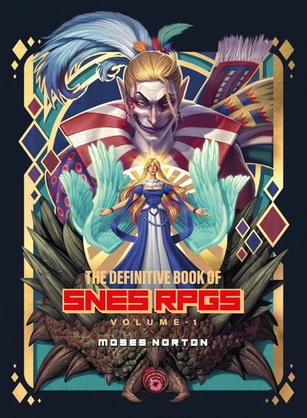


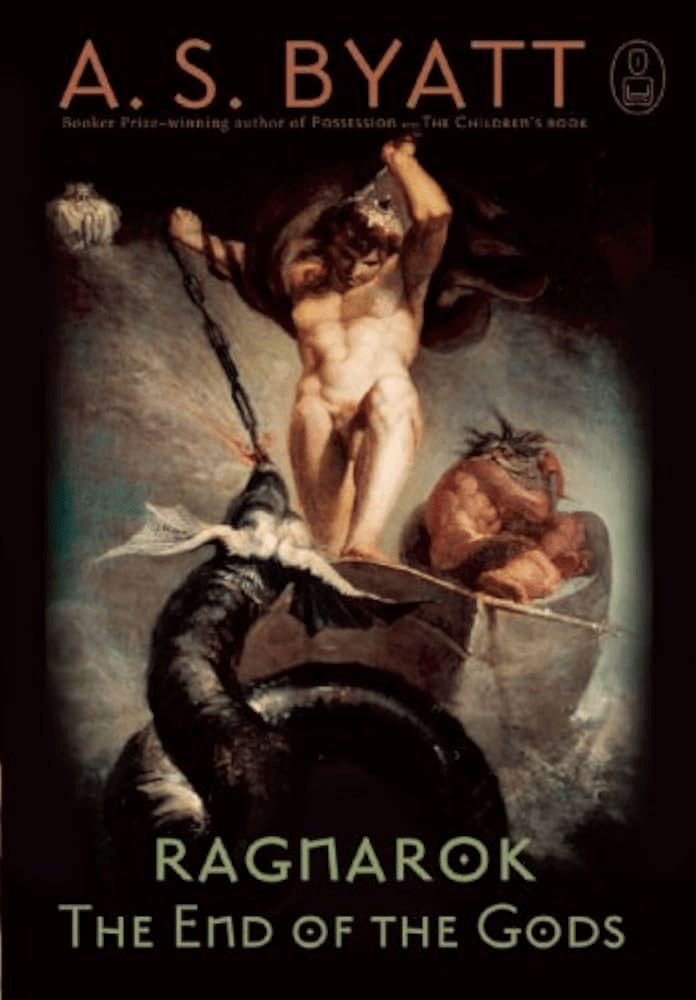


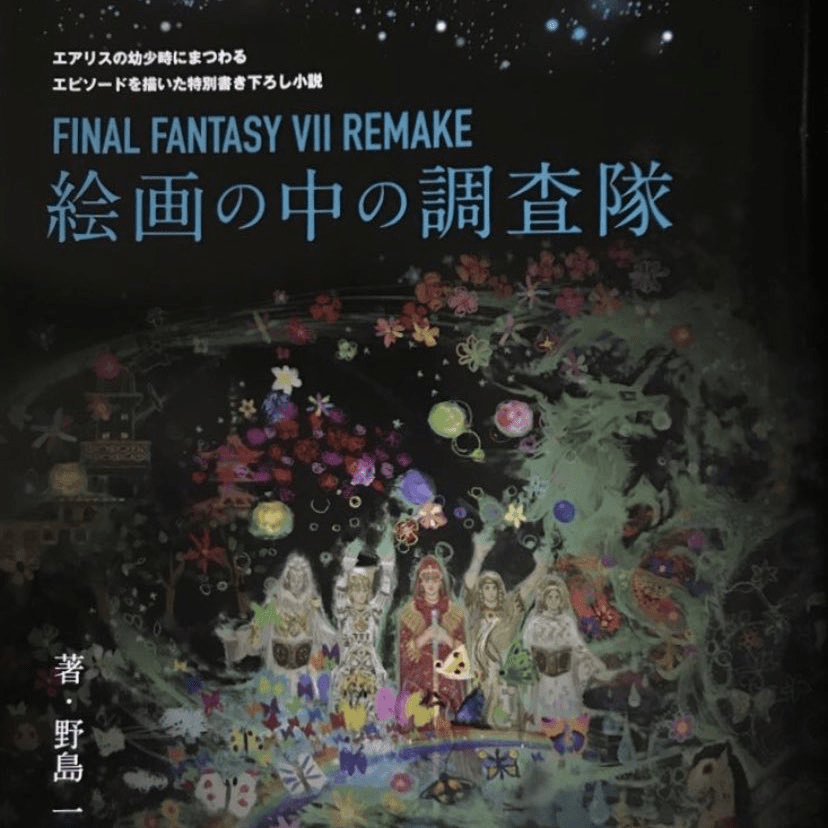


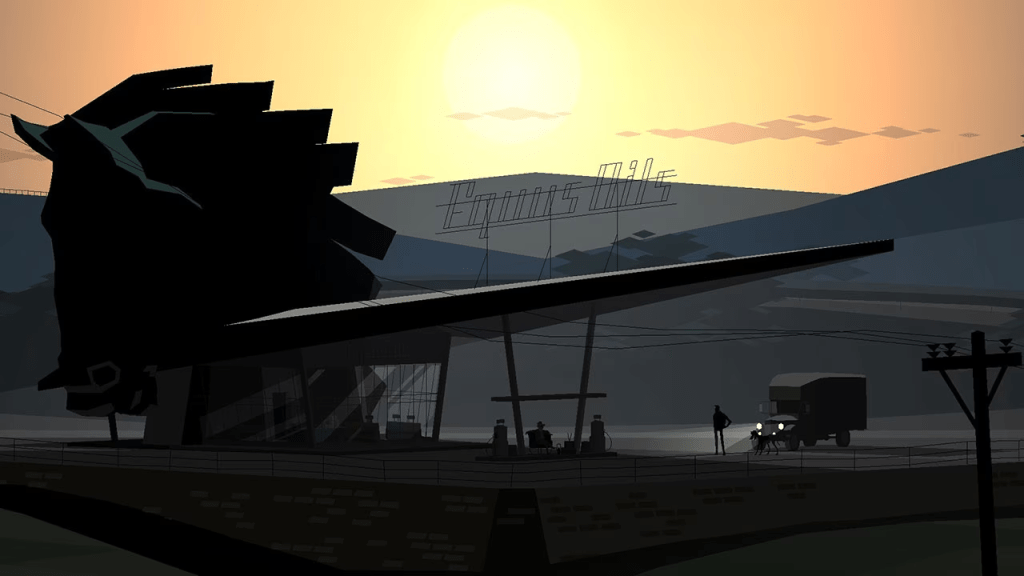


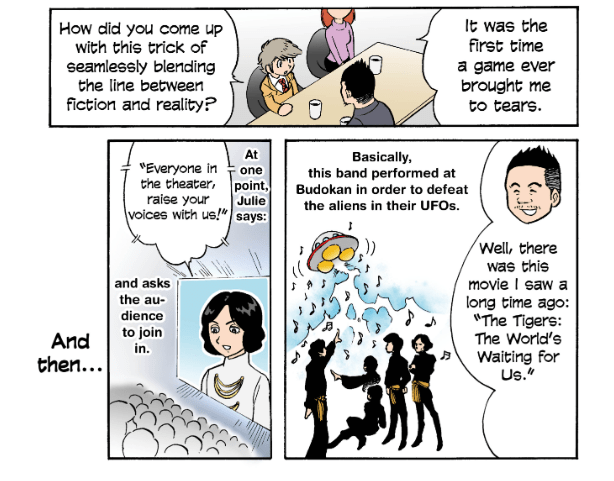
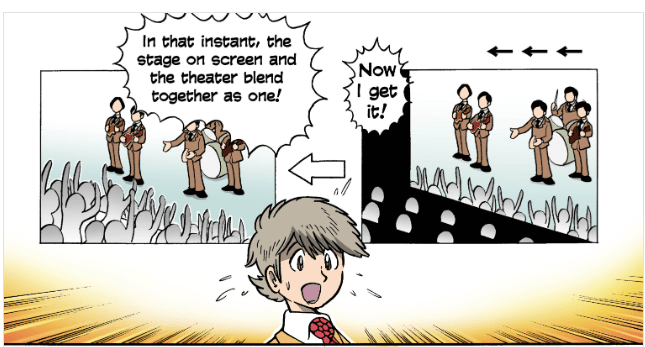






 Video Game Academy