Breathing Fire

Red, white, and blue. No green in the United States’ flag, unlike Brazil’s. Nothing green about our leaves, either. Those that haven’t turned to ash and smoke are changing color and falling on their own.

The fire next time has sparked every year by this time, somewhere in California or the Amazon, and it burns unabated somewhere down the front page. I take it to be a kind of hunger, a parched thirst, an insanity, really–or bewitchment–that we go on reading the news at all. But we read it compulsively, first thing in the morning and in the middle of the night, be it on an actual news outlet or the ever-expanding hell of social media, and like Tantalus, we can only gnash our teeth.

In that time we could, if we chose, write our myriads of books, or read the myriad more books we’ve been wanting to read or re-read, or play a little video games. The uses of free time, even for such small choices as what to read or whether to write, are an enchanted wood, in which besides the many paths not taken, there are the will o’ the wisps luring us off to impossible feasts and dances, to deep darknesses thronged with monstrous spiders. The wood is crossed by forgetful streams, but it’s also flown over by emperor butterflies, if The Hobbit is any guide:

In the end he poked his head above the roof of the leaves, and then he found spiders all right. But they were only small ones of ordinary size, and they were after the butterflies. Bilbo’s eyes were nearly blinded by the light. He could hear the dwarves shouting up at him from far below, but he could not answer, only hold on and blink. The sun was shining brilliantly, and it was a long while before he could bear it. When he could, he saw all round him a sea of dark green, ruffled here and there by the breeze; and there were everywhere hundreds of butterflies. I expect they were a kind of ‘purple emperor,’ a butterfly that loves the tops of oak-woods, but these were not purple at all, they were a dark dark velvety black without any markings to be seen.

He looked at the ‘black emperors’ for a long time, and enjoyed the feel of the breeze in his hair and on his face; but at length the cries of the dwarves, who were now simply stamping with impatience down below, reminded him of his real business.

– in The Hobbit, or There and Back Again, by JRR Tolkien

Somewhere in the wood live the elves, and somewhere else, off-stage, lurks the Necromancer…but that’s a story for another time.

Like The Hobbit, most video games sooner or later face us with a dragon. It might not be the ultimate evil within the world of the game, but for symbolic power a dragon is hard to beat. Tolkien, again, makes the point once and for all:

A dragon is no idle fancy. Whatever may be his origins, in fact or invention, the dragon in legend is a potent creation of men’s imagination, richer in significance than his barrow is in gold.

– from Beowulf: The Monsters and the Critics

Along with a handful of other images–trees, fire, water, the underworld–dragons have to be about the most concise way of imagining all of what is at stake in our favorite stories. They incorporate each of the others, with their green scales, fire breath, flowing movement, flight and depth–and they guard the treasure.

Starmen.Net EarthBound Walkthrough: Magicant (2)
The dragon sings you the sixth melody in MOTHER
In EarthBound, in exchange for a book, we get the power to breathe fire…
…with an item that temporarily turns us into dragons

So when the real world gets to be too much and we’d really rather read fantasy books or play video games than watch another debate between the Red Dragon and the Blue, I don’t think it’s just escapism. If there is a solution to the real problems we face, I think it is there, implicit, in The Hobbit and EarthBound and Final Fantasy and the rest. In playing and reading, we are getting closer to it: saving the world.

Video Game Studies in Brazil

The idea of learning from video games could take us to some unexpected places. It’s not too much of a stretch for me to say (with Toby Fox, so I feel like I’m in pretty good company) that playing old RPGs taught me to read. Even a fighting game like Street Fighter II, besides the hand-eye coordination it builds up and the discipline it instills, has an element of geography to it.

STREET FIGHTER 2 || RULES

And spending enough time reading online, in turn, leads back to video games. For whatever reason, lately academia.edu has been recommending papers to me via email, like this one on teaching Final Fantasy X. (Be careful about clicking any of these links if you have an account on academia, because their overeager algorithm will probably start sending you a bunch of emails, too.) I don’t mind so much, but it’s a little stressful to realize just how much is out there. And I worry that the more I read, the more rabbit holes I’ll fall down.

Oddly enough, the majority of the papers on video game studies turning up in my inbox have been from outside the US, hailing above all from Brazil. My reading knowledge of Portuguese is very limited, but the convention of including an abstract in English provides a glimpse of the content at least. And there’s always google translate.

If nothing else, skimming through them and browsing their references turns up other material undergirding the arguments, suggesting authorities in the field and unexpected connections.

There’s a “Conversation on Archaeogaming”, whatever that is. I’m sure I’ll contact a few of the authors to see if they’re willing to set up some further conversations about these papers and their current research. A piece on “Video Game Music on the Internet: Nostalgia and Esthetics on YouTube” sounds right up my alley, as does another on literature and video games.

Reading just the epigraph to that one sent me to find the lyrics to this variation on Terra’s Theme, and then to the Pray vocal compilation. Uematsu’s message there is reminiscent of Itoi’s beautiful “What EarthBound Means to Me,” and both of these seem to recall the function of prayer in EarthBound, so crucial to the message of that game as a whole.

Which brings us back to Undertale… so more on that next week.

One last essay in this connection, “The music is the only thing you don’t have to mod” takes its title from the ROM-hacking and modding community. Music and modding, of course, are key for the development of Undertale, and both are high on my personal list of things I wish I knew more about.

I can’t think of a better way to keep on learning than by playing the Zelda theme on the piano and reading everything about game design that comes my way.

A Pandemic Playlist

It can be a scary time, but there’s plenty of reading to catch up on these days. Consider spending some time with the likes of Boccaccio, Defoe, Poe, or Camus wherever it is you’re hunkered down. The classics make good company if you’re lonely, and the virality in their pages is not the kind that gets you sick–though no doubt the pandemic is helping to spread word of them at present.

The dagger dropped gleaming upon the sable carpet - Harry Clarke (BL 12703.i.43).tif
Harry Clarke’s illustration for Poe’s immortal Masque.

For those who’d prefer a more interactive visitation during the quarantine, we at the humble pages of Video Game Academia have a few suggestions.

  • Of the many other games with a thematic relevance, from Parasite Eve, with its chilling opening sequence, to Plague Inc., recently banned in China, perhaps one of the best to turn to now would be That Dragon, Cancer.
Image result for jabberwocky
That other dragon, The Jabberwock, illustrated by John Tenniel

As always, you can check out our other courses and resources and head down the rabbit holes awaiting you there. Drop us a line if you find something you like, and “Beware the Jabberwock, my son!”

On the Ground

Imagine my delight, hearing over the morning announcements–on the intercom, no less, anachronism that it is in this age of video!–that the student-run Video Games and Literature Club would be meeting at lunch to discuss The Legend of Zelda: Majora’s Mask.

With some self-consciousness, I’d asked the teacher whose room the club uses for their meetings, would it be OK for me to sit in? He said why not, it should be fine; but just to make sure I talked to the kid who ran the club, who even looks kind of like me, gawky and smiling, and he all but pulled up a chair for me. He’d had an article about The Witness published on a website whose name was something too long for me to recall, and he was riding high. Still, I felt somehow uncomfortable being the oldest person there, and a teacher, albeit just a sub, so I let the kids discuss amongst themselves without speaking up again.

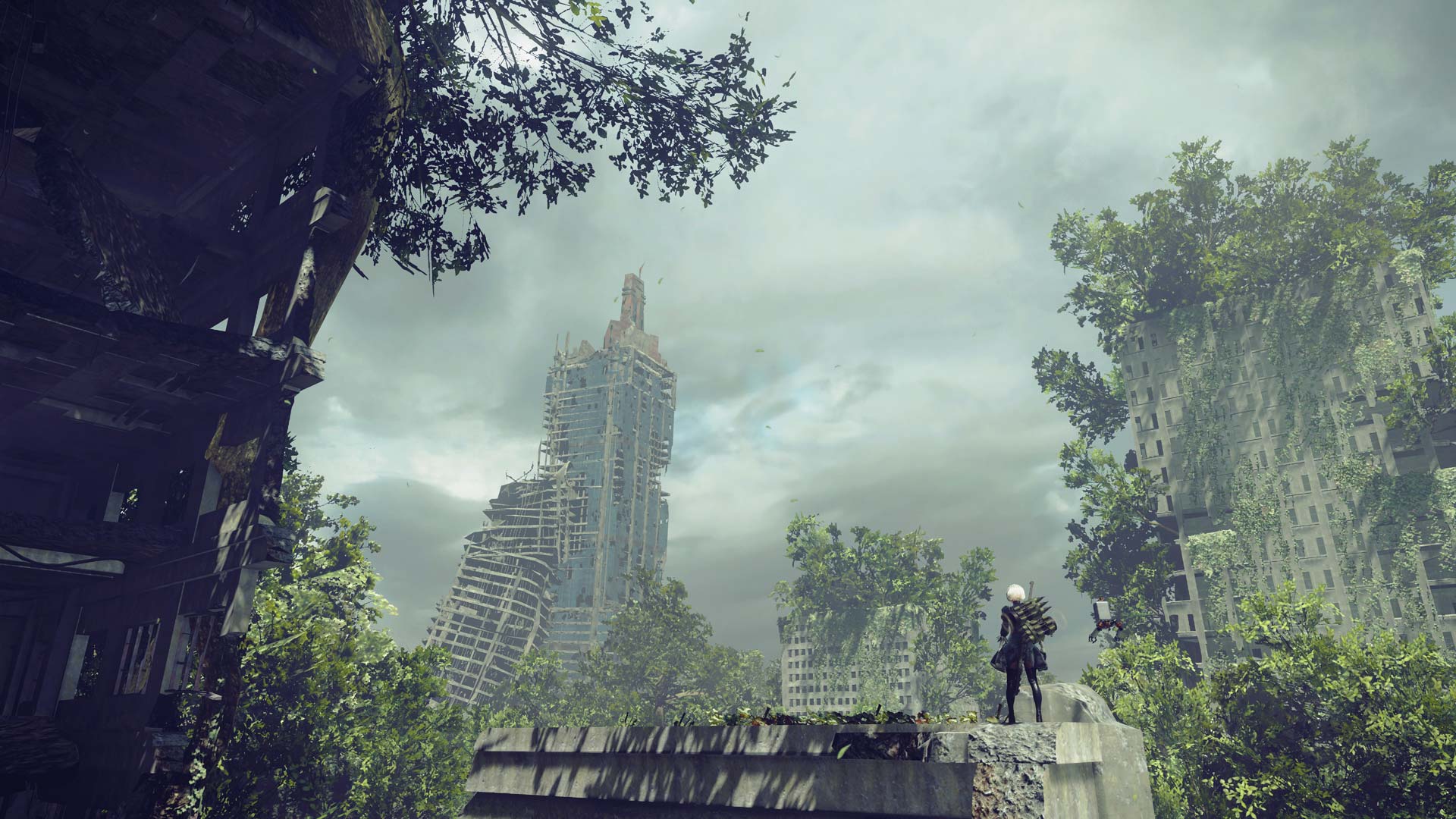
On other days they’d met to talk about the connections established between players of NieR: Automata and, in a different way, of Death Stranding. For their Majora’s Mask discussion, the focus was on the Song of Healing and its effects, both within the game and upon the player. A brilliant discussion it was! The organizer framed the question: How does the song help convey the theme of the game? And briefly summed up the relevant story, playing videos of the song and its various transformations and eliciting ideas from the other members of the group. All in all, it restored my faith in the youth. And it made me wish, more than ever, that this could be the way that games were taught, right alongside the great books cramming the shelves and the art decorating the walls.

With that, let’s invite any readers out there to share your own local clubs and organizations discussing video games in an academic setting. If there’s a course on games in their literary, cultural, or historical context you know of, please bring it to our attention. Whether you’re an organizer or participant, a teacher or student, we’d like to put you all in touch with one another and pool resources. We might even want to interview you about your experience!

This concludes the announcements. Have a great weekend!