– Buber (quoted in Francis Su, Mathematics for Human Flourishing)
What if we were to read the philosophical tradition again from the top, noticing everywhere the ideas of ‘play’ and ‘games’ come up, and to try to give some account of how they are all related? In an invitation/invocation something like Augustine’s take and read, these words must have been heard, or their sentiment anyhow felt as it were irresistibly, by readers long before us. Read and play. For instance, sometime in the latter half of the 20C Mihai Spariosu must have heard and felt them, because that is what he did.
Brilliantly, with verve and erudition, over a series of books none of which is terribly long or intimidating, Spariosu delivers his speeches to the perennial symposium, that moveable feast for the unmoved mover. At a rockin’ party, let’s suppose, with his pal Giuseppe Mazzotta by his side; or on a night out at the theater*, confabulating during the intermission of a play; or even just within the imagination only, now playing dress-up like Machiavelli in his ancient robes, now cutting a rug like Nietzsche’s dangerous leapers and dancers, he concocted this unending party game to play wherever and for as long as the Burkean conversation might be carried on, as long as there’s any Faulknerian puny inexhaustible voice to be heard still talking. Let’s listen in.
Reading Spariosu was one of my projects last summer, but I guess the last time I tried sitting down to write this must have been around Christmas
In Literature, Mimesis, and Play: Essays in Literary Theory (1982), Spariosu adapts sections of his doctoral dissertation into a monograph, which he goes on to unfold across subsequent book-length studies. Based on the four essays included here on Don Quixote, Tristram Shandy, The Eternal Husband by Dostoevsky, and the work of Malcolm Lowry, the original thesis seems to have been about the development of the novel out of epic and romance genres. I haven’t been able to find a copy, but perhaps it was something akin to the work of Bakhtin which was just catching on around the same time. Other major points of comparison would be Frye, Auerbach, and Bloom, though Spariosu is much more concerned with the deconstructionists, as we will see.
Each of these four essays is worth a look in its own right, but especially in the light of my project here at the Video Game Academy, discussing video games with my dear interlocutors and penning meandering essays about how they fit into the larger culture, I appreciate how these later chapters focus as much on the writing’s playful form and themes as they analyze content touching on games and play-concepts in the stories. I’ll likely draw on them when I come to re-read and write about Cervantes, Sterne, and Dostoevsky. But Spariosu’s thesis about play, to which he will recur in order to elaborate it in Dionysus Reborn (1989), God of Many Names (1991), and Wreath of Wild Olive (1997), is where I’d like to focus for now. He encapsulates it in the first two essays, giving “a brief outline of a history of the concepts of mimesis and play in our culture, with special reference to Greek antiquity and to the modern period,” setting his revised and to-be-revised thesis forth as a “myth” and then as a “program,” each of which I’d like to reproduce at some length.
To begin with, here is the formulation in overview: “The basic premises underlying this history,” Spariosu states in the foreword, “are 1) that, at least since Plato and Aristotle, mimesis and play have gone hand in hand, and 2) that both theses concepts can be traced back to, and have served as instruments for, a domination- or power-principle which lies at the foundation of Western civilization.”
Accordingly, the opening essay, “Literature and Play: History, Principles, Method,” runs to 30 pages, plus another 10 of footnotes which combine “critical apparatus” and “parallel, self-reflective, commentary.” Significant parts of it are rewritten into his later books, which are not only more accessible but also more complete. Still, for the unified sweep of the dialectical movement of literature from earnest to playful and back again across ancient and modern philosophical and scientific discourse, this first chapter (together with its notes) is endlessly generative.
For a sampling of these notes, the very first touches down on the problem of definitions, citing Huizinga and Caillois, but also Hutt’s “Exploration and Play in Children,” Bateson’s “A Theory of Play and Fantasy,” Wittgenstein’s “family resemblance” concept, and Susanna Miller’s Psychology of Play. In the course of the chapter Spariosu deals with Homer and Plato, Kant and Schiller, existentialists and behaviorists, Freud’s “Writers and Daydreaming” and Piaget’s Play, Dreams, and Imitation in Childhood, game-theorists and paradigm-shifters in math and science, Miller’s Gods and Games: Towards a Theology of Play and Muller’s Science and Criticism, and other lesser-known (to me at least) figures like Fink, “Eigen and Winkler’s glass-pearl game”, Ehrmann, and Vaihinger of the all-important “as if”. The final notes comprise a precis on “deconstructionism” and a “Platonic myth with strong Nietzschean overtones.” To sample them in turn:
[…] see Geoffrey Hartmann’s Preface to Harold Bloom, Paul de Man, et al. […] For writing as play/game, see, for instance, Jacques Derrida’s “La pharmacie de Platon”[…] Derrida’s whole deconstructive project may be described as following Nietzsche’s “aestheticism” and “nihilism” to their last consequences. Likewise, writing about Gilles Deleuze’s work, Michel Foucault calls it a “reversed Platonism” and concludes: “This is philosophy not as thought but as *theater: a theater of mime with multiple, fugitive, and instantaneous scenes in which blind gestures signal to each other. This is the theater where the explosive laughter of the Sophists tear through the mask of Socrates; where Spinoza’s methods conduct a wild dance in a decentered circle while substance revolves about it like a mad planet; where a limping Fichte announces “the fractured I ≠ the dissolved self”; where Leibniz having reached the top of the pyramid can see through the darkness that celestial music is in fact a Pierrot lunaire […]”
Once there was a superior race of mortals called fictions, who lived in peace and harmony. They enjoyed equality amongst themselves inasmuch as they were called not only by one name but also by its opposite […] “true and false, just and unjust, good and bad, strong and weak, wise and ignorant, real and unreal”[…] But Zeus envied their happiness […] so one day he sent Strife among them […] Most often the vanquished would end up with the now derisive nickname of fictions while the victors would proudly assume the name of truths. As war raged on they frequently exchanged places […] Now it came to pass that certain fictions shrewdly bethought themselves of claiming neutrality so that they could gain access to both camps […]To this end they shamelessly proclaimed what nobody else dared to proclaim, namely that they were only fictions […] Yet apart from all this tomfoolery and mischief, these fiction (who dared call themselves “fictions”) would never forget their duty of keeping their Lord, Strife, happy. Whenever a lull in the fighting occurred, they would boldly step onto the battle-field and declare themselves to be the only truths around […] And Strife has never ceased ruling over this fallen and divided race unto this very day.
Implicit there is Spariosu’s ultimate aim, also touched upon late in the first chapter and at the end of the foreword: “One can completely renounce mimesis only if one turns away from the currently dominant concept of language as representation or sign. In turn this is possible only if one renounces the domination-principle. Instead of a differential/integrative mode of thought, one should develop an an-archical, non-violent thought, which would no longer be based on appropriation and exclusion and would go not only beyond all dialectical and hierarchical systems, but also beyond all functionalism. This is certainly a task that goes beyond the present book, or, perhaps, any book. The alternative for the moment is to patiently proceed with our critique of prevailing Western values down to their last implications. And in order for this critique to be effective, we need to situate ourselves, at least temporarily and in a critical utopian manner, at the opposite end of neither philosophy-truth nor literature-fiction, but of the power-principle which controls this, or any other, dialectic.” His footnotes suggest he is considering “a revaluation of anarchy” and “nihilism, as well as the Stoic and Epicurean apatheia and ataraxia, but stripped of their political or religious context (religion itself, as Rene Girard has shown so convincingly, is based on mimesis and violence)”.
If this all sounds terribly grandiose and delusional, Spariosu’s conclusion to the first chapter recasts his aims more modestly: “The present essay should be seen as a preliminary step toward an extensive critique of two important concepts in Western culture, mimesis and play, which ultimately ought to reveal the intricate and ambiguous relationship of literature and art in general to other power-configurations in our civilization.” (Subtly detectable and endearing, too, is his non-native use of the English language, there in occasional singular/plural slippages between subject and verb and idiosyncratic use of hyphens, though perhaps they are a relic of the academic English of his time, or serve to emphasize the separable roots of words).
The second essay, “Six Authors in Search of a Shadow,” brings this historical discourse into the postmodern era. With a delightful balance of intellectual swagger and generosity towards his illustrious predecessors and contemporary rival/allies, Spariosu lays out an audacious project picking up where his own historical sketch left off, and pointing back towards it as worthy of further development.
In a review by Black (1983), the book was received as a “welcome alternative” to the prevailing academic current: “what seems most distinctive and promising about Spariosu’s project is his determination to present a theory of literature not in terms of but in opposition to what he reveals to be a controlling philosophical-scientific discourse.” Spariosu’s critique of Derrida and his collaborators on the Mimesis/ des articulations anthology certainly positions him in a pugilistic mode, where he thrives. How different his view of power and what to do about it really is from the French theorists’, however, remains beyond my grasp, as I have not successfully read much of them. Spariosu takes pains to separate himself from their readings of Wittgenstein, Kant, Girard, Heidegger, Plato, Brecht, Freud, Aristotle, and Benjamin, to name a few. Towards the end of the piece, he sums up his attempt to “divorce dialectics from its ontological and epistemological grounding and link it to a functional theory of fictions,” and he lays out an “oversimplified ‘program'” in six points:
Fictions (from the Latin fingere: to build, construct, shape, but also to construct, counterfeit, lie) are human constructs which constitute themselves in a historically determined world. In turn, language is constitutive of being and it may produce, rather than be produced by, mimesis. (In the deconstructionists and in Girard mimesis both installs and disintalls language and being).
All fictions have an equal onto-epistemological status, but their ‘natural’ state is strife (Heraclitus’ eris) and therefore they will become differentiated according to various principles of (dis)appropriation, hierarchization, subordination, etc.; in other words they will organize themselves into power-configurations.
The body of fictions which at any given time become dominant will avail themselves of the authority of knowledge and truth which are onto-epistemological instruments for domination (their “standard story” says just the opposite: they have prevailed because of their high cognitive and truth value). In turn, their temporarily defeated challengers are discredited, dismissed, or suppressed as “lies” or “falsehoods”.
The fictions that take part in this power-struggle and become (dis)credited as knowledge and truth may be called practical fictions (from the Greek praxis: action). Examples of practical fictions include philosophical, scientific, political, economic, legal, ethical, religious constructs. The body of fictions that at any time enjoy neutrality or do not contend for the status of truth or knowledge may be called aesthetic fictions or art.
The distinction between practical and aesthetic fictions is purely functional and fictions will change their status according to what Vaihinger calls the “law of ideational shifts” (Gesetz der Ideenverschiebung). This law effectively cancels out Vaihinger’s own “critical positivism” […] paving the way for an “anarchistic” epistemology in the sciences…
The functional character of our theory of fictions implies historical, rather than universal claims: the distinction between practical and aesthetic fictions can be operative only in a civilization based on the domination-principle. It presupposes a differential concept of language as representation or sign, and turning away from the domination-principle would also mean turning away from this concept (as well as any kind of functionalism, including the present theory).
We are now ready to postulate a dialectic of aesthetic and practical fictions based on our functional principles. By displaying their fictional nature, aesthetic or literary fictions allow practical fictions (history, philosophy, science, religion, etc.) to be invested with the authority of knowledge or truth… Therefore a literary text can be defined as a historical function-convention which may be replaced, together with its practical correlatives, at a given historical moment. Finally, this history would have to account for the ways in which art itself attempts to fill the power-vacuum during the so called periods of “axiological relativism”[…] In this context, the “self-conscious” moments in literary history are far from being an “escape” from reality; on the contrary, they are last-ditch attempts to reinforce a given reality or truth.
In conclusion, a functional history of cultural fictions would have to recognize mimesis as only one link in the vast, open-ended network of fictions […]which Western man incessantly interposes between himself and the abyss. And this history could have as allies, rather than models, rivals, or fathers/authorities, the pre-Socratics, Vico, Marx, Nietzsche, […] the “anarchic epistemologists” [ie. Kuhn and Feyerabend], and, last but not least, the major contributors to Mimesis/ des articulations.
With that gracious gauntlet or bone thrown to his compeers, Spariosu goes on to his chapters on individual books and authors. We’re left fairly speechless, not so much at his audacity as his erudition, his fluently moving between the classical, modern, and postmodern; the literary, philosophical, and scientific; and from sweeping surveys to the careful attention on a single work.
There are so many questions I would want to ask, about practically every one of Spariosu’s dense assertions and arguments. From what I’ve quoted here, I hope to have given enough of a voice to this all but unread book, containing his unwritten or unwriteable book about a wholly different world, for the beginning of a conversation, at least. I have to see how persuasive I find Girard’s claims about religion, for instance, and I wonder what role Spariosu would say nonviolent political struggle has had on the culture. For the moment, I believe with Bakhtin (so far as I understand him) that such a world is there already at our reach with the likes of Dostoevsky’s Brothers Karamazov. By extension, per my own interminable project here, in games like EarthBound and in the “having of wonderful ideas” that arises from our encounters with them.
I’d like to pursue the philosophers and philosophy-adjacent thinkers who refer to games, including those Spariosu mentions as well as others he does not, in future continuations of this playful symposium. I’ll have to revisit Socrates and Alcibiades along with their guests at Plato’s, or is it Agathon’s, Symposium–especially Aristophanes, who tells a myth very like that one of Spariosu’s, and who stays up late into the night discussing comedy and tragedy with the Silenus-like daemoniac. Then I’ll have to compare it to that of Xenophon, which I’ve never read but whose Apology and Hiero I know by Straussian hearsay, and to Kierkegaard’s fan fiction.
There’s that other rare book, Maritain on Creative Intuition, which produces a totally different basis for thinking about works of art and poetry, founded on a to-Spariosu-following-Girard presumably retrograde religious metaphysics; or the educational theorist Illich on Hugh and light in his Vineyard of the Text (shades of both Postman and Ranciere); or Gadamer, who I’m pretty sure Spariosu does get around to in later books, with his system of language and the game as replacement for understanding faith; another view of the same in the dismissal of Kierkegaard in Gray’s dissertation on the project for Christian Platonism; coming back to the as-if mode at play in Pullman, and his reliance, at one remove via Karen Armstrong, on the work of Sloek.
There’s always Buber himself, and what the I-Thou relationship means for play; Pascal’s Wager and the uses to which it’s been put; Mauriac’s What I Believe; and Bergson, who I’ve never read, but who is there at the vital root of a contemporary work like Odell’s Saving Time.
So there’s more work to do. And Spariosu is hardly the last to take up and read philosophy in the light of play. Among those who cite him directly, Henricks sums up more recent contributions, Shields responds, and the Game Studies Study Buddies offer their shortlist. Plus here we are, after all. Trying our best to tread enough of the same ground, to show our work, so to speak, while also doing so in a spirit of play and reverence.
Watkinsa revels in such a playful look at research, though according to google he’s been cited by just one (present company excluded). Bogost, who is widely known for his games-related work on rhetoric, has an interesting overarching poetics, too, which deserves to be excavated.
The reader does not “receive” the message of the poem, but excavates its images and uses those to craft relevance.
Excavation.
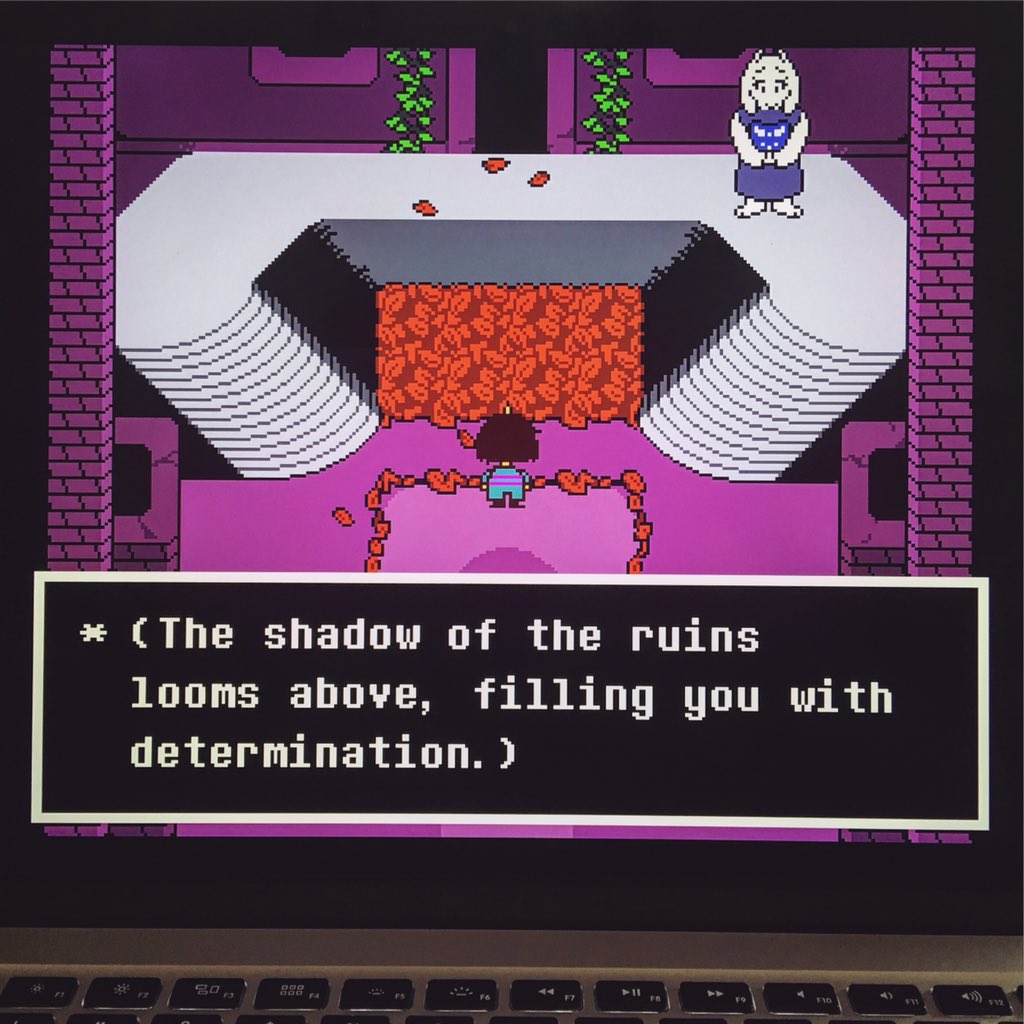
The relationship of player to game is like that of the archaeologist to the ruin. A game is a remnant of something fashioned and disposed by its creator.
When we play, we excavate.
Especially now that we’ve all become inundated with algorithmically generated content and spun up about the possibilities of AI, his gnomic statements and machined poetry may well merit as much renewed attention as his professorial pronouncements–or more conversational ones.
We find rusted yokes, shards of vessels, inscriptions of rites. We find systems that symbolize. We find evidence of utterly lost civilizations that we can never fully understand. They exist to summon wonder instead of clarity. (Bogost)
From the tiny safety pins, broken pieces of colored glass to the withering leaves. When I ask them, “how do you remember so much?” With their eyes gleaming, they say, “I love that world so much I remember everything about it.” I reply right away saying “me too.” (Itoi)


 Video Game Academy
3 thoughts on “In the Footsteps of Spariosu: Play in Philosophy”