On recent podcast conversations and sundry correspondence(s).
My mother-in-law pointed out the other night, quite astutely, that if I did a little more with marketing and Substack and YouTube, I should be able to get donations, maybe through Squarespace, subscriptions, or even sponsorships. She suggested I should work on getting a bed in this way. I must have looked tired, I guess.
But I’ve been staying up late reading Philip Pullman again, as I say, and making notes and podcasts, and corresponding with other readers for the benefit of their perspectives on it all. It’s an incredible privilege to connect with people all around the world through this project. The generosity of strangers never ceases to astonish me, and my gratitude for them sharing their time and ideas in this way–and, grudgingly, for the technology that facilitates our conversations, even as it eats away at the baseline of public discourse–only grows.
If someday I do turn some portion of all these recordings and researches into a salable publication, I’ll also be able to properly remunerate all my guests for their time with honoraria and grants, as I’ve dreamt of doing for a long time. For now, on all our parts, it’s unpaid labor, or in politer parlance, a labor of love.
To judge from the numbers, the internet wants to convince me that this love’s labor’s lost; but my strong hunch is that quality matters more than quantity, or at least, for my purposes of long-form commentary and analysis it does. If I can imagine that each one of those handful of listeners is someone like me–which I have to believe, or forfeit all the humility I pretend to own, as bedrock as anything about me and more important by far than fame or recognition of intellectual bona fides–then the data show that we’re doing just fine. I think I’m up to 50 subscribers!
On a recent episode of the podcast, David Nixon joined me to share his thoughts on The Book of Dust, and in the weeks since he’s followed up with a further recommendation: Paul Kingsnorth’s Against the Machine. When I hear about exciting leads like these in the orbit of my eccentric foci, Pullman’s books and those other great portrayals of religious thought in popular culture, golden age JRPGs such as EarthBound and Xenogears, I tend to perk up my ears. I found Philip Goff’s argument in Galileo’s Error persuasive as far as it goes, though I still have to read his more recent foray into Why? The Purpose of the Universe, no less. Iain McGilchrist, as far as I’m concerned, is a savant on the order of NT Wright, and their new books, The Matter with Things and The Vision of Ephesians: The Task of the Church and the Glory of God, respectively, similarly outrun my grasp as yet. And naturally, the Kingsnorth book is on hold at the library. I still haven’t finished my review of Kristin Poole’s Philip Pullman and the Historical Imagination, though that’s one I did manage to read and re-read, finding it excellent.
So for now I listen to their podcasts and videos. Once again, the internet comes to my rescue with its ambiguous riches. Search them up and see for yourself! (Or unexpectedly encounter them via another route entirely, like the Ephesians class in The Bible Project’s app…)
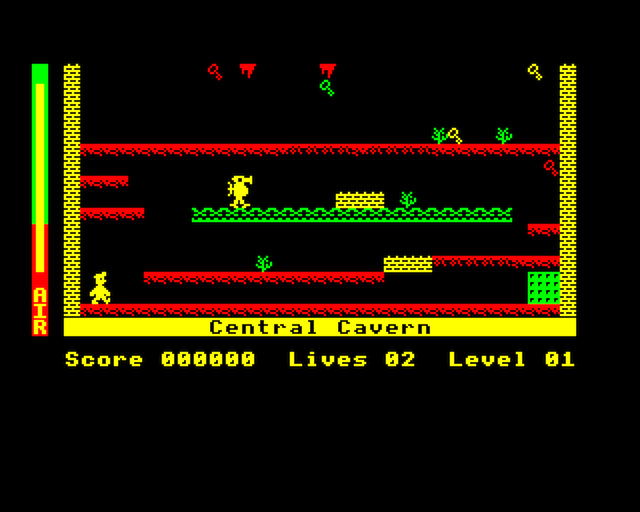
On the video game side of things, my eyes are bigger than my memory card and my appetite likewise exceeds all reasonable bounds, so more and more I’ve been following along with let’s plays rather than playing new games myself. The spirit is willing, the flesh is weak–and paternity leave is fleeting!
Prof Noctis has been my resource for the new Final Fantasy VII: Remake Intergrade release on Switch 2. While he takes advantage of “God mode” affordances included in the game to speed things up, he’s also made time thereby to share the work of other creators, commenting on video essays and discussing “homework assignments” in the form of essays written by the audience, among them a couple by yours truly. Supposedly these will be published eventually in some form as well. Most importantly, though, he’s simultaneously playing through the intriguing mod of the original FFVII dubbed the Shinra Archaeology cut, a translation and adaptation with additional content based on that project’s painstaking study of the original release. It is fantastic.
Maybe because I’ve been watching videos where people say “God mode,” and Alex has been uploading videos where he and I discuss the tropes of JRPGs, among the best-known of which is that “you kill God,” the almighty algorithm, with all the astuteness of a mother-in-law, deemed the following video likely to be of interest. While it takes a while to get going, once it does, it does not disappoint.
Note the subtitles:
Do you hear the voice of life…
Do you hear the voice of the earth…
We were once human…
Then just remember: you’re not a god. – Hitsujibungaku
Which pretty much sums up the many, many hours of discussions we’ve been having of those golden age FF games on the PlayStation.
Meanwhile, my other streaming mainstay, Moses Norton, The Well-Red Mage, has nearly completed his years-long project of playing every RPG released on the SNES in English localization, on original hardware. Having written one volume of a book about the experience and currently working on the second, he took some time to talk with me about it. I loved the book, difficult as the circumstances of its release proved, and I can’t wait to see the full version when it is ready.
Of all my serial interlocutors, there are few more devoted to their craft and more deserving of wider recognition than Moses; then to see that recognition come all too suddenly in the form of undeserved notoriety, followed by a slow and deliberate recovery of confidence and reputation, with steadily accumulating acknowledgment of the extent of the harms on all sides and the possibility of forgiveness at least broached if not realized–I’m fairly in awe of his willingness to stick with these old games, playing them on air for all us sinners, when the internet is just as complex as the people who attempt to use it, and our interactions there are liable to be just as fraught, with all the potential for misuse we are heir to, only magnified by its reach.
And I’m very excited to hear that he’s considering playing next that much lengthier list (however you slice it) of RPGs that were never released officially outside Japan, but for which the resources now exist to allow many more of us to experience them on hardware that is as close to the original as possible, and with the aid of fan-translations and other study aids, whether collaborators helping out on the stream or coding agents of one sort or another facilitating a quick trot or interpretation of the text onscreen.
I’m imagining a version of Tolkien Professor Corey Olsen’s Students of the Word or my friend Brian’s Quran study program for video games like MOTHER 2, which I’ve always wanted to play in the Japanese original, as well as all those games I don’t even know about beyond perhaps the names. Because we are only human, let’s hope our electronic critters will be faithful to the good intentions of those of us attempting to use them for such harmless, educational purposes, but wiser than we always are about going wherever they lead.



 Video Game Academy