For my paper presentation at Manchester Game Centre’s Multiplatform 2025 on the theme of “Rituals of Play,” focusing on the role of Vincent and Chaos in FFVII, I knew I would need to draw on the work of MJ Gallagher. Besides proving itself to be a solid, informative resource, though, his Norse Myths That Inspired Final Fantasy VII is a delight to read. I’m glad I finally took the time to sit down with it, instead of just mining excerpts available online for quotes about Nibelheim and Vincent.
As an introduction to the author, out of the many podcasts and write-ups at the disposal of the curious, I recommend these from Wade Langer, aka Prof Noctis, and Moses Norton, aka Red. I’m biased, but it really seems to me that over and above any objective connections between Final Fantasy and Norse myth, what I’ve sought and been pleased to find in this book is just the sort of human connection, an interaction with kindred spirits, that talking to these two over discord has provided. I’ve had some brief communication with Gallagher, too, messaging back and forth through his facebook page, but not enough to properly introduce him myself.

I’ll note up front that his book on Norse myth has been followed by others on Greek myth in FFVII and themes of Death and Rebirth in FFXVI. It thus fits into a larger project of fanfic-writing and filling out connections between fandom and scholarship which, again, I dig. I’m in awe of Gallagher’s dedication and work rate, and appreciative of the efforts he has made to promote the study of mythology in relation to video games, generally, and to the FF series in particular. I’m supremely aware that he’s had a much bigger impact in this regard with his short self-published books than anything I’ve said so far in posts and podcasts of much longer-windedness and more presumptuous erudition.
Written with clarity and verve for the popular reader, expecting nothing from us but a familiarity with the base game, his work distills down an immense amount of material, citing his sources for the myths and games alike. It also carries a sweet foreword from John E. Bentley, “the voice of Barret Wallace.” It is encouraging and frankly goading for me to see the success Gallagher has had drawing on a single straightforward framework of comparison between FFVII and its allusions to Norse myth, out of all the possible mythological references one might pile up. He brings to bear a copious knowledge of the FF franchise, extending to the Ultimania guides and official novels, to make the most of his insights from this one starting point.
My only real critique for Gallagher as a writer, difficult to square with the great admiration I feel for him personally, so to speak, for this very same reason–is that he is too modest. As popular and respected a figure in the fan community as he evidently is, his work could do so much more in terms of scholarship and analysis than offer the “hope that by the book’s conclusion you will have found something that will enrich your experience of the franchise. Or will at least be entertained. Please enjoy…” (xviii). Taking a leaf from a writer like Alyse Knorr, in her Mario 3, he could have made more than the passing references in the preface to his own experience playing the game shaping his “understanding of capitalism and spiritualism” (xvi), perhaps addressing his father’s incomprehension, leaning on an autoethnographical approach so as to give further narrative and explanatory shape to the welter of information that follows in the book’s fifteen chapters. What does he learn about storytelling, collaboration, or themes of markets or magic, from noticing all these comparisons? We never hear more.
By the end, “entertaining (or at least informative)” as the book is (195), it stops short of giving the reader an idea of why the connections between FFVII and Norse myth (or as I would suggest, mythic language writ large) should matter, well beyond the scope of either playing video games or reading literature. As it stands, the reader is left to supply such a larger meaning to the “passion” or “obsession” that led Gallagher to undertake his project (194). Let me try, at the risk of repeating myself and coming off even more coated in sour grapes…
Both FFVII and the mythological material to which it makes such interesting references can certainly sustain the weight of a meaning bigger than themselves. Beyond providing entertainment or knowledge for their own sake, these poetic works, replete with symbolic significance that resists any simple, one-to-one deciphering of their “meanings,” have opened up vistas onto much deeper questions and experiences than how to progress to the next level or unravel a plot point. Video games and myths, separately, have the power to raise questions of ultimate significance and guide readers to explore them; taken together, they point to a great deal besides their resonances with one another. Knorr’s Mario, again, is an exemplar here; or see AS Byatt’s Ragnarok, in which she recounts and reflects upon her reading of Asgard and the Gods in the course of retelling the myths in incredibly rich, incantatory prose. In Gallagher’s book, he has got ahold of games and myths–or they have got ahold of him–in just as deep a fashion, but by doing so little beyond demonstrating the comparison, his Norse Myths That Inspired Final Fantasy VII becomes something a little less than the sum of its parts. It inspires a reader like me with emulation, to be sure, but fails to inspire in anything like the way its constituent elements do, and as they a fortiori ought to when brought into contact with one another.
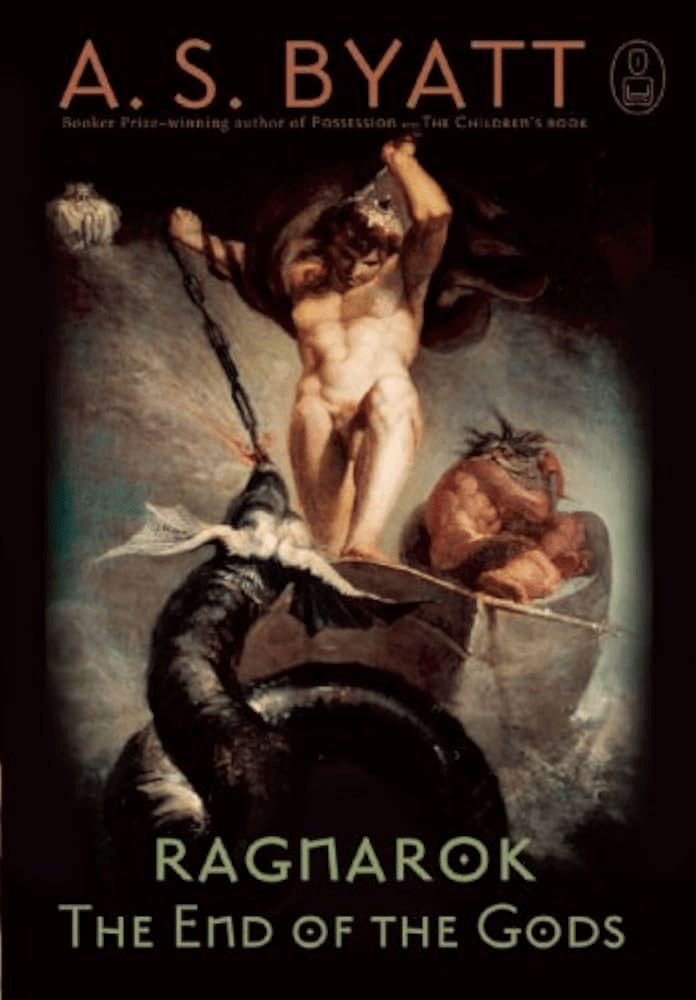
In what follows, I’ll touch on a few of the more interesting parts of the one book of Gallagher’s which I’ve actually read, about a game I’ve actually played (and its spin-offs, which I haven’t). My main critique comes very early, but it colors the whole project (see above). Maybe Gallagher is playing the long game, and in other works, written or unwritten, he has the “tricks up [his] sleeve” that will answer this critique (195). Certainly, holding against him what is not in the book is not entirely fair; the lack of Knorr-level sussing out of meaning or Byatt-level reminiscence and retelling does not greatly diminish the worth of all that Gallagher does accomplish here.
I have to say I love the inclusion of William Morris and JRR Tolkien as key figures in the transmission of myth from literature and opera to video games (15-6), but I have to quibble with the lesson Gallagher draws. His contrast between “fairy-tale creature iterations” and “more mythical descriptions…noble, immortal elves or industrious dwarf artisans, for example” is not particularly on target with respect to Tolkien’s legendarium. As a whole, it mistakes the generic successors for the original sub-creator. The invidious adjective “fairy-tale” is the giveaway here; see Tolkien’s On Fairy-stories for his meditations on the deep and abiding links between Faerie (as place more than folk), fantasy (as imaginative faculty more than genre), and myth (as language and reality).
In passing, I should flag the mention of Christianity immediately preceding this at the end of the first chapter, too, as a missed opportunity to bring in “Balder the beautiful” and CS Lewis. Byatt, to be fair, is if anything even more dismissive of the influence of Christianity on the transmission and transformation of these myths, and of its influence on their transformative force, so Gallagher is once again in good company.
The next chapter turns to FF history, where Sakaguchi’s “first RPG for Square” is identified as The Death Trap (18). Here, I feel, is a rabbit hole worth delving into sometime: that both FF and Dragon Quest‘s future producers should have begun their careers with more grim, text-based adventures like this and The Portopia Serial Murder Case. It speaks to a much larger lacuna in Gallagher’s approach (and my own), however: have we sufficiently considered the cultural context in which these mythic references are being tapped, whether in post-war Japan or the contemporary West? What are the autochthonous mythic and linguistic structures underlying more exotic, albeit evocative, references to the likes of Odin and Midgar–to say nothing of the ways they are affected by historical events, economic changes, and social movements in their creators’ and consumers’ milieux? Truly, without a great deal more help with the Japanese language, to begin with, here we intrepid myth-lovers are liable to “fall into the death-trap… Please keep on adventuring!!”

Given these sorts of quibbles, big and little, I was reassured by the care with which Gallagher distinguishes between the Bahamut of RPG lineage, represented in FF following its “draconic” likeness in Dungeons and Dragons, versus the “cosmic fish of Arabian mythology” (20-1).

Along the same lines, I was astounded to hear that well before the final battle of FFVI, already in FFII there are direct refences to “Dante’s Inferno” and Milton’s “Pandemonium” (21). Gallagher is able to drill down into the previous, lesser-known games as well as pulling out the individual creative figures behind distinct storylines within FFVII, identifying the work of Nojima and Kitase on the conflict between Avalanche and Shinra “as well as Cloud’s backstory” within the script—even down to the naming of Nibelheim and Midgar (25). This extends to the departure of Sakaguchi from the company long before work on the Compilation of FFVII was complete. Though Gallagher treats the various games and media products as a kind of unit, helpfully from a lore standpoint but problematically, I would argue, if we are interested in seeing the original game on its own terms, I would have liked more clarity on tensions already developing within the leadership of the creative team as early as FFVIII, to say nothing of how this bears on closely related games such as FF Tactics and Xenogears. Again, for all his focus and admirable conciseness, the context, the creative milieu, is wanting in Gallagher’s account.
Nojima, in particular, emerges as having a “personal interest in myth and legend” (24) and later takes center stage not only as student of myth but author of the official companion novels On the Way to a Smile and The Kids are Alright (37-8). Throw these on the “further reading” list, then, along with Ultimania Omega‘s novella The Maiden Who Travels the Planet, the anime Last Order, and Nojima’s Remake-adjacent novella, Picturing the Past. Rather than raising questions of adaptation and mediation, or simple poetics, ie. how does the form of a work affects what it is able to say, Gallagher seems most concerned with these works’ “canonicity,” which to me seems a much less rich area of inquiry. Nowhere, in fact, does the poetic form of the source material for his Norse myths really get the discussion it deserves from our genial tour guide Gallagher.
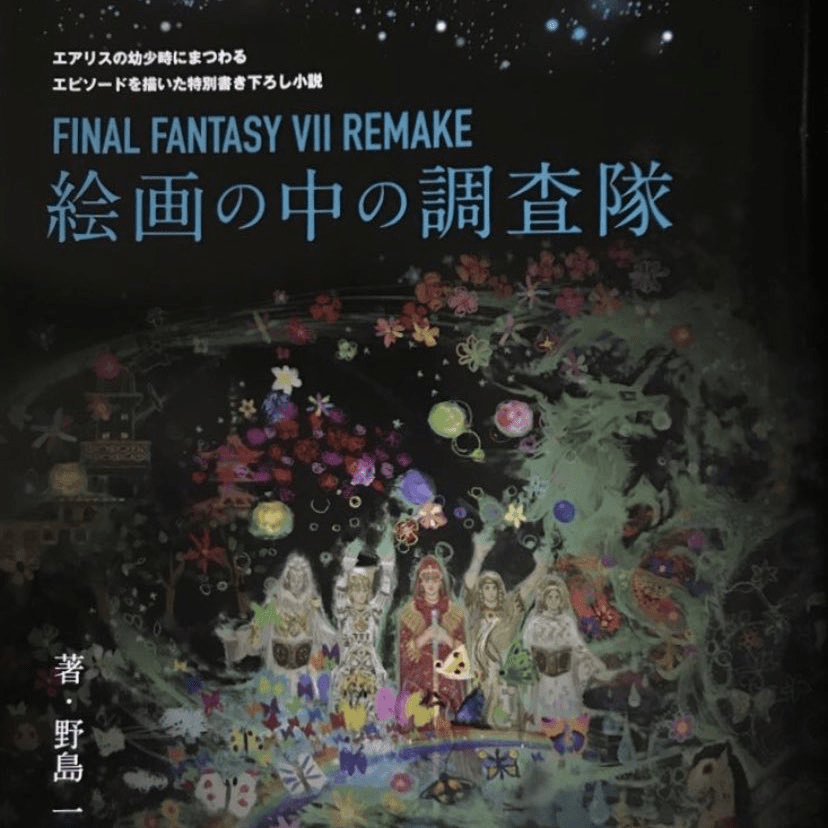
What Gallagher does take great pains to discuss, though, are the contributions to the story of FFVII wrought by its bevy of prequels and spin-offs. Before Crisis and Crisis Core (39) give us new characters (such as Genesis) and, per their titles, crises, as well as filling in the backstory of main players from the original game, such as Zack, whose identity Cloud largely adopts along with his Buster sword. Again, the names alone cry out for comment, which, since they are not in the Norse field, Gallagher provides only sparingly; the fact that Gackt (who is apparently a big deal) voices Genesis is passed over, perhaps mercifully, in silence. Still, it might be worthwhile to acknowledge the proximate influence as well as the speculative, albeit interesting, mythological stretch.
Other names in Dirge of Cerberus referring to color symbolism with more than a whiff of alchemical mysticism–Weiss the Immaculate, Nero the Sable, etc.–are given even less commentary than the titular three-headed beast. The problem is that, like with Lucrecia and Omega, to address these would require going into wholly other realms of myth and religion–in short, we’ll have to consult Gallagher’s other books (and perhaps games in the Nier series).
Questions of artistic form and economic realities return with Gallagher’s discussion of the short film Advent Children. How does it bear on, not only FFVII, but Sakaguchi’s feature-length flop Spirits Within? Perhaps more on this is in those Ultimanias, but I was also especially curious about how Sakaguchi’s own personal life found its way into these games and their spin-offs, particularly as he is in the process of leaving the company throughout their production. Well, as we are told about Genesis and Weiss at the end of Dirge, it might be said of the biographers and video-essayists out there that “they still have much work to do” (46).
Just as Genesis, “judged by the Planet to have an important role to play in future events,” does not join the Lifestream (42), so we had better mosey… I am even less inclined to consult these games and FFVII Remake, etc., despite the intriguing retcons Gallagher alludes to, after having read his book than before. I can’t help but come away glad he has played and thought about them so much, so that I don’t have to.

I noticed just one typo in the whole book, “Kitasi” (47). I can only assume that the report of FFVII Compilation lore is just as accurate. Besides being reminded of Our Universe and its images of the mythological and sci-fi speculations to which we are heir, another idiosyncratic response that was brought home to me was realizing for the first time just how messed up Shinra’s cover-up of the destruction of Nibelheim is, as Gallagher references Nojima’s novels about how the hegemonic power company “paid settlers” to repopulate it (55). The deaths of Tifa’s mother, and then of Cloud’s later, and of his being blamed… it all connects so powerfully with Sakaguchi’s loss of his own mother, and with games like Secret of Mana and Wild Arms, which take just such scapegoating as their heroes’ point of departure, as well as the MOTHER series, of course…
One of the only times we hear about Japanese mythology, “Shinto and Buddhist beliefs,” comes in Mt Nibel being compared to Mt Horai, with Gallagher referring us to Hearn’s Kwaidan (57). Along with the Greek connections, ie. Cerberus (61), one feels that the Japanese backdrop really warrants its own book. File along with this “the Japanese idiom ‘shinrabansho’…’all things covered by God’ (67-8).

Another minor quibble: so is Nanaki aka Red XIII “feline” (31) or “canine” (95)? Maybe I’m misreading, but I always thought of him as more of a dog-type, myself; just like about the “yellow fog” in Prufrock, I guess I’ll admit I was wrong! At any rate, I would love to see a book about Native American influences in FFVII while we’re at it. As I go into more detail in my paper, Dia Lacina’s critique of the music in this direction has always stuck with me. I confess I was miffed that Gallagher does not mention Nanaki’s Cosmo Memory limit break in his discussion of the point at which the party acquires “the [Odin] materia as well as the key to Vincent’s basement chamber” (89), despite going on to show some interesting connections between Nanaki and Odin (94-5).
But I love this passage in the Midgard chapter:
“Giants were considered the embodiment of chaos in nature, and the location of their lands was important in a cosmological sense, but also philosophically. As well as meaning ‘wall’ or ‘enclosure’, the Norse term ‘garðr’ was a metaphysical concept whereby everything within garðr was ‘order’ and everything outside garðr was ‘chaos’. Therefore, to the Norsemen, everything within Midgard represented civilisation, while the outlying Jötunheim represented disorder.” (63)
Along with that “civilisation with an s” spelling, redolent of Sir Kenneth Clark, I can’t help but feel the hyperlinks to John Gardner in On Moral Fiction, to Seamus Heaney’s Beowulf:
No tunes from the harp, no cheer raised in the yard.
Alone with his longing, he lies down on his bed
and sings a lament; everything seems too large,
the steadings and the fields. (c. 2460)
And Tolkien’s giants playing football, “hurling rocks at one another for a game” in The Hobbit (Ch 4). Or again Byatt, quoting from Asgard and commenting on a picture (which she includes at the end of her own book):
The legends of the giants and dragons were developed gradually, like all myths. At first natural objects were looked upon as identical with these strange beings, then the rocks and chasms became their dwelling-places, and finally they were regarded as distinct personalities and had their own kingdom of Jotunheim.
The picture gave the child an intense, uncanny pleasure. She knew, but could not have said, that it was the precise degree of formlessness in the nevertheless scrupulously depicted rocks that was so satisfactory. The reading eye must do the work to make them live, and so it did, again and again, never the same life twice, as the artist had intended… This way of looking was where the gods and giants came from.
The stone giants made her want to write.
They filled the world with alarming energy and power. (10)

Personally, I would have liked more of this philosophical, metaphysical discussion from Gallagher. In the course of which, there should have been room for some consideration of the “Promised Land” motif, which we first hear about early in the game. It could certainly fit better in a discussion that included more about Abrahamic religions and Greek myths, as comments later in the book on Eden and the Hesperides indicate (152-3). Allowing for the focus on Norse myth, though, some reflections on the peculiar playfulness of scenes like the revels of the warriors in Valhalla and the slaying of Balder, besides more Christian-inflected ones like the apocryphal rejuvenation of the world after Ragnarok, could well fit an adaptation of FFVII‘s “Promised Land”.
The parallels Gallagher draws between Midgar and Gold Saucer are well taken (we might add Junon into the mix), as is the delightful and surprising link between Cait Sith in his capacity as fortune-teller and Odin as knower of hidden knowledge (80). The Odin summon, of course, has its parallels again with a range of mythological figures besides its Norse namesake: Raiden, Gilgamesh, and perhaps even the elusive Genji, besides the in-game associations with Shinra Manor, but also Cosmo Canyon by way of the Cosmo Memory limit break (88).
In the discussion of runes, Gallagher gets wonderfully into the weeds, noting not only the importance of the Rune Blade’s double materia growth mechanic, but also the detail on Tifa’s gloves in the Remake (99).

What does it mean for Heimdall to be the watchman, guardian of the rainbow bridge, and giver of runes to men, and yet for Odin to have blinded himself in one eye receiving the runes originally hanging on a tree, wounded with a spear (98)?
LOVELESS, which features as a stage play in the original game, becomes a poem in the spinoffs and remakes (101). Its all-caps mention defers discussion of the poetry for several chapters, but does lead into more about the materia mechanics. Again, it seems to me that a discussion of poetic form would have fit perfectly here.
As the next chapter explains, Vincent’s berserkr-inspired limit breaks are some of the most intriguing links in Gallagher’s study–but also, he’s sort of a cowboy. What’s up with that? And as ever, the question seems open as to whether the causal direction implied by “inspiration” is actually present, or if its impression is more the effect of keen associative reading on our part to discern shared lineaments of story, regardless of authorial intent. Whatever the case may be, some of Gallagher’s strongest arguments come in the symbolism of wolf and serpent, as we are prompted to reflect on the “enemy within” Cloud (127), much as in Byatt’s retelling she dwells frequently on what she calls “the wolf in the mind.”
For deep lore sticking within the bounds of the original game, the distinction between “sentience” and “instinct” with respect to Jenova’s purposes and Sephiroth’s control should provide further reflection (139), down to the controversy over spoken lines attributable to either agent (146). Once more we skirt an analysis of the power of poetic language with reference to the Skaldskaparmal, in which Loki is both tempter and rescuer. What of the tensions inherent in the different poetic sources; in what sense can we even speak of a singular “Loki” figure, or indeed of “Norsemen” as a class (159)?
To my mind, Gallagher’s discussion of the “triple deity” is particularly loose (164), and when in the next breath he moves lightly back to the theme of the goddess figure Minerva as the “conscious will of planet” (165) I get especially confused as to why he insisted on attempting to separate out the different mythological sources into separate books when these games so gleefully mash them up together. Still, it is delightful to see the parallels between Thor’s cross-dressing and Cloud’s in the Wall Market segment (166). Fascinating to hear that in the Remake Cloud is guaranteed to be chosen (167); one would have imagined (in naive Hamlet on the Holodeck syle) that the newer game would rather have moved in the direction of greater freedom of choice and player agency bearing on the outcome, but instead in this case, at least, it does the opposite.
As we come to the end of the book, elves (via Tolkien) as well as angels and demons (influences by way of Christianity) rub shoulders with Odin’s ravens, named for Thought and Memory, and the “fatalistic society” of the Vikings (170) gives rise to unanswered questions about the “Whispers” of planetary destiny introduced in the Remake (174). While Gallagher’s geological conception of Icelandic volcanoes as a source for the “primordial fire” of Muspell is not wholly convincing (184; cf. Tolkien’s critique of Max Muller and the theories he represents), his association of the Proud Clod with Surt is virtuosic. The connection of SOLDIER Unit 13 with Ragnarok (190) is a fitting mic drop.
To be sure, the book is enjoyable and informative, as its author hoped it would be; but we could say more. Like the introduction of Tolkien scholar Verlyn Flieger would have it, bringing the mythmaker’s early work on the Finnish Kalevala to a wider audience in her edition of Kullervo, it should also be recognized as “worthwhile and valuable.” As Tolkien himself rhapsodizes at the point where his essay “On ‘The Kalevala'” breaks off, we should strive to find in Gallagher’s appreciative study not only the linkages between Norse myth and FFVII:
But the delight of Earth, the wonder of it; the essential feeling as of the necessity for magic; that juggling with the golden moon and silver sun (such are they) that is man’s universal pastime: these are the things to seek in the Kalevala…
–and, I would argue, in the contribution to poetry, art, and mythology that is Final Fantasy.


 Video Game Academy