Untitled Edith Finch Essay – Guest Post by Dylan Mitten

Courtesy of the inimitable Dylan, whose work has enriched The Community School Game Jam and Mobius Shark Tank at the Spokane Central Library, and whose Hello Kitty Zen Garden graces the unpublished manuscript of TCS: The Book (working subtitle, albeit cliched, heartfelt: Building the Beloved Community School), here is a deep dive into a game I’ve only watched streams of, and yet can hardly imagine the games landscape without: What remains of Edith Finch. Dylan has also presented this as part of the Games Studies wellness, meeting W/F afternoons at TCS. Drop in when you’re in town, just sign in at the front office.

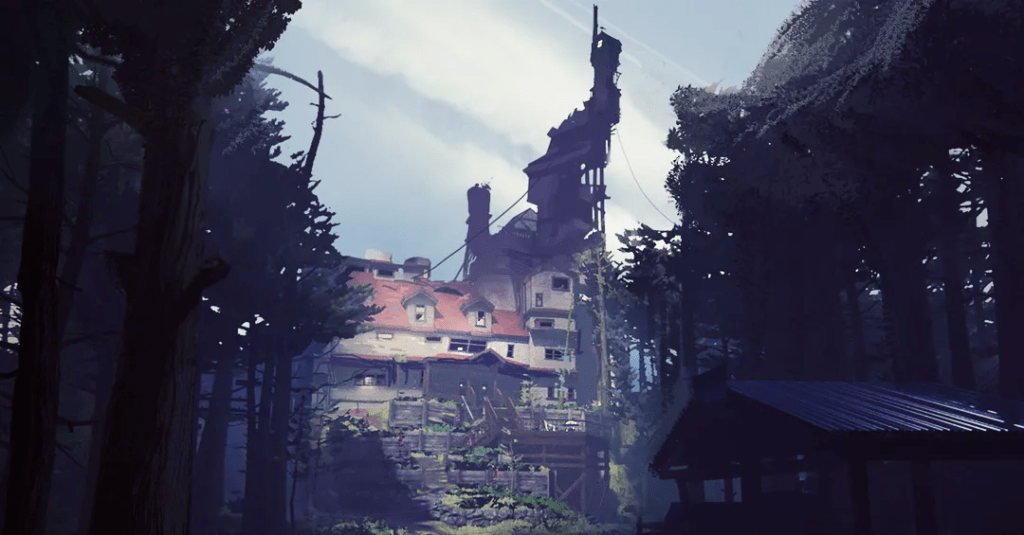
Annapurna Interactive, via WIRED

What remains of Edith Finch is a first-person narrative game where you play as – you guessed it – Edith Finch. Edith is the last living member of her family, and after the death of her mother, we follow her through her childhood home and watch as she uncovers secrets about her family that were buried. Some in walls, others, under beds… you get the idea. Let’s briefly go through the game, and then talk about the pressing issue of the game.

We start the game on a ferry. When we look down, we can see that our character has a cast on their right arm, and that they are holding a journal with “Edith Finch” written on the cover. When we open it, we hear the namesake of the game begin to narrate the writing. She talks about how, at 17, she is the last remaining member of her family. When she gets into the monster of a house that the Finch family home is, we start to learn about all the different members of her family – and moreover, why she is the only one left. 

We learn that in 1937, in an attempt to escape the curse that had claimed his wife and newborn son, Edith’s great-great-grandfather Odin Finch emigrates from Norway to the USA, setting sail with his daughter Edith (Edie, or  Edith Sr. as she’s referred to by Edith), and her husband Sven, as well as their newborn baby, Molly. He uses his house as the raft, but unfortunately, it seemed as though the curse was coming for him too. The wind picked up and a storm broke out. A wave unfortunately took Odin under, swallowing the house with him. Edie and Sven, along with baby Molly, made it to Orcas island safe. Their first order of business? Building a cemetery. 

Of course, this isn’t some happy ending – Edith had to be the last remaining Finch somehow, right? I’ll briefly go over the deaths. 

Edith Sr. ended up having five children with Sven, including Molly. She gave birth to Barbra, twins Sam and Calvin, and Walter. Edie initially believes they’ve left the curse behind, but of course, it’s never that simple. 

At 10, Molly dies from ingesting fluoride toothpaste and holly berries after going to bed without eating. At 16, Barbra is murdered after an argument with her boyfriend over her long-gone stardom. Walter hears all of this happen, and believes it was a monster. After spending 30 years hiding from this monster in the bunker of the house, the day he decides to leave, he is struck by a train. Calvin dies at 11 after swinging too high and flying off of a cliff. At 49, Sven dies from falling off of the house’s roof whilst building a slide.

Sam lives into adulthood, and marries a woman and has Dawn, Edith’s mother, and Gus. Later, he marries a woman named Kay, and they have Gregory.  Dawn is the only one to make it to adulthood. 

At 13, Gus is crushed by a totem pole during a storm. Gregory drowns at 22 months after being left unattended by his mother in the bath. Sam, who at this point is divorced, dies at 33 whist on a hunting trip with dawn. Dawn shoots a buck and Sam wants to take a picture with it and her. Whilst posing for the photo, the buck thrashes and pushes Sam off of a cliff.

Traumatized by all of this, Dawn moves to India, where she marries a man named Sanjay. Together, they have three kids. Lewis, Milton, and Edith jr. 

Sanjay is killed by an earthquake, so Dawn moves her and her kids back into the Finch family home. At 11, Milton mysteriously disappears seemingly out of nowhere, making Dawn become paranoid. She seals all the doors of the rooms of deceased family members. Edie drills peepholes. Lewis, after battling drug abuse and mental health struggles, commits suicide during work. This is when Dawn decides it’s time to leave. She arranges for a nursing home to pick Edie up, and packs the belongings of her and Edith. They leave that night, with Edie meant to get picked up the next day. She doesn’t make it to the morning. Edie is found dead after ingesting alcohol with her medication. Years later, Dawn succumbs to an unspecified illness, leaving a 17 year old Edith to inherit everything. 

In the final scene of the game, we kid out that the character on the ferry with the cast is Edith’s son, and it’s revealed that she died during childbirth shortly after we see her learn of all the secrets of the house. We see her child place flowers on her grave.

That’s the very bare bones of the story. Is there more to explore? More to dig deep on? Yes, of course, but I simply want to talk about my personal opinion with the curse. 

I think that during my first playthrough of the game, I did indeed think there was really a curse – a monster, even, as Walter puts it. He’s convinced that a monster killed Molly, since that’s what she talked about in her journal entry not long before her passing. It was also likely the monster that killed Barbra, since Walter heard it himself!

I definitely believed this theory at first – but the more replays I did, the more I understood the real story, which is the one I placed out for you earlier. I don’t think there’s a monster, nor a curse. I think it’s a bunch of wacky coincidences. Let me explain; I think that the “Curse” is simply a self-fullfilling prophecy, a mindset where you, or someone else, believes that something will happen in the future, and because of that, your actions are affected by that hypothetical event, and eventually, that event happens because you influenced it to!

I think, that given the fact that Edie had recently seen not only her mother and young brother pass away, but also her father while trying to escape the “curse” that supposedly followed them, that she made this connection in her brain that she and her kids were living on borrowed time. I think that this belief made her act less rationally when it came to taking care of her kids, and therefore, the only kid she had that made it to adulthood and had their own kids unintentionally instilled that into them, too. Leading to one of those kids growing up and maybe trying to break the “curse”, but only leading to curiosity about it rather than education about what it truly is. 

Finally, Edith, deciding to find out about the secrets her family holds, died tragically in childbirth in what I believe to be a sad and cruel coincidence. 

So, no. I don’t believe that the Finch family ever had a curse. Instead, I think that the game represents a very straightforward story of generational trauma and how it affects a family. I think that the fear that death was creeping closer resulted in much of the Finch family acting in reckless ways. Some acted as if every day was their last, or didn’t seem too concerned with the danger of it all. Others hid away, or became over protective of themselves and possibly their kids. 

What Remains of Edith Finch is a beautifully dark and morbid game. And I know that at least for me, it allowed me to gain a whole new perspective of what it means to be alive. It gave me an appreciation I didn’t even know I had for life. I think also, that its story about death, highlights just how important it is to cherish every moment, but to also not be afraid to express yourself and do the things that might be a little risky. Enjoy yourself! Don’t be afraid of some silly curse.

Thanks again, Dylan. We look forward to your future endeavors, including the follow up on Little Nightmares and a generation of young players impacted by it!

The Poetry of Virtual Worlds – Guest Post by Greg Bem

“This was written with Forbidden West in mind”

Maurice Merleau-Ponty (1945) emphasized the role of the body in human experience:

Insofar as, when I reflect on the essence of subjectivity, I find it bound up with that of the body and that of the world, this is because my existence as subjectivity is merely one with my existence as a body and with the existence of the world, and because the subject that I am, when taken concretely, is inseparable from this body and this world.

(Doyle, New Opportunities for Artistic Practice in Virtual Worlds, 2015, pages 93-94)

*

But what of multiple worlds

and worlds within worlds

Cognition a gray sweater

that illuminates nothingness

when flames (worlds) arrive.

*

You were killed by lava. You were killed by a serpent. You were killed by ______.

The disclaimers will continue. Death becomes a spiral outwards and upwards, a lesson, a reincarnation.

*

Where there is world there is life, and where there is life there is death, and it’s impossible not to know rebirth in this model, this statement that humans have imposed upon themselves.

Who was the first to say “Game Over” is a misnomer?

Who was the first to turn life into lives, to give “extra,” to provide a plurality to our relationship? To keep us hijacked, smiling, blissful, tethered into a “this could always become and become more”?

*

Death as joy.

*

The way we die, or log off, or quit. Exit to the main menu. Exit to desktop. The intrinsic meeting the ecstatic: it is all temporary, we will be back.

*

I begin sitting down. My body disappears. I begin in a place. There is no more weight. There is no more shapes. The ether fills. Eyes take over. Vision.

The screen moves from absence to presence. The ground loads. The sky loads. Shapes begin to populate. And I am breathing. And there is a flicker of breath, a digital soul shifts position, in the movement in front of me. If I stare just long enough, I am in conversation. This entity in front of me is a character. And we are beginning to dance.

Each moment entering into a world is incredibly special, a welcoming in, a beckoning. I can almost feel the waves of air parting between me and a world as the hand slices through in urgency. Come, be with us, come, explore with us.

A sprig of grass bounces back and forth. A small mammal makes a cry as it darts away into the horizon. Clouds silently expand and diminish in algorithmic intelligence.

*

Each moment entering into a world. Each moment entering. This sense of load, save, load, save. The returning, the coming back. There is always a coming back.

*

Under layers of pixels my beating heart is sustained and low for ages. Waiting for the crisis to crack, the heart getting massaged by mouse click and key tap.

*

Shift feet on carpet, plastic foot rest, plastic cover. Easy for wheels to slide. Easy for rotation, getting settled in, getting up and exploding out into the everything that exists beneath the hood.

*

This is not about what I do, it is all about how I am.

Stand up.

More coffee.

Sit down.

And stand up.

Ice cream.

Sit down.

And stand up.

Snacks.

Sit down.

Stand up.

Water.

Sit down.

*

There is something about the stack of beers that used to pile up around his desk as he ground through MOBAs and MMOs for hours every night. I’ll always remember that altar of numbness. Though I called it a glass cathedral. Was it bigger than him? The individual? Was it bigger than us? Was it emblematic of all the followers of the subtle, brutal, intensely ever-present escapism?

*

Who are we when we’re running around arenas together? Fighting complacency, finding the will to live. Is this modeling? Crafting new models? Designing the new approach? Quake leads to parkour. Bunny hopping leads to summiting peaks. There is time travel; dissonance between discovery and translation.

On the verge of turning forty, I know my breath is what I’ve held in place for countless hours. Countless becomes dozens. Becomes hundreds. Becomes thousands.

*

And yearning to imagine more, always yearning to image. I can see you, oh androgynous anonymous, with your thousands of hour in your nook of cyber love, co-existing. You bring the soul shiver just by contributing.

Electrical requirements. Taking so much for granted. And when the device breaks, the power stops, there is great sorrow. And when it all returns, there is great joy.

Why does leaving not have a fading away, a deconstruction, a slow removal of objects until we are left with the faint outlines of a skybox and a giant, ever after void?

Early MMOs, find a place to sit, and sit there. Then, and only then, can you properly log off.

And if you don’t follow the rules, what happens? Will your “progress” go “unsaved”?

K makes a game that involves a pit. One can jump out of it, but they need to learn how to jump. I didn’t learn how to jump. I died in the pit. “You were killed by lava.” Or something. And I feel the vague sense that learning is the next step. There is no need. There is no “necessity.” It is not “You must learn how to jump.” It is simply is the unabashed next step.

*

Or I could never return. I could leave. I could escape the escape. For another option. An alternative method. Excitement is matched and balanced with anxiety: to embrace nuance, to give and to take, to accept and to reject. Humanity continues to impose its limitations, including choice.

*

The future will be permutations upon permutations. The future will be all options at once. The future will be beyond “extra lives” to “infinite lives.” Infinite living will be the next surge, the next spike.

*

Will we then be forced to move into limitation as a future future iteration? To remember that linearity always had its benefits, its quaking benefits, its beginning and end, its sense of level, leveling, finite structure, rigidity as a great exclamation?

*

We may still find ourselves loading into the space, the flow of endorphins twin spirals between screen and body of player, the real of the in real life is equal parts virtual, a concoction, a cocktail, of here and everywhere, of linear and open, of possibility and action. The long form list of dualities that builds pressure and enhances the techno relationship ad infinitum.

*

There’s time to clear our heads with all of this. Beneath the logistics and the observations, there is a literary subtext. There is a reason beneath it all, beneath all the questions, the individuals, the collectives, the objectively disconnected and isolated. Deconstruction bedamned, it needs only be to continue being, the narrative is a tapestry, the story is a web of stories, it is storied, it has happened, and that is enough.

*

Greg Bem is a poet, publisher, and librarian in Spokane, Washington. A lifelong gamer and game enthusiast, one of his current creative writing projects is a book-length lyrical essay on virtual worlds and performance. An additional sequence is available in the 2025 issue of LEGENDS, the Spokane Community College literary magazine. Earlier in his timeline, he published a game studies blog, and many of his other creative projects can be found at gregbem.com.
Wholesome Streamer Summer

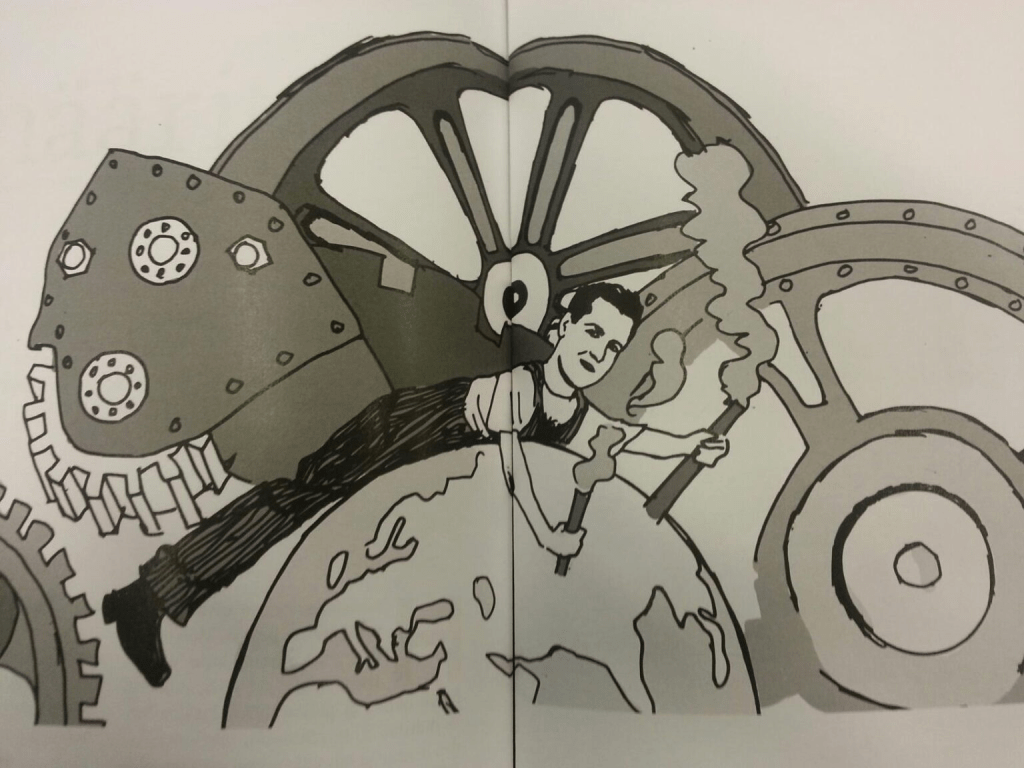
As an alternative to Empty Stadium Summer, what about some Blitzball and theology? Don’t forget, it’s the Year of Myth in Games!

“So stankin’ good” – Professor Noctis c. 13 min in…

Not that I have the bandwidth to properly join in on the streams and play through FFX this summer, but I so admire that Prof Noctis is up to this right now and wanted to share it.

He also recently presented with Evan DeYoung on “Video Games in Higher Education” at PAX East under the alias Dr T Wade Langer, Jr. Some great insights there on the formation of identity and memory through gameplay!

For his dissertation, he wrote on Teaching Judeo-Christian Kingship Through Final Fantasy XV.

As a research project connected to his course on “Mythos to Logos” in FFXVI, he is engaged in using a bespoke Game Lab at UA to “qualitatively research how using a video game to teach theology impacts a student’s ability to objectively examine religious traditions through comparative study.”

And as a minister, he appeals to games to “speak theologically to nearly any audience.” It is life-affirming and life-saving work.

And somehow he found time to play Kenneth from 30 Rock? Pshaw! Just joshin’ ya.

Prof Noctis makes a great counterpart to The Bible Project, with their “One Story That Leads to Jesus” reading plan on the one hand and to Signum University, with their new Tutorials, on the other. It’s awesome to see the success he’s had and the growth since we first connected when he was Editor-in-Chief over on The Pixels.

Very soon, I promise, I will be sitting down to engage more critically with some of this content–and I’ll say in passing that I like the distinction Wade and Evan make in their PAX presentation between “content-creators” and “-curators”, because I, too, feel more comfortable in the latter designation. In particular, I want to dig into the dissertation, since it’s been a minute since I looked at it, and the video “What is Final Fantasy,” which (along with his sign at the wrestling arena) seems to have really put the FF Prof on the map, social-media-wise. From their conversation about Fantasian as the “Final Fantasy We Never Got,” I’m intrigued to consider the thesis that part of what makes an FF is its seeking to break a historical cycle… But until then…

Roll Tidus!

Belated Cascade Moot

I’m slowly working on a few more essays related to books and games, but for now I wanted to share this recent piece on Philip Pullman and Earthbound, a talk given at Cascade Moot (August 31, 2024) on the theme: “From the Fringe: The Importance of Secondary and Tertiary Characters.”

A Tale of Two Tonys: Loss and Recovery in The Golden Compass and EarthBound

⁠Presentation slides ⁠ – essential for playing Name That Tony! with us and reading text boxes from EarthBound

Reflecting on two secondary characters, Tony from Snow Wood and Tony Makarios, respectively appearing in EarthBound, a video game released for the Super Nintendo in 1995, and The Golden Compass, a book by Philip Pullman published that same year, players and readers of all ages are invited to consider themes of loss and recovery from a new perspective. Both characters are kidnapped, one at the start and one near the end of the adventures in which they figure; both characters have someone important taken away from them in turn. Their responses provide significant symbolic images and gameplay mechanics that draw us closer to the heart of these stories.

Thanks to the team at Signum U for hosting, and to you for listening.

Video Games and Meaning

A new course taught by Alyse Knorr at Regis University

Alyse has kindly shared the proposal for Video Games and Meaning. If you don’t happen to attend Regis in Colorado, you might also find her teaching online for Hugo House. See our conversation for more on Alyse’s work.

Integrative Core Course Proposal  

Our students are living lives within and surrounded by video games. They play them on their phones, on their laptops, and in their dorm rooms. They organize Mario Kart tournaments and connect with friends back home over Xbox Live. They build and play as characters with complicated skill sets, racial identities, and even marriage and families. 72% of men and 49% of women aged 18 to 29 play video games, which are without a doubt the newest, most popular, and most profitable form of art and entertainment. The question at the heart of this course is: why? Why do so many humans love games (broadly) and video games (specifically)? And what kind of meaning—artistic, experiential, even spiritual—do we make out of this form of interactive media? 

Through the lenses of art, narratology, ludic studies, business, communication, queer studies, and disability studies, this class will examine the history and impact of video games on American culture. We will consider video games as works of art, as immersive experiences, as educational tools, and as products for profit. We will analyze the political/social arguments that games make implicitly and explicitly, as well as how auteur game designers express their personal experiences in the games they create. We will explore how organizational psychologists are finding ways to “gamify” life and work to make them more enjoyable, and how the idea of “failure” is so essential to both game design and life. Finally, we will consider controversies associated with video games such as video games and violence, gaming addiction, racism and sexism in games and the gaming community, and the ethics of the games industry.  

To unpack these questions, students will play games from a wide variety of genres (storytelling games, platformers, sandbox, strategy, role-playing, puzzlers, and first-person shooter) by a wide variety of designer identities (see potential game list below). Students will also read accompanying popular and academic texts or watch accompanying documentaries, then discuss their gaming experiences with the community. We will take excursions (more below) to explore the ways that gaming communities exist in both virtual and physical space. 

By the end of this course, students will be able to: 

  • SLO 1: Identify and analyze some of the reasons why many people love playing video games, and some of the ways that players make meaning out of games
  • SLO 2: Discuss (in oral and written forms) games in terms of narratology, ludic studies, business, and communication theory, using academic and popular sources as well as their own experiences;
  • SLO 3: Research, discuss, and debate diverse perspectives on key questions and controversies related to video games, synthesizing other’s viewpoints with one’s own. Construct well-supported and sustained critical arguments about these debates, justified by evidence. 
  • SLO 4: Formulate their own creative, sci-fi-themed responses to justice issues and share these with their community. 

The primary form of homework for this class will be playing games! I will ensure that everyone has easy access to the assigned (free or very very cheap) games on their own personal devices or through the library—this is easier to do than you’d think. In addition to playing games as primary texts, students will also read articles and watch documentaries related to the course content. 

Because the nature of the course is to uncover how individuals make meaning out of games, one major assignment will be a presentation on a game of each student’s choice. They can present about the history, theory, and personal impact of a game that has meant a lot to them, and if they have never played video games before this class, then they can present on a non-digital game (Monopoly, tag, chess, etc.) instead. 

The culminating assignment for this class will be for students to design their own game that focuses on themes, questions, gameplay styles, or topics that fascinate them. Students will be able to choose between either literally building their game using free and simple online tools or, if what they envision is beyond the scope of these tools, then they can pitch an idea for a game including its premise, graphics style, and plot, and design the “box art” of the game with a logo. Accompanying this final assignment will be a presentation and a short reflective essay in which students connect their design choices with key texts and ideas from the course. 

I would also love to take students on an excursion to an arcade and/or a game store during this class, where we could play arcade games and experience gaming in community together. We could also attend (either virtually or in-person) an eSports competition. Finally, we could attend either the Denver Indie Games Expo (November) or the Colorado Video Games BBQ (April), both of which are exciting expos with presentations, games on display, and game designers to talk with. 

 Potential games to assign: 

  • “Hair Nah”: a game by a Black woman designer that comments on the ways that white people try to inappropriately touch her hair in public places
  • “Papers Please”: a game commenting on immigration policies that puts players in the role of immigration authority at the border
  • “Gone Home”: a game about queerness and coming out, and the fragility of families 
  • “Passage”: a game about life, death, aging, and making meaning out of it all  
  • “Oregon Trail”: an educational game that many of us grew up with that implicitly validated messages of Manifest Destiny and the genocide of Native Americans
  • “Queers in Love at the End of the World” and “Dys4ia”: games by trans designer Anna Anthropy that seek to put players into the experience of coming out as trans 
  • “This War of Mine”: a survival-based game that explores the civilian experience of war 
  • “Superhot”: a first-person shooter that makes players question the nature of their reality, Matrix-style

Surprise! It’s a lecture. A new series on Assassin’s Creed — and another on being a dad

Summer’s almost over, with a new school year in no uncertain terms upon us. Apologies, but for the foreseeable future things might be a little quiet around here. For now, it’s going to be crossover posts abounding!

Prof Ben sneakily delivers the first in a new lecture series on the conspiracy-laden games.

And another quick link to a new project on being a dad.

Share it with a dad or thoughtful caretaker in your life!