ACT II: In which we begin our explanation of the world of Clair Obscur, in the hopes of understanding its artistic priorities, themes, and aspirations
I’m still not entirely sure how I want to tackle this section. I would normally prefer to avoid spoilers, but we can’t very well talk about the world of Clair Obscur without spoiling what you’ll find there, and we can’t talk about it without also talking about the plot and lore of the game. And, further complicating the matter is the fact that I’m writing this with people who can’t play it in mind. I want to share how awesome this game is with friends and family who really won’t ever have an opportunity to play it, because they don’t play video games, are don’t play these kinds of video games.
So we’re going to do something fairly unprecedented—at least for me and my essays.
I’m going to treat this as an adaptation. I’m going to effectively try and transmute the experience of playing the game to prose. I will walk through the major plot points, and the major areas of the game. I will describe, as best I can, the locations and beats.
That means that this will be all spoilers going forward, but I will be intentionally staggering them, since I’ll be following the game’s own story and plot and revealing what happens in chronological order.
BUT:
We will save the major major plot spoilers (i.e., the endgame) to Act III of our essay.
We will break up this section by the organization of the game’s own Acts, so you can ditch the essay anytime we get too spoiler-y for your liking. (Hopefully, I’ll also be able to sell at least some of you on the game while we go…)
AND:
CONTENT WARNING: Things are going to get pretty dark here. This is a violent game about the ways people react (and overreact) to grief and loss. There are multiple depictions of suicide, trauma, waning mental health, and physical disfigurement. I think the game handles these subjects with understanding and maturity, and I hope to do the same, but use your judgment going forward.
Alright. Let’s do this.
Prologue: Lumière
Lumière is Paris—though the Belle-Époque Paris in that state of static-disintegration we discussed earlier. The top of the Eiffel Tower is smeared to one side; the Arc de Triomphe’s shattered peak floats in a rough arch over its two legs. Nondescript Parisian apartment buildings line crowded streets. But the city is surrounded by the sea, and in the distance you can see a giant monolith, and, at its base, the form of a woman with long ash-gray hair, huddled into the fetal position. Above her head glows a number: 34.
We are introduced to Gustave and Maelle. Gustave is man in his early thirties, wearing an elaborate dark purple suit; Maelle is a young girl in her teens, wearing a stereotypically-French horizontal-striped shirt and red kerchief. They talk together like brother and sister: she teases him about the fact that he is throwing rocks ineffectually at the distant monolith; he plays along, wry and kind. We get a combat tutorial, and traverse the rooftops of Lumière together.
The greater heft of the scene is only gradually revealed, though. Gustave is in the rooftop garden to avoid going to see Sophie, an ex-girlfriend he’s lost touch with. Today is her gommage—and that means that this is Gustave’s last chance to set things right. He has a flower for her—this is apparently traditional—and she thanks him for it. It comes out that they separated over some pretty important differences in perspective. Gustave has been working hard, preparing for this year’s Expedition onto the dangerous continent; Sophie has been trying to enjoy this last year of her life.
Because here’s the thing: the gommage means the death of Sophie, and everyone else her age.
As the characters watch, the woman at the faraway monolith—the Paintress, they call her—wipes away the “34” inscribed on the stone and replaces it with a new number: “33.” And when she does, all the citizens of Lumière over the age of 33 (including Sophie) slowly dissolve into red-and-white flower petals: gone forever.
Hence our call to action, and our title. Gustave (and Maelle) has committed himself to joining Expedition 33—not the 33rd Expedition, but closer to the sixtieth or seventieth, with each Expedition naming itself after the number on the monolith when it set out—and the mission of these Expeditions is to travel to the unknown continent across the sea, confront the Paintress, and kill her, so the gommages will stop and the citizens of Lumière can live their lives without fear.
But Expedition 33 is an unmitigated disaster. Immediately after landing on the shore of the continent, they are confronted—impossibly—by an old man (why hasn’t he gommaged…?!) in the company of the monstrous Nevrons (Nevrons come in many varieties: these are nightmare creatures with no head or eyes but two hands composing a kind of face), who start to lay utter waste to the Expedition with power beyond anything they could have prepared for. There’s a frankly harrowing cutscene where all the characters we’ve met are positively wrecked.
Gustave tries desperately to find safety. Eventually, though, he is knocked unconscious and blacks out.
We rejoin Gustave as he wakes up—but nobody else is around. He’s been relocated from the horrible beach—where the massacre took place—to a glowing blue tree, but he’s completely alone. Dazed, he walks for a little while, calling out for the others, but nobody comes. He eventually arrives at a cave full of the corpses of past Expeditions (it would seem theirs was not the only one to be immediately thwarted by terrible powers), sits down, and withdraws a pistol to end his own life.
But he is stopped. Lune—one of the other Expeditioners—takes his hand. He is not alone. Others have survived, but presumably only a few. Together, Gustave and Lune will try to find the survivors and continue the mission together.
Prologue – Debrief
OK, so we’re barely an hour into the game and it is already more emotionally harrowing than most full games I’ve played. The folks at Sandfall pull no punches with their emotional beats, but it is also not just some grim-dark tragedy-porn experience either. The scenes in Lumière especially are buoyant and lively; even the festival leading up to the gommage is full of surprisingly-rich characterization. These are people trying to figure out how to live their lives in the shadow of this terrible situation. They have traditions. There are little kids running around. Sophie even has a bit of a tense conversation with a mother about whether or not it is responsible (or, indeed, imperative) to have children in light of the gommage (most of these children are orphans, after all—including Maelle).
During the send-off celebration for the Expedition, in particular, many of the characters confess their hopes and dreams. Some are apprehensive; others defiantly resolute. Lune herself, if you notice her among the crowd, comes off as a bit of a space cadet. She can be found sitting on the pedestal of a statue, playing her guitar and singing, barefoot, before the gommage. They’re people—not props. The situation is terrible, but they are trying to make the best of it anyway. Because that’s what people do. This is a game about grief, sure. That much is clear even from this first hour of play. But specifically, this is a game about how we deal with grief. And I think the game wants us to notice that the people of Lumière have made a certain amount a peace with their situation. They don’t consider the broken fragments of buildings strange or disruptive, even though they are the result of a historical catastrophe only dimly-remembered. Their surreal situation has become normal, even if it is strikingly abnormal to the player. Sophie and Gustave disagree about whether they should accept, or fight against this situation (which itself serves as a good indication of normalcy to the player – we’re not going to question the floating bricks, but we are going to question the arbitrary mass killings that also serve as a death-clock for the whole society). Gustave intends to fight, but Sophie intends to accept. It isn’t clear who is right; it will, after all, get much, much worse by the end.
Still, the scene with Gustave—this lively, wry, caring character—sitting down to commit suicide…? It has to be one of the most affecting scenes in any video game I’ve ever played. Even in the one short hour we’ve had to get to know him, he’s been characterized as standoffish, warm, protective, creative, and a little irritating. For him to lose all hope so quickly is both understandable and horrifying. As he walks toward the cave, reduced to a stupor, eyes blank and staring, I feel all that despair and loss and helplessness, even from a man who had said that he would do all he could “for those who come after.”
This doesn’t read like a plot point, orchestrated by some writer for shock value. This reads like an actual human being, reduced to despair by unfathomable trauma.
(It’s almost a shame I’m not still running my “The First Hour” series—because this should be on the short list for “most impressive first hour of a video game ever.)
The World To This Point
This is intended to be an essay about world-building, and, as such, I want to make sure we circle back around to the world at every stage of our discussion.
But there isn’t a whole lot to say at this point. So far we have only seen the town of Lumière (which is very nice, don’t get me wrong), the beachhead where the massacre took place (which we only see in a cutscene), and a little bit of the verdant—if alien—meadow and macabre cave where Gustave faces his despair. We’ve only fought Maelle in a tutorial sparring match, possibly a rogue mime in Lumière, and a Nevron or two along the path to the cave. We haven’t seen much, in short.
But that doesn’t mean it isn’t important. Lumière is festooned with red-and-white for the gommage: the people about to gommage wear garlands of red flowers, and the dominant landmark (even Gustave and Maelle draw attention to it) is a massive red-and-white tree in the square where Gustave meets Sophie. It isn’t “lore,” exactly, but every part of the design of Lumière resonates with and anticipates the gommage that’s about to happen. By contrast, the sending-off celebration for Expedition 33 takes place at night, and we are introduced to the stark, snappy-looking black-and-purple-with-gold-trim uniforms of all the Expeditions past. Here, again, the color palette reinforces the theme. Red-and-white for lost innocence, grief, and aborted happiness; purple-and-black for resolution, purpose, and sacrifice.
When we do reach the continent, the beach is a barren, ashy stretch of sand and debris. The mysterious old man wears a white beard and a severe black suit (and seems to resemble an older Gustave). The entire cutscene is nearly monochromatic: the Expeditioners wield colorful pictos, but the enemies fire devastating bursts of pure white energy that light up the black sand.
Then there is the glade, with its verdant greens and alien blues. And the cave, its ashy-gray bodies lit blood-red by some trick of the light filtering into the cave.
This isn’t what we usually mean when we talk about “world-building” in video games. Instead, we’re used to thinking of lore, or environmental storytelling, or details that add up to a larger picture of social complexity or backgrounds for character development. When I wrote about Morrowind, I emphasized that its believability as a place derives from its complex social dynamics, which are foregrounded, but have to be learned. In some of my other favorite worlds (say, that of Bioshock or Batman: Arkham City), much of the world-building is rooted in environmental details: Bioshock’s bloody messages scrawled across walls, or Arkham City’s villain-related details spread across Gotham.
Here in Clair Obscur, though, world-building is almost always in service to the emotional weight of the scene. Like any good surrealist work, we are not speaking to the conscious mind, but to the unconscious mind. These spaces aren’t necessarily logical, don’t have to make pragmatic sense, and don’t typically invite analysis for the purpose of piecing together a puzzle. You are, in a very real sense, supposed to feel these places. Walking through Lumière, the experienced video-game explorer is likely alert to details that describe the day-to-day lives of its people. And there are some: Gustave and Sophie remark that the piles of furniture (that conveniently block access to alleys the game doesn’t want you to explore) are the belongings of people about to gommage—now free to anyone who wants or needs them. And there’s a café where people have congregated to eat, performances (like Lune’s song) by its denizens, and even a dance that uses the colorful Pictos you’ll use in battle for visual spectacle. But it isn’t really a livable space, the way some other games (like Bioshock) would emphasize. It’s a vibe. And it’s less important to convince the player of its reality than to anticipate the emotional value of this place in the game to come. Lumière doesn’t need to make sense as a lived-in space; it needs to stick in the player’s mind: a symbol of life, normality, and grief that must be protected and saved in the player’s travels. Likewise, the beach doesn’t need to make topographical or geological sense; it needs to represent horror, death, and despair—and, hopefully, scare the player away from it for the foreseeable future (you can go back and get your butt kicked there only later in the game). And, most glaringly, the blood-red light of the cave doesn’t need to make sense; it needs to highlight Gustave’s own bloody despair and failure in his darkest hour.
That’s what makes this so frustrating to discuss: this is a carefully-crafted world, but it exists in service to the experience—to the emotional heft of the story, the characters’ suffering, and to the themes of grief and survival. It is not a world that can be dissected into its speculative elements, but it is no less calculated, no less intricate. Here on The Continent, we will discover, and we will explore, but we will rarely be intellectually satisfied. Instead, we will feel—and that is a noble, if underappreciated goal of the world-building craft.
Act I: Gustave’s Journey
I’m not going to summarize the whole game in this kind of detail. But I felt it necessary to explain the emotional weight of the world here, where we can get into the specifics, and let this be our default understanding of the rest of the world as well. There will be specific locations I want to investigate in more detail, but certainly not all of them.
Leaving the cave, Gustave and Lune quickly find themselves in a forest of these alien-blue trees. Night is falling, it seems, and we have to find a safe place to camp where the Nevrons can’t reach us. This is made especially urgent when we encounter our first Nevron boss—who kills one of the other survivors in front of us, just to drive home the stakes. Beat him, and Gustave and Lune discover a message scrawled at the top of a massive blue tree: Maelle is alive, and has been carried away by someone determined to protect her—but not an Expeditioner, it seems. They aren’t following protocol.
The trail leads us to our first encounter with the world map, where we are given a little bit of space to explore. (And a few world-map enemies to challenge!) But our next destination is one of the truly spectacular and memorable places on the continent: a canyon of rock populated by a forest of coral and kelp. Whatever surrealist elements we may have seen before, this is an idea that would seem right at home in a Magritte painting. The land even has little spouts ejecting bubbles into the air—I honestly couldn’t tell in my first game whether I was supposed to be underwater, or on land, or what. The characters are also a bit mystified, but press on. (Surreal-as-normal, remember? We’re on a mission; no time to figure out the physics…)
In the middle of the coral caves we find more oddities. First, one of the Gestrals: a supposedly-mythical race of paintbrush people. This Gestral’s name is Noco, and he’s a traveling merchant who would also love to fight you, if you’re interested (most Gestrals love a good fight). Second is an out-of-place ornate black-and-gold door in a pillar of rock. Go inside, and you will find the Manor, where it seems Maelle has become quite comfortable. She’s met a strange, but not hostile, denizen of the Manor she calls The Curator—he has a blasted hole where his face would be and speaks only in hollow grunts, but he has apparently been helping her, and will join the party to help us manage our resources and strengthen our weapons (but not fight).
From here, Maelle and Noco lead us to the Gestral village, where we are attacked by autonomous Gestral guardians (who turn out to be massive mechanical armor suits being tested by Gestral engineers). We meet the leader of the village, who encourages us to seek out Esquie, and offers us passage to Esquie’s lair, but only if we go a few rounds in the Gestral arena and confront their new champion. That champion turns out to be the fourth (and final) survivor of the beachhead massacre: Sciel, who will in fact fight us before joining the party properly (she, too, just loves a good fight).
Esquie turns out to be a big, silly, masked guy who would normally have the power to ferry us over the water, but has recently lost his stones that allow him these powers (this apparently happens). He asks us to get his rock-traversal stone from François, his cantankerous turtle-esque neighbor, who attacks us with his “Strongest Ice Attack Ever”—but he isn’t really much of a threat, and seems a bit fond of Esquie despite his grumpiness.
Once Esquie has his stone back, he asks us to help him find Florrie, the stone that allows him to swim over the sea. He believes he dropped it in a cave network nearby, which is our next destination. It’s a massive, sprawling area with lots of smaller caverns and tough enemies, and when we finally find Florrie, it’s guarded by the Lamplighter—a terrifying, multi-armed enemy who attacks us with its lamps, and who resurrects after he is beaten. Once he is finally put to rest, we restore Florrie to Esquie, and he offers to swim us to the next land mass.
But just as we’re about to embark, with half the party in the water below and Gustave and Maelle still in the cave, the mysterious old man from the beachhead suddenly appears and impales Gustave. Gustave urges Maelle to leave and confronts the man in a heroic last stand, but is killed. Maelle is likely to be next, but she is saved by another mysterious outsider with a wild mane of graying hair, who confronts the old man and rushes the party out onto the sea.
Act I ends with the party disheveled: Gustave is dead; Maelle is rattled, and the newcomer, Verso, is little more than an enigma.
Act I: Debrief
Gustave’s loss is devastating, and will haunt the rest of the game. There aren’t many games daring enough to kill off the primary player character (though the death of 2B in NieR: Automata comes to mind), but this seems especially heartbreaking because Lune saved his life at the cave. There is something senseless, tragic, and wasteful about his death, even if it is, also, a kind of heroic last stand. And you’ll often be reminded of it: Gestral merchants will still list Gustave’s cosmetic items in their inventory with the message that you’ll need to find a missing party member before they will sell to you. Many times in the rest of the game you’ll be reminded of his absence. And Maelle will take over his responsibility of writing in the Expedition journal “for those who come after.”
It also seems like the last straw for poor Maelle. Throughout the first act, when the party camps for the night, Maelle suffers from dreams or visions of a similar-looking girl with a ruined face. Sometimes she is confronted by the mysterious old man in these visions, who speaks to her as a familiar, but not in any way loving or friendly. Her relationship with the Curator, too, seems strange: she is the only one who understands his moans. Gustave was her anchor to herself, to her former life, and to her sanity. Gustave was like a brother, but also her caretaker and protector through the Expedition. Now that he is dead, she begins the next Act devastated, and it will take some time before she recovers.
Verso, by contrast, is pure enigma at this point. He slots into Gustave’s spot in the party without any trouble (he even uses all of the weapons you’ve collected for Gustave), but he is slow to trust the rest of the party with personal details, and they are slow to trust his advice and insight. Like the old man, Verso should not be here—he should have gommaged by now, or been killed by the many hostile Nevrons. His very existence is somehow wrong, and the other characters worry that his help may hide ulterior motives.
Esquie, too, is more than he appears. When he first meets the party, he mentions that he has met Sciel before, but she does not remember it. The party has heard stories of Esquie (there’s even a statue in Lumière), but assumed (like the Gestrals) that he was just a myth. But where Verso is immediately suspicious, Esquie is impossible to suspect. His awkward intonation and mannerisms, his goofy affectations, and his plump, huggable, velvety body seem totally unthreatening. He’s not designed to be familiar or inviting, but he has all the otherworldly childlike charm of the laughing Buddha.
We’ll have a lot more to say about Esquie later.
The World of Act I
Compared to the strictly linear path of the Prologue, Act 1 offers a lot of room to explore. The World Map is littered with collectibles and enemy fights; many of the individual locations hide secrets down optional paths (especially in the cave system where Gustave meets his end), and all are just as evocative as the locations from the prologue.
But along the way there are some particular details I’d like to point out:
The Gestrals
Once you meet Noco and visit the Gestral village, you’ll start finding Gestrals everywhere. And they are delightful. Noco is child-sized, and has a child’s temperament: rowdy, inquisitive, and eager to explore. His stated mission is to become “the greatest merchant ever!” which will apparently involve exploring the far corners of the continent. But the rest of the Gestrals are equally enthusiastic, equally rowdy, and equally bumbling. As much as the big Gestral constructs (sakapatate!) present real threats to the player, the area where you fight them is serene—a red forest known as the “Sanctuary” which the Gestrals consider sacred. And the music that plays when you fight these sakapatates is upbeat, cheery, and wistful, not at all menacing like the other combat music so far. (The title of the track is literally “Gestral Summer Party.”) Fighting the Gestral merchants, too, is framed as a fun side activity: you have to duel with only one party member, and neither Gestral nor party member risks death in the encounter. Outside of the Sanctuary (and the arena) you will rarely find Gestrals who are hostile, but most are still spoiling for a fight if you’re willing.
I want to emphasize this because the game is careful to walk us through our different emotional reactions on The Continent. Our first encounter with the old man makes the Continent seem terribly threatening, but the mysterious, beautiful, and alien places we experience next suggest that this is just as much a place of wonder, beauty, and serenity. The Gestrals in particular add a layer of whimsical fun to that feeling. Coming off of the strange undersea canyon, the Gestral community feels odd, but comfortable and lived-in. They like to fight, but their aggression is posture, not threat. You can even challenge the village leader (who will immediately whup you at this stage of the game), but it’s not personal or anything. Gestrals are also apparently immortal. When they are killed—for whatever reason—they are reborn, though without their memories. You will see dead Gestrals on the world map from time to time, and their tell-tale (paint) jars with brushes sticking out of them as they wait to reincarnate. But that just helps to explain why they seem so unconcerned with fighting and dying—it is all just a kind of game to them. These are comic relief characters, essentially, though their endearing sincerity overrides their buffoonery. It’s easy to fall in love with the silly little guys.
The Nevrons
At this point in the game, there is no single aesthetic that describes the Nevrons. The monstrous hand-faced creatures of the beachhead echo the whirling arms of the Lamplighter, but we also encounter the diamond-headed spearmen of the world map, massive club-wielding bruisers with porous, pumice-like bodies, and smaller, quicker Nevrons that dodge traditional attacks. In the coral canyon there are skinny floating Nevrons wearing what look like diving helmets, holding old-school porcupine-like sea mines like balloons floating over their heads (shoot them in combat and they’ll explode, damaging all the enemies in the fight). Some seem stone-like and heavy; others are spry, floating in place or flying across the battlefield to attack. Most seem distinct to their environments: stony four-legged eyeless brutes with luminous hexagonal crystals in the caves by the sea; divers and anchor-wielding toughs in the coral canyon; spear- and swords-men on the world map. There is something suggestive about them, like the sexually-themed monsters of Silent Hill 2, but the theming is rarely so obvious. They may well be the most surreal element of this surreal world—insofar as they are hostile, but conscious, automatic, and not social like the Gestrals or people of Lumière.
Some, though, are not hostile at all. By this point in the game, you may have found several “white Nevrons,” who don’t attack you and will offer you quests. Usually they are missing something—the white Nevron who wields a lamppost as a weapon wants to light the lamp like his friends. The miniature Nevron in an optional area near the coral canyon wants to be huge like the massive, hulking monsters who loom over the landscape (and who Esquie advises you avoid, at least for now). When you help them, they will clue you in to the origin of the Nevrons (and their creator…?), but you will also always have the option to fight them (instead, or after finishing their quests). I never took the game up on the option—there seemed to be enough violence and death going on, thank you very much—but I think the game wants this choice to be deliberate. It won’t be the last time that we mix up our friends and enemies, after all.
And, of course, there are the Chromatic Nevrons—palette-swapped variants of familiar Nevrons, but much stronger, and often with radically different attack patterns. Chromatic Nevrons tend to hide down optional paths or in optional areas, and while you may have beaten several by this point in the game, you’ve probably been beaten by several as well. They are nasty tough, compared to their counterparts.
The Fallen Expeditions
The cave where Gustave considers suicide is littered with bodies of fallen Expeditioners, but we’ll find more as the game progresses. They leave behind flags, which serve as the game’s save points, and will also refill your health and supplies (though at the cost of respawning all the defeated enemies in the area). Some leave behind journal entries as well, which helps to explain the circumstances of their final hours in audiolog style (like Bioshock). Gustave and Maelle also remark on the goals of Expeditions past: one installed all the grapple points you encounter throughout the game; one made the rough maps we use to navigate The Continent. One employed giant Ferris Wheels to traverse the land. It is important to remember that so much of your ability to progress depends on those who have gone before: as much as this is a game about grief, the sacrifices of the foregoing are rarely vain. Every time you save, every time you climb the ledges installed in a wall, you have other Expeditioners to thank. Much as your party is left alone by the disastrous beachhead landing, you are protected by the efforts of the fallen and the lost.
Mimes and Petanks (sic)
In addition to the typical run of Nevrons blocking progress, you’ll also occasionally encounter (with a little exploration), weirdo mimes and ball dudes running around the locations. These critters tend to mind their own business (you actually have to trap the Petanks by chasing them into dead-ends before you can fight them), but offer up pretty great rewards if you do in fact fight them. Leveling up in Clair Obscur is a pretty boilerplate affair, but real strength comes from finding Pictos and the Lumina you need to equip them. So it is usually worth your while to fight the Petanks for their goodies, and you may as well fight the Mimes for their cosmetic items while you’re at it. These fights are also tests: unlike the usual Nevrons, which can typically be brute-forced into submission, Mimes tend to be very high-powered, but they all share the same predictable attack patterns (which can be easily dodged or parried), and Petanks all have unique defense patterns that must be overcome before they run away (denying you rewards). These are tricky fights, and the satisfaction of winning is matched by the wealth of rewards.
Optional Locations
I didn’t actually spend much time exploring optional areas outside the plot-related locations during the first acts of the game: I felt the urgency of the plot necessitated my progress, and I also liked playing the game a bit underpowered, so each new area pushed me to get better at learning attack patterns and employing Pictos strategically. I always felt a little weak, and that’s how I thought the game should feel. But there are several little areas you can visit to find collectibles and pickups. Many are simple one-screen affairs (like the 2D pictures you traverse in the PS1 era of Final Fantasy), and only have a single music record or other doodad to find. Others feature quest-giving white Nevrons in a limited space. The truly deep and complex optional areas remain mostly gated off at this point, but the game is training you to look for them and wonder about the places you can’t access, even now.
The Manor
When we first find the Manor in the coral canyon, it is an ornate gold-and-black mansion, in a style that’s art-deco-by-way-of-Baroque detailing. We can walk throughout the manor’s main halls, but all the doors are locked. As we explore the world, we will find more doors to the Manor, and each one places us in a different room of the manor, usually with a collectible, cosmetic item, or journal entry as a reward. Many of these rooms have obvious, familiar purposes: bedrooms, bathrooms, a kitchen, a library; but the decorations are often strange: statuettes and paintings of Nevrons or other locations on The Continent. Without more context, it’s hard to say what it means, beyond a kind of “hallways under the Matrix” or “Ways beyond the World” vibe. But it’s no hub: you only ever come in and out of the Manor in the same place. You cannot use it as a shortcut across the Continent, and while you may find yourself dumped in a bedroom or kitchen when you encounter a door on the Continent, walk through that door and it will only ever take you to the manor’s main hall, and its main door, which will drop you off at the very same place you entered. It’s as good as a save point, and you are safe as long as you are inside, but there’s no explanation for its presence in a world it does not seem to belong to.
The Faceless Residents
Like the Curator, you will occasionally encounter other human-like beings with broken faces as you travel from location to location. It’s unclear what exactly they are: they aren’t hostile, speak in riddles, and go silent after they’ve made their meditation on life, art, or grief. It’s also unclear how many there are. There are several distinct models—a long-haired woman, a short-haired woman, a boy in a jaunty hat, a man in a top hat—but they recur, and it’s unclear whether you are meeting the same ones over and over, or if they are all supposed to be different persons. Chalk this one up to “needs more context,” too.
Music
Now that we’re starting to pick up records, we should probably talk about Clair Obscur’s frankly incredible score.
It’s not terribly atypical of RPGs like this to have different music for different areas, but it is unusual (at least in my experience) for them to have different combat music for different areas as well (like the “Gestral Summer Party” for the Sanctuary). Clair Obscur also indulges in a lot more sung music than is typical of a game like this. The Lumière theme, Gustave’s theme, the Lamplighter boss fight music (yes, most of the boss fights get their own unique themes, too), and even some of the routine combat encounters feature singing—in French—over the orchestral score. Plainly, a lot of time, effort, and money went into the composition of the score, and I believe it pays off—it is a masterpiece on its own merits.
Most notably of all, the climactic encounter between Gustave and the Old Man features an incredibly dramatic piece: “Une vie a t’aimer” (= “One life to love you”), which evolves from heartfelt piano music to a rock ballad duet of vying pleas—all, again, in French.
And, look. I speak a little bit of French, and could pick up on some of what was saying, but not much. And I think that’s actually intentional. Because if you understand the lyrics of “Une vie a t’aimer,” it kind of spoils what is going on behind the scenes of the game so far. It is meant to be dramatic and emotional, but not necessarily understandable to the majority of Clair Obscur’s audience. Like the opening music to an animé, the Latin chanting behind a Final Fantasy boss, or the nonsense ballads of NieR: Automata, it is meant to be evocative, but the foreignness is intentional. We are supposed to intuit the stakes, but not understand them.
What you need to know is that the music is ambitious, striking, beautiful, dramatic, and also weirdly direct in its discussion of the deep lore of the game. We’ll circle back around when it’s appropriate.
Though maybe now is as good a time as any to mention that “Clair Obscur” (a phrase often repeated in the game’s musical score, as well as its title) translates literally to “Light Obscured”—which could mean “twilight,” but is also the French term for the Italian “chiaroscuro”—the technique of employing sharp contrasts between light and shadow for effect in post-Renaissance painting.
All three of these translations seem relevant, and I have no doubt that the ambiguity of the term is intentional, however lost to non-French-speaking audiences. Again “light obscured” seems especially relevant here: we can intuit the emotional weight of what’s going on, but we can’t understand it.
For now, we should keep moving. There’s still much to do.
Act II: Verso’s Journey
Verso is cagey about revealing his past to the party, but he does explain enough to give the Expedition new purpose. He explains that the Old Man, Renoir, is his father. They were part of the first Expedition (Expedition Zero), which penetrated deep into the heart of The Continent, but Renoir, Verso, and his sister Alicia were granted immortality by the Paintress, and have lived on the Continent since. Renoir has taken to annihilating the Expeditions, lest they defeat the Paintress and end his immortality, but Verso has decided to oppose Renoir, and aid the Expedition, even if it means death. To do this, the party must destroy the Paintress’ Heart, which Renoir protects, so they can travel beyond the otherwise-impassable barrier that protects the Monolith.
Our first stop after the death of Gustave is a battlefield. According to Verso, some of the earliest Expeditions mustered massive armies to invade the Continent and challenge the Paintress directly, but they were all thwarted by the armies of Nevrons that roamed the area, and, in particular the Dualliste—a devastatingly fast and powerful Nevron who could single-handedly decimate armies with his powerful swords. Maelle, already traumatized by the loss of Gustave, seems especially fragile in this place, but Verso assures her that there is a tranquil glade beyond the mountains of dead Expeditioners where they can lay Gustave to rest.
That’s little consolation. This area is full of grueling fights, twisting paths, and dead ends. Then, finally, with the glade just over the horizon, the team is ambushed by the Dualliste, who destroys the bridge we are trying to cross and plunges us into a hellish void of bloody water and mountains of fallen Expeditioners. Maelle, her face covered in blood, seems on the verge of losing what little grip on reality and hope remains to her, but Verso and the other Expeditioners swoop in to combat the Dualliste—certainly the most challenging fight so far—and carry Maelle out of this horrible place.
There is great, terrible catharsis in finally laying Gustave to rest beneath a gold-leaved tree, where the graves of many other Expeditioners dot the landscape, their numbered armbands flapping in the breeze. The trials were many, and unkind, but Maelle may finally start to heal.
From there, we must pass through the mountains to Old Lumière, where we can finally confront the Old Man—Renoir—and destroy the heart of the Paintress (which he protects). First, we must cross the Mountain pass and meet Monoco, a grouchy, hair-covered Gestral who lives in a strange train station near the mountain summit. He apparently has a long history with Verso, and he challenges us to a fight before joining the party (our last member). Interestingly, Monoco can transform into Nevrons when he attacks—an ability reminiscent of Final Fantasy’s Blue Mages—but we’ll discuss that when we break down each character in the next essay.
Beyond the mountain pass lies Old Lumière, a blackened ashy wasteland littered with the ruins of Parisian city blocks—like Lumière itself. Verso explains that the city was sundered in the cataclysm that destroyed the world: half remains here, but the other half lies across the sea (where we started our game). Standing amongst the ruins are glowing golden swords, presumably a token of whatever force destroyed the city. The Nevrons here are also martial: swordsmen who impale themselves before attacking the whole party with many sweeping blows. Beyond the ruined city lies The Manor—nestled between two gardens, its distinct black and gold aesthetic is a familiar contrast to the broken city we just left. And there we confront Renoir again—after he rebukes Verso for being an ungrateful son.
It’s a tough fight, and the party doesn’t “win” so much as “survives.” The disfigured, masked girl—Alicia—intervenes with Renoir, and Maelle discovers a power that threatens Renoir enough that he transports himself, the Manor, and Alicia away, beyond the barrier.
But Verso has another plan. He suggests the party should destroy the Axons—two terribly-powerful beings on islands near the monolith—and claim their essences. With them, the Curator can make a weapon that will penetrate the barrier.
The player can fight the Axons in any order they choose—the game offers more of these freedoms (and more optional areas) the farther the player proceeds. The easier of the two Axons (or so Verso suggests) lives on the island of Visages: a stony outcrop composed of endless stone masks. In addition to challenging the Axon directly, the party may overcome three masked minibosses: one expressing rage, another expressing joy, and a third expressing grief. The Axon itself seems to be a three-faced giant (weakened if you defeated the optional minibosses), but in fact the giant just supports the true Axon, a faceless messenger who uses the giant’s power to unleash devastating attacks. The second Axon is Sirene, a faceless dancer in a sandy tower; her dance entrances the party at first, and they must resist falling into a stupor watching her. Here, too, the party can overcome an optional boss to weaken the Axon, but must ultimately face a difficult fight against the boss proper.
Both Axons, though, are powerful surreal symbols with greater depth than the usual run of enemies so far. In Visages, each mask-miniboss has its own area, and the enemies change according to the mask. The rage mask’s enemies will attack one another, ignoring you unless you get too close; the other masks’ enemies will be too preoccupied grieving or dancing to interact with you at all—unless you attack them outright. Each time the characters voice their misgivings: if the enemies aren’t hostile, why are we attacking them? In the case of the Dancer, the approach to the boss is populated by miniature dancing enemies, all of whom are dangerous, and will attack you on sight, but there is also a wistfulness to the music both in- and outside-combat that suggests you don’t belong here—and that you are destroying something worthwhile and beautiful by fighting here. Combat against the Nevrons is usually framed as a matter of necessity and survival; combat against the Gestrals is a fun challenge—it is strange that combat here should feel just as necessary, but still wrong somehow.
Having defeated the Axons, you can forge Maelle’s barrier-breaking sword, pass beyond the barrier around the monolith, and confront the Paintress. First you must overcome her heart. Then you are challenged by Renoir again in his last defense. Finally, after a long journey through a pastiche of familiar locations with familiar enemies, you confront the Paintress herself.
It’s a tough fight: she has many powerful attacks and, like the Axons, she seems to come in two forms: a faceless homunculus like the Curator, and the giant avatar we first saw sitting at the base of the monolith. At one point, to reach her, Verso suddenly reveals that he has Esquie’s flying stone (how long has he been holding onto that?), and the whole party takes to the sky. But when she is defeated, she does not give up, but instead starts healing and buffing the party as we lay down the final blows.
When she is finally cut down for good, Esquie flies the party to Lumière. But the celebration is quickly cut short. The Paintress was not the one gommaging the citizens of Lumière—she was protecting them. Her painted numbers were not a death sentence, but a warning: she could only protect those under the age inscribed on the monolith from the power of…
…The Curator.
Act II Debrief:
There’s a lot of heavy-duty spoilers up ahead, so let’s take a moment to recap.
There is a marked shift in tone between Act I and Act II of the game. The locations become darker, bleaker—starting with the battlefield where the party fights the Dualliste, and proceeding through the ruined city of Old Lumière. There are upbeat moments, too—like when Maelle sees snow for the first time on the slopes of Monoco’s mountain—but the world is growing more hostile the closer we get to the Paintress, and that reflects the grave stakes that we discover as more of the story is revealed. Visages and Sirene aren’t as bleak or hostile, but our relationship to their beauty has changed: now we are the destroyers and they are the victims. Power, it seems, has come at a cost. At the beginning of Act II we are woefully outmatched by threats like the Dualliste. By the end of Act II we are making real mistakes about how we use our power: the Paintress and the Axons seem more like innocents, and our destructive efforts have proven ultimately self-destructive: we have in fact freed the Curator to gommage all the surviving citizens of Lumière—including Lune and Sciel.
There is also a deeper intimacy to the story at this point. Gustave set out to destroy an existential threat to his community, but now we’ve found that Verso, Renoir, and Alicia were living rich, full lives under the protection of the Paintress. Verso has deep friendships with Esquie and Monoco, and his conflict with his father smacks as much of personal rebellion as ideological disagreement. There is love there, but a love ruined by divergent convictions. As much as Renoir has been the villain throughout this game, he acts out of sadness and grief—to protect his family and his world. He is not evil, and not even all that short-sighted. Like Gustave and Maelle, he fights to protect the ones he loves. But he also loves them according to his terms: he cannot capitulate to Verso’s choice to opt out of immortality, presumably out of a wish to protect Verso from himself. Renoir will have security at the price of freedom. And that is a valid choice, though one still worth fighting against.
We also learn much more about the world during this Act, thanks to Verso’s insights. Verso and Renoir both remember the Fracture that broke the world and killed most of its inhabitants. That first Expedition was not a venture based in Lumière, but a rescue mission to save as many survivors as possible, and had the unexpected consequence of Verso, Renoir, and Alicia’s immortality. Verso knows the world, too. He’s been everywhere. He’s fought the Axons (and failed) many times before. Even into Act III, when you start taking on some of the most impressive threats in the world (like the dragon, Serpenphare), he mentions that he’s been beaten by them hundreds of times before.
But more than anything, this act leaves us conflicted. We have grown much more powerful, but seem even more helpless to save Lumière, our friends and family, or complete our mission. As powerful as we become, it seems the sense of it all is slipping away. How much more will we lose in order to “win”? Gustave is dead. Verso’s relationship with his father is irreparably damaged. Now Lune, Sciel, and all of Lumière are gone—what is left to lose? What have we actually gained? Was the yearly gommage really so bad that we should risk destroying all Lumière for the hope of something better? And, now that it’s happened—now that Lumière is lost—what can we possibly do next?
The World We Found
Obviously we have much more to say about the plot and themes of the game, but I would like to conclude this part of the essay with some discussion of the world as it stands, here at the end of Act II. Our relationship to that world is going to change dramatically with the revelations of Act III, and we’ll have plenty to say once we’re ready to have that discussion. But for now, we should discuss the world as it has been presented to us so far, without that complicated contextualization.
First, and most obviously, the world of Clair Obscur is beautiful. I doubt my screenshots do justice to the place as a world to explore, traverse, and interact with, but it is clear that the developers and artists put a lot of time and effort into crafting the landscape, the non-linear paths, and the vistas stretching out to the horizon. Some of these vistas are clearly intended: the game often uses bottlenecks, area entry points, or high ground to show off its most impressive visions of the world. Sometimes this feels a bit manipulative, but more often it’s just gorgeous. And the unplanned views are often equally impressive. There is a clear mastery of visual design on display here.
But I should stress that even the manipulation happening as developers funnel players into especially scenic areas is a part of the world-building efforts I see here, which brings us to our second point. As I mentioned earlier, this is a game that uses its world to deliberately heighten the emotional effect of the plot. Color, light, and texture are all carefully applied to evoke a specific emotional reaction in the player that dovetails with whatever is going on around them. Perhaps the clearest example occurs at the beginning of Act II. We fight our way across the desolate battlefield, full of grueling fights on a dusky, burning plain. We are dropped into a dark mass grave by the attack of the Dualliste, and must fight the most difficult battle so far. Then we are treated to the tranquil gravesite for fallen Expeditioners. We are, through the design of the world, the plot of the game, and even the basic symbolism of descent and ascent, led on an emotional journey in parallel with Maelle’s despair and regained hope. Start to finish, this has been an emotionally harrowing experience, and every step of the way has been carefully plotted by the art team behind the game.
I stress this because I don’t think it’s a craftsmanship we gamers are likely to appreciate otherwise. Gamers tend to be a left-brained lot, more enamored with logic and science than emotional earnestness. We tend to resent emotional manipulation when we are able to detect it. And we tend to associate the skill of world-building with a game’s lore, rather than its effect on the player. When we write thinkpieces or film YouTube videos about our favorite games, we tend to emphasize these lore details, and how they add up to richer stories or more sophisticated metaphysical systems. We prefer the sorts of worlds that convince us they do not need the player, rather than appreciating when the whole world conspires to perfectly evoke certain player reactions. We like our fantasy complex and nuanced, like Brandon Sanderson or Tolkien, with only a limited appreciation for the fact that the latter can lead us to tears where the former cannot. We poo-poo the craftsmanship of Steven Spielberg, ignoring his pitch-perfect emotional manipulation in movies like E.T. or Close Encounters of the Third Kind.
Clair Obscur has its lore, and there is plenty for the left-brained gamer to appreciate about the characters, themes, and story details embedded in the text. But, like the great works of surrealism, it is also a work more interested in engaging with our subconscious, with our emotional life, and with mysteries we cannot explain. Much of this world will be “explained” in our coming discussion, but much will not. The mimes and petanks, the strange doppelgangers we find across the world, the logic of Verso’s immortality or Esquie’s ability to fly: we are not invited to answer or solve these questions. They are here because, on some level below logic, they should be. They are here because the artistic and emotional logic of the game demands them, even if that breaks the rules of the game world.
There are many reasons to want to dwell in a fictional world, and many qualities that could draw us to those worlds. We may want a fantasy full of verisimilitude, like Tolkien’s languages or cultural histories. We may want a fantasy full of sophisticated rules to follow, like Sanderson’s metaphysical complexities. We may want a realistic social fiction like Morrowind, or a plausibly grand speculative experiment like the future described by Cixin Liu. We may want fun characters to hang out with, like the heroes of the Marvel Cinematic Universe. We may want to dwell in a particular historical period, like those offered by Assassin’s Creed. And we may want to feel the sort of catharsis offered by Clair Obscur. Some of these are easier to praise in prose; others are more difficult to explore, since we run up against the limits of a linguistic medium. I worry that, like E. T., Clair Obscur may be underappreciated by future gamers, simply because it is considered “emotional” and therefore less valuable or important to our masculine, stoic, logic-driven tendencies.
Clair Obscur is a masterpiece, and its world, however illogical and contrived, should be held up as one of the greatest this medium has produced. Perhaps because it isn’t typically the sort we appreciate. And because we tend to de-prioritize the works of art that speak to our emotions rather than our logic, or that resist explanation in words.
Beauty is an audacious enough goal, after all.
So let’s take a minute to appreciate the world on its own terms, before we reckon with its underlying meaning.
I honestly feel a bit daunted by the prospect of writing about Clair Obscur: Expedition 33.
I want to—it’s a truly great game that moved me emotionally, intellectually, and whatever adverb describes the thrill of a good, strong challenge—but it’s also a true work of art, with depth and nuance and personal investment beyond the scale of many of the other video games we discuss at Video Game Academy. In our “year of world-building,” especially, it seems apt to discuss this game that not only builds one of the most engrossing worlds I’ve ever wandered, but that also discusses the business of world-building and why we world-build as a central theme. And it’s a game I spent 99 hours in without regretting a single one of them—every hour was spent eagerly, raptly engaged with this game without a drop of boredom and only the most passable frustration.
But I also feel like it is a game that must be experienced. I don’t think I can effectively convey the emotional highs and lows of following Gustave, Maelle, and their band of Expeditioners through the mysterious world beyond Lumière, nor the joy of walking into some strange new location with the pure curiosity of wanderlust (and the confidence that I will be satisfied by some new wonder), nor the white-knuckle concentration of tackling some insanely daunting boss fight and overcoming it through a mix of ingenuity, trained skill, and dumb luck.
Instead, I want to tell you to just quit reading this and GO PLAY IT. The hype is real and justified. There simply isn’t another game this good, this creative, and this insightful—to my knowledge at least.
The trouble is, I’m not sure I can.
PROLOGUE: In which we discuss PC Privilege and other caveats, then make a plan of attack for our foray into Clair Obscur’s Continent
I: PC Privilege
Since I started playing Clair Obscur, I’ve found a deep need to discuss it with my friends and found a pretty serious difficulty:
It’s only on PC, PS5, and Xbox Series X. Which doesn’t sound that bad to the serious gamer, but PS5s and XSX’s aren’t terribly ubiquitous these days, outside those serious gaming circles. I know a lot of folks who own Switches, and one or two who own high-end PCs, but only one with a PS5, and nobody with an XSX. (I assume people do, in fact, own these?) I suspect the coincidence of the new console generation with outrageous inflation and economic hardship may be to blame here (though I’m sure PS5 scarcity didn’t help, either…)
This is not a problem I’ve run into often—or at least, not recently. I’m usually behind-the-times in my video gaming. I still haven’t played any of the Horizon games, or the new God of War games, and only just got around to Red Dead Redemption 2 in 2024. Clair Obscur represents the first time since Triangle Strategy (2021) that I was excited to buy and play a major release that came out in the same year. Sure, I’m always on top of the weird indie stuff from my favorite developers—I’ve been playing Mewgenics and Slay the Spire 2 since their release in the last month or so—but I’m rarely so excited about the big new mega-hyped releases from big name studios. At time of writing, the buzz is hanging around Resident Evil: Requiem, and I’m politely interested, though also very conscious of the fact that I probably won’t ever play it. Which is usually how these things go. Sometimes I’ll make a mental note to go back and play something especially exciting, interesting, or suited to my tastes (again, Red Dead Redemption 2 comes to mind, but I’m also waiting for the right time to dig into Cyberpunk 2077, Death Stranding, and Final Fantasy VII: Rebirth), but it usually takes me a few years, seeing as I really only have the time for one or two of these in a given year. Plus, it’s cheap: I can wait three years before playing Final Fantasy XV and find it for $20 when I finally pick it up.
But we PC gamers do not realize the luxury of being able (whether we take advantage of it or not) to click on virtually any game and download it to our magic box. It might only happen once in a blue moon, but it is a power I enjoy unthinkingly. I so rarely have to consider platform limitations, console exclusivity, or even price (the mighty Steam sale reduces all games to their most reasonable rates), that it did not occur to me how privileged I was when I bought this on a whim.
So very, very easy…
But when I started contacting my friends to say “Clair Obscur is really good, actually—let’s talk about it!”—the typical response was: “I can’t play it.” I do have one friend who played it on PS5, but that’s it. The rest are stuck either watching Let’s Plays (which I can’t in good conscience recommend on this one), waiting for a port to Switch (which would be nice, but I’m not counting on it), or waiting for the price of a PS5 to come down (which seems especially unlikely in our current tariff-hell).
Even more strange is the fact that I want to talk about this game with people outside my usual video-game circles. Like I said, I consider this a work of art, beyond being just a good game, and consequently I want to talk about it with people who aren’t gamers. My Mom, an ardent Francophile and decades-long French teacher, would love this game (even though she really doesn’t play video games like this). So I’ve shared some of the music with her and she’s gone nuts for it. My wife, whose video game experience reaches just further than Animal Crossing, also likes the music well enough, but I’ve got no way to share the game itself with her.
This is all kind of surreal to me. And it gives me pause while I take up this essay.
II. The Discourse
Also giving me pause is the extremely strange place this game has now found itself in video game criticism and discussion.
When Clair Obscur came out, early in 2025, it became something of a quiet critical darling. I saw a few scattered thinkpieces about it, most notably a piece by Second Wind’s Marty Silva about its use of turn-based combat, and Yahtzee Croshaw’s review on Fully Ramblomatic (which I want to circle back to), but it didn’t exactly cause a huge stir when it first arrived. Most of my other favorite gaming commentators gave it a pass. I bought it on the summer Steam sale, mostly on the grounds that: 1) it looked pretty; 2) it looked interesting (Revisionist history Belle Époque France? Surreal, wildly speculative story and world-building? Light horror imagery with psychologically-taxing stakes? Sign me up!); and 3) Yahtzee said (however begrudgingly) that it was good.
And then the Game Awards happened and it WON ALL OF THE THINGS. And I’m honestly not sure anyone saw this coming—least of all the devs, who seemed over the moon throughout the whole thing. Suddenly this was the biggest game of the year, despite everyone kind of sleeping on it for six months or so. I actually think there are more thinkpieces and reviews and discussions now than there were when it came out (or maybe it’s just the algorithm adapting to my research).
This adds up to what might be a new landmark in video-game discourse:
Namely, this may be our first Oscar-bait discussion.
Where is Weird Al’s EGOT?
I mean this in a very narrow (but hopefully apt) sense. We’ve had critical darlings in the past. I remember when Journey came out back in 2012, when we were young and innocent (just before GamerGate) and there was a bunch of talk about whether or not it was actually a game, whether or not the critics were just pretending to like it, and whether or not it was any good. And it was right around the same time that the indie boom was really starting in earnest, and people were celebrating indie games in parallel with big-budget games, largely because that seemed the safest way to highlight the cool new stuff coming out from smaller studios without alienating the Call of Duty/GTA crowd who wanted to see their big-budget slaughterfest validated as art.
But here in 2026 Clair Obscur won all the indie awards and the big-budget awards, kicking off a whole wave of discussion about its deserts. Now that we’ve got mid-tier studios like Bloober Team, Ninja Theory (pre-acquisition, anyway), and Sandfall, is it right to call them “indie” when they clearly have more resources than some tiny one-man affair like Toby Fox’s Deltarune, or small-team projects like Supergiant’s Hades? Are The Game Awards—usually mocked for its slavish devotion to big-name brands and promotional stunts—attempting some kind of artistic coup here?
And, perhaps most relevant to my Oscar-bait comparison:
Is this weird arty game that so few have played (since, again, it’s only out on PC and PS5), really good enough to deserve all this praise?
In his review, Yahtzee agreed that Clair Obscur was good, but only with the major caveat that it was pretentious. And, in retrospect, after winning its butt-ton of awards, it’s hard not to wonder—was Clair Obscur our first-ever awards-bait video game, designed for critical success?
III: On Pretentiousness
No. Just…no.
Again, The Game Awards is a manic, Red-Bull-fueled ceremony built on promotional stunts and corporate sponsorships. It’s come a long way since Madden 2004won Best game in 2003, but it’s still as much a vehicle for promotional announcements and publisher grandstanding. You can’t pander to their critical tastes the way you can with proper Oscar-bait.
Still a ways out from real legitimacy here, guys.
But that word pretentious does bother me a bit.
As a lover of modern art, Dostoevsky, and indie video games, I wonder sometimes if I’ve gotten pretentious without noticing. And if I love this game that others call pretentious, and then defend it from these accusations of pretentiousness, there’s always the possibility that I’m just so danged pretentious that I can’t appreciate it in the things I like. In the same way that someone fully six-and-a-half feet tall probably wouldn’t consider someone six feet tall to be properly “tall,” presumably I could be so dang pretentious that I can’t see that this obviously pretentious thing is pretentious.
So let’s define our terms.
I’m not going to Oxford English Dictionary this one (that would be pretentious), but just define from context here. And with that in mind, I think we’ve got three different plausible definitions of pretentious.
Having the pretense of quality without its presence (i.e., pretending)
When people accuse a person or work of art of being pretentious, the assumption is usually that there is some element of hypocrisy here. When we criticize a movie for being “Oscar-bait,” the assumption is that the producers have made something that fakes or affects (as in affectation) quality without actually providing it: the movie is set in some “important” period like World War II or the Cold War, or it’s about “important” things like AIDS, developmental disorders, racism, or concentration camps. Whether or not the movie is any good, people will hem and haw about its “cultural value” and it will ultimately get more attention than it deserves.
This is tricky, though. By this definition, a movie that pretends to be more important, serious, or “thinky” than it actually is would be the most obvious candidate for the accusation of pretentiousness, but this is rarely the case in practice. When a movie like Joker comes out, and virtually all the critics agree that it’s pretending to be smarter than it actually is, the word “pretentious” still doesn’t seem to come up all that much. Likewise, when some obviously-corporate-IP-related blockbuster movie shows up with something emotionally-resonant or intellectually-stimulating to say (like, say The Lego Movie or Barbie), whether or not it succeeds, we’re usually not talking about “pretentiousness.”
So as much as I think this is the right definition, and I suspect we would all agree about this, the actual use of the word suggests something else. We want “pretentiousness” to be our word for calling out the emperor’s nakedness, but in fact it’s doing something else.
2. Aspiring to critical attention without popular appeal (i.e., awards-bait)
We’re only a shade removed from (1) here, but I think it’s an important shade. (1) was specifically about quality—whether or not the work in question was actually good; (2) is about audience—and thus discards the notion of quality altogether. It could explain why Joker and Barbie don’t get called “pretentious”—they are intended for a mass, popular audience and critical appeal. By contrast, movies that do get accused of “pretentiousness” usually go hand-in-hand with accusations of “Oscar-bait.” These are typically films with limited releases, made by auteur directors celebrated by a cinephile elite. They often feature unsubtle celebrations of industry history (think Mank, The Artist, or Argo) which appeal to the vanity of the people immersed in that industry. They are often technically flashy, even to the point of distracting or alienating audiences. And they win lots of awards, despite most movie-goers never having heard of them until Oscar-time.
But in Hollywood, there’s a function to all this, and a well-trodden trajectory for talented artists to walk. You make your big box-office blockbuster for a major studio (say, The Dark Knight), and you win the trust of your industry to make more auteur-driven independent projects (like Inception), which enables you to make more daring, artistic decisions to attract the attention of your colleagues in the industry (like Dunkirk or Oppenheimer). The idea is that you need lots of actors, directors, and other talented artists to make expensive, crowd-pleasing, tent-pole fare, and so most folks are going to get their start doing the work that attracts the crowds. But Hollywood also has its pretensions to grandeur and artistry, so the most talented and successful of those artists will go on to make movies that appeal to a more discerning (and International) body of critics. Hollywood gets to have its cake and eat it, too: make all the money at the box office to keep the lights on, AND make art from time to time to keep the prestige of the studios intact.
But video games just don’t do this. Sure, if you work in the indie space and make a big splash (like with Hellblade: Senua’s Sacrifice), there’s a chance that your company will get bought out by some big studio (like Microsoft), but that usually ends with the studio dissolving, no job security for any of the employees, and half the devs going back to other indie projects. Meanwhile, the developers for big-budget games like GTA, Call of Duty, Assassin’s Creed, or God of War don’t become rock stars followed by the community—they just get handed the reins of more big-budget games by the same publisher. There are exceptions (Miyamoto, Kojima, and Suda 51 all come to mind—notice, though, that they’re all Japanese), but the pipeline of video game success just looks very different from cinematic success. For most gamers, (and most employees working for video game companies, I suspect), it’s the studio, the corporation, or the brand that gets the praise for a successful game. So it makes sense that The Game Awards is less interested in the individual developer than the corporate entities they work for. (Sort of. This also works to the advantage of the corporations, since they can fire talented people without disturbing their brand integrity.)
But that means you can’t pander to The Game Awards. By and large, this is not the place where the community rewards the accomplishments of its own. (I suspect that’s more GDC’s line.) The Game Awards is more of a money-making venture, and therefore has a vested interest in keeping the publishers and fans happy, rather than making some artistic statement.
So the winners of The Game Awards’ Game of the Year of the last decade or so tend to be the most popular big-budget game with some aspiration to artistic merit, like God of War (2016), or Breath of the Wild, or Elden Ring. Meanwhile, the indie awards, similarly, tend to go to the most popular indie darling of the year, like Inside, Cuphead, Disco Elysium, Stray, or Balatro. But it’s hard to say that any of these choices should be considered “awards-bait,” or that the critics are in love with games the fans don’t care for. How the heck are you supposed to call Balatro pretentious? I’m pretty sure the designer himself had zero expectations for how popular the game became. Nor is there anything especially critic-friendly about the game. You could make a case for some patterns: Stray, Inside, and Kena: Bridge of Spirits are all variations on “aesthetically-striking platformer about a lone player character navigating a hostile world”—but most of these games are wildly different from one another. If Disco Elysium is pretentious, it’s not because it’s sticking to some formula of success.
Nor is there any distance between die-hard fanbases and critical success. Every one of these games—big budget or indie—is wildly popular, or at least beloved by its fans. Again, you can make a case for Balatro’s artistic merits, but it got to The Game Awards because it was popular as buttered toast. If Disco Elysium appealed to the critics, it appealed to gamers first, if the thinkpieces and memes and cosplaying is any indication. There just isn’t really any such thing as “awards-bait” for The Game Awards, and if there is, Clair Obscur is not it.
Which brings us to our final definition:
3. Highbrow, artsy (i.e., French)
(That last bit is Yahtzee-specific: he spends most of his Clair Obscur review railing about the French-ness of the game, which leads me he’s more preoccupied with his Francophobia than the actual merits of the game.)
I think this definition is the one we most need to wrestle with. I don’t think we like it. I don’t think we want to admit it. But every time I hear the word “pretentious” these days, it’s in reference to the aesthetic decisions rather than some critique of the work’s substance. A movie set in World War II like The Brutalist or which adapts a famous work of literature like “Wuthering Heights” will almost certainly get an “is it pretentious?” discussion, where movies that fail to live up to their intellectual aspirations (like Joker) get a pass if they are sufficiently lowbrow. Artsy movies like Anora or Poor Things will inevitably get called “pretentious” while pandering lowbrow fare like Sound of Freedom are ignored, whatever their artistic merits (or demerits). Nobody called out The Bourne Identity for pretentiousness when it applied novel cinematic techniques to action scenes, because it’s still a crowd-pleasing action movie with fistfights, car chases, and explosions.
And I can’t deny it: Clair Obscur is highbrow. It’s a French game about grief, loss, and escapism set in a world resembling surrealist/impressionist paintings, with a full orchestral soundtrack, art deco architectural highlights, and characters wrestling with deep trauma. It’s about creativity and world-building and, just, art. And it’s beautiful. And it’s trying to be beautiful (which may be exactly the problem).
And, yes: it’s also French as hell.
Speaking of France, Hell, and Prententiousness, here’s a No Exit joke.
Which isn’t to say “all highbrow things are pretentious”—I’m pretty sure that’s why we have these discussions about whether or not a particular work of highbrow art is pretentious—but it means that aspiration to “highbrow” or “artsy” is a prerequisite for pretentiousness. Nobody is interested in whether or not a Quentin Tarantino film is only pretentiously schlocky, or whether Lego Batman is only pretentiously metatextual, or Red Dead Redemption 2 is pretentiously graphics-intensive, but everyone wants to know whether Clair Obscur is only pretentiously great art.
What frustrates me is that every time I hear it accused of being pretentious, I can’t help but respond:
“But it’s so heartfelt! So achingly, gut-wrenchingly sincere!”
But that’s my confusion. I think we’re talking about (1) when we’re actually talking about (3).
And, like Clair Obscur, I suspect I, too, am guilty of (3) while being innocent of (1). (After all, I can gush ad nauseum about Dostoevsky, or Homer, or Faulkner—my love of these highbrow things is pretty dang sincere.) By my logic, that makes me unpretentious (and for the same key reasons: sincerity and enthusiasm), but I can understand, however irritating I find it, that (3) is the more important criterion.
Worst of all, though, is that this is not an accusation you can successfully defend against. Like being called “racist” or “sexist” (or “woke,” for that matter), the accusation functions as a “poisoning the well” argument, rather than a subject for serious discussion. The goal isn’t to engage meaningfully with the art, it’s to introduce a suspicion to the minds of the audience that the art is not worth engaging with. Once the accusation of pretentiousness is out there, it won’t go away. It lingers, like a bad smell, tainting all the discussions it touches. You can’t disprove the pretentiousness of a work of art, because you will necessarily fall into that “but what if you’re pretentious, too” trap. And if our definition of “pretentious” is, roughly, “not as highbrow/artsy as it thinks it is”—how the heck are you even supposed to disagree?
IV: Accessibility
I suspect all of this is exacerbated by the game’s inaccessibility. Just as the usual criticism of Oscar-bait boils down to “but they only showed it in a few theaters for a limited run!”—so, I suspect, does a lot of the criticism here boil down to “but I couldn’t play it!”
And I really wish I could help you with that.
Seriously. I don’t want to contribute to any more video-game class-elitism than is already out there. The “git gud” gatekeepers irritate the crap out of me because I’d like to enjoy the world of Dark Souls but do not have the time or patience. I was never much for the console wars of my childhood and have no real allegiance to Nintendo, Playstation, Microsoft, or even Steam—and I worry we might be returning to that idiocy, now that the Switch/PS5 dichotomy is growing stronger again. At least part of the reason I love novels (and, indeed, indie games) is because they are so dang accessible. You have to go to New York City to see a Broadway show, or the paintings on display at the Met, or any number of other works of performance art, ballet, musical performance, or what have you—and that’s just not feasible for 99.9% of people. Whatever the other merits of these works, I will always consider that exclusivity a huge, glaring demerit.
Meanwhile, I can buy a copy of Dostoevsky’s The Brothers Karamazov for a dollar at a used book sale and engage with one of the greatest artistic experiences man has devised. For five bucks you can download Morrowind to a used laptop and play it for a hundred hours. With a cursory Internet search you can find most of the greatest poetry ever written. That’s the kind of art I love.
Pictured: The Democratization of Art at its finest (at the Friends of the Library Book Sale in Ramsey County, MN)
You should be able to play Clair Obscur: Expedition 33. We should be able to talk about it. I don’t want this to just be mine. So I hope it gets a Switch port (or at least a Switch 2 port). I hope it gets a dozen re-masters for whatever future consoles dominate the 2030s. I hope it becomes a part of our shared gaming lexicon. But it probably won’t in the near future. Whether or not this game is highbrow, exclusive, or pretentious, I don’t think that was ever part of its intention. Everything I’ve seen about the devs and the development suggests that this was a labor of love by talented, creative, passionate people, intended as an expression of our common humanity and experience—like all great art should be. And I worry that this “is it pretentious” discussion drowns out that fundamental truth—that Clair Obscur wants to talk about universal human truths like loss and creativity and escapism. And I worry that it might betray some fundamental reluctance on our part to discuss those very same truths—or at least, to discuss them directly, without the smokescreen of genre conventions or metaphorical abstraction or artistic distance between us and them.
But I suspect that’s just me getting all pretentious again.
V. Plan of Attack
With all this in mind, here’s how I want to tackle this essay.
Clair Obscur is divided into three acts, with a prologue and epilogue. So it seems appropriate to structure this essay in the same way. And, like the game, we’ll dole out our information carefully and deliberately.
In Act I, I want to talk about the game’s inspirations. One of the most immediately striking things about Clair Obscur’s game design is its diversity of brilliant thefts. There’s the DNA of a dozen or more great game design choices on display here, and this is an opportunity to talk about the game without actually talking about the game at all. Instead, we can discuss the game as the sum of its spoiler-free parts.
In Act II, I want to talk about the game’s world. It is the “year of world-building” after all, and we’ve got a doozy of a world on display here. But, naturally, this will require discussing the details of that world, and a good bit of plot information to boot. So there will be mild-to-moderate spoilers throughout.
And in Act III, I want to talk about the game’s biggest reveals, its characters, and its ending. Spoilers will abound; beg, borrow, or steal a PS5 before you proceed.
And maybe we’ll have an Epilogue, too. It’ll probably be warranted by the time we get there.
ACT I: In which we explore the many possible inspirations, real and imagined, that echo the experience of exploring and playing Clair Obscur: Expedition 33, in the hopes of explaining its basic mechanics and priorities in a way that effectively describes the game without spoiling anything.
Let’s not beat around the bush here: this is as much an excuse to talk about a bunch of great games and their great design choices as it is an opportunity to talk about Clair Obscur’s genius in bringing these ideas together. So there’s probably going to be a good bit of gushing about games I love, and we’re going to be looking at how these ideas and mechanics work in their original game, as well as how they transition to Clair Obscur.
There’s also the possibility that these ideas are not unique or original to the games I discuss here. Some of that comes down to my own inexperience; these are just the games I thought of while playing Clair Obscur. And, indeed, it seemed like I spent hours of this game just saying—“Wait! They took that from XXXXX! Like that meme from Once Upon a Time in Hollywood.
No, but seriously…
I apologize for none of this; mostly I just want to express this part of the experience to you.
And, finally, if I do get a bit sidetracked, I want to remind you here and now that this does not make Clair Obscur some kind of stitched-together Frankenstein’s Monster of good ideas. This happens sometimes, but not here. In my experience, these ideas and mechanics fit together seamlessly, and added up to a game that was radically original, not hopelessly derivative. This is not Immortals: Fenix Rising–levels of messy duplication; this is Breath of the Wild-level synthesis into originality.
Cool? Cool. Let’s get started.
Reactive Turn-Based Combat from Paper Mario
I’ll happily concede Marty Silva’s thesis from the video I linked in the prologue: turn-based combat did not need saving. I love roguelike deckbuilders, tactics games, creature-collector RPGs, and I’ve seen a zillion different interesting takes on turn-based combat in the past few years.
But that doesn’t change the fact that the turn-based combat of Clair Obscur feels like a freaking revelation.
The truth is, though, that it’s a very old idea.
Gaming historians may well point to the fact that Mario was hopping to avoid turn-based attacks as far back as Super Mario RPG, but I think Clair Obscur is more obviously indebted to the more recent iterations of Mario-style turn-based reactivity. That might be bias on my part (I’ve never made it through the whole of Super Mario RPG, but I’m replaying Paper Mario for the umpteenth time on Switch as we speak), but I also think it has to do with the contextualization.
In 2001, when Paper Mario first came out, it released on the N64: a notoriously RPG-hostile console. Final Fantasy had been wrecking shop on the PS1, and Final Fantasy X released the same year as Paper Mario. If Paper Mario had been designed to compete with Final Fantasy X, it wouldn’t have stood a chance.
But the genius of Paper Mario is that it didn’t try to compete with Final Fantasy. Instead, it filled the need Final Fantasy had left behind. On NES and SNES, Dragon Quest and Final Fantasy had been the JRPGs that introduced new players and Western audiences to JRPG-style games; but Final Fantasy had grown into an adolescent-targeted property with its dense narratives, fate-of-the-world stakes, and edgy teen heroes, while Dragon Quest had fallen out of favor with Western audiences.
And in walks Paper Mario with its cute papercraft aesthetic, its too-clever-by-half sense of deconstructionist humor, and its simplistic but engaging combat system, and it almost certainly introduced a whole generation to story-based (read: non-Pokemon) JRPGs in a way that was gentle, fun, and lasting.
Just don’t jump on the spiked goomba…
It’s also important to note that turn-based-combat in 2001 was kind of in a strange place. Final Fantasy had been using the Active Time Battle system since Final Fantasy IV, and RPGs were increasingly trying to avoid the analog “everybody take a turn in order” approach, as though it had become outdated with the advent of higher-end graphics. Pokemon was one major exception, but it was also a handheld game, exclusive to Game Boy (and thus given a pass). It also had a unnoticeably-unique simultaneous execution design to accommodate competitive battling (which always reminds me of samurai movies, where both charge forward and one falls over after a slight, tense delay).
Paper Mario, following its Super Mario RPG predecessor, bypassed the need for any ATB-like real-time system by making the player able to react to and mitigate the damage on the opponent’s turn. Where Final Fantasy made combat time-sensitive with its gradually charging bars, Paper Mario made it possible to block attacks with carefully timed, quick-time-event-esque button prompts. Simple ones: a single well-timed button press would prevent one damage of your adversary’s attacks—but that gets important in a game where you’re likely to top out at seven or eight damage at a blow. On the offensive, a similar button prompt would increase the damage you inflicted. So it was still run of the mill, polite turn-based JRPG combat, without all the complexity and particle effects of Final Fantasy, but it was still engaging, required skill and practice, and was especially satisfying to execute.
Later games iterated on this formula. The sequel, Thousand-Year Door, introduced additional timed button presses on the offensive for fancy flourishes (winning audience appeal) and the extremely powerful (but difficult-to-execute) parry, which allowed you to negate enemy damage altogether (especially relevant to our discussion here). Later still, the Mario and Luigi games would ask you to respond to different attacks with different button presses: enemies would attack either Mario or Luigi and you’d have to press A or B depending on which one was in the line of fire, canceling damage. (My knowledge runs out after Superstar Saga, though. If Origami King is doing something really cool, I don’t know about it…)
I gotta say, though: much as I love these games, and much as I’m enjoying replaying them, the difference in style from Paper Mario to Clair Obscur is like trading in your Cozy Coupe for a Cadillac. Where Paper Mario is slow and methodical, with the clear intention of teaching new players the joys of engaging with JRPG combat scenarios, Clair Obscur is fast-paced, intense, and relentless. Where Paper Mario is visually simple and clear, Clair Obscur revels in elaborate, balletic, Final-Fantasy-style acrobatics during attacks. In Clair Obscur, successful dodges negate all enemy damage, but enemy attack patterns hit multiple times—sometimes many times in the case of bosses and unique enemies. Even more challenging, rather than dodge (which takes longer and is more forgiving), players can parry attacks (but it requires more exact timing), and if every instance of damage in an attack is parried, the character performs a counter-attack, often for substantial damage. Clair Obscur players must also react to many different attack types: some must be jumped, others can’t be dodged and must be parried, some special attacks require a separate kind of parry altogether, and enemies often feint, draw out attack animations, or vary attack patterns to throw off timing. It’s the difference between having a snowball fight with a neighbor, and entering a paintball match with a dozen opponents. The scope, scale, and requirements on the player’s reflexes are multiplied exponentially.
But if it felt good in Paper Mario to block or parry some otherwise-lethal attack, it feels amazing in Clair Obscur to parry every damage in some stupidly complicated attack pattern that flattened you in battles past, then rain sweet destructive hell on the monster who foolishly dared to provoke you. It feels like that famous video of the Street Fighter II championship, where one competitor blocked every hit of Chun Li’s spinning kick only to counterattack and knock her out—only it feels like this every time. Omigosh what a high.
Apparently, this is known as Evo Moment 37 by real nerds.
But here’s the secret:
They want you to do this.
As much as the fancy animations and effects contribute to the Cadillac/Cozy Coupe divide in player experiences, the real secret here is the way Clair Obscur structures its battles. As I said above, the dodge move is more forgiving than the parry—it lasts for more frames and doesn’t have to be as precisely-timed. But if you do time it precisely, the game lets you know. That’s a perfect dodge, and the character flashes to indicate you’ve executed the dodge perfectly. But the timing for a perfect dodge is the same as a parry. So the game is effectively treating dodging like training wheels or bowling-alley bumpers: it’s a teaching tool to get you to parry. Once you’re consistently executing perfect dodges against the enemies you’re fighting, you’re ready to start parrying instead—and getting those sweet, sweet counterattacks in.
Moreover, each instance of combat is treated like its own tutorial. If you beat all the enemies on the first try—good for you, here’s your experience and other rewards. But if you fail, the game offers you two options: keep fighting with the rest of your party (at most, you have five party members, but only three can fight at a time; continuing with your remaining two party members represents a significant power decrease, but you could still win if you’ve figured out the enemy attack patterns and can consistently dodge or parry), or you can start the fight over from the beginning.
This means that Clair Obscur is far more difficult than Paper Mario, but actually less punishing. You’re supposed to fight the same goon squad, or boss, or mime multiple times in a row, building muscle memory until you can not only dodge but parry every attack thrown at you. The game is oh-so-gently guiding you toward the incredible high of knocking back the enemy’s attacks and flattening them with a counterattack. It’ll wait as long as it takes for you to figure it out. As much as the intense music and battle animations suggest this crazy, pitched battle with epic stakes—and you get caught up emotionally, trembling as you hover your fingers over the right buttons—really this game is wonderfully forgiving, and accommodates failure without missing a beat.
Brilliant, brilliant stuff here.
We should also probably point out that Clair Obscur’s Pictos are little more than Paper Mario’s Badges.
In Paper Mario, character customization was very limited. Each time you leveled up, you got to choose to augment your health points, flower (magic) points, or badge points. Badges would give you new moves, augment your damage or decrease flower-point-use, or give you other passive bonuses. Badges could be equipped and unequipped at will, which enabled players to build their own playstyle from their favorites, and/or adapt to difficult fights or levels by choosing badges that suited the situation (like using fire attacks on ice enemies).
This honestly isn’t terribly far from some of Final Fantasy’s combat systems—especially the one in Final Fantasy IX—but it is, predictably for Paper Mario, simple, versatile, and easy-to-use.
Not the last time we’ll be comparing to Final Fantasy…
I suspect Clair Obscur is borrowing from Final Fantasy IX more than Paper Mario with its Pictos, but the mechanics are functionally identical. You discover Pictos in the wild, either lying around the world, bought from merchants, or won in fights, and you can equip them on whichever character you choose. Each character has a fixed number of points to use, though that number can be increased using a relatively common item (my characters all had over 200 points by the end of the game). Unlike Paper Mario (and like Final Fantasy IX), one character must “learn” the Picto by equipping it in four battles before its power can be equipped apart from the item, though each Picto also augments your basic statistics like damage, defense, and speed—so there is a bit of a balancing act between the Pictos you use for abilities, and the Pictos you use for stat increases.
But unlike Final Fantasy IX, the Pictos are not tied to specific characters, and therefore allow a much greater level of character customization, more akin to Paper Mario. And the sheer variety of Pictos you can use dwarfs both games. It’s not quite Final Fantasy VIII’s Junction system—there are severe limitations here than cannot be contravened—but it is extraordinarily powerful, nonetheless, and figuring out the potential combinations of character skills, weapon choice, and Picto allocation yields an enormous variety of potential playstyles for each character.
Again, it’s a forward-thinking reinterpretation of familiar systems, exponentially expanding the possibilities these older games allowed. The systems are both expanded and streamlined—or would be, if the interface wasn’t just a bit too clunky to make these customizations straightforward to implement.
You can’t win ‘em all, I guess.
II. Style Lessons from Persona
A strong aesthetic covers up a multitude of sins. And I doubt anyone understands this quite as well as the Persona games.
That’s not to say that the games are bad—not at all: Persona 4 remains one of my all-time favorite games—but all the Persona games suffer from repetitive gameplay through simple, meager levels, featuring monsters that reappear, re-skinned, throughout the game and a battle system that remains largely unchanged after several sequels. Take away the music, the textures, the dialogue barks, and the dynamic combat animations and it might be tough to support five games with these mechanics.
But music, textures, dialogue, and dynamic combat animations make all the difference. Combat in Persona always feels quick, strategic, joyful, and tense—and rewarding to boot. The big, broad, primary colors and overly-expressive animations all serve to make every combat encounter feel like a party, with the monsters as the killjoy party crashers whose collective butts desperately need kicking. Even the subtler touches—the rapid edits, the bobbing of the characters’ idle poses, the simple but stylish menus—all contribute to the game’s lively, fast-paced vibe. And it’s hard not to get caught up in it all.
Even to the point that nobody, but nobody criticizes the Persona games for their strict turn-based combat. There are no reaction prompts here, no ATB system, and no half-measure real-time mechanics either. Everybody takes their turn in a regular, predictable order, makes their move, and passes to the next. And it still feels great because of that bouncy music, snappy editing, and bold color scheme.
Pictured: Style for days
On the surface, Clair Obscur steals nothing from the Persona games—it’s plausible deniability all the way down. You won’t find the garish colors or character designs or pop music sensibility anywhere. But every combat encounter features the same propulsive, snappy editing top-to-bottom. The camera whips around every time you press a button, whether it’s to aim your projectile weapon, select a command, or suffer an attack—all wonderfully functional (zoom out when enemies attack so you can see and time your dodges; zoom in when choosing attacks to emphasize the character’s face and expression; level out when choosing an item or support skill so you can see your other characters’ ailments and status), but also stylish and propulsive. Once you’ve committed the menus to memory, selecting even the most routine actions turns into a dance of camera, character, and enemy: the view swoops and dives even as the characters fling themselves headlong across the battlefield at their enemies. It’s even more balletic than the Persona games tend to be.
Because the trick here is that Clair Obscur’s style is all so much its own. The stark primary colors and jagged, irregular edges of Persona’s pop-art menus are here replaced with something more stark and Baroque: black-with-gold-trim art-deco-by-way-of-steampunk sensibilities that feel wonderfully timeless, realistic, and otherworldly. Clair Obscur is operatic where Persona feels jazzy. Clair Obscur is stylishly ornate where Persona is ultramodern simplicity. Clair Obscur is Monet’s Paris to Persona’s Tokyo-by-way-of-Worhol. The styles themselves couldn’t be more different, but the boldness of execution are much the same. They feel worlds different to play, especially given the reactive combat we discussed above, but the pedigree is unmistakable.
There is another combat detail I might attribute to Persona, but it’s a bit less obvious, and I suspect the inspiration is coming from elsewhere. Like Persona, Clair Obscur has a six-color elemental system (fire, water, earth, wind, light, and dark) where specific enemies have specific elemental weaknesses. Unlike Persona, these weaknesses do not instantly stun enemies; instead, Clair Obscur has a “break” bar parallel to the health bar, which gradually accumulates progress over time. Once “broken,” enemies are, like fallen enemies in Persona, more susceptible to damage and stunned for a turn (though there’s nothing like an “all-out-attack” here, either).
I suspect that this feature of the combat honestly has more in common with other JRPGs. I’m specifically reminded of Octopath Traveler, but I’m pretty sure there are earlier precedents. Nor is it such a huge feature of the combat that it warrants its own discussion. There will be plenty of battles where you don’t think to use the break system at all; there are others where it is critical. It is a weapon in your arsenal, not a core principle of the game’s design—but it does bear mentioning while we’re here talking about Persona anyway.
Instead, let’s talk about the elephant in the room.
III. Eating Final Fantasy’s Lunch
There were probably a dozen times during my 99 hours of playtime when I felt like shouting at my computer screen, “I hope Square Enix is taking notes!”
I played Clair Obscur right on the heels of Final Fantasy VII: Re-Make, which might have been a mistake. Part of the reason I want to emphasize that I played 99 hours of Clair Obscur without boredom or frustration, is because I played a mere 40 hours of Re-Make and still felt like it was about fifteen hours too long. It took me four or five months to log those 40 hours, but it only took me a month-and-a-half to blow through Clair Obscur’s 99. And while some of that was purely a matter of timing (I played Clair Obscur during my December-January break), a lot was purely self-motivated. Many an evening in the chill November I considered playing Final Fantasyand really just…didn’t want to—but I always felt eager to return to Clair Obscur.
So let’s talk about why.
Dialogue scenes
Probably the first time I wanted to scream at my screen was about one-and-a-half-minutes into Clair Obscur, in the very first dialogue scene between Gustave and Maelle. Gustave is throwing rocks into the sea, Maelle suggests he use his fancy robotic arm for more distance. They banter. It’s a breezy little scene.
That’s it. It’s just a breezy little scene. It’s not weighted down with heaving sighs or emotional angst or dire stakes. The stakes are there—Gustave is actually avoiding meeting his ex-girlfriend because she’s ABOUT TO DIE, but the characters are playful and maybe a little flirtatious because people don’t look grave stakes straight in the eye, and they talk around their problems rather than confronting them.
It just felt so dang natural, especially on the heels of Re-Make’s affected anime mannerisms.
Though, admittedly, Cloud seems too dense to get subtlety from the ladies in his life
And I realize this is dangerous ground I’m treading on. We could be in cultural divide territory here—at the very least, I know enough about the distinct artistic conventions in the West and East to know that some of those over-the-top gestures in Re-Make are genre expectations, and even Kurosawa and Ozu will drop one now and then to drive home a point. But Kurosawa and Ozu are also carefully subtle where Re-Make very much is not. And I doubt either filmmaker would ever condone the naked fan service Tifa and Aerith regularly commit in Re-Make. I’ll willingly chalk up my preference for Western mannerisms to cultural upbringing, but that doesn’t mean Re-Make gets a pass, even by its own cultural standards. Less is more.
Maturity
I’ve talked a fair bit about the weird relationship between video games and the appearance of maturity. And I’ve talked about it with respect to Final Fantasy specifically. The short version is that I think Final Fantasy often panders to a juvenile sense of maturity rather than aspiring to maturity itself. This isn’t always the case: there have been plenty of Final Fantasy games that really do manage to engage with mature themes and mature questions (I would argue Final Fantasy VI, despite its superficial silliness, is among the best), but especially since Final Fantasy X, the games as often seem to mistake soap-opera hysterics, adolescent posturing, or melodramatic tragedy for “maturity.” It is, in some sense, an adolescent’s understanding of maturity, rather than maturity proper.
Which is fine, by the way. Teenagers have to vibe just like anyone else.
But when Clair Obscur came along and said, “Hey, we’re an adult-oriented, visually-striking, turn-based RPG set in a fantastical open world full of strange technology, and our posse of playable characters are going to set out to fight the powers that govern the world!”—it’s hard not to take it as a challenge to Final Fantasy. That’s been their turf for decades now. And the sheer artistic success of Clair Obscur reveals just how darn pretentious Final Fantasy has been this whole time. I’ve enjoyed my time with Final Fantasy X, XII, XIII, and XV, but it doesn’t change the fact that they all look pretty shallow, immature, and awkward when you see Clair Obscur pull off a rich story with real, serious emotional and moral stakes for its characters, seemingly effortlessly, and with very little of the bombast or “cinematic” flourishes Final Fantasy constantly indulges in. And, yeah, Clair Obscur willingly embraces its “M” rating where Final Fantasy has typically stayed in “T” territory—until XVI, anyway, which makes this comparison all the more unavoidable.
I admittedly haven’t played XVI; maybe it’s just as good?
It doesn’t sound like it, though.
Time to get your shit together, Final Fantasy. The newbies are coming for your turf.
Turn-Based Combat
But we’re not done! Not by a long shot!
The weird addendum to all that discussion about Final Fantasy and Paper Mario earlier is that Final Fantasy X actually did polite, run-of-the-mill turn-based combat. They threw out the ATB system altogether for that one game and just lined ‘em up old-school.
It was also great? I give Final Fantasy X a lot of crap, but it is a really good game, and its combat system is really engaging.
XII for me is the low point in the attempt to fuse turn-based and real-time combat in the Final Fantasy franchise: I could not figure out their pseudo-programming triggers in that game. It drove me nuts. But since then it seems like Final Fantasy is really struggling to figure out how to do combat in the modern video gaming landscape. XIII was perfectly functional (I liked it, anyway), but apparently a bit too turn-based for the fans. So XV was basically just real-time combat with menus, and XVI (which, again, I haven’t played, and thus operate on hearsay) is basically just Dark Souls.
I get the theory; but in practice, this is maddening
Then here comes Clair Obscur and just eats Final Fantasy’s lunch. Like, sits down in their turn-based combat backyard, which Final Fantasy had condemned and shuttered and ignored, and Clair Obscur just shows up, slaps a new coat of paint on the walls, and takes all the money Final Fantasy could have been making. And now they’re winning all the awards and selling a zillion copies (or at least making everyone wish they had a PS5), and everybody is talking about how awesome the turn-based-combat was in this game and how turn-based JRPG combat can totally be fun again, because this Western RPG showed it was possible.
ARE YOU WATCHING, SQUARE ENIX? TURN-BASED COMBAT CAN STILL BE A LOT OF FUN IF YOU DO IT RIGHT!
Level Design
Some of these others are jokey-jokes. This one is super-serious.
When did Square Enix forget how to do basic level design in Final Fantasy games?
‘Cuz it’s been a while. I remember the first two-to-three hours of Final Fantasy XIII were basically just a series of literal linear corridors, where you would just walk down the hallway in front of you while flashy stuff happened off to the left or right, and you would get interrupted by text dumps of lore, exciting cinematic cutscenes, menu and combat tutorials—and that was it. That was the first two hours of the game. And I remember spending a lot of that game wandering around pretty lackluster environments with more aesthetic flourish than intricate level design, wondering why it took so dang long to run down all these hallways.
It sucked. And everyone said that it sucked. And everyone made fun of Final Fantasy for it.
In Final Fantasy XV, you can see the devs taking this lesson to heart. It’s a big, sprawling open world game where you drive your car around the big sprawling open-world map doing sidequests like it’s Borderlands or something. But then you get to the back half of the game and there’s this truly god-awful dungeon where you’re trapped in some King jerk’s basement running down cement corridors and I had to wonder: is this where the budget ran out? Did we just give up? Are we padding out the game for two hours to make the ending more climactic?
And as much as Re-Make covers up a lot of these sins with some really great aesthetic flourishes—Midgar really does come alive in this game—it doesn’t change the fact that you will spend hours running around linear corridors (most of which look very nice, though some of those laboratory levels don’t), A-to-B, just like in those first hours of Final Fantasy XIII.
Meanwhile, pick virtually any location in Clair Obscur, and you’ll find these complex webs of overlapping paths, often looping back around to make shortcuts or open new areas, with the occasional platforming challenge to mix things up. Where there are linear corridors (as in the first hours of the game), they are gorgeous, with lots of things to see and do, people to talk to or nooks and crannies to investigate, or world-building happening all around. Never mind the fact that each of these areas is aesthetically unique, sometimes in wildly divergent ways. I was always exploring, always discovering, always getting a bit turned around, and always, always present.
Which brings us to a pretty controversial, and not quite Final-Fantasy-relevant detail…
No Minimap
Yahtzee called this one out, and so have some other critics, and I get it.
But you can keep your stinking minimap.
Clair Obscur, a bit aggressively, does not have any minimap at all. There is a worldmap you can peruse when you’re on the overworld, but anytime you are in a location, there is no map present for guidance.
This is, in fact, something I would change—gently. If it were up to me, the minimap would be something you unlock in the later stages of the game, probably in Act III.
But I respect the crap out of this decision. Having played so many games with minimaps, you eventually reach the point where you watch the minimap more than the actual world around you. Final Fantasy may not be the worst perpetrator of this crime, but it’s hardened nonetheless, and I can remember looking at the minimap for more topographical detail than the actual world in front of me on multiple occasions in Final Fantasy XIII and XV. But in Clair Obscur, that is not an option, so you are constantly looking at the world. Which is good, because it is beautiful, and carefully designed to be intelligible and logical (even when it is also labyrinthine and confusing). This is a game that demands exploration, and I love it in the same way that I love Morrowind for foregoing quest markers and Hollow Knight for making you find mapmakers. This is a bold choice, and frustrates completionist players, but it is wonderful for the explorer in touch with the world. In Clair Obscur I was occasionally lost, and occasionally confused, but I was also, always, emphatically present in its world.
And, like Morrowind, I suspect I’ll be vacationing on The Continent again someday, but that’s a conversation for a later act. For now, let’s blow this out to its logical conclusion:
The World Map
At no point did I feel more triumphantly embarrassed for Square Enix than when Clair Obscur gave me the ability to fly over the World Map.
“They did it,” I thought. “The crazy bastards finally did it.”
This might technically count as a spoiler, but I don’t even think it’s that big. It’s teased early in the game, and seems like an inevitability for most of Act II.
But seriously, when did we give up on airships?
Airship travel in FFX: more adventures in menu navigation!
Final Fantasy X was apparently too invested in its own prettiness to include a low-fidelity world map for the player to fly around, and that choice followed through the rest of the franchise. You get the car in XV, but only in the front half of the game; the back-half rather mercilessly repossesses the open world for the sake of its plot, which is frustrating.
But here it is in Clair Obscur. Final Fantasy’s classic locations-on-a-world-map setup, complete with a couched linear progression for early areas, unlocked modes of transportation for water travel and other obstacles, and, finally, the mighty airship which allows you to seamlessly fly all over the map in the endgame.
It is weird how cathartic it was to do this again. And it’s weird that Clair Obscur feels more like a classic Final Fantasy game (i.e., pre-X) than any more recent Final Fantasy game in this way.
They ate your lunch, guys. They ate your whole lunch. It was right there on the table, but you weren’t eating it, so they did instead.
What I find so surreal about all this is how effortless it all seems. Clair Obscur doesn’t even explain itself with plot points or dramatic setups or anything like that. It just does Final Fantasy, often better than Final Fantasy, without any pretense or fanfare or veiled allusion. It’s just being itself, I think—doing what comes naturally. Of course its dialogue is understated and naturalistic; and of course it has excellent, engrossing turn-based combat; and of course it has a single world map linking together all of its locations which you can traverse via land, sea, or air. Why wouldn’t it? These are all well-worn artistic and design solutions to storytelling problems that video games have been ignoring for decades. Why not trot them out again? Why can’t we do this with our advanced hardware? And isn’t it more cost-effective for a smaller, lower-budget team than some of the back-of-the-box features boasted by bigger studios? When did we stop thinking these things were cool? Or necessary? Or just good ideas?
Why does this feel so freaking original?
IV: The Broken World of NieR: Automata
With our discussion of Final Fantasy finished, we can broaden our view a bit, but that means the allusions are also going to grow a bit more abstract. It’s easy to pin down the design decisions that inform Clair Obscur’s combat system, or its traversal mechanics; the art style, themes, and bigger-scale decisions are trickier beasts.
But it’s also really hard not to think of NieR: Automata while playing Clair Obscur.
There are a few reasons for this.
First, there are some notable, if undefinable, aesthetic similarities. There’s a graininess to the graphics in both games that I can’t quite place—since I’m not terribly knowledgable about the engines or animation decisions informing both games. Apparently NieR: Automata used a homegrown graphics engine, completely unique, even among the other Platinum titles; Clair Obscur used good old Unreal, though they did switch from 4 to 5 during development. So that means it’s not some kind of common ancestry, but a deliberate choice. But that’s as much as I’ve got here.
Second, there is the world. Both games feature a kind of post-apocalyptic setting: NieR: Automata is located in some unknown, familiar city long overtaken by nature; Clair Obscur is located in a world where the very laws of reality seem to have been broken in some prior cataclysm. Consequently, both games use a fascinating blend of urban and natural environments, familiar (and even iconic) architecture and locations broken apart by these forces.
Clair Obscur has fewer skyscrapers, but the landscape is no less evocative
Third, there is the character design. This might be a subtler touch, but the cast of both games are young(ish) people, dressed in fairly conservative uniforms, but with some effort expended to animate the hair in a way that is free-flowing and natural. And these choices tie in to some of the themes and iconography of these games: in both we play as soldiers lost in a hostile world; in both we are the arm of an organization we have largely left behind; in both we are explorers mapping a frontier. And in both we are trying to figure out how to balance our identity and personal goals with the goals of our collective organization. But now we’re wandering into the next category…
Fourth, and perhaps most obviously, there is the theming. Both games are about loss. Both games are about being caught in cycles of violence. Both games are about rediscovering or asserting humanity. And, importantly, both games are highbrow (read: pretentious). NieR: Automata is full of allusions to philosophy and literature; Clair Obscur is full of allusions to painting and sculpture. Which means they’re both artsy according to our reductive definition in the prologue. But that counts—because big sprawling RPG games usually aren’t about these things unless they’re coy about it. Xenogears and Final Fantasy can get away with their dense allusions to philosophy and literature and mythology because the moment-to-moment gameplay is about giant mechs and casting spells and toppling governments—but they’re not about art and philosophy. Not explicitly, anyway.
Right?
(Not really, but the aesthetic difference is relevant…)
At the end of the day, both games are off-beat RPGs by mid-tier studios, using unusual mechanics and a bold visual style to explore a rich post-apocalyptic world, though organically—without lore dumps or expository speeches or some non-diagetic glossary. And, yeah, when you put it that way, it seems kind of obvious. Except that “off-beat RPG using unusual mechanics and a bold visual style to organically explore a rich post-apocalyptic world…etc., etc.” could also describe another really important influence that very obviously belongs in this discussion.
V. The Long Tail of Dark Souls
It always comes back to Dark Souls one way or another, doesn’t it?
I imagine some of you would like to push back against my inclusion of Dark Souls as an “off-beat RPG…etc.,” but I stand by it. In the year of our Lord 2026, with “soulslike” as a genre determination and a good ten of these things on the market, it might seem weird to call Dark Souls “off-beat” or “unusual,” but that’s only because it was the one of these things that hit big and became the new normal.
I imagine some others of you are waiting to pick up your torches and pitchforks on the off-chance that I dare to call Clair Obscur a “soulslike.” Don’t worry. I’m not going to.
But I will say that Clair Obscur is clearly borrowing a lot of ideas from Dark Souls and the rest of From Software’s catalogue. That damage-cancelling dodge we discussed as an upgrade to the Paper Mario combat system? That seems like a pretty Souls-y addition to the pre-established formula. Quietly pottering around a post-apocalyptic fantasy world? Also pretty Souls-y. Crazy difficult combat encounters? A world defined by generational conflict over many years? Narrative and lore drip-fed to the player in the form of environmental design and boss encounters? All pretty Souls-y.
But there is one major influence that I think it entirely unmistakable, though it only comes in the last portion of the game. Clair Obscur is positively littered with optional boss fights. These are by far the most difficult combat encounters in the game. Many have their own locations or areas devoted to them, and many of them are used as opportunities to reveal the deep lore of the game: they are the footprints of characters or aftermath of events we do not personally meet or see, but hear about and deduce through snatches of dialogue, journal entries, and exploration. Clair Obscur is more charitable with lore dumps than Souls games typically tend to be (it is, after all, a character-driven RPG, rather than the more typically Souls-y mute player avatar with an RPG leveling system), but if you want to know the game’s real secrets, or reveal more of the story than the characters are willing to literally tell you, you’ll have to do some serious spelunking, and pick fights with some truly terrifying bad guys.
That is unmistakably a Souls-like influence.
Of my 99 hours, I think I spent fully half on the last Act of the game—exploring optional areas, getting into tense boss fights, and piecing together the deep lore of the game. Which I suspect is fairly typical of the devoted FromSoft player, based on what I’ve heard from commentators and let’s plays. And it is the part of Soulslike design that I am most attracted to—my favorite part of Hollow Knight or the little bit of Demon’s Souls I’ve played. You can’t sell me on the punishing gameplay, or the arcane character customization, or the unusual multiplayer experience, but you can absolutely sell me on the drip-fed storytelling through exploration.
And if you’ll remember, I mentioned earlier that Clair Obscur was less punishing than Paper Mario, with its careful combat encounter design—this means, to me at least, Clair Obscur is the perfect balance. It removed the punishment of Dark Souls but retained much of its difficulty. It enabled the careful storytelling-by-exploration and conflict without the frustrating limitations of the bonfire system. I bounce off of Dark Souls because I can’t afford the time to “git gud” and can’t afford the emotional investment of its punishment and frustration—but Clair Obscur was exactly as welcoming as I needed to make my investment of time, energy, and curiosity.
Maybe one day I’ll be able to give what Dark Souls asks of me, but I did not need to wait to meet Clair Obscur’s demands.
VI. Exploring History with Assassin’s Creed
Guillaume Broche, the lead designer on Clair Obscur, is an ex-Ubisoft employee who used to be a Narrative Lead at Ubisoft Shanghai. He’s the primary founder of Sandfall Interactive, the independent development team behind the game, and I suspect that many of the designers, artists, and writers who worked on the game were also working at Ubisoft at some point.
This information is not impossible to find, for those willing and patient enough to do the work, but I’m not making money writing these essays, and I don’t think it’s really worth my time to track down all the possible connections I could make here. What research I have done suggests that most of the games on this list were artistic inspirations—not projects the designers worked on themselves. Broche grew up on Final Fantasy VIII, IX, and X, fell in love with the parry system in Sekiro, and the team cites Persona as an inspiration as well.
But I have to wonder if some of the artists working on this game had experience in some of Ubisoft’s past projects. And Assassin’s Creed—especially Assassin’s Creed Unity—immediately springs to mind. To my knowledge, Broche doesn’t talk about working on Assassin’s Creed—the two Ubisoft games he does seem connected to are Ghost Recon: Breakpoint, and Might and Magic: Heroes VII. But Ubisoft Shanghai is credited with doing some of the work on Unity, even if Broche isn’t credited specifically.
It could be purely coincidental; Unity is the distinctly French game in the franchise, and Clair Obscur is unapologetically French as well. But Unity also played with surreal, disintegrating imagery in a side-mission taking place (anachronistically) in Belle-Époque Paris, and that seems too obvious a connection to be a coincidence here.
I still include this shot in my desktop image rotation
All I really have to say here is the obvious: like Assassin’s Creed Unity, Clair Obscur is a game rooted in a particular place at a particular moment. It is interested in history and real-world locations and architecture, as much as it is interested in the fantastic revisions it makes to that history and these places. Like Assassin’s Creed Unity, it is inspired by Parisian architecture, past and present, and uses it to set the stage and tone of the game.
And I wouldn’t be surprised if a few of these creators were burned in the fallout surrounding Unity’s botched launch, and decided to make a game studio—and a game—they could be proud of, instead.
VI. The Worldmakers of Myst
If you thought that last one got a little tin-foil-hatty, this one’s going to be way worse.
With the exception of Paper Mario and NieR: Automata, all of the games on this list are cited as direct inspirations by the developers or the team—or, in the case of Assassin’s Creed, they seem connected by virtue of the developers’ history and possible past projects.
Myst fits neither of these categories.
Sort of.
So the history of the Myst games is nearly as tortured and complicated as Assassin’s Creed. Cyan, the original development team, produced Myst and Riven, but the rights to the franchise were transferred out of Cyan’s hands and into Ubisoft’s. Ubisoft independently developed Myst III: Exile and Myst IV: Revelation while Cyan put together Uru and, eventually, Myst V: End of Ages, which closed out the series in 2005.
We can’t really talk about the artistic connections between Myst and Clair Obscur until we get some spoilers under the belt, but suffice to say there is a kinship, at the very least because both are games that are about world-building in addition to both having richly realized worlds themselves. I’d like to suggest that some old Ubisoft hands worked on both Revelation and Clair Obscur, but that would be a crazy reach. More likely Broche’s team was inspired by the games themselves, but nobody has mentioned them to my knowledge.
On some level, though, I’m not sure how much that matters. Even more than Paper Mario, Myst is deep in the DNA of contemporary gaming traditions. Any game with a richly realized world is almost certainly indebted to Myst’s revolutionary commitment to an immersive world in 1993. It transformed gaming as surely and completely as Doom that same year, or Dragon Quest on NES. But at that point we might as well also point to other gaming legends like The Legend of Zelda, Ultima, or even Dungeons & Dragons itself. At some point we have to stop going backward in time, if only because the intervening causes and effects become impossible to tease out of the direct line we’re trying to draw.
Or we would, if it wasn’t for the unmistakable similarities we’ll be discussing later. It’ll have to wait though.
For now, I have one more major inspiration to highlight.
VII. Surrealism
Magritte – The Castle of the Pyrenees
I keep using the term “surreal” to describe Clair Obscur. That term might not be entirely accurate, but it is deliberate.
Clair Obscur’s world is caught in a kind of stasis of disintegration. The buildings, the objects, and even the land itself seem to be paused in the act of tearing itself apart. Even the starting town and its famous Parisian landmarks are in this state: the Eiffel Tower is bent and smudged into a left-leaning smear; the Arc de Triomphe is broken at its peak, the two legs of the arch falling away as the top scatters into the sky. Cobblestones and roofing tiles float impossibly above the street. Rocks float out of reach. And there are even platforming sections in the game where you have to hop from floating debris to floating debris like in Bastion. (I’m not confident in calling that an inspiration, though.)
And nobody talks about this. It isn’t explained in dialogue or journal entries. It is, by the standard of the game world and its inhabitants, normal. What is obviously, manifestly impossible to our eyes is routine to theirs.
I call it “surreal” because that’s the best descriptor I’ve got. This stasis-of-disintegration isn’t necessarily a hallmark of surreal painting, but it is one of the many oddities you’ll find there.
But let’s back up and do this one right.
Surrealism has been a fascination of mine since I was a little kid. My mother introduced me to the work of Salvador Dali at a very young age, and I never tired of puzzling through his dream worlds. Later, in high school, I encountered the famous French surrealist Rene Magritte, whose simple and iconic images have burrowed deeply into my brain. These days, I find myself running into the postwar British surrealists strangely often, and I’m gradually tracing a direct line from the work of these British surrealist painters through Pink Floyd’s animation in The Wall to the novels of Alan Moore and Brian Catling.
Surrealism is usually characterized as “dreamlike”—one of the stated goals of the surrealist movement was to bypass the conscious mind and reach the subconscious directly. Surrealist art in all its forms aspires to reach a kind of subconscious iconography, a rearranging of the world into impossible shapes that baffle or frustrate our efforts to interpret them. In surrealist art, recognizable shapes are used in unrecognizable ways: clocks melt, castles float, and drawers grow out of human chests. Faces are obscured or transformed or are half-suggested by strategic conglomerations of objects. Landscapes are composed out of metal and water, barren of detail or filled with confusing objects.
For the surrealists, this was all within their scope (along with plenty more besides). As an art movement, it was open to many interpretations, and tended to be free of judgment or boundaries. Many surrealists took their cues from the foregoing Dada movement, which deliberately challenged artistic conventions, incorporating found objects (like Duchamp’s famous urinal, re-titled “Fountain”), mass media clippings, or photographs. Like Dada, surrealism was aggressively anti-political: artists were sick of having their work co-opted by politicians to serve as propaganda, so Dadaists and Surrealists both composed works of art that could not be co-opted, that could not serve to heighten emotions of national pride or fervor, but could only speak for themselves, antagonistic to contextualization and interpretation.
Many surrealists were also unapologetically commercial. Dali in particular sold the shit out of his paintings, turning himself into one of the twentieth century’s first pop-star artists. He saw no shame in marketing himself, or his most iconic images (like the melting clocks of The Persistence of Memory); he regularly photographed himself in promotional or advertising photos, and even encouraged the rumor that his pointed mustache received messages from aliens. For the surrealists, it was all part of the game: the weirder and the crasser, the better. Where abstract painters like Klee, Kandinsky, and Pollock tended to practice a kind of artistic austerity, the surrealists were all about excess and confusion. Anything goes; whatever sticks is worthwhile.
I think this is part of the reason why “surreal” seems to have become so broad a term. It was intentionally broad, intentionally open, and intentionally left without boundaries. One might look at a Kandinsky painting and reasonably argue that it is “surreal,” but it would be more difficult to look at a Dali and call it “abstract”.
But here in video game land, surrealism has its own complicated baggage. For a long time now, games have often incorporated a kind of surrealism into the basic lexicon of play. As early as Final Fantasy VII and VIII we have images of characters superimposed on one another, or floating in some kind of void, or in a twisted illogical space to communicate their internal division or a conscious break from reality. Batman: Arkham Asylum famously used twisted, surreal stealth sections to characterize Batman’s encounters with Scarecrow’s fear-gas: Batman had to metaphorically face his own inner demons while being hunted by a gigantic monstrous Scarecrow avatar looming over hollow buildings suspended in a void. Since then, the trope has been everywhere: walking simulators like Dear Esther or Ether One, Corvo’s encounters with the Outsider in Dishonored, even major franchise games like Call of Duty or Alan Wake have gotten in on the platforming-through-a-void surrealism-as-internal-metaphor action.
Come out, come out, wherever you are…
A trope this ubiquitous naturally becomes trite and frustrating, but I think it speaks to something special in the medium of video games. The barren voids or senseless spaces of surrealist painting have an actual historical value in the medium of video games: in the distant history of the medium, when assets were expensive and space limited, many of our games took place in barren spaces, with only the merest suggestion of a sky and earth to guide our play. Some of our most iconic mechanics—like the wrap-around maze of Pac-Man where you can march off one edge of the screen only to emerge on the opposite edge, or the floating blocks and coins of Mario, or the invisible walls that prevent players from wandering beyond the game space—these are all nonsensical in the real world, but accepted shortcuts and conventions of games. It is known that, just beyond the walls and skybox of our field of view, you’ll find a different kind of empty void: every video game world is just construct, and you need only slip through the world geometry or clip through a faulty surface to be suddenly exposed to the true unreality of a space no developer thought you could reach. Some games, like Daniel Mullins’ The Hex or The Magic Circle even invite you to explore those spaces: violating the developer’s intentions is a part of the developer’s intentions.
Clair Obscur, then, sits at the intersection of these two surrealist traditions. On the one hand, the visual language is rooted in painting—not only are the images of broken buildings and floating objects something easily found in surrealist painting, but the game’s resources: chroma, lumina, picots, and colors—are all tools of the painter. The floating debris could easily have fallen from a Magritte painting, and the static destruction seems especially evocative of Dali’s The Disintegration of the Persistence of Memory. But on the other is the video game language, where a bolder claim is being made. In this game, the unreal is real; the video game signifiers of a mental state—disconnected floating objects in a void—are here permanent and constant. This aesthetic of the abnormal has been made normal. The artificiality of the game is ever-present, despite the clear effort devoted to making the world real and believable.
Dali – The Disintegration of the Persistence of Memory
And that’s before you meet any monsters or see any of the real disintegrations before your eyes.
I don’t know how much of this is deliberate or intentional. For most players, I suspect they would just say that “it looks cool.” Even for some of the artists, that may be as far as they wanted to reach. I suspect we’re supposed to intuit the unreality of the space, and almost certainly understand this static destruction as a kind of world-paused-in-its-disintegration. But I don’t know if we’re supposed to be thinking about dreams, or apolitical statements, or Batman’s encounters with Scarecrow.
But I also think that Clair Obscur is tapping into the same cultural zeitgeist Moore has found with The Great When, or Jeff Vandermeer in Annihilation, or that the animators at Sony have found with the Spider-verse movies. Surrealism is back in a big way, it seems. The absurdity of its unreal spaces and its rejection of fascist political statements resonates with us in our own absurd, fascist, hyper-commercial time. Maybe in spite of AI art; maybe because of it, we find meaning in images and virtual spaces that speak to the subconscious, rather than the conscious mind. Ours is the era of the “elevated” horror movie, the absurdist meme, and the guerrilla artist: all children of surrealism in one way or another. We don’t reach far in our memory to find images of smoking skyscrapers, human shadows in Chernobyl, or streets abandoned in the wake of the pandemic. And the imagery of today’s protestors against fascism are dancing frogs and dirty jokes. We live in a surreal age.
Clair Obscur’s odd tension, then—the surreal made normal—seems especially apt. Many of us have ceased to question the strangeness of our circumstances; why would the residents of a literally-disintegrating world do any different?
But enough of this. We’re right on the verge of exploring Clair Obscur’s own unique world. Let’s stop here; next time, we’ll take the plunge.
I did not expect this to be the Limbus Company chapter I would write about first…
…But I want to talk about Ryoshu’s story.
Content and Spoiler Warnings
OK, you know the drill, but it should all be said up front.
Limbus Company is a really dark game, and this is a particularly dark chapter in it. We are going to be discussing some really grim subject matter, including: Domestic/Child Abuse, graphic, gory violence, suicide, rape, and murder. Just for starters.
We’re going to talk about some major plot and thematic elements, so that means we’re going to talk spoilers about Limbus Company’s Canto IX and its preceding chapters, the source material (Ryunosuke Akutagawa’s “Hell Screen”), and, while we’re at it, some Shakespeare stuff. (I have a point, I promise…)
I should stress, though, that I’m not here to relish the grim themes or make connections to contemporary circumstances, as I often have in the past. I’m in academic genre-interrogation and art vs. commerce mode, because I think Limbus Company has done something odd, interesting, and new with this chapter. So as much as I’m throwing up the content warnings, really this isn’t about the horrors of modern life.
Except insofar as it might be about compromise and conflicting realities.
Which is as good a place to start as any, I suppose.
Limbus Company’s Identity Crisis
It is weird to think that I’ve put more hours into Limbus Company than any other video game ever made (1,366 hours, according to Steam), and yet it’s probably my least favorite of Project Moon’s offerings. Lobotomy Corporation and Library of Ruina seemed like miracles of purpose to me: efficient, direct, and calculated; while at least 700 of those 1300 hours playing Limbus Company were probably spent on nothing-burger alternate game modes or leveling up characters, or accidentally leaving the game on while I was eating dinner or grading or something.
We’re coming up on the third anniversary of its release—I’ve spent three years playing this game every day. Every day I’ve logged in, probably twice on most days, just to collect daily rewards so I can keep my characters leveled for the next big story chapter. And this means that Limbus Company has become part of my life—I have habits built around the game. Not terribly intrusive habits, but habits nonetheless.
This is a weird choice for a horror game. Or a game that’s ostensibly a horror game. Horror—especially the psychological horror Project Moon excelled at evoking with Lobotomy Corporation and Library of Ruina—is a tightly-controlled, intense experience that has to be carefully designed to succeed. And here’s Limbus Company asking me to log in and level up my characters, run through the same encounters over and over again, and reduce the levels that used to be intense and terrifying to rote and mundane exercises I conduct while Bob’s Burgers plays in the background.
I can see two reasons for this.
The obvious reason is financial. Korean gacha games are big business, and you can make a lot more money selling microtransactions to whales than you can selling full games at a fixed price. I’ve absolutely spent at least three times as much money on Limbus than Library and Lobotomy put together, so that tracks.
What bargains!
The artistic reason, though, is difficult to justify. Project Moon has always trafficked in the “horror become mundane”—Lobotomy Corporation was literally about managing nightmare monsters on a rote, day-to-day basis, and the growing, gnawing horror of trying to keep the engine running while everything spins out of control, over and over again. And Library of Ruina was also about a world where murder, horror, and psychological damage had become commonplace. So you could argue that Limbus Company is just the next logical step in the theme—by making the horrors of the game habitual, the player becomes complicit and fully immersed in the nightmare-world.
But that’s not how it works. On a day-to-day basis, we are not exposed to some fresh hell; we just go through the motions until the next chapter comes out, at which point the game becomes thrilling and grim and horrifying again. If anything, the horror of the new chapter is undermined by the familiarity with the systems and the work we’ve done to over-level our characters.
The first chapters of Limbus Company felt, properly, like we were underpowered little weaklings taking on powers far beyond our ken—because the challenges we faced seemed monumental for our scruffy, underleveled characters, and we had to figure out how to distribute those scanty first few weeks’ worth of resources as efficiently as possible to get through the story.
Now, after three years of consistent logins and hoarded resources, the new chapters remain challenging and threatening, but artificially. My once-scruffy little band of misfits has now toppled empires and taken down terrifying monsters. Those major challenges of the beginning of the game have literally become weekly training sessions. I’m not drastically underleveled, asking myself questions about whether or not I’m prepared for this fight, but quite confident that I have all the tools I need, and can get past virtually any challenge by strategic tinkering with my party composition, or by carefully observing the enemy behavior, or by just getting lucky with the RNG. Even when they drop some out-of-my-league threat into a battle, I can’t help but think “Oh—I’m supposed to lose this fight.” Or: “I guess something scripted will happen to make this winnable.”
This does not make compelling horror. And it is a far cry from the serious escalating threats of the past games.
Keeping Everyone Happy
But there’s another, more insidious decision that is especially relevant to our subject today.
Along with the diminishing returns of the rote, daily/weekly gameplay, there has been a persistent tendency in the story to provide satisfying, cathartic conclusions to every new chapter.
That does not sound like a bad thing at first blush, but let me explain.
You know how in The Empire Strikes Back there’s this tough, downer ending: Luke failed to rescue his friends and got his hand cut off when he faced his father. Han was captured and frozen in carbonite. You’re allowed to end a sequel like this only when you know you’ve got more story to tell (and that you’ve got the ability to tell it). Without the promise of Return of the Jedi, this would never have been an acceptable way to end the story.
The same could be said of Avengers: Infinity War or Spiderman: Across the Spiderverse—both have downer, setback endings—and are relatively effective and surprising—but promise a more complete, positive catharsis in the true ending to come.
Limbus Company, however, is structured in such a way that makes this very difficult to do. Since each chapter focuses on one (and only one) of the game’s twelve characters, and since it doesn’t seem likely that we’ll be able to revisit any of those characters in any real depth after their chapter concludes, the game feels practically obliged to give each character a satisfying, cathartic (and positive!) send-off at the end of each chapter. Yi Sang makes peace with his past, Ishmael achieves her revenge, Don Quixote (read: Sancho) recommits to her dream, and Hong Lu ends his family’s tyrannical succession of greedy leaders. Limbus Company reads less like a finite movie series, and more like a sitcom setup: eventually, everything has to go back to status quo for the next chapter.
There are exceptions, and significant ones—Gregor, Rodion, and Sinclair (each of the first three characters from the release season) each have complicated endings with unfinished business. Honestly, when I first played through those chapters after the initial release of the game, I figured we would be revisiting these characters in multiple chapters, and was a bit surprised when Yi Sang completed his arc in the first additional season. But of the chapters since, the only seriously unfinished business (besides the villains joining the Blue-Reverberation-esque Nine Litterateurs) is Heathcliff’s commitment to “Remember” the otherwise obliterated-from-reality Catherine at the end of Canto VI. And both Gregor and Sinclair get major character development moments in this new chapter, bringing them closer to the other characters’ completed arcs.
But these exceptions serve only to highlight my point. The game is structured in such a way that Project Moon feels compelled to provide a happy, satisfying ending for each character at the end of each chapter. And that is very bad news for your horror game. If happy endings are not only possible, but mandatory, it’s really hard to keep up that grim, nightmare-of-the-mundane tone that has characterized all of the games to this point.
Especially if your source material didn’t have a happy ending in the first place.
Hong Lu, A Dream of Red Mansions, and Canto VIII
So I’m no scholar of A Dream of Red Mansions, but I did read it a couple years ago to catch up on Limbus Company’s source material, and I liked it and remembered it well enough to see much of what Limbus Company did with Hong Lu’s chapter last spring. And, overall, I think it was another faithful adaptation of the book’s themes, with some fascinating transposition to Project Moon’s world—which I could say about most of the past chapters. I liked it a lot, in short. And in a vacuum, I would not really venture to criticize.
But there is one thing that stands out, especially when discussed in this light.
Where the original classic was about a powerful family (and an era of beauty) falling into decadence and decay, Canto VIII of Limbus Company re-frames the story as the new generation destroying the old and bringing about new hope for the future.
Pictured: Thematic Resonance
Again, that’s fine. I’m totally on board with this shift: it’s faithful to the themes of the original, while staying true to the characters that have been developed in the game. It makes sense in the world, and appropriately adapts the setting and themes of the original work. There might even be a greater thematic (and even political) statement about historical narrative-making that I’m not able to fully appreciate. (Was the era to come really so bleak and disappointing?)
But the move is toward the happy, satisfying conclusion. Just like how Ishmael manages to actually kill the whale in Canto V (achieving closure) or how Don Quixote accepts her dream (and optimism) in Canto VII. Where tweaks occur, they are directed toward the aim of a happy, satisfying conclusion. Grim, ambiguous endings now become just a little more pat and crowd-pleasing.
And that’s kind of frustrating, considering how grim and ambiguous the endings of the two prior games turned out to be. It feels a bit like Project Moon has gotten soft in its old, decadent age—fat and happy on microtransaction money, they feel more obliged to keep pleasing the crowd and make fans happy—where once they would throw real risk of failure at the players or strip accomplishments of their catharsis in the last moments of a story. What I loved about those games was that they were not routine and predictable, and found greater truth as a consequence. But now that Limbus Company’s gameplay is designed to be rote and predictable (for that sweet, sweet microtransaction money) at the same time the story also tends toward the rote and predictable (lest we alienate the fans), I find that I’m growing progressively less invested in their more recent work.
And Then There Was “Hell Screen”
But if you thought A Dream of Red Mansions had a downer ending, “Hell Screen” is a whole ‘nuther problem entirely.
“Hell Screen” is a short story by Japanese writer Ryunosuke Akutagawa, who also wrote “Rashomon” and “In the Bamboo Grove”—the two stories that Kurosawa borrows in his famous adaptation of Rashomon. If you’re familiar with the movie, you can probably guess that we’re dealing with a writer of nihilism and the macabre.
But you really have no idea.
Now Available in Manga!
“Hell Screen” is about a fictional painter named Yoshihide. Yoshihide is the most skilled painter in all the land, but he is arrogant and perverse, preferring to draw scenes of devils and monsters and horrors than calm landscapes or austere portraits. He is reviled by his community every bit as much as he is respected for his craft, so he becomes a bitter, angry man. And the only thing he truly cares about is his beautiful daughter. So much so, that even when his daughter is courted by “His Lordship,” he is too jealous and protective to allow this advantageous match.
Then “His Lordship” hires Yoshihide to paint a screen depicting the eight hells of Buddhism. Initially, his work is very successful—Akutagawa details at length the horrifying gothic images that Yoshihide produces. But Yoshihide is unsatisfied, and cannot complete his work. He protests that he can only paint what he has seen, and needs a true vision of hell to complete his work. He demands to see an aristocratic carriage, with a beautiful woman inside, burned before his eyes so he can include it in the painting.
The climactic scene has Yoshihide painting the horrific scene only to realize that “His Lordship” has chosen his daughter as the beautiful woman in the carriage, burning to death according to his own twisted request. In the final paragraphs of the story, the author intimates that Yoshihide finishes his work with unprecedented artistry, but hangs himself immediately afterward.
Yeah.
I was blown away by this story the first time I read it. I really didn’t know what to expect from Akutagawa, and while there’s plenty to compare to other gothic horror storytellers like Poe or Gogol, Akutagawa’s brutality and nihilism in “Hell Screen” remains a standout characteristic of his work, even compared to the Western masters. But for Project Moon, this was A CHOICE. If Project Moon wanted to continue their selection of existentialist anti-heroes (like Meursault, Sinclair, and Raskolnikov), they could have easily picked one of Mishima’s heroes (either Honda or Kiyoaki from The Sea of Fertility would have made excellent choices), or we could have gone with a hero from a national epic (like Dante, Odysseus, Don Quixote, or Hong Lu/Bo Jia) like Genji of The Tale of Genji. But nope—we picked Yoshide from one of the most depraved and upsetting horror stories I’ve ever read. Even among the other stories by Akutagawa, there is a cruel, uncompromising vivacity about this story and its ruthless, relentless horror.
And I absolutely love that choice. I can’t help but think that Project Moon’s horrific world (known only as The City) must be inspired by Akutagawa in some way. And including Yoshihide seems to be a testament to that inspiration, just as I imagine that Yi Sang was included as a way to hold an influential (and personally-inspiring) Korean writer up to the world stage.
Three Years of This…
I don’t know what the original design document for Limbus Company looked like. I can only speculate. I don’t know what voices were involved in the decision-making process from the initial concept to the game we have now.
I suspect that, with Limbus Company, Project Moon wanted to make a more ambitious game—and a more lucrative one. I suspect that the team wanted to cash in their popularity and good will with their fans and make something that could catapult them into wealth and success beyond the scope of their earlier, smaller projects. I get the sense that Lobotomy Corporation and Library of Ruina were both megahits in Korea, well beyond their original expectations, but never really managed to turn that popularity into financial success.
Limbus Company, therefore, has always read to me like a compromise, even from its first days. The promotional material in those first weeks after its announcement—the website and art and character design and worldbuilding—are all pure Lobotomy-Corporation-era Project Moon. But the implementation—the gacha mechanics and daily rewards and half-baked multiplayer—read like something alien: trend-chasing by a team that doesn’t have the fluency in game design that Lobotomy Corporation and Library of Ruina—by accident or design—routinely demonstrated. Limbus Company in its first days was a horror game bolted onto a gacha game (or vice-versa), presumably as a way to turn fans into whales and earn all the money.
But, as the man said, “the medium is the message.” And the horror game has, pretty inevitably, become a gacha game first and foremost. And while horror games are designed to unnerve and disturb, gacha games are designed to encourage players to spend more money with the promise of power and stability. Eventually, the horror story must necessarily make concessions to the monetization scheme, and your original designs must bow to your financial aspirations.
And maybe nobody notices at first. Maybe you can go two years and more with the story you envisioned only making some small concession to the financial scheme you’ve chosen. Maybe it doesn’t matter when you give Hong Lu or Ishmael a more satisfying ending than would be appropriate for them. Maybe you get away with a “to be continued” on Heathcliff’s story, preserving its grimness. But I suspect we now have to talk about two Project Moons: the Writers and the Accountants—and the distance between them has never been more obvious.
Because you can’t turn “Hell Screen” into an emotionally-satisfying, happy ending. You just can’t. Did you read my synopsis? Holy crap.
So what do you do, then? What do you do when the Writers planned a chapter that disturbs, horrifies, and careens out of control, while the Accountants demand that your wild chapter work within the established structure?
Again, this is all speculation. I don’t know what’s going on in Project Moon’s offices. I don’t know if there are factions, or what their priorities are.
This is what I do know:
Canto IX is a radically different beast from its predecessors. Much about this chapter represents a huge deviation from what I’ve come to expect from Project Moon in its other updates.
But the ending is not different.
And that’s what makes this all so interesting.
At Long Last, Ryoshu and Canto IX
Canto IX opens faster, quicker, and meaner than any other chapter I’ve played in this game. One consistent critique of Project Moon’s work is that it is “overwritten”—we spend hours on circuitous exposition and information dumps to set up the big emotional catharses: much of which could be eliminated for the sake of pacing, and which could be discovered through gameplay or character beats.
NOT A PROBLEM HERE.
We are dropped directly into the action: Limbus Company is attacked by a group of renegade syndicate leaders. Our character rush back to HQ only to find the whole facility obliterated, familiar characters dead and dying, and our hard-won golden boughs stolen. The perpetrators are an unprecedented coalition of syndicate (organized crime) leaders from each of the five “fingers” established in previous chapters (and games, for that matter). And each of these syndicate “nursefathers” was once Ryoshu’s master, in a childhood she can only remember fragmentarily.
Look, this is great storytelling even by Project Moon standards. It seamlessly integrates combat encounters into the development of the story, and some of these revelations even happen in-combat, with new characters appearing to fight our team unexpectedly—which efficiently and propulsively moves the plot forward with every encounter. We do get a couple over-long exposition dumps once we find the survivors of the attack, but we quickly embark on another unprecedented choice: the team is split up, and you have to manage smaller teams of three or four members rather than your full complement of sinners. Which is also brilliant, as this choice takes a lot of control away from the player and forestalls familiar strategies and combinations.
It’s also thematically appropriate: Ryoshu is famously curt and hostile, even to the point of abbreviating familiar phrases with initial letters (which Sinclair often has to translate)—so a chapter that dispenses with the exposition in favor of getting straight to the killing makes perfect sense here.
S. A. D.
What we get here is Die Hard-style gritty action with clear motivations and plain-spoken plotting. We’re introduced to a finite roster of villains, all of whom have to be dealt with, and all of whom have distinct, unique characters. There are twists and turns as villains reveal new agendas and heroes develop new powers, all of which make for a thrilling ride, start-to-finish. It’s masterfully paced, confident and straightforward. I love it.
But we gotta do that emotional catharsis thing. Ryoshu has to face her past. We have to walk through the beats of the source material, in addition to all our action-movie heroics. And this is where things get complicated.
So Ryoshu is a Black-Widow-style assassin raised by a unique collaboration of syndicate nursefathers for reasons initially unclear. Each syndicate is represented by one of the fingers on the human hand:
The Thumb is hierarchical and aggressive, demanding proper respect and propriety from members and victims alike.
The Index is tightly wound and controlling, taking incontrovertible orders from a mysterious authority (which is explored in detail in Library of Ruina).
The Middle is emotionally explosive and vengeful—the sinners antagonized a high-ranking officer of the Middle and he’s been a recurring villain since.
The Ring is artistic and grotesque, regarding violence and cruelty as an aesthetic enterprise (Ryoshu often refers to violence in these aesthetic terms, dispassionate to the point of sociopathy).
And the Pinky is…well, largely unknown. Our first encounter with agents of the Pinky occurred in Hong Lu’s Canto, where it is revealed that they are working behind the scenes as spies to usher in their own inscrutable order. There they were benevolent (or at least aligned with our interests). Here, not so much.
Because, it turns out, the Pinky nursefather was the most abusive to Ryoshu, despite the fact that she (the nursefather) was her biological mother.
When Ryoshu escaped from her surrogate parents/mentors/captors, she wounded each one with the sword she no longer unsheathes. In the case of her Pinky nursefather (yes, I realize how ridiculous this sounds every time I write it), she cut out her tongue as a kind of symbolic rejection of her hateful emotional abuse.
Which makes it all the more surprising when Ryoshu discovers this same person masterminding the attack on Limbus Company, still able to talk.
The Emotional Stakes
That’s all well and good for plotting, and sets up a pretty great Kill-Bill-esque revenge story, but there’s one more Kill-Bill-style wrinkle.
Ryoshu had a daughter.
Too bad they’re both stuck in a prison they can’t escape.
Adopted daughter, admittedly, but—as in “Hell Screen”—the only person Ryoshu cared about. It turns out that much of Ryoshu’s behavior is explained by her relationship with her daughter. Why is she called Ryoshu instead of Yoshihide?—her daughter mispronounced her name and it stuck. Why does she abbreviate words?—she and her daughter used to do this as a game (noteworthy, then, that Sinclair, the most childlike sinner on the team, is the one who can translate). Why did Ryoshu betray her mentors and escape the House of Spiders?—to protect her daughter from Ryoshu’s own fate, being turned into a weapon of the syndicates. Why did Ryoshu join up with Limbus Company?—to infiltrate the House of Spiders and rescue her daughter from the time-stasis safe where Ryoshu hid her. And why doesn’t Ryoshu use her sword out of its scabbard?—because each cut of the sword cuts away part of her memory (hence the amnesia) and she does not want to forget her daughter.
But it turns out that it’s all too late. Ryoshu’s daughter, tired of waiting, emerged from the safe and was, predictably, adopted and trained as an assassin by the nursefathers, unbeknownst to Ryoshu. Worse, she now wears the garb and veil of the Pinky nursefather—the same malevolent abuser whose tongue was cut out by Ryoshu years ago.
Which would have been nice to know before Ryoshu exacts her vengeance and runs her through with her sword.
Oops.
As an adaptation of the beat in the original Akutagawa story, this does the job reasonably well. Like Yoshihide, Ryoshu inadvertently kills her own beloved daughter—here in a lust for vengeance rather than artistic inspiration—but all the “painting” metaphor is here in the Ring’s aesthetic-critical language. It’s a convoluted revenge story rather than a barebones gothic horror setup, but it’s an appropriate adaptation with Project Moon’s typical aplomb. So far so good.
But now what?
Ryoshu, monomaniacally obsessed with finding her only-beloved daughter, accidentally kills her in her lust for vengeance—that’s the kind of serious character development that pitches her way out of the game’s gacha framework. The game even addresses this—you literally lose control of Ryoshu for the duration of the next battle because she has turned into a mindless destructive (and self-destructive) force. Dante even muses that she might very well leave the team altogether—she no longer has any reason tostay.
But the Accountants say she’s got to. We’ve got a status quo to get back to, after all.
So Ryoshu, enraged to the point of insanity, unsheathes her blade and wields it in a whirlwind of blows—obliterating her opponents and her memory at the same time. Here is our big emotional catharsis: Ryoshu’s big transformative moment—and the Mili song starts to play…
Ryoshu, Unleashed
But it’s…wrong…
That’s not what this moment should sound like…
Mili and the Music of Project Moon
This is hard to explain in prose, but I’m going to try anyway.
Lobotomy Corporation used unlicensed, free-to-use music. It worked, but it didn’t work well, and it makes the game’s soundtrack a bit of a strange hodgepodge if you’re trying track down its most effective tracks. But I’m guessing that this was one of the first things Project Moon wanted to fix when Lobotomy Corporation made a bunch of money.
So Library of Ruina has two soundtracks: Studio EIM does most of the score-work, making brooding ambient music for your battles and story beats, while Mili—an indie Japanese group—writes and performs several important tracks for the big emotional catharses. When characters literally transform or reach major realizations; when they distort into monsters or overcome their horrors, a Mili song plays. It’s a big moment, and the music signals how big the moment is—like when you’re fighting a Final Fantasy boss and the Latin chanting starts up.
But Mili songs tend to be haunting and discomfiting. They’re talented musicians with a pretty strong command of a variety of genres, and Library of Ruina makes full use of that with a warped love song, and haunting piano number about loneliness, and a creepy electronica jam to symbolize the calculating machinery of the Index’s commanding computer.
In Limbus Company, this translates to one Mili song per chapter. Sinclair got the bleak and haunting “Between Two Worlds” for his battle with Kromer the anti-mechanization human monstrosity, Yi Sang got the inspiring “Fly My Wings” for his apotheotic rejection of his invention’s misuse, and Ishmael got the alien and cryptic “Compass” for her battle in the belly of the whale. Perhaps the high point so far has been Heathcliff’s “Patches of Violet”—a mock duet between Heathcliff and Catherine where each blames his/herself for the failure of their relationship against a tortured string solo. It’s gorgeous and heartbreaking and perfect.
And when you’re in one of these climactic battles, with the big emotional stakes on the line and one of these jams kicks in—that’s why I keep coming back to this game, for three years, every time a new chapter shows up.
But, considered another way, this is just another predictable component of the overall Project Moon apparatus—another constant at odds with the variable horrors of this game. Another level of coordination for the Accountants to work out in advance. Another fixture to please the fans. Another thing our Writers need to consider as they put together their Art.
Let’s Read That Again
Bear with me, because maybe we’ve been going about this all wrong.
What if this isn’t a calculated masterpiece of purpose, deliberately blunt and curt because it fits our blunt, curt character.
What if the Kill Bill parallels are not incidental—a testament to the chapter’s tight plotting—but blatant homage, just short of plagiarism.
What if this is the slapdash chapter, put together at the last minute, half-assed and broken.
What if we didn’t do exposition dumps or character beats because we were rushing this crap out the door and we just had to finish it.
What if the reason why it isn’t overwritten is because it isn’t finished—at least, not the way it was supposed to be.
Video game release schedules are messy, messy things—as often as not subject to delays and setbacks and God-only-knows what kinds of unforeseen problems. And Limbus Company has been habitually bad about their release schedule of new chapters. The first new “season” after the initial release was just over three months after the launch, June 1st of 2023. The second was released well over five months later, in November. And I recall the developers apologizing profusely about the delays. They even stopped scheduling releases at that point, preferring to announce the new chapters only a week or two in advance in an “it’s finished when it’s finished” sort of way. In 2024 we got Heathcliff’s chapter in late March (roughly four-and-a-half months later) and Don Quixote’s in October (six-and-a-half months after that).
Image Courtesy Limbus Company Wiki
Which brings us to Hong Lu’s chapter in May of 2025, seven months after the last chapter.
And, of course, Ryoshu’s chapter, released seven-and-a-half months later on December 31st of 2025. Seriously. On the day. New Year’s Eve.
What’s more, each season/chapter since Heathcliff’s had been accompanied by two “Intervallo” chapters—fun little side stories that play with the game’s genres, characters, and world and keep the game going—while Hong Lu’s season/chapter had only one (and an Arknights crossover which cannot be replayed).
There’s a lot to like about Ryoshu’s chapter, and I don’t apologize for my praise. Nor do I have any problem with the long gaps between new chapters—I’d rather they take the extra time to do each chapter properly, even if it means only one release each year. But I suspect this game’s ballooning budget and ambition—with each new chapter taking longer to produce than the last—finally got burst here. I suspect the Accountants finally put their foot down. There was no way they were only going to release one chapter this year. They were going to get the second under the wire come hell or high water.
Ryoshu’s Redemption
So there’s Ryoshu, a whirlwind of steel, driven to madness by the mistaken murder of her own beloved daughter, tormented past the point of sanity and human tolerance—and the Mili song kicks in and it’s…
…a gentle piano piece about proving that she can love.
The ghost of her daughter passes beyond her spinning blade and convinces Ryoshu to rejoin the party of sinners, even though she no longer has any memory of this daughter. The blade is sealed into the scabbard by a red string—the same symbol of belonging and family ties that was used to connect Ryoshu to her daughter before (but it’s also the same symbol used to describe her ties to the abusive nursefathers – another fraught connection the game passes over without comment).
The game proceeds to a final confrontation against the Index nursefather. Win, and it rolls credits—the same “Pass On” song each character has sung so far. Like SAIKAI, the gentle Mili song, it’s gentle and maudlin and maybe even a bit sickly-saccharine and…wrong. But it also features a segment where Ryoshu sings against a music-box rendition of her daughter’s voice, a mechanical reminder of her loss and a hint that Ryoshu, too, is just going through the motions. Perhaps it highlights Ryoshu’s disaffection and disconnection—while the music soars, Ryoshu fails to emote, her voice methodically hitting each note with monotone, robotic precision.
And right at the end she sighs, just before the last line: “It’s alright.”
“I.A. (It’s Alright) because I can L.O. (Live on…?)”
And I don’t know how to feel about any of this.
There’s a good story here, and plenty of support for the themes of cyclical generational violence, finding compassion and love for flawed family members, and there are real, evocative and loving depictions of Ryoshu’s relationship with her daughter. And some of these are rooted in the original Akutagawa story as well.
But I wanted rage. I wanted screaming to grip my soul. I wanted a metal ballad unleashing every ounce of Ryoshu’s torment—and Project Moon can do that: Gebura’s theme in Library of Ruina expresses that sentiment pretty perfectly.
The source material, and even the text of the game present a story of an unfathomable horror; a woman destroying everything she was raised to become even as she destroys herself and her only-beloved daughter—she transforms into a weapon whose sole purpose is obliteration, unleashed upon the world by the monstrous criminals who created her.
But the tone tells me that All is Well. Every aesthetic choice in the staging of this big, cathartic finale assures me that the status quo has been well and thoroughly restored.
I just don’t believe it. Not one bit.
And I can’t tell if that’s the point.
All’s Well That Ends Well…Right?
I don’t talk about Shakespeare enough.
Like, the guy is such an incredibly talented writer, and has produced dozens of plays so artistically powerful and influential that we basically attribute the current state of the entire English language to his writing. And even if that’s overstated, you just read his work and it’s clearly the product of mindblowing talent.
I’m sure part of the problem here is overexposure: they force Romeo and Juliet down the throats of every American high school student whether they want it or not, and you’re sure to get one of the “four great tragedies” before you leave, too. Shakespeare is so “important” that it’s easy to forget that he’s also just a straight-up amazing writer with incredible range and human insight.
But if I ever do write some monograph on Shakespeare and how great he is, I’m probably going to give all those “great tragedies” a pass. I love Hamlet and King Lear, don’t get me wrong, and you can sell me on Macbeth, too, but they don’t fascinate me like some of Shakespeare’s other work.
See, I love the weird stuff. I love his dark comedies, like Measure for Measure or The Merchant of Venice, or the wonky genre-bending retellings of old stories, like his mean-spirited take on Troilus and Cressida. If I were to talk about one of the “great tragedies,” it would probably be the ever-taboo Othello—not because of the racial angle, but because it’s a comedy gone wrong, and I’m all about that.
I like broken things. I don’t know why this is, but I do. I can absolutely appreciate a flawless masterpiece like Hamlet or King Lear (or even Romeo and Juliet, understood as a breathless hormone-driven comedy of errors with tragic consequences). But I like it when the artistic seams show and I can pick at the scabs of bad ideas. I like ambitious works that go wrong and genre Frankensteins, whether or not they’re successful.
And among these broken genre experiments is All’s Well That Ends Well.
In All’s Well That Ends Well, Bertram (who is kind of a prick) is on his way to France to seek his fortune when Helena (who is in love with him, as only Shakespeare heroines can love) decides to follow him and seek his hand in marriage. But Helena is low-born, an orphaned daughter of Bertram’s family doctor, and Bertram is the son of a countess, and won’t have her—even after the King of France commands them to marry. Instead, he takes off for the war in Italy, where he meets and falls in love with Diana. But when he goes to sleep with Diana, Diana and Helena pull the ol’ bed trick and switch places, getting Bertram to consummate his marriage to Helena without his knowledge. Bertram returns home after Helena fakes her own death, woos another nobly-born lady, and is interrupted again by Diana and Helena. Helena reveals she is not dead, reveals that she has deceived Bertram into their marriage, and the King of France re-confirms their marriage in the final page—though both Bertram and Helena seem to have misgivings at this point. All’s Well That Ends Well.
Bullshit. And Shakespeare knows it.
I definitely forgot many of the details before re-visiting the play for this essay, but I remember my initial reaction clearly: Shakespeare is deliberately writing an artificially-pat ending, well in line with the conventions of the comedy genre (everybody’s gotta get married at the end), but defying its spirit. Even the title: “All’s Well that Ends Well” is a kind of bitter challenge.
Is it Well? Really? Even after all the deception and intrigue and manipulation? Isn’t this just a bit…you know…rape-y? Isn’t this marriage kind of doomed to fail?
I’ve never seen the play performed—unsurprisingly, it’s not well liked—but I also have to wonder if it just works better on the page than the stage. Any actor’s performance will necessarily bring an answer to what appears to be a question on paper. Their reactions will determine whether the King’s choices are justified or not. And the real challenge in the performance would probably involve preserving that ambiguity.
And I have to imagine this is also on Shakespeare’s mind. You know, late Shakespeare. Coriolanus Shakespeare. “Why do I keep writing masterpieces for these damn plebs” Shakespeare. Everybody wants a new comedy for the season but Shakespeare already wrote Much Ado About Nothing and As You Like It and Twelfth Night goddammit so he basically flips off the audience with a Measure for Measure or All’s Well That Ends Well. On the one hand, this reads as a genre subversion—an intentional effort to push the boundaries of what is possible and accepted in Elizabethan comedy; on the other, this reads as a push back against the expectations of audience and commerce alike—an expression of Shakespeare’s frustration with the constraints on his Art.
Ryoshu’s Happy Ending
I don’t think there’s anything resembling emotional consistency about the ending of Ryoshu’s chapter in Limbus Company. I’m not going to pretend that this is all intentional, and that Project Moon are secret geniuses trying to play the tone of the Mili song against the actual text of their story for some deeper artistic purpose. I think it’s more likely that they commissioned the Mili song before the writing was done, because the Accountants were busy kicking this turd out the door as quickly as possibly while the Writers were desperately trying to make something truly good out of it, with what little time they had. Or that the Writers wanted something really raw and unsettling for the big Mili song and the Accountants vetoed it because they didn’t want to drive away any of the whales they’ve amassed through three years of unprecedented popularity. Or, heck, maybe there was just miscommunication between Mili and the Project Moon team. Or maybe it had nothing to do with Mili at all because the Writers couldn’t agree on what they wanted to do with the Accountants’ deadline looming over them. Or maybe some writers insisted on a pat ending and others subverted it with some key decisions. I don’t know for sure, and can only guess.
What I know is that All is NOT Well. And I’m pretty sure at least some of the writers know it.
Much as Ryoshu’s ending is pat and cathartic, it also stands in contrast to some major tension with the other characters. For the first time ever, one of the sinners was completely incapacitated for the final battle: Gregor apparently went full bug-monster and you even have to fight him in what is probably the roughest battle of the chapter. He is also conspicuously absent from the final slide displayed over the end credits (another first).
We better get a Cockroach Emperor Identity for poor Gregor in one of these updates…
Meanwhile, Sinclair goes full super-sayan with an identity that teases his future fusion with Abraxas, the cryptic god of Hesse’s Demian. We’re assured that this is only temporary—we may never see this version of Sinclair again—but it’s a heck of a beat all the same, and seems especially appropriate in light of his affinity for Ryoshu.
There are a lot of daring choices made in this chapter, and I support them whole-heartedly. And, what’s more, I have to wonder if these choices are metatextually deliberate. Here I am talking about the possible factions at Project Moon, and the text of the chapter itself emphasizes the breaking up of the Limbus Company team into smaller factions. The sinners are, like any beloved band, starting to break up. Gregor’s got personal problems interfering with his life; Sinclair’s growing up and thinking about a future solo career.
We’ve only got three sinners’ chapters left in Limbus Company. The game might well be over by the end of 2027. So now’s as good a time as any to start breaking the toys we’ve devised and upending the game’s status quo. And maybe Project Moon is starting to have some tough conversations about the future. The gacha model implies a kind of game-as-service approach, with content releases stretching indefinitely into the future; but the horror story Project Moon is telling is very finite. And I stand with the Writers (as I imagine them). I don’t want the game to go on forever. It will be better to resolve these plot threads, and let these characters reach the end of their arcs, as they are with Gregor and Sinclair here. I would rather have a finished game to revisit and replay than feel obliged to keep logging in and leveling up my characters ad infinitum.
I look forward to the end.
But as for Ryoshu, I find myself unsettled.
For the first time since the game began, I am deeply uncomfortable with their adaptation. I feel like a serious breach of faithfulness to the source material has been committed. I feel like I’ve been fed a cheap catharsis rather than a meaningful look at the very real horror both story and game have concocted. I’ve been robbed.
But, in being robbed, I also feel a deeper connection to this game and this series than I have in a long while. At last, the game has become truly unsettling and horrifying again. Even as the game assures me that All is Well, I know that it is not, and even feel a bit offended that someone might suggest as much.
And the real, lurking horror of it all lies in an uncertainty I haven’t felt in a while.
Do they know?
Are they planning to fix it?
Or is this half-baked compromise a real part of the text, now?
Are we stuck living with a brain-damaged Ryoshu, and a writing team who is willing to call that cathartic closure?
Or is this a deliberate misdirect—all part of some enigmatic master plan?
Or am I missing some cultural nuance, some important detail in the Korean text or cultural associations that makes clear what I only infer?
Which seems most likely?
On Wellness
Pictured: Acknowledgment…?
Though it was not my intention to make them, there are greater connections to be made. There is certainly a greater thesis here about the ways that we are assured by the modern world that “All is Well” when it isn’t. How once-reputable organs of journalism like the New York Times tiptoe around the chaos surrounding the Trump presidency like his violations of constitutional rights are legal curiosities, or how corporations continue inundating us with promises about AI while astute investors worry about an impending economic collapse, or how publicity releases from major movie studios blithely promise profits to investors and bright futures to fans while the entire industry collapses in on itself under buyouts and the threat of AI replacing writers and other artists. We are repeatedly assured that “All is Well” because the Status Quo is a far more profitable state of affairs than panicked uncertainty about the future—which is where most of us actually seem to be. And that disjunction—between the terrifying reality we’re all stuck living in and the assurances of normalcy we are surrounded by—just makes our horrors even more crushing.
And, in a sense, Ryoshu’s chapter speaks deeply to all of this. Ryoshu is not well. Ryoshu never could have been well. She is deeply damaged by a childhood full of horror and abuse. She has been turned into a tool of destruction for the purposes of insidious masters. And she destroys herself in this chapter, as utterly and completely as if she were written out of the game altogether. But she isn’t. The game must go on. We will have our catharsis, and our Mili song, and her deadpan rendition of “Pass On,” and she will show up in our roster for Shadow Dungeons and Luxcavations, just like she always has, because the game must go on. This dramatic plot development cannot interrupt the day-to-day grind of the game I (and all the whales) play habitually.
But this is not in the text of the game. One must read against the grain of the tone and many of the artistic choices to reach these conclusions and connections. Because the game assures us that All is Well, even when what we’ve experienced is Not At All Well. It speaks to our disassociation from reality not because it depicts this dissociation, but because it is, itself, dissociating from its own reality. Tempting as it may be to credit Project Moon with intentionality—surely they did this on purpose; this was the whole point!—we must resist: “the confusion is on purpose” is just another form of the statement “All is Well,” and contributes to the same delusion. (How often are we told by Trump supporters and conspiracy theorists that “it’s all part of the plan”—as though Trump, like God, “moves in mysterious ways…”) What we see is not the subversive artistic clarity of someone like Shakespeare, pushing back against genre conventions, but the push-pull of conflicting priorities within a single company: a narrative struggling against itself.
Instead we must respond with brutal clarity. No, we must say. Ryoshu is Not Well. Any more than Yoshihide is Well at the end of “Hell Screen”. But at least Akutagawa has the decency to confirm Yoshihide’s Not-Wellness. Akutagawa’s horror is straightforward: a terrible thing happens to a terrible person and we are encouraged to feel revulsion and discomfort. We are meant to walk away unsettled, and to reflect on the injustices and horrors of our own lives. Even Shakespeare wants us to walk away from All’s Well That Ends Well challenged and unsettled. There is catharsis in this, even if it isn’t explicitly positive: a validation that our lives are prone to these kinds of horrors and injustices.
But Project Moon (and here I speak of the whole company—the finished product they’ve produced instead of the disparate component voices I’ve identified) does not. Even if some of the writers and developers are defending the artistic integrity of their work, Project Moon has delivered us a messy, possibly unfinished chapter, confused in its messaging, but clear in one single-minded intent: We are meant to keep playing. And I will, because I’ve invested myself deeply in the game and I am curious about its uncertain fate. And because I trust those artists who have guided me through ten years of rich games, and know they are there still, working toward the ending they envisioned years ago.
At some point in April, I had just managed to finish grading the mid-semester papers, Spring Break was well behind me (but semester’s end still well ahead), and I had a bit of extra time evenings and weekends between classes and e-mails to students. Alienated by my displacement from my condo and my president’s war on our National Parks, too poor and too busy to manage a proper vacation (and still smarting from the failed camping trip recently recalled by my earlier essay), but still spoiling for some kind of muted revolt against my responsibilities, I found I wanted to go to Morrowind.
Not play Morrowind, mind you. But visit Morrowind. Go to the place.
I want to make that distinction very clear, because I intend it to be both the conceit and the thesis of this essay: I was drawn to Morrowind as a place that I could visit, on the cheap—not just for five dollars a day, but for the five dollars I spent years ago buying the Game-of-the-Year edition on GOG for 75% off. I wasn’t going in order to feel heroic or powerful (though those are nice side-benefits), but because I wanted to be there. I wanted to walk beneath the giant mushrooms of the Pelagiad valley, to straddle the river Odai on a walk from Balmora to Hla Oad, and to swim through the scattered islands of Azura’s Coast.
This is not a new feeling for me—I’ve played Morrowind start-to-finish at least four times before now—but it was the first time that I felt, distinctly, that it was less about the story or the collecting of relics or the joy of building a new character, and specifically about the going-there. And my play experience reflected that desire: I made a deliberate, conscious effort to wander—to fill in the pixilated map, square by square, as I strode through the blasted foyadas surrounding Red Mountain, or wandered across the rolling hills of Ashlander country, south of Tel Vos. I spent extra time talking to scouts, familiarizing myself with the regions of Morrowind (Bitter Coast, Sheogorad, Ascadian Isles) so I could consciously notice the changes from biome to biome. I tried to make sense of the ecology of the place, and did.
I didn’t quite fill in the whole thing, but I did get closer than ever before
At time of writing, my play-through ran to about 120 hours over these last several months: 100 for the main game (and the bulk of my wanderlust); 10 each for the expansions: Bloodmoon and Tribunal. It was a leisurely play-through, though I had my moments of determined focus, especially toward the end of the game as my completionist tendencies kicked in to collect the last few donations to the Mournhold Museum of Artifacts, or the remaining propylon indices.
In short, I took a vacation. A vacation that required no airfare, no hotel bills, and no passport. And, like every obnoxious tourist, I’d like to tell you about my visit—though less as an exercise in bourgeois wealth-flaunting, and more as a not-so-subtle encouragement that you should do the same—or at least consider the potential of video games as destinations. (Again, $5 on sale…)
But First, Some Anticipated Objections
So a couple of strange things happened during my play-through of Morrowind that seem to be worth mentioning here, since they were both coincidentally hilarious, and because they address one of the key questions one might ask about my strange decision to revisit Morrowind (only the third Elder Scrolls game, well overshadowed at this point by its sequels: Oblivion and Skyrim).
Specifically, I was running through my lecture on research and writing technique for my Humanities students this semester, and happened to accidentally leave my google search history visible for a moment, which included the incriminating entry:
morrowind mehrunes dagon
At which point, one of my cannier students called me out for it and asked:
Dude, why don’t you just play Skyrim?
To which I replied:
F*** Skyrim.
This was an intentionally flippant response: it conveniently allowed me to proceed with the scheduled lecture rather than exploring the tangent that will almost certainly cost me the twenty pages I’m about to write, and woke up the students in the back with a glimpse of my humanity (which my students tend to like).
But it is also an exaggeration. Skyrim is a perfectly good game that I have had very little inclination to play since it first came out and I first played it to its conclusion. I found its world compelling, its vistas beautiful, and its jank endearing. Skyrim is fine. I just like Morrowind better. I would (and will) argue that it is the better game, but, more importantly, it was absolutely the game I wanted to play at that moment—much more than Skyrim.
They say on a clear day, you can see Skyrim from here. Too bad it’s never clear…
Even more relevantly, I was mid-Morrowind when the Oblivion Remaster came out and took over the Internet for a hot minute or two. And I’ve played Oblivion at least twice at this point, and even entertained the possibility of buying the remaster and playing it after finishing Morrowind—but then thought better of it because I really don’t think a Remaster is going to salvage my relationship to Oblivion. It’ll need more than a coat of next-gen paint to redeem that mess.
Professor Kozlowski vs. Bethesda
So let’s talk for a minute about this.
Morrowind is one of my all-time favorite games ever, period, the end. I’ve given up on having a decisive list of all-timers since Lobotomy Corporation broke my brain, but I’m pretty sure Morrowind would take a top-five spot, no question.
But I’m not sure Skyrim, Oblivion, Fallout 3, or any of the other Bethesda favorites would make the top-100 in my estimation. If any, Skyrim, but I would make no guarantees—I like a lot of games, and I have no reservations about slotting a tight and beautiful nine-hour game above the janky (yet endearing) multi-hundred-hour mess that is Skyrim.
The truth is, I don’t need multiple Bethesda games in my favorite-games rotation. There are plenty of games that fulfill my fantasy of independently wandering across a beautiful open world and shaping it according to my will. It’s a fantasy I want to experience fairly often, but I can realize that fantasy in Morrowind, in Fallout: New Vegas (that wonderful Bethesda/Obsidian hybrid), in The Signal from Tolva (look it up, it’s great), in most Assassin’s Creed games (which I find scratch a similar, but not identical, itch), in NieR: Automata, in No Man’s Sky, in most Zelda entries, and even in some of the 3D Mario games. My unplayed backlog includes even more: Dark Souls (and its many successors), Tears of the Kingdom, Dragon’s Dogma: Dark Arisen, Monster Hunter (pretty much all of them), Just Cause 2, FarCry (again, pretty much all of them), pre-Morrowind Elder Scrolls games like Arena and Daggerfall—the list goes on.
So I can afford to be choosy here.
But where else can you build pretty weapon mosaics?
Now, not all of these games fulfill precisely the same desires or fantasies, but that’s just my point. There is a specific niche fantasy fulfilled by Bethesda’s games—but they nearly all fulfill the same specific niche fantasy, and I am therefore less inclined to settle for the efforts that less fully realize that fantasy.
That’s not to say that Oblivion and Skyrim are unequivocally worse than Morrowind. Oblivion has some famously great set piece moments—the climax of Sheogorath’s quest, the locked-room mystery for the Dark Brotherhood, or the big final mission to steal an Elder Scroll for the Thieves’ Guild: these are all favorites of mine. Morrowind lacks these big moments—the engine is not designed to handle them as well—but it also lacks the tedious lockpicking and persuasion minigames that make up a much larger proportion of Oblivion’s playtime. Oblivion has great moments nestled among pretty lackluster gameplay; Morrowind is great between the moments. And if you want great moments in video games, well—there’s even more competition for that than with our earlier list of great open-world exploration-fantasies.
There’s also one other major consideration that led me to favor Morrowind over its sequels—but this one really is a matter of taste.
Relaxing vs. Exciting Vacations
My ideal vacation is one where I get to sit and read without interruption for a solid week or two. Sure, I’d like to do it in a nice place, maybe with a good hiking trail or three, and a couple used bookstores within walking distance—but I’ll absolutely take that trip before I go on some cruise, or go on some busy vacation with schedules and timetables to do things that are otherwise exciting and novel—spelunking, scuba diving, amusement park rides, etc.
Morrowind is my kind of vacation. I take the walk from Seyda Neen to Balmora, take over Nerano manor (by long tradition more than anything), and venture out on the occasional long walk to Caldera or Ald’ruhn between visits to Jobasha’s Rare Books in Vivec using the Mages’ Guild teleportation system. And when I’m out and about, I can be reasonably sure that nothing too terribly urgent will interrupt my walk through the countryside. Maybe I’ll get conscripted into delivering some pile of junk to a nearby town, or finding a healing potion for yet another stranded pants-less Nord, or end up escorting some hapless pilgrim to a holy site, but if I want to drop everything and wander into some bandit cave to see what I find, I can.
Some Nords just own it.
But I think this was perceived as kind of a problem by Bethesda when they were making choices about Oblivion and Skyrim. A problem that they ended up addressing in two different ways. The first and most obvious addition in future games was the fast-travel system, but that’s not what I want to talk about just now, even if it’s the more contentious change.
What I want to talk about are Dragons and Oblivion gates.
See, when you’re on a good long wander through the forests and plains of Cyrodil in Oblivion, there’s always the chance that you’ll be interrupted in your ambulations by the appearance of an Oblivion Gate. They show up with a whole bunch of drama and violence, and start spitting out high-level enemies which terrorize the countryside. So, naturally, you will want to drop everything you’re doing and go take care of it—which means navigating the long, hostile dungeon through the Oblivion wastes, picking up a bunch more loot (inevitably exhausting your carrying capacity—ever the bugbear of Bethesda’s game design), and straining your resources in the process.
And most of these dungeons just suck. They’re time-consuming, hostile, frustrating, repetitive, and unrewarding. Never mind the fact that you were just trying to find that dang Nirnroot you heard chiming, and had to do this whole big thing—and weren’t you supposed to be looking for some lost NPC or something? Players hated these dungeons on the whole, and the Bethesda team took note.
So when you’re on a good long wander through the mountains of Skyrim, you won’t get sidetracked by obnoxious dungeons popping up, but you will get occasionally interrupted by dragons. And Dragons are cool: they show up with a big musical cue (like Oblivion gates), and they’re a sudden, dramatic threat to the countryside (like Oblivion Gates), but the fights against dragons tend to be exciting and legitimately threatening in the early game, while becoming relatively trivial and quick to beat in the late-game. Some of my favorite experiences in Skyrim involved me hiking up the side of a mountain in a blizzard, looking for some dungeon or quest or something, when the dragon music starts up and I’m suddenly in a fight for my life. That’s pretty cool, and algorithmic storytelling at its best.
But the tenth time it happens, it’s just dang annoying. Less annoying than Oblivion Gates, but still—as the old joke goes about golf—just a way to ruin a good long walk. And the fact that dragons are more effective versions of the Oblivion Gate means that the designers are iterating on what they perceive as a problem: namely long walks. Bethesda wanted to “fix” long walks.
When I wanted to visit Morrowind this past spring, at least part of the reason was because I wanted to go on some good long walks, without the threat of Oblivion Gates and Dragons interrupting me.
Pictured: A good long walk
Not Just a Walk
I’ve presented this as a pretty simple conflict of priorities: Bethesda doesn’t want me getting bored on my long walks, while I actually want to go on long walks without interruption—but this plugs into a much more complicated discussion about the way an open world is presented to us. See, Bethesda (1) wants us to feel like this world they’ve built is huge and full of possibilities to explore, while also (2) remaining within their budgets, and (3) allowing the player to access as much of this huge world as quickly as possible, for convenience’s sake.
Because while I keep talking about wanting to go on long walks, the truth is that I don’t just want to go on a long walk around a made-up world. I want there to be things to do in that world. I want there to be obstacles to my progress. I want there to be things to find. In short, I want a reason to go walking, and I want my walk to be interesting.
Dragons and Oblivion Gates are meant to make walks more interesting, but they frustrate my desire to go on a walk altogether. Now my walk is too interesting, and it isn’t even really a walk anymore, because by the end of it I have to give up on my walk and dump all my swag back at the hotel so I can try this walk again—hopefully without getting too sidetracked this time.
But there are also problems if the walk isn’t interesting enough. I am a pretty staunch defender of “walking simulators” like Dear Esther, Gone Home, and Ether One (and plenty of others), but that was not what I wanted to play on my vacation. I wanted a bigger place, with longer walks, more open exploration, and more obstacles to make the walk interesting
Bethesda is pretty much perfect when it comes to providing a reason for a good long walk, though. There is a gentle insistence that you should fulfill your quests, but rarely urgency, and then only in specific situations.
Consider, by contrast, No Man’s Sky. A few years ago I took a stab at the game and logged a solid 70 hours or so before falling off of it. And it, too, scratches much the same “going on a walk” itch that Morrowind does—but eventually I got pretty tired of going on walks without any promise of a reward. Goals and quests in No Man’s Sky are almost entirely player-driven, and while I thought it might be cool to have a bigger spaceship, a bigger house, the sheer number of mechanics and options and obstacles involved eventually became too overwhelming for me to care. Sure, No Man’s Sky is functionally infinite in size, but it’s just algorithmically-generated, nice-looking planets, all the way down. And as much as there is a lot of cool stuff to find, after seventy hours of the same rocks and critters and biomes and mysterious obelisks, I was no longer interested. It was beautiful, but soulless and uncurious.
Or consider Grand Theft Auto—that most iconic of open-world franchises—and a game series I pretty much care nothing about. Grand Theft Auto’s urban open worlds are busy and exciting places full of goings-on and player-driven questing, but they also tend to discourage exploration-for-the-sake-of-exploration. You’ve always got multiple quests, your quest markers are always at the edge of your minimap, vying for your attention, and the game is always pointing you toward the next objective (and, in more recent iterations, always showing you the fastest route, GPS-style). At this point, the reason for the walk obliterates the joy of the walk itself—the better choice is to get in the car and go to your destination as quickly as possible. (Red Dead Redemption has always been more about “moseying”, and I’ve always liked them more than GTA as a result.) I can get behind this kind of game design—I’m a big fan of No More Heroes and Saint’s Row for taking almost all the emphasis off the open world and sticking to fun, engaging missions instead—but that’s a different niche, fulfilling a different desire.
So this is always a balance, and a tricky one. And it tends to be easily thrown off by seemingly-trivial decisions.
The Size of Your World
Take the famous fast-travel debacle. Some design team at Bethesda looked at the long hours spent walking around idly and thought “we can fix this. We can eliminate all this pointless travel time.” So Oblivion provides a generous fast-travel system where you can automatically zip yourself to any big city, whenever you want, right from the beginning of the game.
And players hated it. Which is weird: it is a convenience that enables players to move more quickly through the game world, and you don’t have to use it, right? But the fact that it was there to be used meant that gamers would, optimally, use it, and that meant that the big, sprawling world became, effectively, optional content. The reason to go walking just up and vanished.
Bethesda tempered the system for Skyrim by requiring the player to visit each new location before being able to automatically zip to any found location—both more generous, and encouraging exploration—and it tends to be much better-loved by players. It required those long walks and rewarded curiosity, but also enabled players to get around quickly during the late game, when they just wanted to get there already!
And this is part of the balance: since Bethesda games are so long and their worlds so huge, they are exciting to explore in the early game, but tedious to navigate in the late game. Skyrim effectively fixed that problem, threading the needle of early- and late-game needs, but at another major cost:
It makes the world shrink.
Remember that Bethesda’s priority isn’t to make a huge, sprawling world—it’s to make that world feel huge and sprawling. And as much as I’m grumpy about the Dragons and Oblivion Gates, they do contribute to making the world feel large. Going on a long walk from one town to another and being interrupted by a dragon makes the walk feel longer, even if it isn’t. Just as the cliff racers harassing you in Morrowind makes the walk from Ald’Ruhn to Ghostgate feel interminable—even if it’s actually a pretty short distance.
Speaking of ruining a good walk…
The history of actual world size in Elder Scrolls games is a fascinating one: according to GameRant’s page on the topic (https://gamerant.com/every-elder-scrolls-game-ranked-map-size/), Vvardenfell (the location of Morrowind) clocks in at a mere 16 square kilometers—a little over one-fourth of the size of Manhattan Island, even if it feels like it should be roughly the size of Ireland. Oblivion is the largest of the three we’ve discussed, at a whopping 41 square kilometers, still well short of Manhattan’s near-60. And yet it feels reversed: players often think that Morrowind is the largest of the three games, and Oblivion the smallest, at least in part because Oblivion’s fast-travel system makes traversal unimportant, while Morrowind requires a lot of walking due to the limitations of its fast-travel. By the same logic, Skyrim’s size changes from early to late-game: it feels expansive and large in its first hours, when walking is mandatory, but it feels cramped in its final hours, when you’re zipping around the map without walking.
But Arena and Daggerfall, Morrowind’s predecessors, use algorithmic generation in roughly the same way that No Man’s Sky does, providing enormous game spaces. Daggerfall manages over 160,000 square kilometers, making it roughly twice the size of actual Ireland, and approaching the size of Great Britain (just under 210,000 square kilometers) while Arena boasts nine million square kilometers (it just repeats—and glitches out—after long distances). I can’t speak to how large they feel (the interfaces for both games are too cumbersome for me to get into them), but I can say that these algorithmically-generated worlds are rarely explored in their entirety. Daggerfall may be huge, but the actual business of playing and beating the game requires a tiny fraction of that huge game space.
So let’s talk about how the smallest game in the mainline Elder Scrolls franchise manages to feel so dang big.
Why Walk, When You Can Ride?
Clearly threading the needle between convenience and necessary exploration is a tricky business, but I don’t think anyone has done it as well as Morrowind. And, in the process, Morrowind achieves a rare feat in these games:
Fast-travel in Morrowind is entirely diagetic.
Like any actual transit system, in any actual place (contemporary or historical), Morrowind has multiple means of getting from place to place.
Obviously, you can walk and/or swim to wherever you are going.
You can also take the silt strider: a kind of giant, long-legged insect domesticated by the Dunmer to connect major cities across the island of Vvardenfell. Even in your starting town of Seyda Neen—where the Imperial customs and excise office provides the only legal port of entry for the island—there is silt strider service to the nearby cities of Balmora and Vivec. When you first land in Seyda Neen and are given your first mission—deliver a package to Caius Cosades in Balmora—the officer recommends you take the silt strider (a recommendation I usually ignore). Clearly, the game wants to familiarize players with the silt strider fast-travel system, and to make use of it regularly.
There are also ships, which work the same way as the silt strider. In both cases, you talk to the operator, pay a small fee, and the game automatically takes you to your destination (as in-game time passes). But where the silt strider services the inland cities (Balmora, Ald’Ruhn, Gnisis), the ships service the outlying island towns (Sadrith Mora, Gnaar Mok, Dagon Fel). Which means that these partially-overlapping transit systems make an awkward network, with hubs that allow for transfer between one system and another (like Vivec or Khuul, which connect to both Silt Strider and shipping services)—much like switching from subway to bus in a modern city.
And, of course, there is magic. The Mages’ Guild provides teleportation services to each guildhall (Balmora, Vivec, Caldera, Sadrith Mora, Ald’Ruhn), and tends to be cheaper and instantaneous (no game time passes). So you’ll often find yourself employing a combination of all three services to get from place to place—take the silt strider to Balmora, walk through town to the Mages’ Guild and teleport to Sadrith Mora, then ship out to Vos—it’s almost certainly the fastest way to get there.
But if you, too, cast spells (and why wouldn’t you?), you can learn teleportation spells of your own (or buy scrolls from a trader, if that’s more your speed). Specifically, you can use:
Almsivi Intervention—which will take you to the nearest Tribunal Temple
Divine Intervention—which will take you to the nearest Imperial Cult Shrine
And Mark/Recall—which allows you to set a teleportation location (Mark) and return to it (Recall) whenever you like.
These also double as an excellent exit strategy—the game even encourages you to carry Intervention scrolls if you find yourself in a dungeon with no way out, or even to get you out of an overwhelming fight. (I suspect they might also be intended as a kind of inelegant soft reset if you find yourself stuck in the world geometry, which does happen from time to time…)
So travel in Morrowind is simultaneously restricted and freeform. There are huge sections of the map that will require walking to explore, but the major urban centers tend to be spaced out across this sixteen-kilometer island, and you can get from one to another pretty easily, so long as you are willing to engage in some creative transit use. For example, when I started in on the Tribunal expansion, I would typically use the Mages’ Guild to teleport from my home in Balmora to Vivec, use Almsivi Intervention to quickly reach the south side of Vivec, use Divine Intervention to teleport to the cult shrine at Ebonheart, where I could find the one mage who could transport me to Mournhold for the expansion content. All very quick and convenient, but still rooted in the logic of the world and paying homage to the reality of its spaces. The world still feels big, the cities still feel real; you’ve just figured out how to navigate them effectively, the same way you might figure out how to shave minutes off your commute by using a different bus line or cutting through an alley.
Balmora’s Mages Guild – Fast, Cheap Access to all* of Vvardenfell!
“Walking,” too, is a relative term. There are roads that connect all of the urban centers—and many of the dungeons—throughout the world of Morrowind, and they’re great for wandering and exploration. But if you need to get to Kogoruhn in a hurry, it might be to your advantage to cast a levitate spell and just float your way over the mountains north of Maar Gan. Or if you need to get to Tel Fyr—where the reclusive Divayth Fyr keeps his wizards’s tower deliberately disconnected from the shipping services—you might want to bring along a potion of water walking, so you can run over the waves and avoid all those irritating slaughterfish.
And, ingeniously, you will gain more options the more powerful you become. Silt-strider fees that seem punishing in the early game become effectively trivial when you’re sitting on thousands of gold. Flying over mountains (or through the stair-less halls of Telvanni wizards) may require serious forethought and planning when you’re level two or three, but becomes routine after you’ve got your Wizard’s Staff from your promotions in the Mage’s guild—or when you’ve collected enough alchemical unguents to craft your own potions of levitate.
In short, the game never shrinks, except when you’ve gotten big enough to warrant it. Travel is as much a measure of your power growth and mastery as your ability to fight bigger, scarier enemies or venture into more dangerous dungeons. And the world never violates its own logic to accommodate you: fast-travel is always a matter of using the same tools that were always available, since the very beginning of the game.
The Boots of Blinding Speed
Yes. The Boots of Blinding Speed gets its own whole section.
The “Speed” stat is, like Strength or Intelligence, a measure of your growth in the game, and affects your abilities like in any RPG. But your walking speed is mapped directly to this statistic—the higher it goes, the faster you walk. Your running speed is additionally affected by a second statistic—Athletics—which is a skill just like your proficiency at teleportation magic (Mysticism) or ability to wield a bow (Marksmanship). And all of these statistics are increased—as in Oblivion and Skyrim—with use. Keep using your bow and your Marksmanship will go up. Keep running and your Athletics will go up. Level up your skills ten times and you’ll be able to level up your statistics (like Strength and Speed)—with bonuses for how many times the related skills were used. So if you keep running, you’ll raise your Athletics, which will raise your Speed, which will make you run even faster.
But stats can also be artificially raised—using spells or potions or items. So if you want to walk quickly, you can always down a potion that increases your speed, or cast a spell, or what have you.
Or you can equip the Boots of Blinding Speed.
There are many cool, unique items in Morrowind, but none seem so transformative to a playthrough as the Boots of Blinding Speed. These light boots increase your speed statistic by a whopping 200 points as long as you keep them equipped—but, hilariously, the name is more telling than might first appear. In addition to raising your speed, they blind you—completely.
Just one of many mystical items now on display at the Mournhold Museum of Artifacts!
This is the kind of brilliant design that I love about Morrowind. On the one hand, this is just a joke—a bad pun, that contributes to the silly, janky, and rich humor of the game and its lore.
On the other, these boots are totally usable, if you know what you are doing. Many items confer magic resistance on the player, which will mitigate the blindness effect of the boots. Players who build magic-proficient characters will probably deliberately choose star signs that provide inborn magic resistance. And especially sneaky players can enchant their own gear to offset the negative effects of the boots (like, hypothetically, enchanting a robe with Nighteye). I played most of my recent run through the game with these boots equipped, sprinting absurdly across the long distances of Morrowind at competitive-cyclist speeds, and just raising the contrast on my computer screen to accommodate the darkness before I managed other, in-game solutions.
And even if you’re no mage, there’s always the option to equip the boots, run blind in a straight line for a while, take them off to deal with attackers, and repeat until you reach your destination. It’s inconvenient, but a viable (and world-consistent) option.
Travel as Puzzle
See, this is part of the reason I love Morrowind so much more than its successors.
As with many things in Morrowind, travel is a kind of puzzle, and requires thorough understanding of the world, its systems, and the ways you can circumvent them. And while the teleportation and levitation may be fanciful, the logic of travel is realistic—it corresponds to the way I might find my way home from Boston after a long semester (subway to train station to bus line to different train station) or how one might coordinate travel abroad. And, as with travel in the real world, it is just inconvenient enough to make optimization interesting.
The first time I played the game, as a teenager in 2003, I laid the map (included in the box for the PC version) on my floor and used pieces from a board game to mark my different destinations, based on the instructions of the different NPCs—color-coded according to the faction offering the quest. When enough pieces congregated in a given area, I would make the journey to the region and complete as many quests as I could—just as one might plan to pick up dinner from the Chinese restaurant because you were already in the same strip mall or shopping plaza as the cable company where you went to return your modem, or the Kohl’s where you made an Amazon return. This sounds mundane and boring—I don’t deny it—but there is a joy to the coordination that arrives from the basic realities of the game world. If you’re going to go all the way up to Ald Velothi for the Imperial Legion, you might as well stop over at that Dwemmer ruin Edwinna Elbert asked you to check out—and isn’t the Urshilaku Ashlander camp up there, too? Might as well swing over that way and talk to them about the Nerevarine prophecies…and so on.
And the game encourages this behavior. There are eight different factions you can work for simultaneously, not even counting the vampire quest lines or the main storyline, and each faction has multiple quest-givers—so you could have twenty or more active quests at any given moment. And while many of these quests are pretty small and mundane—find this book, give this person this object, talk to this person—plenty more are fairly involved or unspecific. It’s not uncommon for a quest-giver to tell you to go to some tomb or ruin “somewhere West of Ald Velothi” and expect you to figure it out once you get there. And if you’ve got a couple quests in roughly the same vicinity, you can save a lot of time stumbling into any one location while looking for the other.
Why can’t you just go get your own dang Dwemer crap?!?!
Sometimes this can be annoying—I was definitely told to find a Dwemer ruin “West of Vos” (an instruction comparable to someone saying that Kansas City is “West of New York”), and spent an inordinate amount of time wandering over the wickwheat fields of Northeastern Vvardanfell, wondering whether or not I should keep going West over the mountains into the ashlands. But these unspecific instructions also urge exploration and accidental findings—while looking for that mysterious Dwemer ruin, I definitely stumbled across some high-powered Daedra in a region where they didn’t belong, and found a tower full of wizards and magical loot.
And Morrowind is packed with these finds. It may be the smallest map of the modern Elder Scrolls game, but it is almost certainly the most dense with tombs, caves, ruins, and treasures—all hand-crafted, and many with their own environmental-storytelling mini-narratives, or links to other quests or treasures. For example, one of the earliest quests you’re likely to take—a Fighter’s Guild quest to take care of a rat that’s taken over the basement of a local Balmora resident, has a whole weird narrative spun out of it: the beleaguered Dunmer woman who made the request mentions, in passing, that she’s worried the rat will destroy her pillows. And when you walk into the basement room, all of the baskets and chests are full of—dozens of pillows. Talk to her again after you’ve killed the rats and she’ll mention that she was waiting for another shipment of pillows that hasn’t arrived—like this woman needs more freaking pillows.
But if you’re wandering off the coast of Sheogorad, you’ll find a ship wrecked on the rocky coastline that contains—you guessed it, even more freaking pillows. And an invoice from the now-deceased captain listing this crazy lady’s overseas pillow order. This isn’t a quest, mind you. And there’s no loot but pillows. But it just makes the world that much richer.
That’s too many pillows.
Morrowind is a People, and a Place
When I say that I want to visit Morrowind, it’s as much because of its people as its vistas. Because, for me, one of the main selling points of this game—the thing that elevates it so far above Oblivion and Skyrim—is the way it builds a sense of the community of Morrowind.
But I think this is going to be a hard sell, so I want to back up and talk about verisimilitude for a moment.
In case you don’t know, “verisimilitude” is a fancy literary word for “seeming like the truth”—like that’s literally the word: verity meaning truth, similitude meaning similarity. In fiction, this is usually characterized by sneaky details that make the writing sound factual. Realist writers like Dostoevsky will occasionally include partial names like Mr. M—— or Baron von B—— to make it sound like these are real people whose identities are being protected by the narrator/author out of some kind of consideration for their status and anonymity.
But verisimilitude in video game is a trickier beast, depending very much on the objectives of the individual game. Morrowind clearly has no intention to emulate real-world rules in some ways (you can cast spells, after all, and no attempt is made to explain why this is possible), but it is very invested in making the world a believable place—because, remember, that’s the whole fantasy they are catering to.
By Oblivion, Bethesda starts experimenting with algorithmically-determined social mechanics. The finished game features characters with pre-determined day/night cycles: shops open and close at certain hours of the day, characters will cycle through predictable habits like getting up, going to certain places at certain times, and going to bed at certain times. But there were rumors (possibly apocryphal—my source here is hardly trustworthy) that Bethesda was experimenting with much more dynamic social systems based around the different factions in the game, such that there were earlier iterations of the game where roving bands of townsfolk would attack one another in what was basically unintended procedurally-generated gang wars.
This seems…extreme—but seeing as similar procedural conflicts occur in Bethesda’s later games (like Fallout 3 and New Vegas, released shortly after Oblivion), it’s clear they were working toward this kind of dynamic, procedurally-determined social interaction. And since there are multiple set pieces in Oblivion where guards will fight bandits (or Daedra), I’d say that they were clearly working toward this kind of simulated society.
I also don’t think it’s terribly effective. Much as the procedural scheduling of Oblivion was a big deal at the time—groundbreaking even—I remember playing the game and thinking that it was basically just a less-effective version of what Majora’s Mask had done with the townsfolk in Clocktown back in 2001 (and on the N64, no less…). Sure, it was an interesting system to navigate, but more annoying than immersive. It didn’t make you believe that Tamriel was a real place with real people—it just meant that you had to sleep in a bed for a while if you needed to sell something. That’s not incorporating the player into the game world—it’s driving the player to do un-immersive actions for the sake of a game world simulating a reality the player doesn’t participate in. There’s no reward for following the day-night cycle, but there sure is a punishment for wanting to go shopping at the wrong hour.
Morrowind does not try to simulate community mechanically—it can’t. The technology just isn’t there. So instead it does the same thing Majora’s Mask does—it scripts community.
I’ve dwelt in Morrowind long enough to know its people as well as its land. I know that if you need some weird book—usually because some spacey mage like Ald’Ruhn’s Edwinna Elbert asked you to find it and couldn’t possibly be troubled to leave their work—you can almost certainly find it at Jobasha’s Rare Books in the Waistworks of Vivec’s Foreign Quarter. And I know Jobasha occasionally deals in illegal books—he’s got a copy of the Dissident Priests’ Progress of Truth—which has been formally condemned by the Tribunal Temple—which might be why the Temple Ordinators are posted on every floor of his shop. But Jobasha is a shrewd operator—he’ll never admit that he owns a book, even as he sells it to you on the sly—and good luck sweet-talking him into a better price: he must have one of the highest personality stats in the whole game. But he’s also just a good dude—when he hears that one of your friends-of-a-friend is suffering from Moon Sugar addiction, he’ll recommend the controversial treatise Confessions of a Skooma-Eater, with a comment that—like most Khajiit—he knows that skooma-addiction is incurable, but “maybe Khajiit know things that are not true” (and you have to figure that, as a rich, successful Khajiit working in a mostly-legitimate business, he’s probably one of the most important figures in the Vvardenfell Khajiit community, and knows plenty of Khajiit suffering from addiction). He’s also almost certainly connected to the abolitionist movement in Morrowind (Khajiit and Argonians are the most common slaves in Morrowind), though he won’t talk about it unless you’ve managed to raise his disposition toward you, even after you rescue an Argonian from a racially-motivated bar fight with some of the native Dunmer by bringing him to Jobasha’s shop.
Jobasha: Bookseller, Salesman, Smuggler, Abolitionist, and Person of Interest to Temple Guards
Or consider Baladas Demnevanni, the reclusive Telvanni wizard who has set up a wizard tower in Gnisis, far from the Eastern shores of Vvardenfell that the Telvanni tend to favor. Baladas is probably the most knowledgeable person in Vvardenfell about the Dwemer—he’s even managed to animate a Dwemer Centurion as his personal guard—and he’s one of only two people in the whole game who can figure out how to read the Dwemer language itself—assuming you find the Dwemer book Hanging Gardens of Wasten Coridale—the Rosetta Stone text that allows him to translate the Dwemer texts The Egg of Time and Divine Metaphysics Adapted to the Meanest of Intellects (another worldmaker’s joke—it’s “Godhood for Dummies”). But Baladas is utterly immersed in his work. If you join up with the Telvanni, Master Aryon of Tel Vos—another decent guy, as Telvanni wizards go—will ask you to get Baladas to join the Telvanni council. If you find some other Dwemer books for him, he will, but begrudgingly: “at least for the next century or two…”
The more time you spend in Morrowind, the more you will come to see its characters as a tightly-knit community of people, and learn to understand the dynamics of that community. You’ll learn to check in with Percius Mercius of the Ald’Ruhn branch of the Fighter’s Guild before claiming any bounties from Lorbumol gro-Aglakh, because they might be coming from the criminal syndicate, the Camonna Tong, which currently controls the Guild. You’ll learn to ignore the quests from the Archmage of the Mages’ Guild, Trebonius Artorius, because he’s an idiot who was dumped into the job by an uncaring Duke on the mainland. You’ll learn that Crassius Curio of House Hlaalu will almost always be willing to help you in your dealings with the house—but he’ll usually expect some sexual favors in return.
And then, if you’re paying attention to the context—the big picture, and not just the day-to-day quests—you’ll start to notice the larger patterns. You’ll notice that the Camonna Tong seems to be smuggling a whole lot of the same ash statues employed by Dagoth Ur’s Sixth House—which isn’t terribly surprising, given that Dagoth Ur is basically a Dunmer Nationalist calling for the expulsion of other races from Vvardenfell, and the Camonna Tong rarely accepts recruits from outside the Dunmer. Or you’ll notice that the lowest-level quest givers in the guilds are Khajiit and Argonians, while the top positions all seem to be held by Imperials, Nords, and Redguards; whereas only House Hlaalu among the Dunmer Great Houses has quest-giving non-Dunmer members. You’ll notice that the Tribunal Temples tend to be deeply integrated into the cities of Vvardenfell, while the Imperial Cult shrines tend to rest in the Imperial castles on the outskirts of the same cities. You’ll notice that the Morag Tong guildhalls in the cities tend to be populated by Dunmer, while the secret headquarters in Vivec holds a much more diverse crowd of Orcs, Bosmer, and other outlanders.
None of this is algorithmic. None of this is procedurally-generated. None of this is mechanical, except insofar as it is reinforced by some pretty subtle touches—like the fact that members of your own race will always have a higher base disposition, or that certain factions will have significant disposition penalties against you, based on your race, faction membership, or other behind-the-scenes statistics.
It’s all scripted. It’s all written. Because, here in Morrowind, that was the best way to simulate a real, believable community. The developers and writers at Bethesda had to script the interpersonal relationships between the NPCs. They had to refer the player to other characters, or change disposition statistics according to manually-programmed conditions, or allude to details left spread around the world like bread crumbs.
On Talking to People
(1) Don’t
Video game developers and publishers talk a lot about immersion, but there seems to be a deep confusion about the way we reach that immersion.
Sometimes, we absolutely want our immersion to be rooted in mechanical interactions. SimCity is “believable” exactly because it simulates basic social considerations like simulated people commuting from home to work, or economic factors like land value fluctuations and changes in the market. The crowds in Assassin’s Creed are believable because they behave according to mostly (but not wholly) predictable rules. But I think every effort made by Bethesda to “simulate” real people since Morrowind has been a significant step backward. Morrowind’s tacit lie of all these scripted NPC’s referring back and forth to one another is much more believable than procedural scheduling.
But even more importantly, I think some of the most basic features of Morrowind and Oblivion expose some traditionally-held mis-beliefs about immersion.
Take the obvious: in most of Bethesda’s games from this period (i.e., since Oblivion), conversations with characters involve a jarring animation transition that puts the player and NPC directly facing one another, with the NPC staring directly at the player, delivering dialogue in response to a fairly limited (and console-friendly) list of dialogue options. All the dialogue is voice-acted, but the acting varies pretty wildly (especially given Bethesda’s habit of hiring one or two big-name voice actors like Patrick Stewart for Oblivion or Liam Neeson for Fallout 3, and relying on a pretty narrow pool of professional voice actors for all the rest of the voice-work).
And I say this knowing full well that I am in the minority, but hear me out:
I want it all gone. All of it. I want to go back to Bethesda games where there is little-to-no voice work. And I say this knowing full well that I’m basically talking about Morrowind and a few spin-offs like Battlespire and Redguard that I haven’t played. But I don’t think any of the gains from fully-voiced characters in Oblivion and Skyrim are worth the obvious sacrifices made on their behalf.
Let’s start with a practical example.
The first person you talk to in Morrowind (besides Jiub, your fellow prisoner, and a few guards on your ship) is Socucius Ergalla, chief agent at the Seyda Neen Census and Excise office. His job (in-game) is to process your paperwork and release you into Vvardenfell proper. His real job (functionally) is to get you to build your character and introduce you to the world you’re about to explore. The role is crucial, and understated compared to similar characters in later Bethesda games—but just as effective in my opinion.
Ergalla has five lines of scripted, voiced dialogue. Added to the lines of the guards (and Jiub, who achieves weirdly cult status after this, mentioned in Oblivion as “Saint Jiub, who drove the Cliff Racers from Vvardenfell”), you’ve got maybe a dozen, total. That’s it. The first five-to-ten minutes of the game is a dozen lines of voiced dialogue, some spreadsheet character building, and then Ergalla kicks you out the door to start the game. You run through a few little tutorials with the menu, and then you’re faced with Sellus Gravius, an Imperial Soldier who explains your first mission (deliver this package to Caius Cosades in Balmora). But unlike Ergalla (who you can talk to after building your character, and who figures in a side quest for the Seyda Neen explorer, but who doesn’t have much to say in either case), Gravius has something like thirty different topics you can ask about.
Sellus Gravius – The Helpful Customs Agent
See, now that you’ve got a quest, the game is quietly encouraging you to play with the dialogue system. Ask about Balmora, and he’ll give you pretty involved instructions on how to get there on foot, though he recommends you take the silt strider instead. Ask about “law in Morrowind” (one of the few topics he shares with Ergalla) and you’ll get a stern reminder that attacking random people in the street will get you arrested or killed. Ask about Morrowind itself and you’ll get some lore about the province, the Emperor Uriel Septim, and even some puckish wall-breaking allusions to your new status as a player: “Morrowind has been part of the empire for 400 years…You haven’t been in prison that long, have you?”
This—a character who can introduce you to dozens of new ideas using a dialogue menu—is just not possible in Bethesda’s more recent entries. This is old-school CRPG design, where you’ve got a mouse-and-keyboard (or, older still, just a text parser), and can choose to ask about any of dozens of possible topics. Oblivion retained the menu (at least for the PC version), but drastically cut down on the dialogue options, because Oblivion couldn’t voice every one of those dialogue lines—and even if it somehow managed to record all that voice-acting, it would be obnoxiously long to actually listen to the voiced line—at least compared to quickly reading (or skimming, in some cases) the paragraphs of text on the screen. Counter-intuitive as it sounds, reading the unvoiced dialogue was far more immersive than hearing it spoken in Oblivion. And being able to pick Sellus Gravius’ brain to learn about the world does immense work in making Morrowind a believable, immersive place.
But in the age of console dominance, text-on-a-screen is not a feasible solution to your dialogue problems. Who knows how big the TV screen is? Or how far the sitter is from the screen? You’ve got to voice the line, because that’s the only way you can ensure that your player will receive it.
Now I should mention: Morrowind was released on Xbox as well as PC—in fact, that’s the first place I played it—but the interface was cumbersome. It was clearly a PC game ported to console, and it was predictably clumsy as a result. But Oblivion was the last Bethesda game to treat consoles as a secondary platform: Fallout 3, Skyrim, and their successors were all designed with consoles in mind, with the PC audience settling for consoles’ streamlined (and simplified) mechanics.
Wrong-Headed Immersion
I realize that picking on Oblivion’s dialogue system is like shooting fish in a barrel, so let’s blow this discussion out a bit to talk about the other missteps in immersion made between Morrowind and its successors.
Consider the dialogue process itself. In Morrowind, you can literally walk up behind people and initiate a dialogue with them while they’re facing the wrong direction. The game completely freezes, you go into the dialogue menu, select whatever options are relevant to you, and exit at your discretion. The world resumes its usual behavior and you go back into running-around-fighting-monsters mode.
This sounds utterly awful, and un-immersive. Which is probably why Oblivion insists on snapping into these rigid animations where the NPC faces you and addresses you.
But, honestly, that is so much less immersive. Sure, it’s realistic, but it makes dialogue a whole ordeal, interrupting the game for the animation to catch up to whatever weird pose the NPC was in when you addressed them, slowing down the pace of the game to accommodate the voice dialogue, then snapping you back to reality with another animation. The Internet has highlighted this silliness with memes—characters talking blandly about a quest while a monster, frozen in mid-swing, tries to decapitate them. My understanding is that Fallout 4 “fixed” this problem by letting the world carry on during dialogue, but that just makes for even sillier interactions where dialogue keeps getting interrupted by attackers or accidental movement by the game engine, or any number of other issues—and each time dialogue is interrupted, you have to go into the same animation cycles of face-to-face turning, again and again.
Thanks Kryptnyt at r/Oblivion for the best version of this picture
Or consider the famously-bad Skyrim mining animation. Your character has to slowly drift into position, then bend over—sometimes comically hunched—to accommodate the pickax animation.
In Morrowind, you go up to a vein of ore and it opens the same little menu you get when you loot a treasure chest. Then you just transfer the ore to your inventory. Realistic? No. Effective? Yes.
Or consider the incorporation of physics engines. Ever since Oblivion’s opening moments where the game shows off by asking you to shoot a dangling bucket with an arrow, Bethesda has clearly been proud of its physics engine. But physics in the original Oblivion were comically bad—you’d shoot a deer and it would go somersaulting down a hill, forcing you to chase after it. Or in the first days of Skyrim, you’d get smacked by a giant and ragdoll into the air, plummeting for thirty seconds or more before smacking into the ground.
And honestly, I love this stupid janky physics in Bethesda games. I love it even more in Fallout, where the VATS system turns its absurdity into glory-kills. But it is not immersive. It’s silly and fun, but it detracts from any belief you might have in the reality of the world around you. In general, I think it is very rare that a physics system contributes to immersion through realism. More often, it just highlights the absurdities of the video game world—objects stuttering as they erroneously clip through the environment, bodies flying idiotically through the air after being shot, awkward shapes getting caught on world geometry—all the usual absurdities of physics engines. Our physics systems are getting better, and I think games like Death Stranding and Outer Wilds are starting to harness video game physics toward immersion—but Bethesda isn’t making that kind of game, and Skyrim is definitely not immersive because it has physics.
Morrowind—nothing. You can absolutely place objects on top of one another, then remove the supporting objects to leave the others floating in space. In my first play-through, I did this deliberately: I left a gaggle of floating skulls at the entrance to Nerano Manor in order to scare off intruders like the Dark Brotherhood assassins who kept trying to kill me during my naps. (It did not work, but it was still fun to do and to have.)
Physics and Realism are for SUCKERS!
Immersion—as I understand it—has less to do with “realism” than “belief”. It’s the difference between the correspondence and coherence theories of truth. I can appreciate a game that accurately simulates real physics—like the excitement of seeing the well pail bounce when hit by an arrow—but I honestly dislike playing them because they tend to be unpredictable. Immersion for me is about a consistent set of rules—being able to make interesting choices, informed by an understanding of the game world and its systems, to produce predictable, deliberate results.
In short, I find Morrowind immersive not because it is realistic (it most definitely is not that), but because I understand its rules and can use them to do fascinating things.
There are two different things I mean by this business of immersion-as-rule-consistency: one mechanical, and one oriented to story and lore. But the mechanical one is, predictably, easier to explain, so let’s start there.
Breaking the World, Immersively
As I’ve mentioned, one of the things you can do in Morrowind is enchant items with magical effects. It’s a cumbersome, tedious system, but it is also incredibly powerful if (mis)used correctly. And if you took anything away from my love letter to Final Fantasy VIII’s Junction system, it is that I am all about powerful, cumbersome systems.
There are two statistics that influence your ability to enchant items in Morrowind: an “Enchant” skill and the Intelligence stat. “Enchant” is terribly difficult to raise, as it requires you to repeatedly enchant items or use soul gems to recharge existing enchantments—neither of which are common or easy actions to conduct in-game. So the more viable solution is to find trainers to teach you to raise the Enchant skill—which is expensive.
Moreover, even if you do raise your Enchant skill to high levels, the best enchantments will remain tantalizingly out-of-reach. Sure, you can enchant an item to be able to cast spells, which is cool, but the holy grail of item-enchantment is to produce an item with a “constant effect”—that will raise stats or confer bonuses perpetually, so long as the item is equipped.
But this is a ludicrously complicated feat. There are only two kinds of monsters: Golden Saints and Ascended Sleepers—two of the most dangerous enemies in the game—who consistently yield souls powerful enough to produce “constant effect” enchantments. And only the most valuable and powerful items in the game—usually Daedric weapons and armor, or “exquisite” (read: super-expensive) rings and clothes—can sustain these kinds of enchantments. And when you try to produce an enchantment, the game will effectively “roll the dice” to see if you are successful, based on those two statistics—anything but the most basic “constant effect” enchantments will fail more often than succeed, even if you’ve maxed out both statistics to 100. More complicated enchantments, like, say, enchanting a Daedric shield to give you a permanent summoned Dremora companion, are frankly impossible.
In my first play-throughs of Morrowind, I considered this limitation stupid, and shamelessly cheated my way to successful item-enchantment. I opened up the in-game console and changed my statistics to accommodate my designs, only to find that I needed an intelligence statistic well over 5000 (remember, the maximum is supposed to be 100) in order to produce my more complicated enchantments.
But I have grown much cleverer since then.
This April my character build was a dorky magic-wielding Breton. I gave him specialties in heavy armor, restoration, and conjuration, with the plan of summoning monsters to deal with my enemies while I tank damage and perpetually heal. But my other skills were utilities—alchemy for potion-making, alteration for navigation, and enchant for making cool magic items. (According to my head-canon, he was basically Charles Darwin, wandering around collecting plant samples and studying the wildlife while ignoring the monsters and tombs that attract most explorers—since, as I said, I’m here for a vacation.)
Alchemy sounds pretty boring to the inexperienced player, but I’ve loved the skill since my second run, because it allows you to brew potions and sell them for an inexhaustible source of money. And, more importantly, the shrewd alchemist can make fortify intelligence potions to raise the same stat that governs potion-making to make those same potions exponentially more potent (and valuable).
Conveniently, though, intelligence also governs enchanting.
So one day, about midway through my play-through, I got the mischievous desire to see how far I could push this system, and began incrementally brewing fortify-intelligence potions (and quaffing them, making the next potions more potent), until I had raised my intelligence stat to a whopping 16,000 (again, out of a 100 maximum). Then I made my Dremora-summoning Daedric shield on the first try, along with a pair of strength-raising rings (for carrying heavy loads), a belt that gave me constant water-walking, and my “Lucky Pants” which gave me a constant luck boost.
(The other one definitely summons a constant effect Storm Atronach friend…)
It was dumb. It was silly. It broke the game.
But I did not have to cheat.
This silly, ridiculous, game-breaking choice was all well within the rules set by the game world. It was, in point of fact, terribly immersive. Not at all realistic, and absolutely treating the game as a series of numbers and statistics and probabilities rather than actual real-life talents and abilities and predilections—but that’s like saying that physicists and mathematicians aren’t immersed in the work of solving equations and conducting experiments in quantum mechanics.
Morrowind has its own natural laws, and my little experiment to potion myself into an uber-genius capable of constructing a Dremora-Summoning Daedric Shield was no more absurd or unreal as the Manhattan Project or search for the Human Genome.
Honestly, I suspect it was less absurd—I didn’t have to work nearly as hard as those scientists did, after all.
Maybe being able to break the world is just a part of how realistic worlds work.
So What Even Is Immersion, Then, Anyway?
Like I said, every game has its own aspirations to immersion. This is not a hard, fast rule. But I am immersed in Morrowind when I’m allowed to plan long walks through the wilderness to check off a list of chores or errands without being interrupted by otherworldly threats. And I am immersed in Morrowind when I figure out how to bend the rules of the world to accomplish my goals quickly and effectively, or to just see how far I can push them.
I am not immersed when the game intrudes upon these desires. When the game slows down my progress with clumsy animations or tedious voice-acting. When the game interrupts an otherwise-satisfying quest with an admittedly-memorable but bespoke set-piece moment. When the game insists that a certain power (Tom Francis once suggested this “might be the saddest phrase in game design”)—does not stack. And, consequently, I find Oblivion and Skyrim much less immersive than Morrowind, even if they aspire to an increased realism. Call it a cousin of the uncanny valley effect—Morrowind, with its mechanical coherence and indifference to correspondence achieves immersion by avoiding the uncanny valley of quasi-realism; Oblivion and Skyrim, reaching toward realism with their graphics upgrades and painstakingly half-baked animations and voice-acting, fall headlong into the valley, rushed all the faster by their mechanical incoherence.
And if there are any game designers out there reading this, I really want to drive this point home: employing new technology into your game is rarely an unqualifiedly good idea.
Technologically, both Morrowind and Oblivion were ground-breaking games employing new techniques. But Morrowind’s 3D environments were little more than a one-to-one adaptation of CRPG techniques well-worn by game design conventions and experience. And it succeeds because it cuts out much of the technological ambitions of its predecessors (no procedurally-generated dungeons, no aspirations to huge worlds) in favor of hand-crafted environments and carefully-written dialogue. Whereas Oblivion “improves” on Morrowind by sacrificing much of its depth for the sake of superficial aesthetic advances: physics engines and spoken dialogue and a larger map with glossy graphics (for the time, anyway—I suspect they’ve aged even more poorly than Morrowind’s graphics, ironically enough).
Meanwhile, Morrowind’s density of dungeons and rich, well-populated world remains uniquely engaging and fascinating. Its janky systems of spells and statistics accommodates a much wider variety of play because it avoids setting limits on its own rules, and allows the player to break its difficulty. Oblivion’s tailored experience as often fails as succeeds, but Morrowind is consistent, providing a space for the player to truly play—experimentally and creatively.
Y’all look like ants from up here
Bioware vs. Bethesda
I said there were two ways that I understand and can use the rules of Morrowind. It’s time to talk about the second. But I feel like you should be able to predict my argument at this point:
To understand Morrowind and properly affect it is to understand not just its mechanics—the physics and metaphysics of the world—but also to understand its society. And I think this is kind of unique among video games—or at least very, very rare.
I have sort of mixed feelings about the trajectory of the CRPG as a genre. I am no purist: Morrowind was almost certainly my gateway to the genre, and I still haven’t gone back and played some of the greatest games the genre has to offer. I’ve played (and loved) Planescape: Torment, but haven’t even tried Baldur’s Gate (1 or 2). I’ve enjoyed my outings with modern Obsidian offerings like Pentiment, Tyranny, or The Outer Worlds, but bounced hard off of their first Fallout games and haven’t tried their tentpole Pillars of Eternity franchise, either. And I can’t, for the life of me, get into Bioware’s back catalogue: I still haven’t played Mass Effect 2 or 3, or any Dragon Age games beyond the first half of Origins. And, obviously, I’ve got pretty mixed feelings about Bethesda’s career, even if I absolutely love Morrowind and are more familiar with their games.
But Disco Elysium and Shadowrun: Dragonfall are both among the best video games I’ve every played, full stop. And I’ve watched enough Noah Gervais videos to have tremendous respect for the storytelling chops of these studios, even if I can’t always appreciate them first-hand.
But I think at least part of the problem dividing me from this genre is that these games tend to prioritize character relationships over social dynamics. By which I mean that these games are often about persons where I’m better at dealing with people.
This taps into a whole complicated network of ideas for me—Dostoevsky’s portrayal of hypocrites who somehow claim to “love all mankind” but who also hate every individual person around them; Kierkegaard’s radical claim that God wants us to “love our neighbor” regardless of their personal characteristics; the usual academic preference to treat “humanity” as a subject of study rather than building interpersonal relationships with actual human beings. And this all taps into my own deep-seated misgivings about whether I’m actually a decent, caring person—or just very good at convincing myself that I am decent and caring because I’ve read a lot of books.
But I want to lay the complicated personal morality aside for a moment and raise an idea.
I suspect that modern CRPGs prefer to depict personal relationships—i.e., between the player character and a select handful of NPC companions—than social dynamics—i.e., between the player character and their community.
And I, for better or worse, favor the latter.
Now I suspect that this is atypical, and that I’m writing from the perspective of a minority of CRPG-players here. My friends and students who love Mass Effect, or Baldur’s Gate 3, or other contemporary CRPGs tend to do a lot of shipping, and dive deep into the romantic options offered by these games. They have strong feelings about individual characters and will get pretty worked up talking about the decisions these characters made—whether with the player’s guidance or without it—in describing their experience with the game. They have clear preferences for some characters and not others.
Meanwhile, I cannot remember, for the life of me, any of the player companion characters in the original Mass Effect, despite playing it twice. I can barely remember any of the companion characters in Fallout: New Vegas, though I’m pretty sure I’ve played it at least three times. People will literally ask me who I romanced in Mass Effect, or what choice I made in a particularly important scene—and I have to shrug and tell them I seriously don’t remember.
But I can tell you all about Divayth Fyr in his tower with his four daughters who are actually some kind of weird clones who he also uses for sex…? Even though he’s just one relatively-minor character in this game with its cast of dozens of similarly-minor characters.
I definitely owned the strategy guide for Morrowind at one point and read it obsessively. And the author was especially interested in paraphrasing these kinds of relationships in much the same way as I do here, such that Jobasha or Divayth Fyr or Percius Mercius became properly contextualized for me outside of the confines of the game.
Caveat: I definitely did not own the guide for Tribunal, but I can also tell you all about Helseth and Almalexia’s rivalry, which is every bit as real and vivid to me.
I am almost certainly a visual learner, and the move from text to voice is actually kind of disorienting to me, beyond the argument made above that voiced lines are typically less immersive and more resource-intensive to game design.
Caveat: There are definitely voiced characters in other games (in other genres) that I have similarly-strong feelings about. The best counter-example I can think of is the anarchic redneck driver of the missile buggy in Red Faction: Guerrilla—you literally never see him in-game as a character (i.e., no visual component), but his voice is distinctive and his personality is larger-than-life. The mission where he turns on you (spoiler alert) freaking breaks my heart every time I play it. And this is in a stupid, stupid game about blowing up buildings.
I am just a heartless sociopath who cannot connect to actual human beings as human beings (see above thinking re: Dostoevsky/Kierkegaard, etc.)
Caveat: Do sociopaths know they are sociopaths? Would you even trust me if I said I wasn’t? Would you trust my wife? But in all seriousness, I think I may not be able to engage with video game characters in quite the same way as many people do, even if this isn’t sociopathy. Hence my questions/concerns.
I am only able to engage with video game characters when they serve a distinct mechanical or thematic function in the game somehow.
At the risk of leaving my sociopathy undiagnosed, I’m going to argue for (4) here.
Because I understand and relate to the characters of Morrowind according to their role in Morrowind society, according to their function in the game world, and according to their relationship to one another. There is a sense of position here, and I can keenly understand each character’s positioning relative to the other characters, better than I can understand their “relationship” to those same characters. That is to say: I can’t tell you jack about who I romanced as Shepherd in Mass Effect, or what our romantic connection was based on, because the emotional content of this relationship was jettisoned from my brain as soon as I turned the game off—but Jobasha makes all kinds of sense to me because he’s the guy with all the book connections, and I have to visit him every time I need a new book. He is a part of the game’s world, and you associate him with his function in that world. “I need to go see Jobasha” is something you will think often in this game.
I’m also pretty good at understanding characters relative to some kind of philosophical perspective they hold—so Red Faction redneck anarchist guy makes sense to me because he represents a sort of extremist foil to the main character’s pragmatism. The companions from Planescape: Torment make sense to me in terms of their relative ideological orbit to the Nameless One—inflexible Justice Armor dude, chaotic Thieving Tiefling girl, the literally flaming guy who is basically just the personification of destruction, etc.
As much as there is a ton of ideology and lore behind the various companions of Mass Effect—paragon or renegade, representatives of dying races or outcasts—this ideology and lore is always secondary to the main plot. You have to complete their quests as distinct activities, separate from the functioning of the world and its mechanics.
This is subtle to the point of being just imagined self-justification, but I think there is something very important at stake here.
In Morrowind, understanding character is crucial to progress through the story and world. You need to build a network of contacts in order to complete quests effectively and navigate the world. You need to juggle their priorities and interests in order to make progress in the game. In short, there is a mechanical reason for getting to know this society and community, and understanding these relationships.
It’s all about who you know, right?
Whereas, in most CRPGs (and especially Bioware games), understanding character is just a matter of listening to them talk about themselves for a while before doing a quest utterly-unrelated to the dialogue (shoot the thing, bring to the place). You don’t actually have to listen—you just have to follow the quest marker and do the thing. (And I’m apparently too impatient or stupid to care about anything besides going to the place and doing the thing, such that I need Morrowind to take away the quest markers before I start paying attention to these things.)
Now this is not to dump on Bioware. My understanding is that, by clicking through the dialogue and doing the thing, I’m actually very much playing Mass Effect wrong. Serious fans play through these games many times, and have a clear understanding of how specific choices affect later events in the game, such that they’ve built a kind of map of cause-and-effect that transcends the game’s run-time. They will play—as I play Morrowind—with a plan in mind that includes certain decisions to explore or ensure certain outcomes.
Just as I play Morrowind from a God’s eye perspective, trying to see how the various people interact, they see Mass Effect or Dragon Age in terms of selecting which of the many “possible worlds” they want to make real.
Story vs. Place
But the disadvantage to this style of writing is that it requires peering behind the curtain to understand. When you ask me why I’m flying over the mountains West of Balmora, my answer is diagetic: “I’m going to use the Hlormaren propylon chamber to teleport to Berandas, because that’s the fastest way to get to Gnisis, and I want to see if Baladas Demnevanni has anything to say about this Dwemer book before I report in to Edwinna Elbert.”
Whereas if I ask you why you’re picking Drack for this mission in Mass Effect, the answer might be: “Because it’s the only way to get a certain cutscene to play so I can fulfill his loyalty mission in a later game.” And that’s cool and all—actions with long-reaching consequences are what make Bioware games great—but it’s a very different kind of immersion.
Again, I find it immersive when I understand the world well enough to make interesting, informed choices that affect that world. And Bioware games fall on the two sides of that immersion: either you don’t know what the outcome of your decision will be, for dramatic reasons (which is a valid choice, but does not facilitate the kind of immersion I’m trying to pinpoint in Morrowind), or you have to understand the game as a game in order to be immersed in the choice and understand your influence. Either you’re invested in the uncertainty (“I don’t know how the world will respond, but let’s find out.”), or you’re invested in choosing a known outcome from a known script of possibilities (“Based on my certain knowledge of what happens in the distant future, this is the right choice.”).
Mass Effect, by this logic, isn’t a place. It’s a story. Which is fine—I’m just not going to go vacationing there. Retelling (or having a story retold) is a fine way to spend one’s time, but it doesn’t have quite the same effect as going to a familiar place.
In Morrowind, character is always subservient to the place. And in most Bethesda games, that is true. That is the fantasy they are trying to deliver, after all. And we can debate whether the decisions made by one game or the other effectively contribute to that fantasy—whether the interface of Morrowind is too archaic to be enjoyable, or whether Daggerfall is superior despite its own technological limitations, or whether the voiced dialogue in Oblivion is more or less immersive than Morrowind’s text-on-a-screen. But I really don’t think it’s the key reason I keep coming back to Morrowind, rather than the other games in the series.
The real reason is that Morrowind is so much more utterly immersive in its place-ness.
There is a care to its worldbuilding that I don’t think I’ve ever seen in any game since, and you are more welcome to explore its every corner in a way that even Oblivion and Skyrim do not achieve. Morrowind can be understood, and the deeper you dig the richer its secrets become.
Take another superficial, aesthetic detail for an example.
In Oblivion and Skyrim, each major town has a distinct design from all of the others. The style of architecture, the location of the city—these are all unique from one another.
I like this choice. I think it’s a clever way to make clear to the player where they are at any given moment.
I think it’s also a step down from Morrowind’s take on the same idea.
Provinces of Vvardenfell
If we take Morrowind’s Mages Guild transit system as our guide to the largest cities in the game, we are left with five radically-distinct urban environments.
Balmora, Ald’Ruhn, Sadrith Mora, Vivec, and Caldera.
But these distinctions are tied to the deep lore of the game.
Balmora, Jewel of the Odai River
Balmora is the seat of Great House Hlaalu, the merchant house, who has started rapidly expanding due to their allegiance to foreign powers like the Empire. Their buildings are squarish, utilitarian, and familiar (it’s no accident that this is the first major town you’re sent to in the game), often with roof porches and balconies, or outdoor staircases connecting separate apartments on different floors. Balmora itself is a major trading hub, located on the River Odai, and most Hlaalu councilors live in similar buildings dotted around the temperate regions of Southern Vvardenfell (Bitter Coast, Ascadian Isles), especially as plantations presiding over smaller towns (Gnaar Mok, Suran) or farms (Dren, Arvel Plantation).
Scenic Ald’Ruhn – Don’t like the weather? Neither do we.
Ald’Ruhn is the seat of Great House Redoran, the conservative warrior house, stagnating in central Morrowind’s ashlands, but also most embattled by the blight-laden ash-storms and excursions of Dagoth Ur. Redoran uses the shells of dead silt striders as inspiration for much of their architecture (you can see these abandoned shells across the ashlands), and tend to employ elaborate underground basements to protect themselves from the harsh weather, but this makes the architecture seem alien and unfamiliar. Furthermore, most Redoran towns also grow up around important Tribunal Temples or pilgrimage sites—which makes sense, since the Redoran are by far the most pious of the three Great Houses. The entire Redoran council (with one exception) lives under-Skar, a massive complex of manors under an enormous shell in Ald’Ruhn, and Ald’Ruhn itself sits dangerously close to the Ghostfence—the magical barrier that encircles Red Mountain and imprisons Dagoth Ur—and is by far the closest major town to Ghostgate—the last bastion of the Temple protecting Vvardenfell from Dagoth Ur. In a very real sense, Redoran towns like Ald’Ruhn are designed to blend into the hostile ashlands of Morrowind, and (both literally and figuratively) weather the storm.
Tel Vos – I hope you brought your levitate potions
Sadrith Mora is the seat of Great House Telvanni, the wizard house—but the wizards are flighty and reclusive, and inhabit a series of towers on islands throughout the Azura’s Coast archipelago, and the bordering Grazelands region (where Master Aryon’s Tel Vos resides). Wizard towers are grown, not built—and they rarely use staircases, protecting their privacy by requiring visitors to levitate up the central shaft of the tower in order to reach them. They also tend to be reclusively academic and elitist, a tendency effectively symbolized by their hostile, labyrinthine architecture. Additionally, rumors abound of rogue Telvanni wizards engaging in aggressive expansion toward Vvardenfell’s center. This rumor is made especially believable by the fact that Master Aryon’s Tel Vos is a tower planted in the middle of an Imperial Legion fort—one of the most remarkable architectural wonders of the entire game: twisted vines and bulbous Telvanni porches spring from the square gray crenellations of a medieval castle. It’s a perfect architectural symbol of Aryon’s ambitions: his aggressive interest in expanding the Telvanni into unfamiliar territory pairs with a willingness to try newfangled and creative magic to achieve his ends.
Majestic Vivec City – Home of the world’s most hypocritical deity!
Vivec is the seat of the Tribunal Temple, and home to Vivec himself, the warrior-poet god-man who stole immortality from the heart of the Dwemer construct god in the citadel now named Dagoth Ur. Vivec city is a series of “cantons” (conveniently justifying a series of loading screens for this largest of cities in Morrowind)—huge, square structures that loom out of the Ascadian Isles with temple domes and rounded archways and ramps. Temple architecture in the other towns is similar: the internal layout tends to employ the same stacked-ramp style as is used in the cantons—and the temple city of Molag Mar on the edge of the Molag Amur region is described as “a lost canton,” separate from the others in Vivec. But the cantons unsubtly divide the inhabitants between upper and lower: rich citizens live in top-floor manors; middle-class traders and craftspeople favor the “waistworks,” on the next floor down; outlaws, criminal organizations, and the occasional impoverished loner will hide out on the lowest level, the “canalworks;” and the truly desperate or antisocial (including several daedric shrines) camp out in the rat-infested “underworks,” which are little more than sewers. This striated housing reflects the strict, conservative stranglehold of the Tribunal Temple over the lives of its citizens: Vivec is patrolled by Temple Ordinators, possibly the most powerful city guards in the game, who tend to be extremely surly with you (unless you’ve joined the temple and performed the requisite pilgrimages). Vivec’s lower levels are also home to ancestral tombs—the Tribunal worship has wrapped earlier ancestor-worship traditions into its liturgy—so tombs found in the countryside share similar architectural characteristics. The rounded archway doors familiar to Temple buildings also resemble Redoran architecture (again suggesting the connection between the two). And just as Vivec is the largest and most imposing city in Morrowind, so should you intuit its authority over the whole island.
Caldera – pillaging Morrowind’s rich natural resources for over fifty years!
Caldera is the oddest of the five—not connected to silt strider or shipping services, and smallest by far in size. But Caldera is a new colony, built by the East Empire Company (yes, it’s what it sounds like) to mine ebony from the local mountainside. The architectural style is rare on Vvardenfell, though recognizably similar to the thatched roofs and rounded towers of Seyda Neen (you know, the Imperial census and excise town) and Pelagiad (another recent colony with no silt strider service). These are colonial towns: Caldera doesn’t even have many native Dunmer residents. Instead it is inhabited almost exclusively by Imperials, orcs, and other outlanders. These towns are a symbol of the powers challenging the traditions of the Tribunal Temple and infiltrating the homelands of the native Dunmer. This world is not only rich in detail and diversity, but we are seeing at a specific historical moment, poised at an instant of waxing and waning powers.
My name is Kagrenac, King of Kings. Look on my works, ye mighty, and despair!
And there are other distinct architectural styles as well: the imperial forts like Buckmoth and Moonmoth, integrated into empire towns like Pelagiad and Ebonheart, but on the outskirts of Dunmer towns like Balmora, Ald’Ruhn, and Sadrith Mora; ruined Dwemer architecture where Dwemer cities once stood—massive spires of stone and metal often found rising from lava pits, filled with inscrutable steampunk machines and telescopes; Daedric shrines representing the ancient traditions of Daedra-worship with their aggressively-disorienting uneven brickwork and mesmerizing ornamentation, typically housing one (or more) statues of the various Daedric gods and inhabited by fanatical, violent worshippers. And we shouldn’t forget Dagon Fel, the lone town still inhabited primarily by Nords who stayed in Vvardenfell after the rest were driven back to Skyrim. Nor should we forget the Ashlander camps—clustered yurts utterly removed from major towns or transit services.
Start long-lasting relationships with despotic ancient gods at any of our many Daedric Shrines!
But these styles are not isolated to a given town—they are, as I hope I’ve communicated—a part of the worldbuilding and storytelling, and you can make informed conjectures about the world and the people who live there just by looking at these buildings and their arrangement. You can tell that the Imperial Conquest of Morrowind is still a fresh wound—Seyda Neen’s towering census and excise office is the center of a bustling town, but also overshadows a shantytown of hastily-erected shacks owned by poor displaced residents. Similar towns have sprung up along the Bitter Coast in major smuggling centers like Hla Oad and Gnaar Mok, often overshadowed by Hlaalu manors, and as frequently controlled by Camonna Tong goons (who have close ties with the Hlaalu). The major Great House centers—Balmora, Ald’Ruhn, and Sadrith Mora—are all, individually, uniform in their architectural style and are home primarily to Dunmer residents (Balmora excepted), but each also has a nearby Imperial fort watching over them menacingly. And Vivec, that most important religious center in Morrowind, is adjoined by the Imperial administrative center, Ebonheart (don’t miss the clear implication that the Imperials only value the province for the Ebony trade—there’s even a prominent statue of an Imperial dragon circling a massive stone of Ebony in the center of town).
Symbolism!!!
The astute player will notice that this particular detail: the holy city of Vivec neighbored by a massive colonial fortress/administrative center – should remind us of another famous holy city and its neighboring city of landlords: specifically, the Roman city of Caesarea a stone’s throw from Jerusalem.
The Meta-Lore
This is not an isolated historical reference, either. Seeing as this is my first time through the game since I became an amateur historian of ancient cultures, the references and their implications were a constant fascination of mine this time around. The Imperials seem an obvious reference to the Roman Empire (even if their architecture is more medieval), what with their recent conquest of Morrowind and insistence on the divinity of their emperor. Daedric architecture smacks of ancient Assyrian or Babylonian designs, though more surreal and off-putting (the names, though, are a dead giveaway; I definitely found one shrine literally named Assurdirapal, which is far too close to the name of the famous Assyrian king Ashurbanipal)—and the Daedric religion (like Roman Zoroastrianism) is nominally forbidden but tacitly tolerated. And the Nords are, well—Nordic. Y’know. Vikings. Anglo-Saxons. With meadhalls and thatched roofs and runed swords, etc., etc.
The Ashlanders, though, are a tricky bunch. The obvious point of reference seems to be medieval Mongolian society: like the Mongols, Ashlanders are nomadic, following the guar herds—but there are clear connections to Native American traditions as well: multiple quests reach toward an acknowledgement that Ashlander culture is being snuffed out by the competing interests taking over Vvardenfell—the Ahemmusa are justly wary of the Mages’ Guild’s efforts to make contact with them (not hard to think of Colonial American pseudo-scholars stealing indigenous artifacts on the dubious grounds of studying these people) and there are several missions (of varying sensitivity) that feature Ashlander warriors at odds with Imperial traders and missionaries.
They’re not exactly welcoming, but they’ve got good reasons not to be
Read some of the books scattered around Morrowind, and even more layers to this picture begin to emerge. Follow the plot, read some of the dissident priests’ proscribed texts, and it just grows richer and richer. Morrowind has centuries of history: a successful war to drive the Nords (with only partial success) from Dunmer lands; a cataclysmic war of Dwemer against Dunmer, in which the Dwemer mysteriously vanished altogether; an unsuccessful Dunmer war to repel Imperial invasion; and here, now, the colonization and exploitation of Vvardenfell for its taxes and ebony. The setting of this game is dense with these histories: centuries-old Dunmer Great Houses try to survive in this complicated political environment, even as Imperial institutions like the guilds muscle in on their territory; Imperial mining operations for the East Empire Company employ Khajiit and Argonian slaves despite the outlawing of slavery outside Morrowind; Dunmer antipathies toward all outsiders manifests in the xenophobic Ashlanders, nationalist Camonna Tong, and racial supremacist Sixth House; religious schism simmers within the Tribunal Temple as Dissident Priests challenge doctrine, all while the Temple tries to withstand the incursions of the Imperial Cult; House Hlaalu struggles to forge uneasy alliances with the Camonna Tong crime syndicate and Twin Lamps abolitionists—the first, presumably to build a thriving trade in smuggled goods as an assertion of Hlaalu independence from Imperial control, the second, a convenient, morally-unobjectionable method of currying Imperial favor while undercutting the expansion of rival House Telvanni.
This is what I mean by a place. This is what I mean by a community, or society. This is a world carefully wrought of countless competing interests, using history as a guide to understand the various complicated interrelationships among all of these factions, and architectural design as one (of many) keys to unlocking the deeper meaning behind all of these ideas, all of these people. Someone, somewhere, asked themselves what it meant to be a penniless Dunmer of an Ald’Ruhn noble house and how that could be turned into a player quest—and then fit that into the overall picture of this world. Or how to decorate the apartment of a Khajiit skooma addict on the lowest level of the St. Olms canton in Vivec. Or what the manor house of a bunch of nouveau-riche orcs in Caldera should look like. And I believe it. Sometimes it’s silly. Sometimes it’s a wink and a nod to the player. But it rarely ever breaks character. There are always reasons for these people to be living here, always an explanation behind the seeming-absurdity.
Guys, you’ve got to keep the Creeper from getting drunk and passing out on my lawn. It’s bringing down the land values.
That’s why I believe in this place. So much time and effort has been dedicated to portraying this big-picture world of titanic forces at odds and in tension, but only one dialogue, one character, one domicile at a time. Because that’s how the world works. History is composed of people. Great movements and political shifts are nothing more than many, many individual people making decisions based on their own understanding of their own individual circumstances. Dukes and councilors and miners and traders and slaves all try to make a bit of sense of the world and eke out the living they believe they’re owed, or have earned, or have had entrusted to them by generations past.
But that just shines the spotlight on the most important choice of all…
On Becoming a Savior
So we’re thirty pages in and just now starting to talk about Morrowind’s story?
Yup. But this won’t take long. I promise.
Morrowind’s story is about a savior. Perhaps even the Messiah.
This is not subtle. Dagoth Ur is frequently referred to as “the devil,” especially by Temple faithful, and the Nerevarine (player character) is framed as Saint Nerevar, reborn—the same Saint Nerevar who first teamed up with the Dwemer to drive out the Nords, only to end up fighting against the Dwemer when he found out they were messing with divine powers and endangering all of Morrowind. The same Saint Nerevar who (according to the Dissident Priests) was stabbed in the back by the same Tribunal (Vivec, Almalexia, Sotha Sil) the Dunmer now worship as gods.
Awkward, that.
Recent history in Morrowind has also been littered with “false Nerevarines” who claim the title but fail for one reason or another—usually when the Temple finds out about the blasphemy and straight up kills them. There’s even a mission you can take for the Temple where you silence one of the false Nerevarines in Suran (though there are several possible interpretations of “silence” in this case).
And, like the Bible, prophecies about the Nerevarine are obscure, and even possibly-contradictory. Dagoth Ur seems to believe that he will team up with Nerevarine to drive the outlanders from Morrowind (i.e., much like Roman-era Jews believing Messiah would kick out the Roman Empire—again, the connection is not subtle). The Tribunal Temple, when it isn’t denying the existence of Nerevarine altogether, seems to think he’ll show up to oust Dagoth Ur and restore godhood to the Tribunal (though, again, the Dissident Priests seem to think that the Tribunal betrayed Nerevar). And the Ashlanders have an oral tradition that says Nerevarine will destroy the Tribunal (who the Ashlanders see as false gods) along with Dagoth Ur, and effectively rule Morrowind.
And then you show up.
But here’s the hiccup in the whole grand plan:
You were picked to be Nerevarine.
Caius Cosades intimates this to you pretty soon after you reach Balmora. Things are getting bad in Morrowind; Dagoth Ur is moving to take over the whole province, and the Emperor knows just enough to know that this is very bad. But the Emperor apparently also knows about these mysterious Nerevarine prophecies, and has sent you—some rando in his dungeons—to go be the prophesized Nerevarine and fix everything.
I cannot tell you how much I love this choice. I cannot stand the typical “chosen one” narrative, where it’s just “destiny” that this person has to be the prophesized savior—and here is a game where a character straight-up tells you that he’s grooming you to be a savior, that you’ve been maneuvered into this role by a bunch of shadowy secret agent types—and it’s basically your job to go fulfill all the prophecies so people will take you seriously (and also save the world).
It’s also perfect for Morrowind’s aspirations. Bioware games prioritize player choice and end up having to bend over backwards to accommodate the ways that a player might choose (and possibly interrupt the trajectory of the story). But here is a game that cannot afford to do this. The story must not change. So we are told, from the outset, that this is what’s going to happen: you’re going to fulfill some prophecies, go to Red Mountain, and kick Dagoth Ur’s butt. This is what you have to do to beat the game.
And now the question becomes: why?
This is literally a question multiple characters ask you over the course of the game. Azura herself probes the idea in the opening cutscene (which you likely dismissed as a dream). Caius Cosades, your Imperial handler, muses at one point that he’s starting to believe you actually are the Nerevarine, despite the fact that he’s in on the plot. When you go to curry support from House Redoran, you’ll find that the Temple has started circulating a scandal sheet exposing your connections to the Empire, and one Redoran councillor will rather die fighting you than accept you as Nerevarine. (But does this scandal really disqualify you from fulfilling the prophecy?)
Nibani Maesa, wise woman of the Urshilaku, wonderfully summarizes the situation with this line:
You are not the Nerevarine. You are one who may become the Nerevarine. It is a puzzle, and a hard one. But you have found some of the pieces, and you may find more. Do you choose to be the Nerevarine?
Vivec poses similar questions when he officially acknowledges you before the Temple, and accepts the end of his godhood. And, of course, in the final confrontation with Dagoth Ur, you finally get to provide an answer. He asks, “Are you really Nerevar reborn?”
And you can answer:
I am Nerevar reborn
I’m a loyal servant to the emperor
I make my own fate
I don’t know
All that changes is Dagoth Ur’s dialogue response (voiced, tactfully in this case), but I think the question is more important than the consequences here. Here, in this massive world of conflicting ideas and ideologies, where beliefs define the factions in their struggles and tensions with one another, it stands to reason that we must ask: why? Why do what we do? Why did you take on the mantle of savior? Why did Azura accept you as her champion? Could it have been different?
In a sense, no. This is the game, folks. You can play it or not; those are your choices.
The Path Less Traveled
But in another sense—yes, you totally can.
There’s a famous meme from this game: if you accidentally (or intentionally; you do you) kill someone crucial to the plot of the game, a little message pops up on the screen:
The Vvardenfell Society for the Preservation of Decency says Hello, you sick son of a…
With this character’s death, the thread of prophecy is severed. Restore a saved game to restore the weave of fate, or persist in the doomed world you have created.
So there is, clearly, an intended experience.
But as long as you fulfill a few little early-game criteria, you can still defeat Dagoth Ur and beat the game. It gets super-weird. Rather than fulfilling prophecies, you have to kill the Tribunal god Vivec himself and take Wraithguard from him, survive the unprepared Wraithguard’s magic effects, and then steal Sunder and Keening without his help. But it can be done.
You get to make your own destiny, after all. Be the savior your way.
Or don’t. It’s a vacation, right?. Maybe you futz around killing vampires and freeing slaves until you get bored and play something else. Maybe you decide to actually do Archmage Trebonius’ quest to count all the things in Morrowind. Maybe you kill all the guards in Fort Buckmoth and fill it up with pillows instead—wall-to-wall pillows—and then hack the game and relocate what’s-her-name from the Fighter’s Guild quest to your new pillow-paradise forever.
Or, better yet, you take the Elder Scrolls Construction Kit—included with every copy of Morrowind on PC—and you build your own dang game. Plenty have. And others used the Oblivion (and Skyrim) engine to re-make Morrowind altogether.
It’s a place, remember. Your place. That’s the Bethesda hallmark, after all. If you think you’ll enjoy the vacation more with mods, or by going on a murder spree, or by collecting all the ash statues and drowning them at the fallen shrine of Boethiah, who’s going to tell you not to?
On the one hand, it’s easy to revel in this freedom. On the other, I’m not sure it makes for a great approach to the game.
After Morrowind, I think Bethesda realized that its player base was just as happy futzing around in the world and playing it their own way as it was going through the intended experience, and accommodated that. Fallout 3 is very laissez-faire about player decisions, up to and including letting you nuke an entire town. Fallout 3 is just sandbox, and Skyrim follows suit, to a point. Stretch the line further and you can see Minecraft as the apotheosis of this idea: all sandbox, no story.
But it’s hard for me to square this unfettered freedom with the richly-realized world Morrowind offers. I have no problem breaking the game by drinking intelligence potions until I can make a shield that gives me a permanent daedra friend, but I have never made the deliberate choice to go around murdering campaign-critical characters just for funsies. I get a certain schadenfreude out of following Larrius Varro’s veiled recommendation to basically perform a mob hit on the Camonna Tong at Balmora’s Council Club, and even more from wiping out the thugs at Dren plantation (and freeing all the slaves while I’m at it), but these follow the logic (and the morality) of the world in front of me. You might (rightfully) question the morality of these decisions, but they are consistent with what the world of Morrowind asks of you—it’s a pretty messy place, after all. But without these believable factions, my actions have no meaning. Without the world of Morrowind with its complicated network of characters, relationships, and interwoven lives, there is no value to the choices I make in a quest, even if that quest is scripted.
One of my favorite of these morally-messy non-decisions comes, not in the main game, but at the end of the expansion, Tribunal. The expansion is set in Mournhold, the capital of Morrowind on the mainland of Tamriel, and largely features a microcosmic power struggle of the same sort so common on Vvardenfell. Almalexia (the Tribunal goddess) and the Mournhold Temple are engaged in a pretty tense little cold war with the newly-crowned King Helseth. Both Almalexia’s priests and Helseth’s guards will offer you quests, each subtly undermining the other faction, but the Temple is kind and deferential to you while the guards are haughty, curt, and unhelpful. It becomes increasingly clear the Helseth poisoned his way to the throne, murdering the last king and his intended heir—the guard captain doesn’t even bother to deny it if you ask. He doesn’t even suffer a disposition penalty.
But as the expansion continues, Almalexia’s requests begin to reveal her insanity: she reacts to a cult leader prophesizing the end of the Tribunal by causing unprecedented (and destructive) ash-storms in Mournhold, destroying and poisoning its people. Turns out, she murdered Sotha Sil and unleashed his monsters on Mournhold just so she could sweep in and save the city (another interesting example of someone choosing to be a savior, though this time for absolutely the wrong reasons). You fight her in the last confrontation of the game, and destroy her, leaving only Vivec of the Tribunal gods.
But if you tell anyone about what happened, they will deny it. They will be offended, even. There are some few exceptions—Barenziah, the Queen mother, or the dissident Temple Informant in the infirmary.
Most notably, though, Helseth takes it completely in stride. Yes, he’s a poisoner, and assumed the throne through cunning and murder—but here in Morrowind, that seems like a pretty good resume for kingship. It’s not hard to think he’s a scumbag, but by the end of the expansion the why becomes the more interesting question. He’s an effective tyrant, greedy for power, but unflinchingly pragmatic and rational in a way that the mad gods of this world simply aren’t. He will protect the people of Mournhold well, if only because he knows that’s how to best preserve his reign.
I mean, he only accidentally tried to assassinate you. It was all a misunderstanding.
You can kill him (and I have), but I think it is more satisfying to let him live (not that it matters much; the expansion ends with Almalexia’s death, either way). You’ve built your own little political tension here. He dismisses you to go back to Vvardenfell and protect your people—not as his puppet, maybe as his rival, but with respect for your prowess. He’s just another player in the game of Houses in Morrowind—like the Camonna Tong, the Morag Tong, the Empire, and Dagoth Ur’s Sixth House. And that’s the story. You can change it if you really want, but why would you? What threat does he pose to you, the player—or even to the world around you?
This is the story. The real question, then, is how do you choose to interpret it? Is this a tragedy, in which Almalexia’s insanity dooms Morrowind to the whims of a tyrant? Or is this a victory—the old guard falls as a new, ambitious, competent leader takes their place? Maybe you write a new ending—wipe out Helseth and his guards and leave Morrowind with no leadership but you—but that’s still just your interpretation of the story that has been told. Almalexia’s fall and Helseth’s rise are not choices, from the game’s perspective. This is just history. The more important question is what you do with that history—how you turn the isolated events of the story into a narrative.
And you can’t make these kinds of choices or interpretations without the rich, believable world that Morrowind provides. Oblivion and Skyrim (and Minecraft) may provide a more fun sandbox, but without a believable world, the sandbox cannot have stakes or significance beyond what you lend to it. NPCs in Minecraft are just empty homunculi; NPCs in Oblivion strain toward humanity, but fall short. NPCs in Morrowind exist in a community, and make the place into a proper world. Yes, you can break the story, kill characters, violate the spirit of the game’s rules, if that’s what you want to do. But if you do, it’s your own fault: you broke your own immersion. And if you don’t: if you choose to honor the story and the world…well, that’s exactly what makes this game so dang immersive. In giving you the freedom to break the world, Morrowind gives you the obligation to protect it. In showing you the path to follow (and the choice to stray), Morrowind makes it your choice to complete the game as-intended. And as much as there is no room for Dagoth Ur to triumph, or the Nerevarine to fail, or Almalexia to conquer Helseth, there is plenty of room for you to reflect and make meaning of your decisions and of the world.
Missteps
And, look, I’m not saying that Morrowind is some kind of unassailable masterpiece. It has a lot of problems. And not just the usual endearing Bethesda jank (though there’s plenty of that, too…).
For sure it is subject to same critiques of fantasy-racism as Dungeons & Dragons, or Lord of the Rings, or most fantastic properties which propose to deal with racism. There is justification for the criticism that Khajiit are basically stereotypes of Arabic culture. And that the orcs are code for black people. There are definitely problems with the whole structure of the story—where you can walk in as a white-as-the-driven snow Breton (because you can choose your own race), and be held up as the savior of the dark-skinned Dunmer. Heck, the story of the Dunmer even includes a scene where they are “cursed” with being dark-skinned—they were originally the light-skinned Chimer and condemned by Azura for the betrayal of Nerevar.
The game also doesn’t always encourage a player morality as complicated as its world design would require. Walk into a dungeon and most of the characters will attempt to kill you on sight, obligating you to kill them: even if there might be a narrative reason to spare them. Join any one of the Great Houses, and while you begin building your own stronghold, you’ll be asked to visit the rival strongholds and assassinate the leader, with a fairly weak justification that these strongholds are illegal (yours is always the legal one).
Or take the Raven Rock quest line in Bloodmoon. The native Nord Skaals insist that the Imperial colonists are destroying the ecosystems of Solstheim because they fail to respect its natural order. This is kind of a major plot point for the whole expansion—though it doesn’t really factor into the big climax where nature-God Hircine collects each faction’s champion for his big end-game hunt. But then the Imperials recruit you to help build the new Raven Rock colony—a really fun line of quests that has you build a settlement from the ground up, in true social dynamics fashion—but one of those quests includes a mission where you have to poison the local tree spirits who keep attacking the colony, and you kind of…have to do this pretty dodgy thing…that the Nords have been warning you about since the game began…if you want to see the whole quest play out.
Come visit Raven Rock! Now with 50% more colonialism and 100% less tree spirits!
To see all the game’s story and plot, you’ll probably have to do a little murder. And a little colonialism. And a little racism. And possibly a little slavery. But I find it hard to get too mad at any of this, just because it is all so well contextualized. Even the criticism that the quests require bad behavior is contextualized by the fact that every faction is kind of terrible. Sure, they tend to be benign on their face: Percius Mercius is a better choice for Fighter’s Guild Grandmaster than Sjoring Hard-Heart, that’s for sure—but he still has no questions about collecting bounties or wiping out cultists, so long as they are orders coming from legitimate Imperial authorities and not Camonna Tong bosses. If you’re working for the Telvanni and they ask you to put down a slave rebellion—well, they’re the Telvanni—they have 100% built their wealth on the slave trade and slavery: what did you think they were going to ask you to do? (And, by the way, I totally skipped that quest as my Breton and ended up head of the guild anyway.)
John Gardner argues in On Moral Fiction that immoral art and bad art are typically one in the same. A failure to be compassionate or understanding or decent is as much an artistic critique: the writer or artist failed to appreciate the perspective of a certain character, or minority, or the justification behind a certain philosophy held by that character.
And in Morrowind, I think this is very clear. Since the game understands and contextualizes so many of these complicated relationships and rivalries; since the game offers conversation after conversation, book after book of lore and historical explanation, the actions of the characters—including the scripted path of the player character—are justified. Even when the game depicts immorality, the game is true: an accurate depiction of what that character would do, in that place and in that time. You can criticize the game for making you complicit in colonialism with the Raven Rock quests, but there’s no doubt that Falco and Carnius would, unapologetically, poison the tree spirits to ensure the survival of their ebony operation.
Furthermore, there are even more abundant examples of the game paying attention to these moral decisions. If you’re a member of the Fighter’s Guild and Thieves Guild, you’ll find yourself in multiple situations where you’ll find your Fighter’s Guild (and Camonna Tong) masters ordering you to turn against your Thieves’ Guild allies (and in one case, you’ll be literally called upon to choose sides). Join either House Hlaalu or House Redoran, and you’ll often find yourself attacked on sight when you encounter rogue Telvanni wizards in their towers in the wilds of Vvardenfell; join House Telvanni instead and those wizards will be reasonably friendly (though their minions will still attack you on sight; Telvanni assume that you should be able to take care of yourself if you come visiting unnanounced). Many of the quests dealing with ashlander relationships have a wide varitey of possible outcomes: do you side with the ashlanders? Do you side with the Imperials? Have you already completed the relevant Nerevarine quests for this particular camp? All of these factors may play in to the possible outcomes, leading to surprisingly sophisticated solutions.
Fictional Historiography
And, more importantly—we’re having these conversations. The game, tacitly or explicitly, clumsily or effectively, raises these questions. It invites us to wonder and explore the world, not just to win loot and scour tombs, but to interact with this world as a real, living place. It’s why I feel compelled to respect the sanctity of tombs, to forego quests enforcing slavery, or declare a vendetta against the Camonna Tong—because these decisions mean something in the world of the game, even if they aren’t explicitly rewarded or acknowledged. Like Saint Jiub, the hero who drove the cliff racers from Morrowind, I want to leave behind a legacy, and I want to shape that legacy into something personally meaningful:
Nerevarine, who freed all the slaves of Vvardenfell.
Nerevarine, who saved the Thieves’ Guild and Fighters’ Guild from the control of the Camonna Tong.
Nerevarine, who avenged the Ashlanders and drove the Imperials from Vvardenfell’s shores.
Nerevarine, who stole everybody’s pillows and stockpiled them in Fort Buckmoth.
Leave me alone. I’m on vacation. I can do what I want.
When Dagoth Ur asks the question: “Are you Nerevar reborn?” It isn’t a question that can be answered by the plot, or by the actions you’ve taken in the game. It’s a question of interpretation. Why did you do what you did? What did it mean? The story is rigid; the plot fixed. The game doesn’t want you to ignore or reject the guardrails set for you by its developers. It wants you to go through the motions—fulfill the prophecies—and then, afterwards, when the game is nearly-done, ask yourself what it meant. Why did you do these things. Because you were told to do them? (By Caius Cosades, Imperial agent? By Vivec, Mehra Milo, and the Temple prophecies? By Azura? By the game developer?) Because you wanted to do them? (For self-aggrandizement? For the sense of completionism? To see what would happen?) Because it was moral or right to do them? (By whose standard? Would the Camonna Tong agree? Would the Imperial Cult? Would Azura? Would Sheogorath?)
The story of Morrowind—and the world of Morrowind—invite interpretation and understanding. We are presented with a galaxy of different in-game interpretations: the game’s many factions trying to make sense of themselves in the context of their world—and we are left to make our own sense: decide who are the heroes and who are the villains. But the end of the game does not change based on our behavior. There are no Fallout-style epilogue slides to show the future we’ve made. Oblivion and Skyrim will mention the events of Morrowind in passing, but the legacy left behind will not be of Nerevar-the-pillow-collector, but of Nerevar who destroyed Dagoth Ur and ended the Tribunal (you know, the same legacy that predates your actions in the prophecies of the Ashlanders). This is history: fixed, fated, immutable.
But what does it mean? Was this the heroism of a savior? The monomania of a tyrant? The ambition of a collector? The whim of a visitor?
That’s left up to you.
Applications
This would be the logical time to talk about applications.
Morrowind, by encouraging us to think sociologically about the world it depicts, invites us to explore and consider the ideas and interests that shape our own world.
Morrowind, unlike its successors, is the product of painstaking personal creative work—scripting and consideration rather than procedural generation or slapdash design—and is therefore a compelling argument for the superiority of human art over AI soullessness.
Morrowind prioritizes the believability of its society over graphical fidelity or modern video game conventions like voice acting and realistic animation, and thus shows us what we have lost by adopting new technologies without careful consideration.
Morrowind diverges from other CRPG design to emphasize realistic social dynamics among peoples and races, rather than individual relationship dynamics between characters, and thus presents a more compelling picture of a video game world as a place.
Morrowind’s rigid storytelling may limit the freedom of the player compared to other games like it, but, in doing so, provides a more accurate depiction of life in a world that provides little opportunity for social mobility or political influence.
…but that would be missing the point, wouldn’t it?
Morrowind doesn’t tell us what to believe, or how to interpret what is presented to us. Instead, it asks those questions, leaving it up to us to answer. It does an amazing job in making us believe in this world, and thus invest in the answer to these questions, but it does not answer them.
Morrowind is a playground. It is a place to explore and wander. It is a place to experiment and test the bounds of its design. It is a place to rest from the rigors of a world where the consequences of our choices are all too irreversible, and where those consequences ripple out from us, resulting in unforseeable effects. And, in true playground fashion, it is a place where we can—if we bother to look—begin to see the way the fabric of our society is woven together. The playground is where we, as children, begin to learn about cliques and rivalries, greed and kindness, authorities and rebellions. It is—perhaps more than in our classrooms—where we first begin to build a picture, an understanding, of how the world works, and how to understand our place in it.
But these are not lessons you are taught, except in some cosmic or divine sense of the word. Learning, after all, is typically more effective when no teachers are present, or are well hidden.
Morrowind invites us to learn. To understand. To play, but not in the pejorative sense. It fires our curiosity, and sates it when asked. Like the real world, it rewards our efforts to understand it. And like the real world, it only gives what we ask of it. You will only get out of Morrowind what you invest in it.
Because Morrowind is a place. Inert, yet reactive. Logical, yet whimsical. Predictable, yet surprising. Real to its marrow. Believable. Immersive.
For better or worse, I wrote this in October/November of 2024, before the Presidential Election, and the time informs the tone. Rather than rewrite it all and delay publishing this *again*, it seems wiser to consider this a period piece in its own right, especially since it’s a piece about a period already, and we’re publishing it serially now. So: 2024 reflecting on 2021 – go.
CW: AmErIcAn PoLiTiCs
2021 seems like a long time ago, here in 2024.
I hope I still remember how this story goes.
Vacation
At the end of May 2021, I was at possibly the lowest point I’d reached in years. The pandemic was raging around me. My students were plagiarizing at record levels. And that month I’d been threatened with legal action by plagiarists defending their own plagiarism, all while my computer was utterly crashed—and while I’d fought off those threats with some combination of stubborn determination and painstaking documentation, I was now exhausted.
Truly, deeply exhausted.
So I skipped town.
That January I’d decided to go camping in the summer. I hadn’t been camping in years—probably over a decade at that point. I talked to my wife about it, found a secluded state park in the Alleghenies, and a very cheap cabin to rent for a week, scheduled my vacation for the first week after my spring semester concluded – and now the time was come. Now, after a year-and-a-half of stuttering lockdowns and closures and stir-craziness, I was going to get a vacation. I was going on an adventure, like the ones I used to take when I was in college.
This probably requires some context.
Context
View of the backyard where I grew up, ca. 2022.
I grew up in Northern New Jersey. As far North as you can get without ending up in Upstate New York. This amounts to growing up in the most rural part of the most urban state in the United States (Pine Barrens folk will fight me on this; I concede the ground – I’m just trying to make a point). So I have, as long as I’ve been alive, found myself caught between these two worlds. And in America, the force behind these two worlds is pretty palpable.
“Rural” in American means “redneck”—Conservative, separated from major urban centers (and often a little resentful of those urban centers), Christian, blue-collar, outdoorsy.
“Urban” in American means “citified”—Liberal, dwelling predominantly in major urban centers (and taking significant pride in how close one resides to those centers), religiously open-minded, white-collar (or at least Bohemian), cultivated.
There is a serious cultural divide between these two groups. One serious enough that when I got to college and started meeting people in the entrenched “urban” category, I was shocked that such people existed.
(If you’re thinking about political divisions, here’s a cookie: we’re getting to that. For now, I want to keep this very basic, and very personal.)
But in my little middle-class corner of rural-ish New Jersey, we coexisted peaceably. On the one hand I was surrounded by Jeff Foxworthy-loving rednecks—farmers and laborers and lower-middle-class office workers (my father was an insurance agent for many years); on the other, my teachers were typically ex-hippies and New York City expatriates, Liberal to their bones (my mother taught French at my high school for many years). At least as far as I could see from my child’s vantage point, these two forces existed in tension, but not in hostility. White-collar conservatives and academically-minded liberals could agree to prioritize children in school board elections. Ex-hippies respected the honest work of running a farm, while conservative farmers and shopkeepers relied on the business of their liberal neighbors to keep their doors open.
Furthermore, we as a community found reasons to laugh at outsiders from either end of this spectrum. Locals often mocked the tourists who would come to our town from the city, only to pull over and gawk at cows standing in fields (an everyday occurrence for us)—or we would gossip about the woman who, while visiting a local park, fed a sandwich to a bear and had the skin of her hand ripped clean off. And yet we had a certain disdain and apprehension of the angry poor men who would congregate in the town bar, picking fights and running up bills—“white trash,” we called them.
We were neither of these people. We laughed at big city tourists who’d never seen a cow before, because all their money and status had distanced them from what was normal. And we pitied and protected the poor people who struggled with alcoholism and abuse and homelessness—so long as we didn’t have to go to the unpleasant places where they fought and fornicated.
Local Entertainment Photo courtesy of Sparta Independent
I say we and they because this is always the binary. I’d say “in America,” but I’m not sure that’s true. I suspect this is the case everywhere. We are always we and they are always them, though who is “we” and who is “them” changes from person to person, place to place.
But because the we’s and them’s existed cheek-by-jowl in our little corner of the world, I quickly learned that those barriers were porous, malleable. I remember a conversation in third grade—a boy told me his parents were voting for one particular local town council candidate (I don’t remember who), and I immediately—reflexively—replied: “but he’s a Democrat!” And he responded, as though it wasn’t some kind of scandalous transgression: “Yeah. So?” Or the time I went to a friend’s house and discovered that it was squalid, ill-kept, like one of the white-trash people. Or the time my high-school English teacher counseled me that “maybe liberals aren’t so bad, after all.” Or the time I rode in the bed of a pickup truck to a friend’s house, only to have the dog accompanying us leap out and start fighting with another dog—all of which was understood as good sport by the people I was with.
There is no good way to express this. The abstractions only make sense in the American worldview I have; the examples only reveal the abstractions when you’ve met and known the type of people that surrounded me on all sides.
But the point is: there were two worlds, possibly more, and I between them. And in many ways, I was exposed to the best and worst of each. I once spent a day in the offices of the New York Times, watching over the shoulder of one of the editors, who commuted into the city from my town. On a different day, I had a tour of a dairy farm, and helped milk a cow. School field trips included independent book stores and off-Broadway playhouses in Brooklyn, as well as hiking trips down secluded streams. And I liked to think I was raised to be reasonably comfortable in all these places, with all these people. I’ve never been social, but I could get along with the conservative Christians, the retired academics, the men who worked the land and talked football in the evenings, the women who studied literature and culture and history and encouraged me to do the same.
I was taught to see the value—and the danger—in all of these things. I learned to appreciate the beauty and tranquility of camping, but was taught to respect its dangers as well. I learned to love the intelligence and skill of cultural study and pursuit, but to disdain its elitism and detachment. I learned how hard (and rewarding) a day’s manual labor could be, but also that it was not an excuse for poor behavior or belittling others. I learned that you could gain great knowledge and wisdom from books, computers, and experts, but that such knowledge could prove to be stupidly narrow when faced with the basic realities of another person’s life.
I learned, in short, that they was really just we with a different way of going about things. That under different circumstances, or from a different point of view, it was easy enough to see that they and we had more in common than we did dividing us, and you could pretty easily trace the divergence points, if you took the time to try.
And, importantly, I respected this about myself. I liked having a foot in both worlds. I liked having the company of both kinds of people. And I would feel incomplete if I were forced to give up one or the other. My home was in the center. My aspiration was to balance these parts of my life.
Encounters
College brought new worlds to engage with, and a new desire to explore and investigate these worlds. I went to college in Maryland—a state with its own complex history of having one foot each in the North and South. I went to a Liberal college on the Conservative Eastern Shore—and found myself equally enamored by the academic world of my professors, and the proud history of Shoremen crab-fishers, farmers, and shopkeepers (even as the “townies” would occasionally make trouble on our campus out of disdain for outsider college students). I took trips to visit friends at their homes during the summer—and discovered that their worlds were even more foreign to me. One lived in a dilapidated house in South Philadelphia. Another lived in a secluded mansion outside York, Pennsylvania, protected from the highway by a portentously-long driveway. Another lived on an immense horse farm, where past Kentucky-derby winners were often pastured by absent owners. Another lived in a tight-knit suburb of Washington, D.C. Another dwelt in a cozy house in the middle of nowhere, across the street from a biker bar where drunk bikers would accidentally decapitate themselves on low-hanging branches.
Perfectly normal college behavior
Twice, after college, I expanded my wanderlust to the corners of the country. Once with a friend; once with my sister, I drove from sea to shining sea, across Kansas plains, South Dakota Badlands, up the Rocky mountains, and through the hills of Napa valley. We camped where we could, stayed with friends where we had them, and took rooms in cheap motels or made camp where we didn’t. I’ve at least driven through all 48 of the contiguous United States; I’ve spent several days vacationing or visiting well over a dozen of them, and (at this point) lived in five. I’ve driven through most major American cities, visited many National Parks, and have tried to see the appeal of every place I’ve been. Sometimes, that comes with difficulty (I did not adapt easily to life in Boston while pursuing my Master’s); other times, I fall in love with a place at first sight (Vermont, Utah, Oregon).
On some, deep level I consider myself a true patriot in these United States. I love this land. I love the wild, diverse ways that people have made homes here. I have stories to burn about friends, neighbors, strangers, and encounters with people all over this country. And I have a perennial desire to venture out into the unknown and make peace with those places as well. Like Bilbo Baggins or Innocent Smith, my love of foreign climes and my love of home enrich one another: adventuring makes my home fonder; long spans at home make my adventures richer.
Enemy Territory
So I decided to go adventuring. I rented my cabin. I bought some supplies (Food, mostly. I make no pretense at survivalism, and can barely make a fire if they provide me with a woodstove.) I packed my books, and notebooks for writing. And on some unassuming Tuesday after my hellish week of grading and computer-wrangling, I left. I hopped from major Pennsylvania interstates to dusty farm roads, through small, one-traffic-light towns, and past homes dotted along hilly, remote lanes.
But something was not right. Something I should have expected, but had not.
These places did not feel like home anymore.
There’s a line in the first Captain America movie: “People forget that the first country the Nazis took over was their own.” You can find the same sentiment in Mann’s Doctor Faustus.
That’s how I feel about Donald Trump.
I wanted a picture of a Trump flag in the wild, but Google Earth scrubs its images and I saw no reason at the time to take pictures – so indulge in this horror from Getty Images instead
Before 2016 he was just a CEO caricature, but the 2016 election somehow turned him into a demagogue, and his followers into a cult of personality. There’s a lot more to say here, and I’m not qualified to say most of it, but we do have to talk about this if it’s going to make sense.
Donald Trump took over my country. This is how I feel. In my little corner of rural New Jersey, the uneasy and delicate tension between rural and urban, redneck and hippie, Conservative and Liberal, suddenly became untenable. Suddenly, there were Trump flags flying from the beds of pickup trucks. Red MAGA hats were everywhere. Bumper stickers and lawn signs and billboards all announcing allegiance to Donald Trump.
Look, I’m not naïve. I’d seen political movements like this before. There had been strong support for George W. Bush in my community, even after he invaded Iraq—but this was different. This was not your garden-variety political friction ramping up for a presidential election: this was a cultural force. People were as excited about Donald Trump as they were for their favorite sports team, and showed the kind of performative allegiance that you would for that team. And after Trump won the election, those signs and flags and bumper stickers and hats didn’t go away. They stayed around, littering yards, broadcasting from trees and silo walls and bumpers, dotting roadsides. Why? What purpose did they serve, after the election had ended? Why did people still feel this kind of allegiance?
Then Trump took office and—look, there’s a litany of terrible things he did while in office, but I’m not here to make a political plea. That much should be obvious to anyone reading this post at this point. I don’t see the sense of preaching to the choir, or stirring up Trump supporters by antagonizing them. Suffice it to say that I think he made a terrible president—like, competing for the title of worst-ever president of these United States.
But here’s the kicker: the signs, the hats, the bumper stickers, and the flags never went away. It didn’t matter what new terrible thing he did, what accusations of racism, islamaphobia, or misogyny were leveled at him. It didn’t matter that he was firing staff and cabinet members left and right, or couldn’t string a cogent sentence together, or was rattling sabers with North Korea and Iran. People still pledged their allegiance, flew his flag, announced their support. He still conducted rallies, regularly, well into his presidency. People felt connected to him.
And increasingly, I felt afraid of those people.
I remember walking into a diner with a friend of mine, back in 2016, and there was an older man in a MAGA hat leaving as we came in. And my friend admitted it was the first time he’d seen one in the wild—not on some televised rebroadcast of a Trump rally, or as an Internet meme—and he felt shaken. Honestly, I felt the same. There was nothing terribly upsetting about the man himself: maybe an awkward moment, holding the door, as we reacted to his hat, and he reacted to our reaction, but nothing more than that. No confrontation. No exchange of words or convictions. Just a mute acknowledgement that we were on different sides of the political spectrum, and maybe a bit of a shock that there were actual human beings occupying the opposite position, rather than faceless villains or bogeymen.
My friend and I had been taught to believe that wearing a MAGA hat was tantamount to a hate crime: it was an endorsement of a man whose convictions were ridiculous and execrable. It was a signal of political illiteracy: an admission to being suckered in by a man preying on fear and hatred rather than relying on logical arguments and experience.
But to this guy, I assume he was just showing his support.
That was in 2016.
In 2021, the situation had only grown worse. The 2020 election had been plagued by allegations of malfeasance: Trump spent the months of his campaign arguing that the mail-in ballots (necessitated by the pandemic) were untrustworthy and fraudulent, then cashed in that investment by alleging that the election was stolen from him by villainous officials and misdeeds. On January 6, 2021, his supporters went so far as to storm the capitol building, terrorizing Democratic politicians and destroying their property—all while flying Trump flags, and repeatedly professing their allegiance to his cause.
Note from 2025: Everyone in this picture has been pardoned now!
And in May 2021, as I left my safe suburban-New-Jersey apartment complex to go on my adventure into the woods, I did not expect what I found.
The flags were still up. The bumper stickers still on. The hats, the billboards, and the dozens of other signs of Trump-allegiance—all were still everywhere. Worse, there was a recent fad: flags depicting a human hand pulling one flag back like a curtain to reveal another icon beneath. On my trip I saw two that especially frustrated me: the first, an American flag pulled back to reveal a typical white-Christ-with-halo beneath (I really hope my memory is correct, and the two symbols weren’t reversed); the second, the same American flag pulled back to reveal a Trump flag beneath. Both I found semiotically-horrifying, an affront not only to my convictions but to good sense and self-awareness. Who were these people who misunderstood their faith and politics so egregiously?
I wasn’t going on a relaxing vacation to escape the political turmoil and stress of the last year—I was venturing into enemy territory: an unwelcome hostile combatant.
Checking My Privilege
This is not meant to be a sob story. I’m not looking for pity. I realize that I’m a white man, and am the least of Trump’s targets. I imagine that rural neighborhoods and backwoods campgrounds have not been safe spaces for black people, muslims, or lone women for decades, and I’ve only just gotten around to noticing it, protected as I was by the color of my skin and the gender I project. And that sucks. That sucks a whole heck of a lot.
I am sorry for that. I am sorry that some of America’s most beautiful places are cordoned off by race, class, and gender. I’m sorry that people who have been born and raised in this country—or are even just visiting from somewhere else—are alienated, antagonized, and even attacked when they venture out of friendlier neighborhoods. I wish I could rectify that. But I can’t.
Because I’m afraid I’ve exhausted my power to improve the situation for other, less-privileged people. By throwing in my lot with them, I’ve stopped being part of we. Because Trump has narrowed we to the people who support him: everyone else is them. I became them as soon as I chose not to senselessly hate the people he vilified.
This was my home. This was the place where I wanted to get away. And they took it from me.
I used to call these people neighbors and friends. Now, they terrify me. I used to try to reason with these people, appeal to their better natures, but now they do not listen to me. I am the enemy. I do not feel safe among them.
And as much as those signs and flags and bumper stickers and billboards are a sign of allegiance, they also function (intentionally, perhaps) as an expression of hostility.
Some more obviously than others.
No Trespassing.
You Are Not Welcome Here.
This Place Belongs to US.
The Human Under the Hat
Let’s be very real for a moment here.
I assume that under every MAGA hat is a living, breathing, thinking human being. And I assume that everyone who flies a Trump flag, or puts up a Trump sign is also a human being. And, because of my upbringing in philosophy, I believe that each human being is worthy of respect, has dignity in Kant’s language.
This is doubly the case because, remember, many of these people were my neighbors, once upon a time. I come from a place (and time) when conservatives and liberals worked together. Conservatives were friends, family, and neighbors. Our disagreements could be overcome in the pursuit of common goals.
But there is a fundamental difference between the person who chooses to vote for Trump (who decides, in their heart-of-hearts, that he is the best person to run the country, whatever his failings), and the person who aggressively, vocally, supports him. The person who votes for Trump may have reasons and misgivings, but the person who stakes a twenty-foot Trump sign in front of their house is not interested in talking about his policies or ideas: that person doesn’t speak rationally or respond to rational argument. Talk to that person, and you’ll hear not reason, but emotion. Immediately. This isn’t a matter of “getting worked up”, but reflexive anger, defensiveness, and dismissiveness. These are people who have gone well beyond making a thoughtful political decision, and moved directly to allegiance.
And, frankly, I blame Trump for this. His rhetoric is always self-focused. His promotional materials invite people to join his “army”, or frame the decision to “support” Trump as an act of “loyalty” or “dedication,” while liberals are always framed as monsters: pedophiles, conspirators, or traitors. He is not interested in appealing to reason, but encourages the engine of emotion to run freely. He is a demagogue. The most successful cult leader in American history.
But his supporters are still people, right? Even the flag-flying, hat-wearing, I-will-spray-paint-“Let’s-Go-Brandon!”-in-fifteen-foot-high-letters-on-my-picket-fence crowd are people. Not just automatons, or the brainwashed. They vote. They have families. They work toward a functioning society, just like everyone else.
How do we—not just the liberals, I mean, but any thinking person upset by this fanaticism—deal with this reality?
In the week before going on my camping trip, I ran across a liberally-minded meme that was making the rounds. I don’t remember the exact wording, but it came out roughly to:
”We didn’t try to talk to the Nazis. We sent soldiers to kill them.”
Which was true enough in 1944, but in 2021, there was an incredibly dark undercurrent to these sentiments.
Is that really the only solution left? Are we really prepared to say that the people who vocally, emotionally support Trump are so far gone that the only solution is to kill them?
Local color from my hometown, courtesy NJ 101.5
In 2024, this might be an even more complicated conversation. After two assassination attempts on Donald Trump, there seems to be a pretty uneasy truth hanging over our heads. Much as there has been backlash against any public figure who claims to support the assassins, or who expresses any amount of sympathy with the desire to kill Donald Trump—it doesn’t change the fact that, even in liberal circles, the man has been vilified to the point that many believe it would be better if he was dead.
To make matters worse, this isn’t even an issue in Trump-circles. People regularly wear T-shirts announcing their intention to kill members of the press, or liberal politicians, or any number of celebrities or public figures representing opposition—but this is not condemned, and when judged by outsiders, the justification is that this is “ironic” or “exaggerated”.
But liberals, guided (rightly) by their morals and rationality, still find this thinking distasteful. As much as some, more radical progressives may call for violent opposition to Trump-ist fervor (“Nazis must be killed”), more moderate liberals find themselves caught between Trump supporters calling for unchecked violence (and Trump extremists committing violent acts), and the need for some kind of measured, rational response (which Trump supporters scoff at). But their solution isn’t working. Which arms the violent progressive who offers a violent solution. Which in turn confirms the Trump-ist assumption that fanatical liberals are attacking and destroying our country.
I don’t have answers for any of this. And I imagine I am not alone in being horrified at this culture war. I imagine we are all stressed-out of our minds, worried that the enemy is at our doorstep, worried that we, too, may be the victims of a random act of violence, politically-motivated or otherwise.
All of us. Remember that, lie or not, Trump supporters believe that every immigrant community hides thieves, rapists, and murderers, because Trump and his supporters repeat this message all the time. Liberals live in fear and paranoia because they fear (rightly) that Trump supporters want to destroy their way of life. But conservatives also live in fear and paranoia because they fear (wrongly) that liberals and immigrants are conspiring to destroy them.
I understand the situation of the Progressive: calling for violence against Trump and his supporters because there is no time to dawdle—people are suffering and dying under Trump-era policies now, suffering and dying by the hand of policemen and fanatics and bullies now. Any time wasted translates to lives lost and ruined. We need to help the suffering, not waste our efforts by compromising with and evangelizing to our enemies.
I understand the situation of the Moderate: seeking solutions that are peaceable to stem the tide of violence and prevent this cultural war from spilling out into all-out war. Surely a compromise is possible. Surely violence is preventable.
I understand the Trump-supporter: here is a man who claims to be able to fix the economy and restore America to its former grandeur. I, too, long for an era before all this polarization and anger. I, too, am looking for a scapegoat—for my economic failings, for the loss of national identity, for the reality I face today rather than the reality I was promised in 1991. I, too, want stability and security for my family, my friends, and my students. If I could just turn off the part of my brain that analyzes (and the part that empathizes with Trump’s usual scapegoats of immigrants, the Chinese, Muslims, and the Queer Community), I could see the appeal of committing myself to his cult of personality.
And, to some degree, I even understand the demagogue: I have a podcast and a platform; I respond to praise and criticism. I can see how a PewDiePie or Joe Rogen might start their careers as culture commentators and end up reinforcing a feedback loop of edgy humor that leads to right-wing-spokesmanship.
And, if I really, really work at it, I can (to some degree) understand Donald Trump. Say what you want about the man: he’s found a successful formula for power and adulation. I don’t think I have the ability to suspend my scruples, self-analysis, or honesty as far as he has, but I’ve also never tasted the success that tempts one to give these things up.
It’s all so human. It all comes from such honest, human places. Fears and desires and empathy and obsession—but it all ends in the same horrible binary: us vs. them. A cold, inhuman absolute, admitting of no human distinctions.
Bailing Is Easy Work
So much depends on a stack of gray cinderblocks…
I had come to my cabin to escape these problems, but my drive through Pennsylvania Trump Country continued to preoccupy me. My campsite in the Alleghenies was secluded enough—one other campsite was festooned and bedecked with Trump paraphernalia, but it was far enough away that I did not have to contend with it often. And nature is, as always, wonderfully apolitical. But anytime I ventured into town, I had to pass all of it: the flags with the hands, the “Trump 2024” billboard (in 2021!), the lawn signs and bumper stickers and other signals of support for the man I believed was destroying my country.
So I wrote.
I had a college professor who described it like this: As writers, we take in the world and take in the world, and when we can’t take in any more, we write.
I had taken in far too much of the world in 2021, with far too little time to write. Arguably, I’m still trying to exorcise the demons of that moment of my life, by writing this essay, by writing my current novel project, and by harboring ideas for more projects when I’ve finished all the others.
But at the time, I just needed to let it out. I came out to the wilderness to do just that: re-connect with myself as a writer (including re-reading John Gardner’s On Becoming a Novelist, which might be the most preternaturally descriptive account of my own life experience and perspective in print today, despite the fact that this man never met me, and died before I was born), and get away from all the distractions and obligations that distance me from my “best” self (at least as I see it).
“Killing Is Easy Work” is the name of the story I wrote. It is about killing our own empathy rather than trying to understand people. I think it’s reasonably good: you can find it here. It seems a bit silly to spend all this time contextualizing it when I believe it speaks for itself more eloquently than all this leadup, but here we are. Read it if you like; don’t if you’d rather get to the Library of Ruina stuff faster. I include it here because I’m proud of it (and allow myself a little indulgent self-promotion), but also as a window into my mental state: frustration at the senseless, politically-motivated hostilities, an effort at compassion and understanding in a world lacking the will to either, and a wish to go back to a home that had ceased to exist (or had never existed at all).
Anyway, after I finished the story, the camping trip went quickly downhill. A foul-mouthed woman claimed the next campsite over, and spent a lot of her time insulting her own children, letting the older ones wander the area freely with an axe (?!), and gossiping loudly with another adult woman.
By Friday I realized I’d made a grievous error: since the semester had started (and ended) late, the weekend I’d chosen for my vacation was (gasp!) Memorial Day Weekend! And not just Memorial Day Weekend, but Memorial Day Weekend, 2021—a weekend that will live in infamy as the weekend every American stood up and declared with one voice: We will not stay at home one more moment! We’re going outside, dammit!
By midafternoon every campsite in the park was crowded with people, and I could no longer enjoy the seclusion I sought.
I bailed. I’d paid for three more days at the campsite, but I didn’t care. Start-to-finish, this relaxing vacation had proved much more stressful than I’d hoped, and I have no sentimental aversion to wasting money. I checked out and drove home to my wife, and the now-preferable oasis of my own apartment.
I don’t regret any of the choices here. I needed the break and profited from it. And I needed to leave when I did. Maybe, better informed and more observant, I might have avoided wasting money by anticipating the Memorial Day crowd. Maybe I would have been better off choosing a more isolated campsite, even if it meant spending extra money. I don’t know. Really, I don’t care either.
But when I booked my trip, I thought this might become a yearly tradition. I thought I could start every summer with a trip into the woods alone. And that hope was very much dashed. I haven’t made the effort since. Some of that has been financial: one summer we moved, another was spent pinching pennies to avoid destitution. But I also haven’t felt a strong desire to experience that disappointment again. I don’t want to drive through more Trump towns to get to campsites crowded with people seeking something other than privacy and isolation. I don’t want to waste more money trying to get away from my responsibilities, only to find new ones waiting on my doorstep. And I suppose I can write as easily at home as I can anywhere else.
Besides, I had a game I wanted to play.
Welcome to the Library
I’ve said before that I play video games to be alone. And it stands to reason that my abortive effort to escape my responsibilities would drive me to my virtual escape all the more strongly. However complicated my feelings might be about just having finished Lobotomy Corporation, I’d come away from it feeling comforted and hopeful—I’d faced the horrors of the game alongside the horrors of my pandemic life and teaching, and triumphed over both. I felt seen, as the kids said then—like the developers of the game understood just how heavy the burden of basic human responsibility was proving to be in the contemporary world, and were making a game encouraging us to persevere and overcome, all the same.
And, you might remember, Lobotomy Corporation was supposed to be the appetizer: I was even more thrilled to try out this game about a secret library capturing the souls of its visitors in books in search of the one, perfect book. The Steam page described it as a strategic deck-builder (presumably in the style of Slay the Spire), but I knew from Lobotomy Corporation to expect wild, experimental gameplay and a masterful escalation curve.
In short, this seemed like a game absolutely tailor-made for me. I mean, we use that phrase unthinkingly, but the image is spot-on. There are many video games that aspire to reach a wide audience, but this one was made for me. It confessed a love of literature (and of libraries), of Pokemon-style capture and collection mechanics, of tactical gameplay, all topped by its playfully dark mood.
I mean, seriously, watch that trailer video again:
In 2024, after watching Neon Genesis Evangelion, it’s impossible to miss the connections to its opening titles, but at the time I was blown away by the tenacious, fragmentary abstraction of the trailer. It felt like nothing I’d ever seen before: daring and exciting, ebulliently warped, thought-provoking and existential and insightful and—I don’t even know what else! As C. S. Lewis said of myth, the explanations all fall short of the thing itself. It’s a riot of symbol and archetype: gambling and puppet-strings, organ players and distorted mirrors, all set against that music.
That music!
Lobotomy Corporation did a good job selecting its royalty-free soundtrack, as I’ve discussed, but the double-threat of Mili’s song-writing (and singing) and Studio EIM’s score adds an incredible depth to what’s on screen. All this heavy archetypal imagery set against the backdrop of that bouncy, saxophone-led jazz music, the lyrics equally heavy with allusion—it perfectly matched the smile-because-you-have-to, horror-by-way-of-mundanity energy that so characterized Lobotomy Corporation.
Some of the trailer is parse-able, especially after finishing Lobotomy Corporation: clearly Angela is struggling against Carmen’s humanity. But the rest is pure mystery—evocative and compelling in itself, but only a promise of what the game has to offer.
This was a mystery I ached to explore, from a developer I admired, in a game that seemed uniquely mine. I don’t think I managed to wait twenty-four hours after arriving home from my complicated vacation experience. I wanted to see what the game had to offer.
I wanted it to fix what was wrong with me.
Wow, That Was Dark. Care to Elaborate?
Art affects different people differently. Art affects the same people differently at different times in their life. This is a truism, and probably doesn’t warrant elaboration. It’s also why I insist on contextualizing my long-form essays with these long personal explanations, even though conventional wisdom would consider it trivial, tangential, or unimportant.
And maybe, for a professional critic, it would be.
But I cannot talk about Library of Ruina without talking about where I was when I played it. I played Lobotomy Corporation through one of the most difficult times in my life, and it matched challenge for challenge, up to and including an episode of despair so deep it damaged my faith in humanity. And Lobotomy Corporation gathered me up and gave me solace. Without pandering. Without demeaning. Without belittling. And, as I said in my earlier essay, I mapped my experience onto it.
So it only seems natural that I’d look to Library of Ruina planning to do the same.
Natural, but unhealthy.
I don’t think it’s terribly unusual for people to look to art for answers when their questions become unbearable. It is common practice in Christian circles for Christians in a crisis of faith (or dark night of despair) to open the Bible at random, read the first passage that jumps out at them, and find meaning and solace in an isolated verse. Heck, it’s even a plot point in Dostoevsky, the moment of conversion for Augustine. And at various times in my life I’ve found deep, resonant meaning in all kinds of art: The Bible, most obviously, but also Shakespeare, Goethe, Don Quixote, The Master and Margarita, Zelda: Majora’s Mask, Donnie Darko and Everything Everywhere All At Once. Even going on my camping vacation I brought Gardner’s On Becoming A Novelist as a way of deliberately invoking my past self, like I was trying to summon it across a decade by re-creating the experience I had reading it for the first time.
During the pandemic I did this too. I deliberately read Kafka’s The Trial and Joe Hill’s The Fireman (especially on the nose, seeing as it’s a post-Trump novel about a pandemic destroying society while society tears itself apart on political lines—we should have questions about Joe Hill’s preternatural predictive abilities). I wanted to make myself feel these things, think these things. I wanted to see myself in the mirror of art, see my circumstances reflected back at me. I wanted the consolation of knowing that other writers in other times had stood on the same ground and found meaning (or unmeaning), and survived.
And the great joy (and trepidation) of encountering a new work of art is opening oneself to that possibility. Each time I crack the cover of a new book, or boot up a new game, or sit quietly through the final previews in a movie theater, there is that hope: this could change my life.
I’m not sure everyone shares this hope. I’m not sure many would admit it if they did. But I think it is a fundamental part of the way we encounter art. I think our favorite movies, books, music, and video games—the ones we return to over and over again—are not just the ones we “like”, but the ones that speak to us and shape us into who we are. Sometimes that relationship is positive (The Matrix urges the marginalized to assert themselves and accept themselves for who they are); sometimes that relationship is damaging or pernicious (The Matrix is interpreted by teenage boys as a power fantasy justifying their superiority over a conformist dystopia). But I suspect we all do this. At least, all of us who find their time well spent reading an essay about somebody who does.
The Matrix is complicated, but not as complicated as our reactions to it
For me, I’ve collected hundreds of works that speak to me in this way. Art—and especially literature—is my life. I have an entire shelf dedicated to works of fiction that have changed my perspective, never mind the works of philosophy I teach in my classes, the religious texts I know by heart across half-a-dozen world religions, the movies and TV shows and video games that I enshrine on “Top 100 lists” in my own personal accounting. It is a joy to me to share these works with others—teach them in my classes, share experiences with my students, urge them on beleaguered friends and family—and might be the primary way I try to communicate my deepest-held beliefs and convictions.
Hence essays like this one.
But I don’t think I’ve ever come to a work as open, as hungry, as searching, as I did for Library of Ruina. After playing Lobotomy Corporation, suffering through my failed soulsearching camping trip, and coming home to a newly-restored computer, I really did expect Library of Ruina to fix me, to offer a solution in the dark summer of 2021.
There are stories in many religious traditions of men and women who are willing to drop everything in their lives to follow a sage. Jesus’ disciples, the early followers of Siddhartha Gautama, Confucius’ students, even the Vedic gods seek wisdom from Brahman and Prajapati in the Upanishads. I’ve always fancied that I would do the same: if Jesus came again, I’d like to think I would recognize and follow him when he called.
But I wonder if that’s what the Trump supporters say, too.
My search history is going to hell after finding pictures to accompany this post. Time to clear the ‘ol cookies…
The truth is, I suspect I wouldn’t follow Jesus if he showed up. He would call and I would argue that I need to teach my classes, or provide for my wife, or think of my parents. Like the young rich man, I would let my responsibilities hinder me from the true pursuit of wisdom. Or, worse, I would call Jesus a liar and accuse him of being a demagogue.
I say this because intellectual humility is a much-needed lesson, and a great truth of the New Testament. Even Peter denied Him three times. Revelation tells us that many will fail to recognize the Savior when he comes, and many more will accept the Antichrist as Savior instead. If anything, the church is the most vulnerable to these lies and attacks.
To follow a sage, then, is not just difficult but treacherous. Many a false sage has lured the unsuspecting to destruction. America is not necessarily distinguished for its Christianity, but I’ll bet we have the rest of the world beat on crazy cults and crackpot saviors. Our homegrown Christian heresies: Mormonism and the Jehovah’s Witnesses, are as distinctly American as baseball, apple pie, and pickup trucks.
The comparison here is deliberate. I came to Library of Ruina like a student seeking a sage, or like a cultist following a leader. The Christian may criticize me for abandoning my faith—that would be warranted, but Christian community not misled or warped by political demagoguery was tough to find in 2021. Call it a moment of weakness, a failure of judgment, an act of desperation—the point is that I was vulnerable. And vulnerable people seek strength outside themselves.
This is why I try not to judge those who have been misled (or indoctrinated) by bigots, demagogues, or cult figures. “There but for the grace of God go I,” after all. And it is always grace—or luck, the atheist might argue—that points us in the right direction when we are desperate and vulnerable.
I came to Library of Ruina with more expectations than were reasonable. I wanted it to be more than a game—I wanted it to be life advice, solace, and wisdom.
It’s 1997, and Squaresoft just released a game that many have called the greatest video game of all time.
Oh Boy! It’s Final Fantasy VII!
I’m not here to defend or dispute that claim. In fact, I’m not here to talk about Final Fantasy VII at all (or at least beyond using it to contextualize our discussion). I think there’s plenty of folks talking about FFVII already—including the team developing a series of contemporary games that are part-remake, part-commentary on the original text of Square’s masterpiece.
It’s March 3rd, the Friday after Limbus Company’s Sunday release. At this point I’ve written two whole essays about Lobotomy Corporation, plan to write another essay about Library of Ruina, and have devoted a disproportionately large amount of my time to Project Moon’s work. And after months of waiting feverishly for the release of Limbus Company, it should come as no surprise to anyone that I’m already very invested in the game.
CW: Horror, gore, addiction, stress, depression, capitol riots, death – basically everything. And also MAJOR spoilers for Lobotomy Corporation
On some strange level, I feel like Library of Ruina is the last game I will ever play.
I don’t even know what I mean by this. I’ve played games since, obviously. But I still feel this way. As though the summer of 2021 was this hinge between two unrelated parts of my life that otherwise have very little traffic between them. As though my entire relationship to playing video games has been irrevocably modified. As though I have seen the heights of what video games can achieve and expect only disappointment from the entire industry in the years to come.
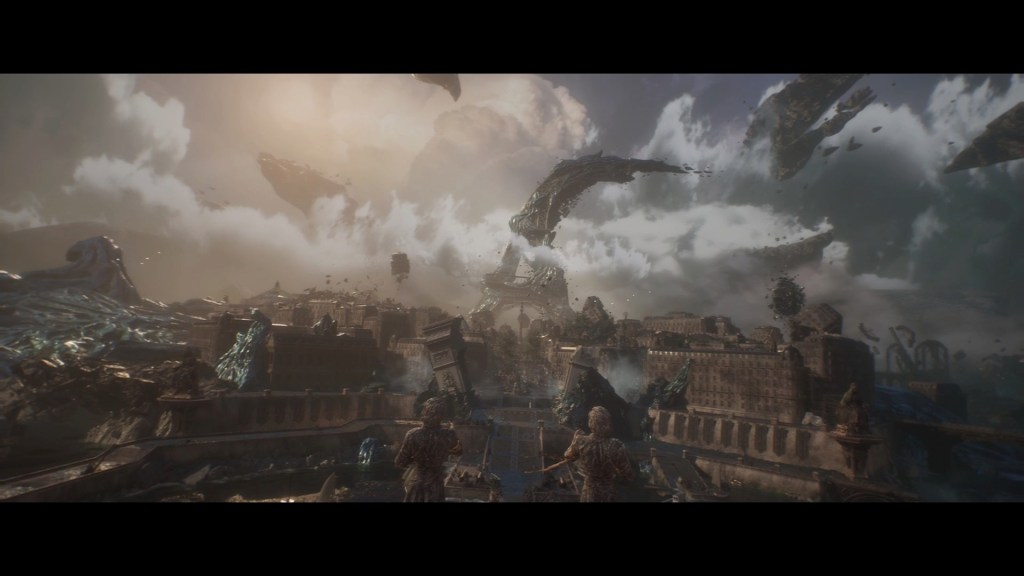
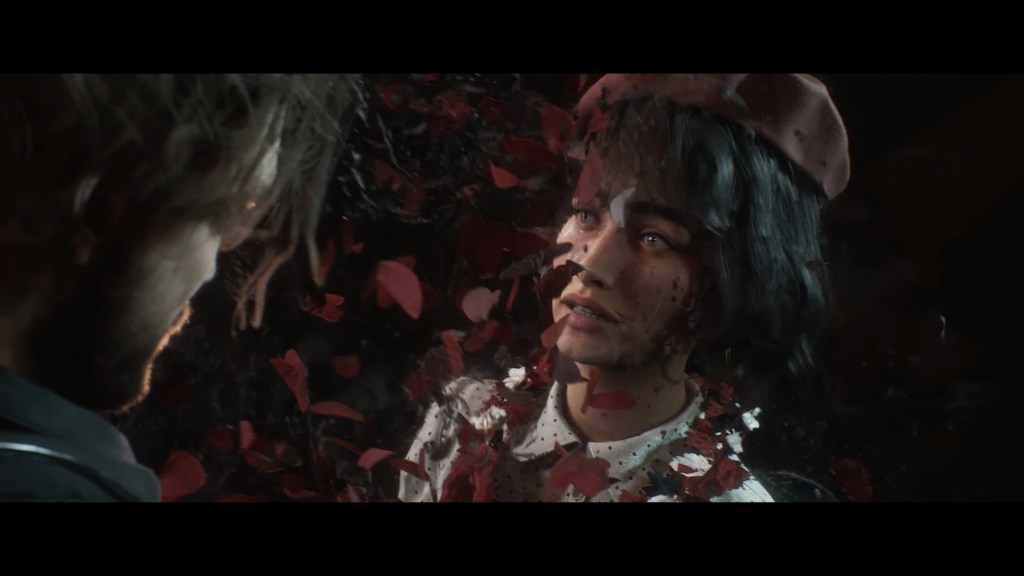
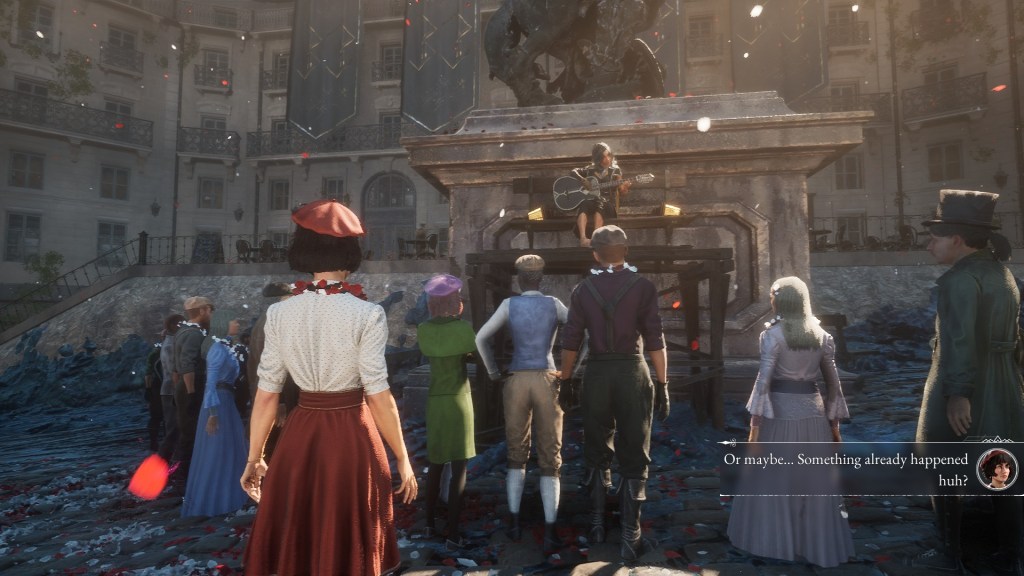
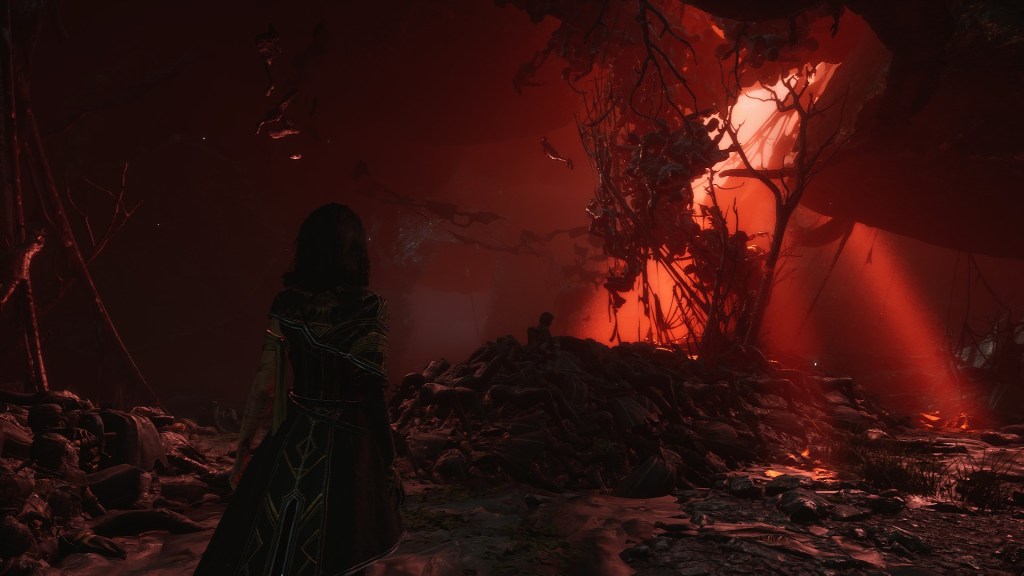
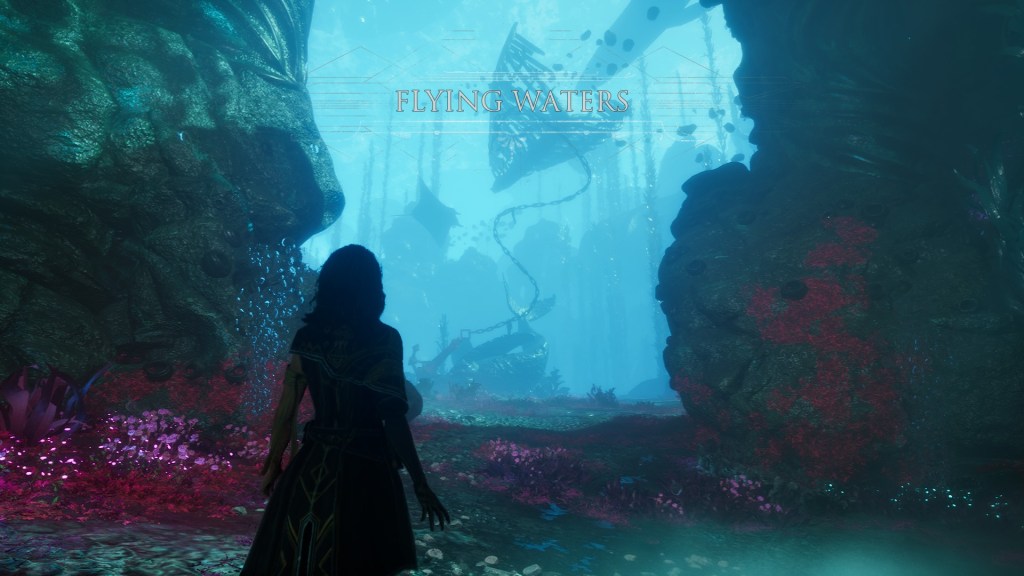
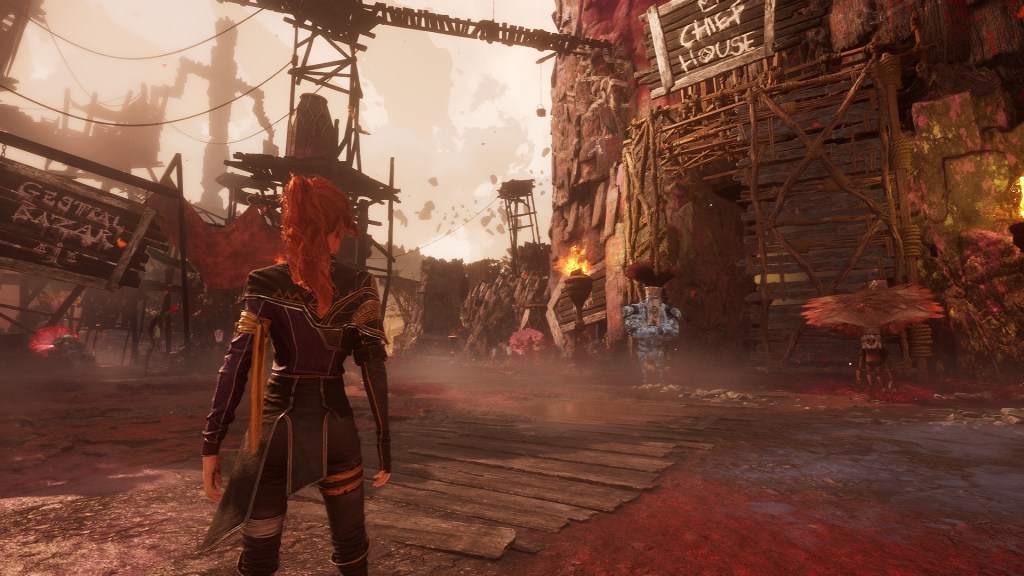
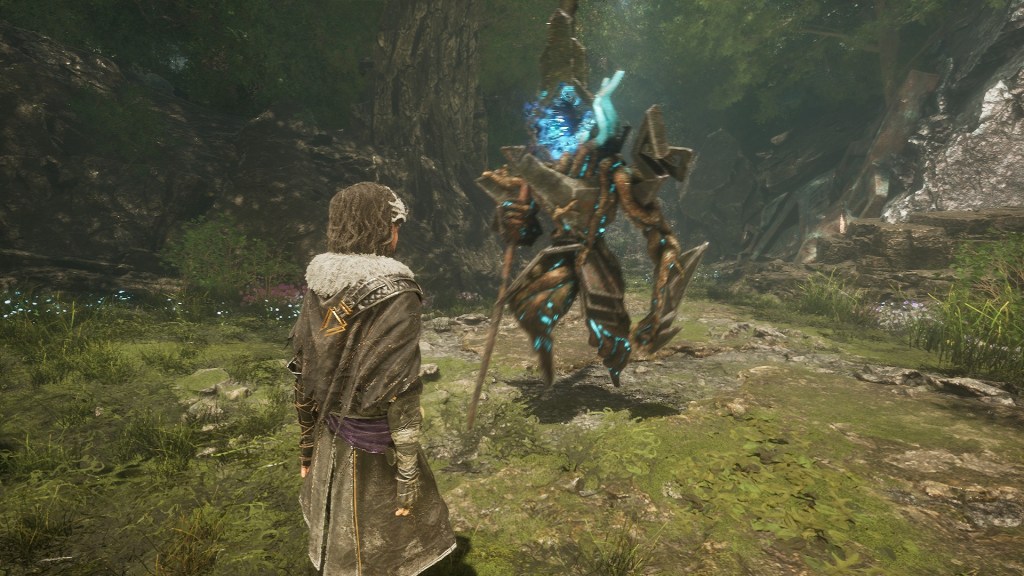
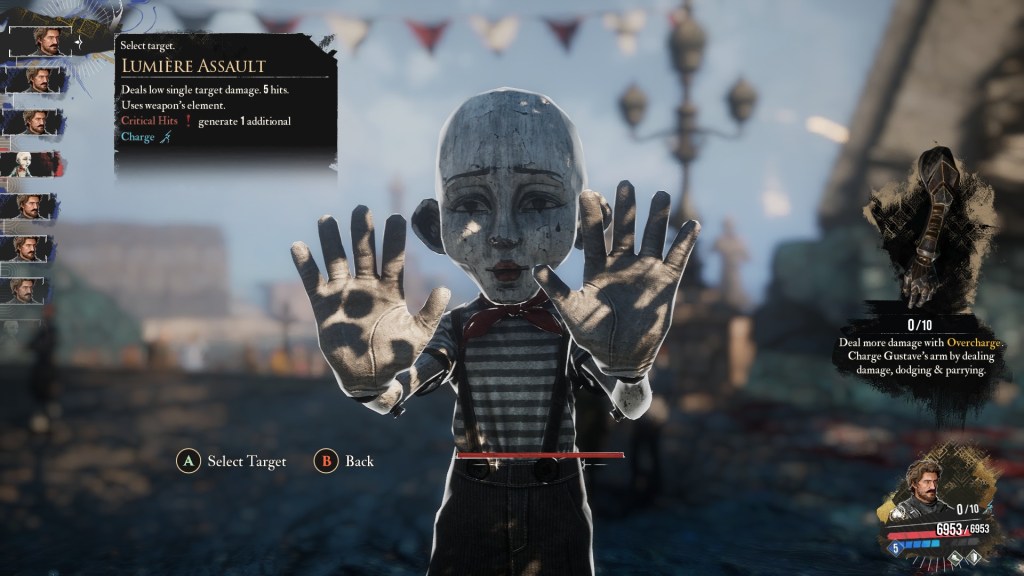
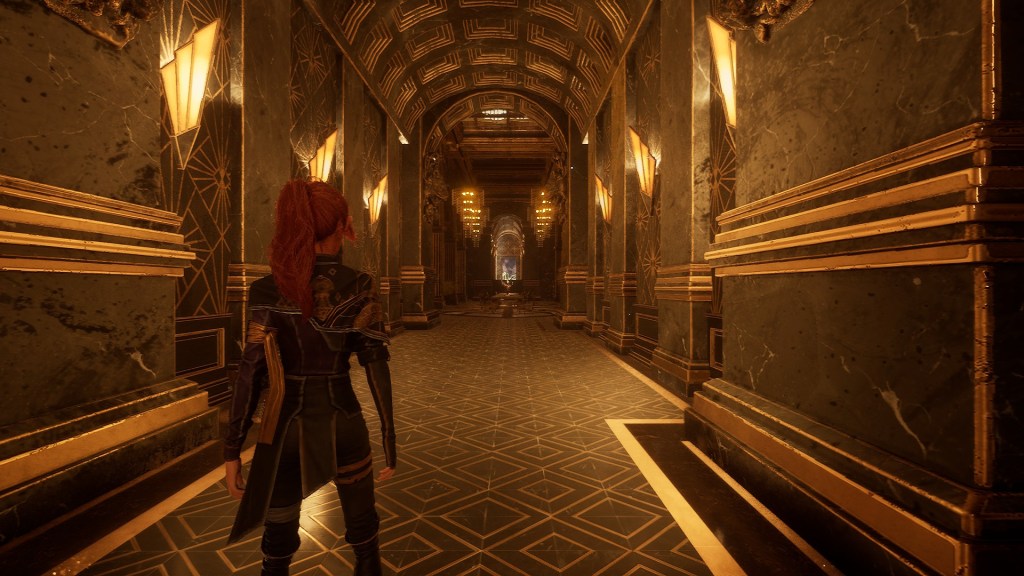
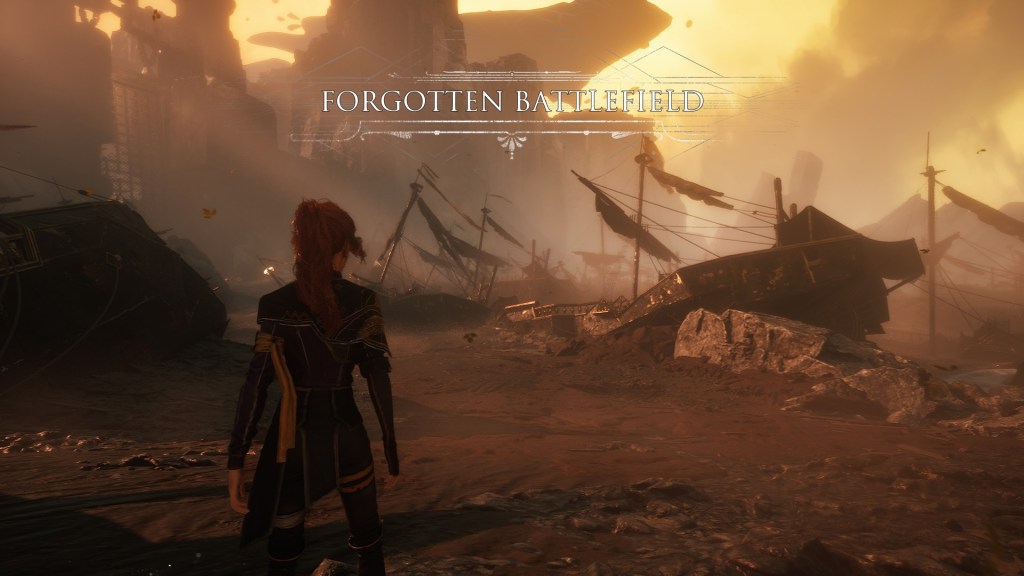
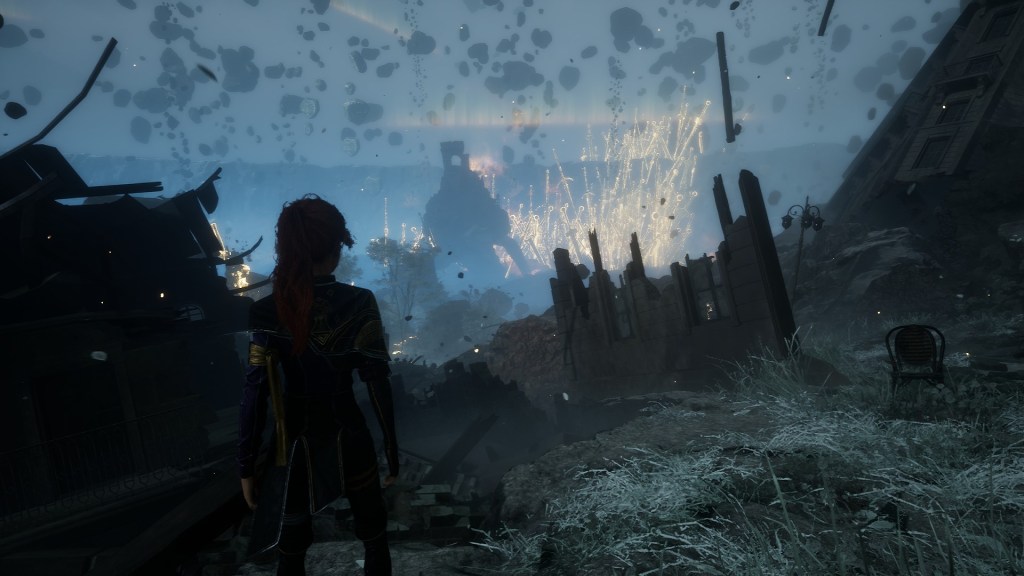
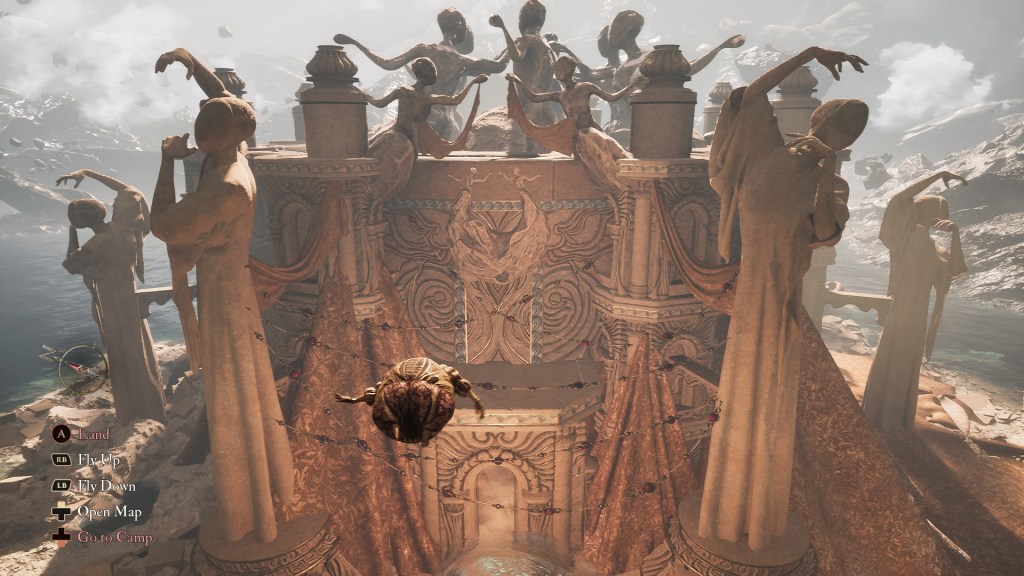
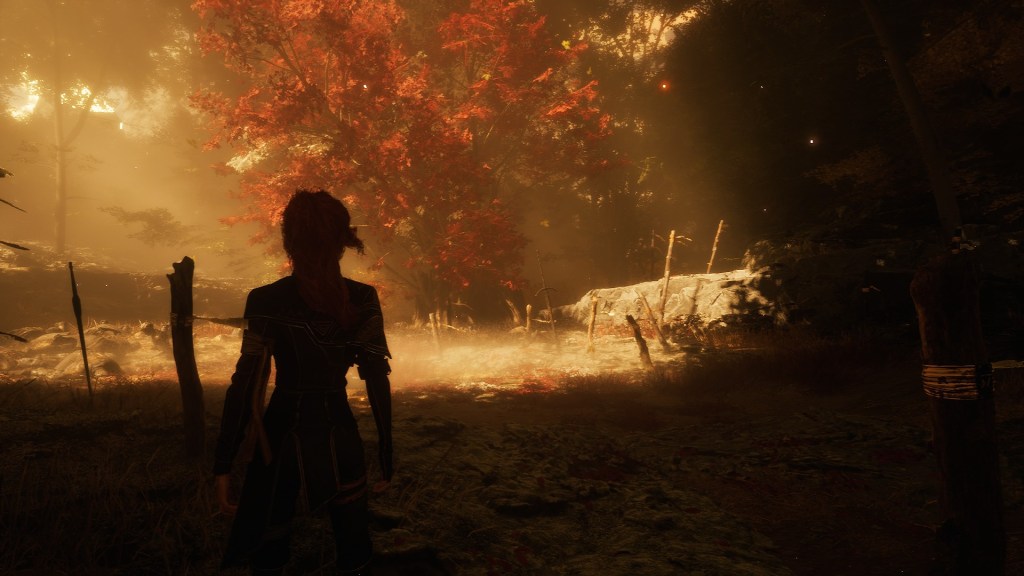
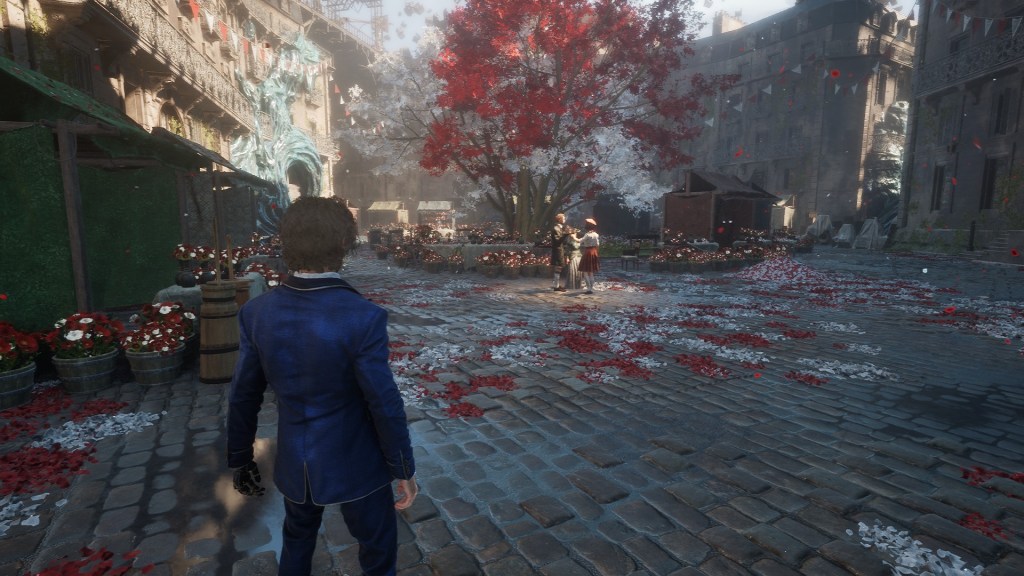
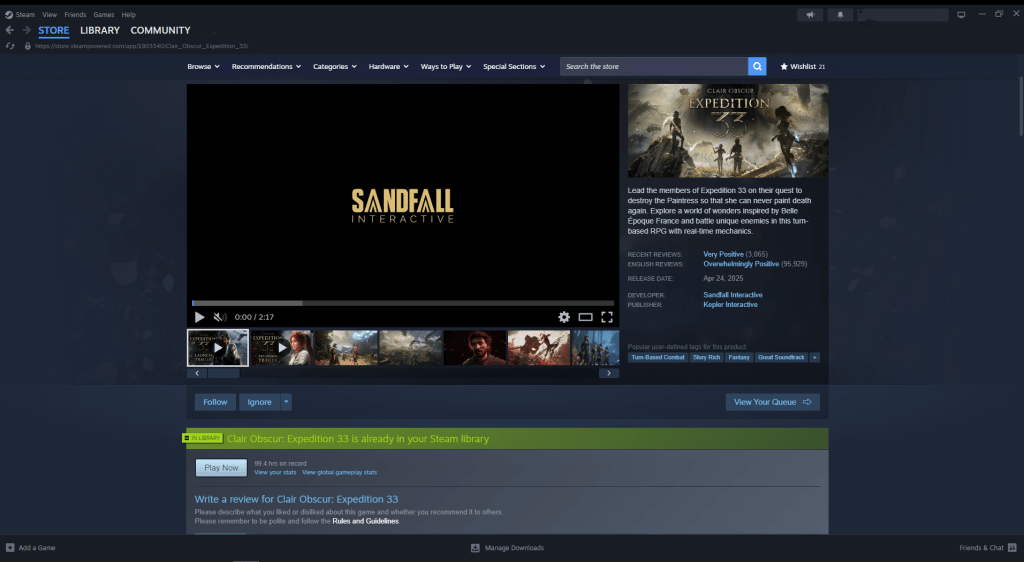



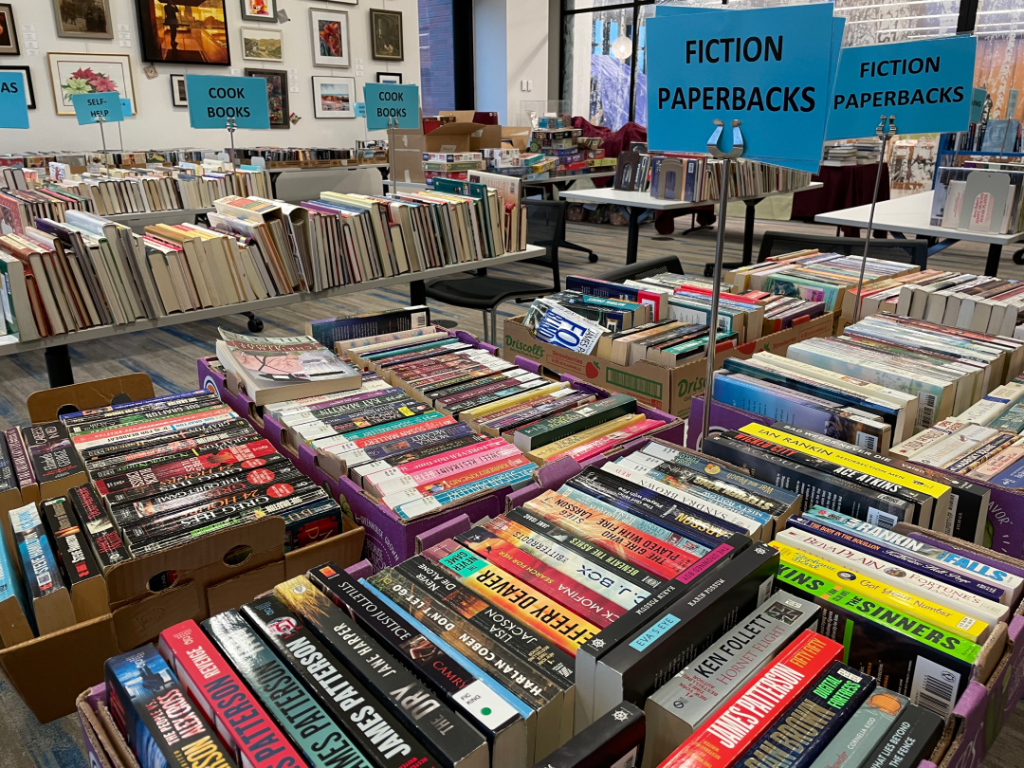
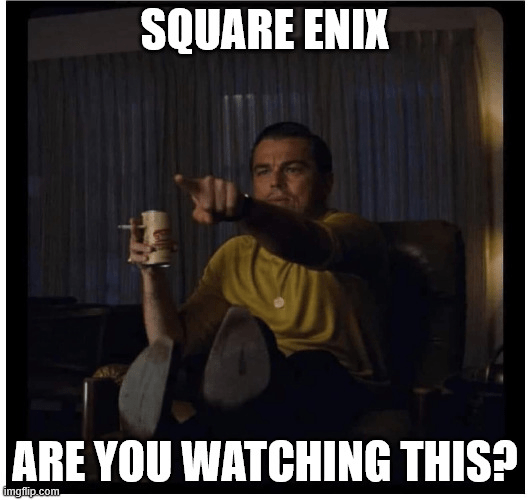
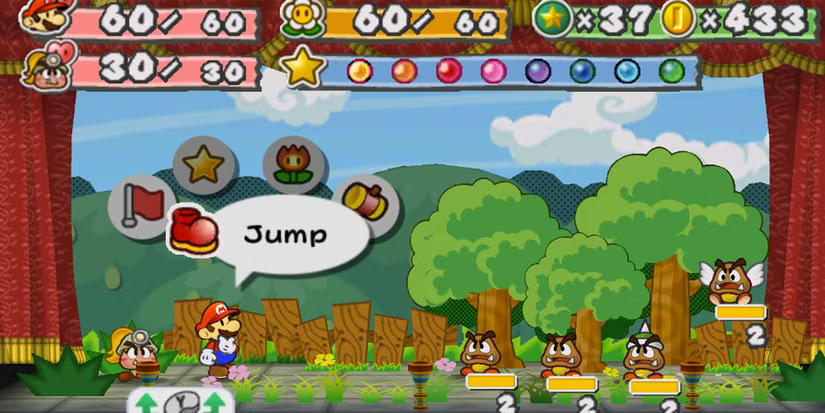
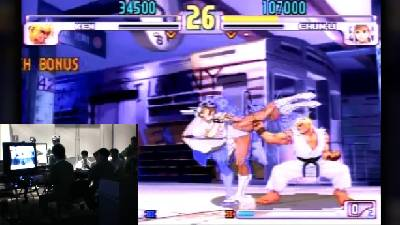
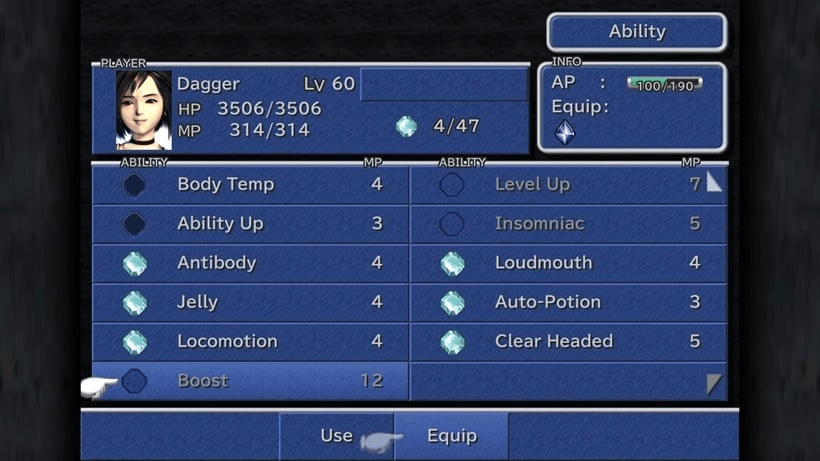
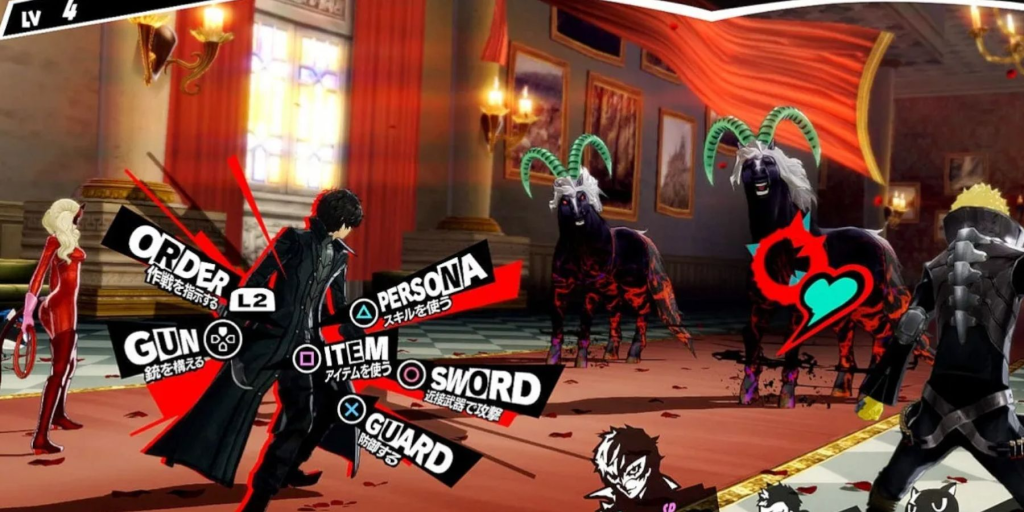
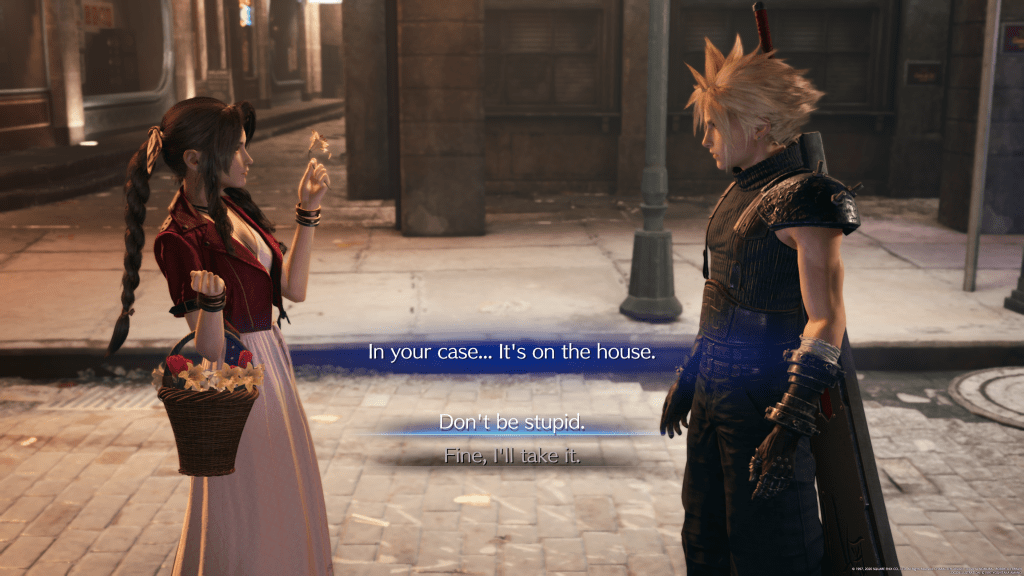
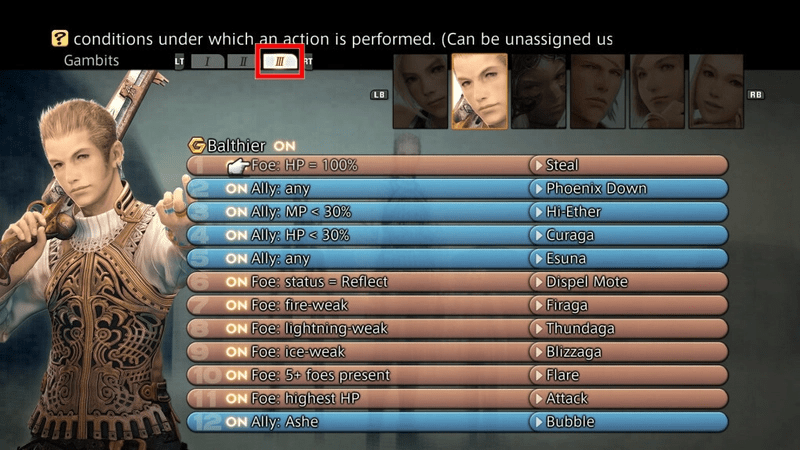
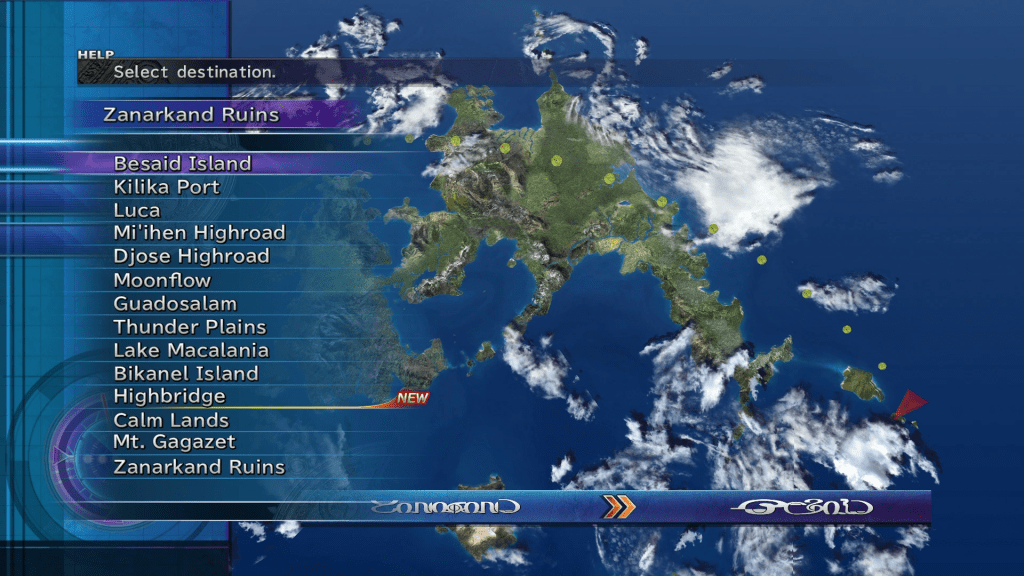
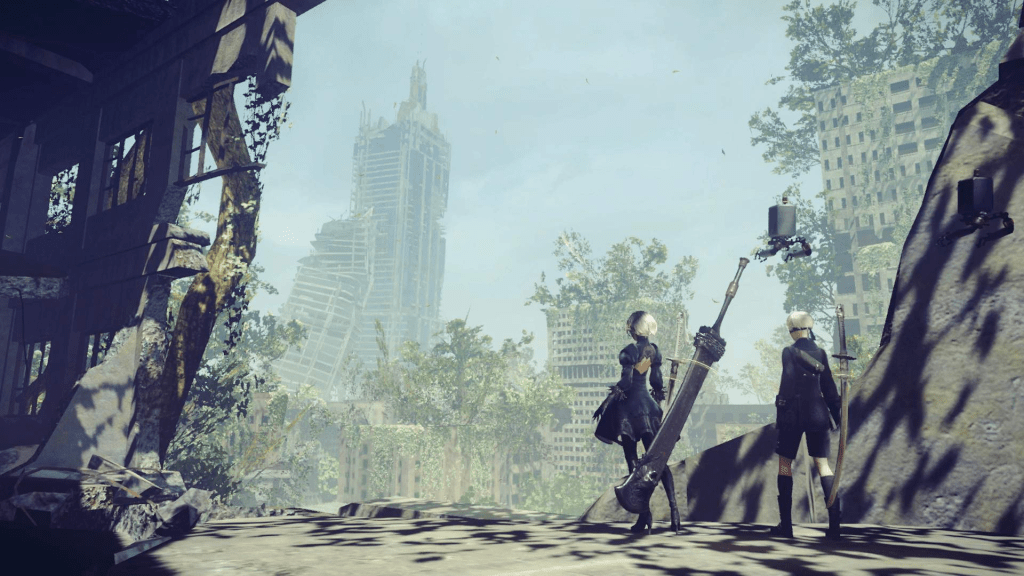
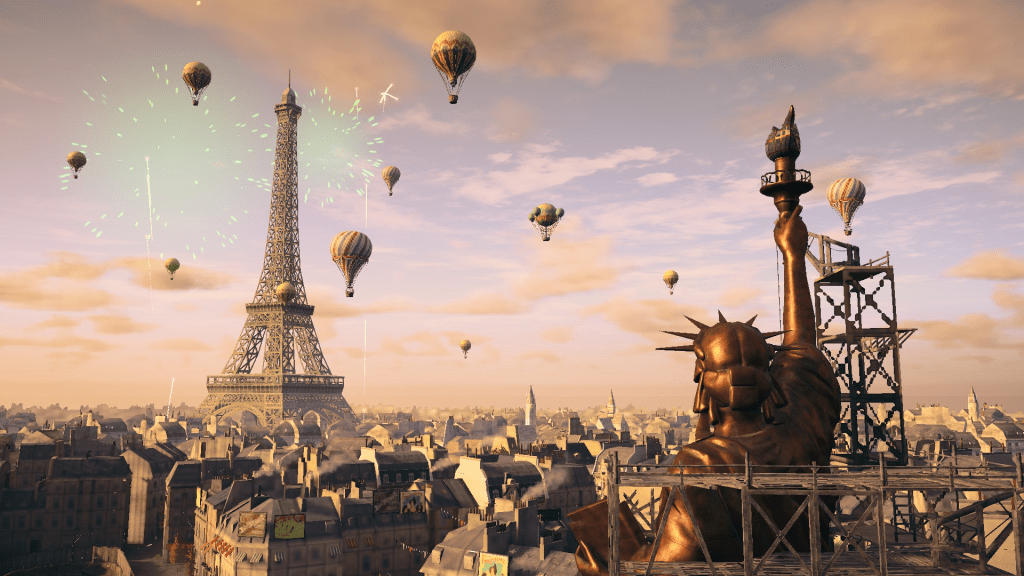

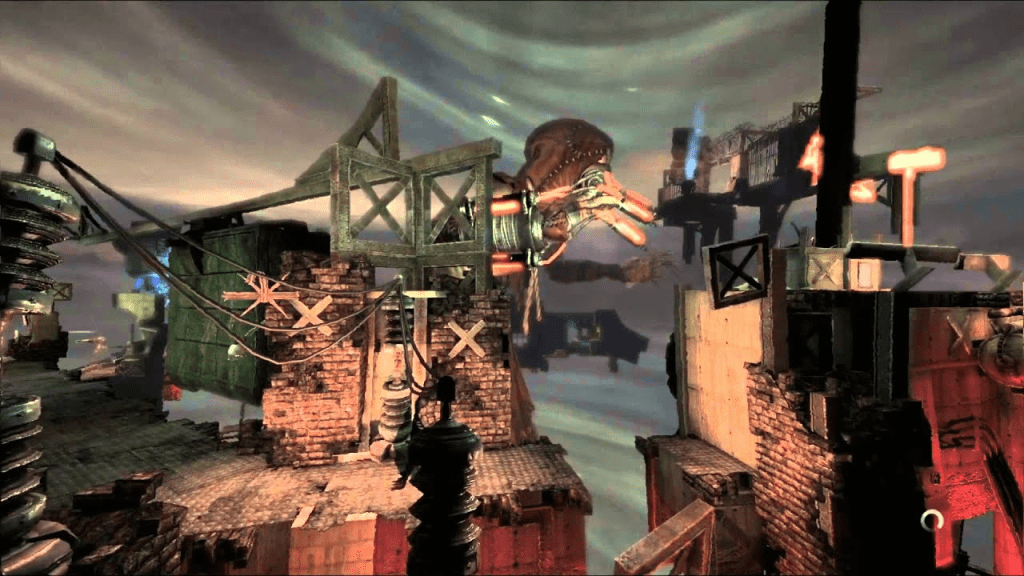
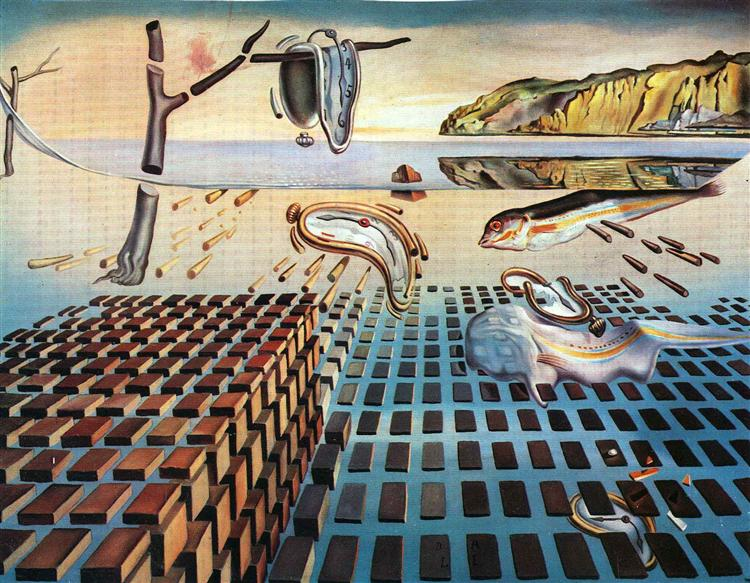













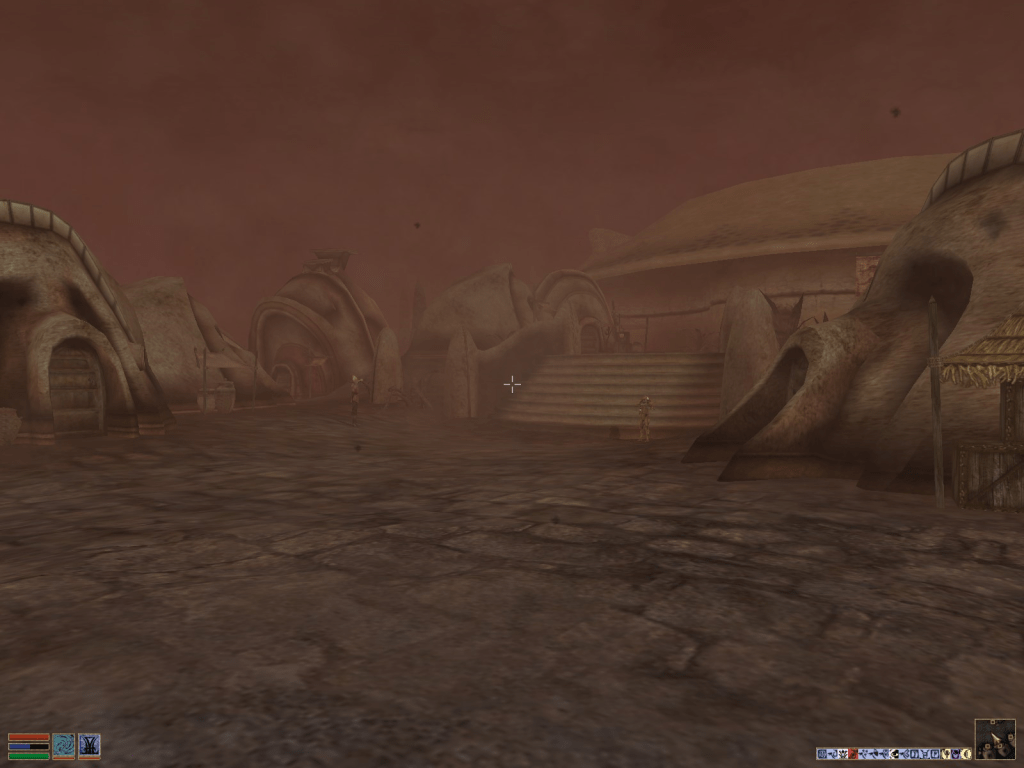


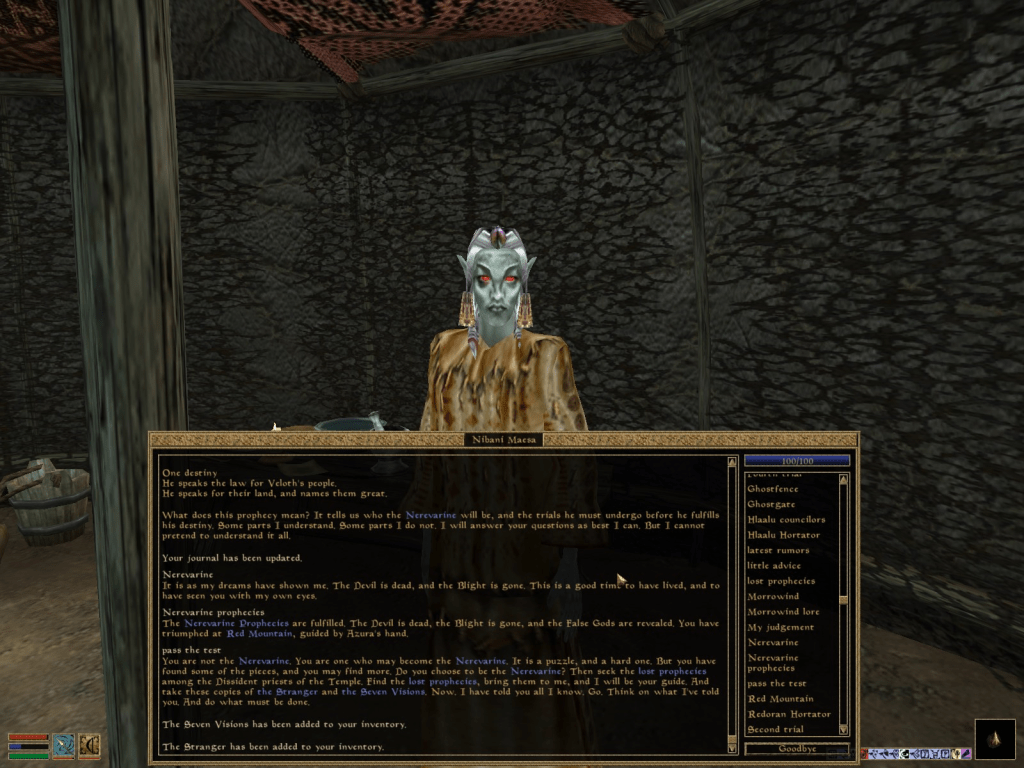
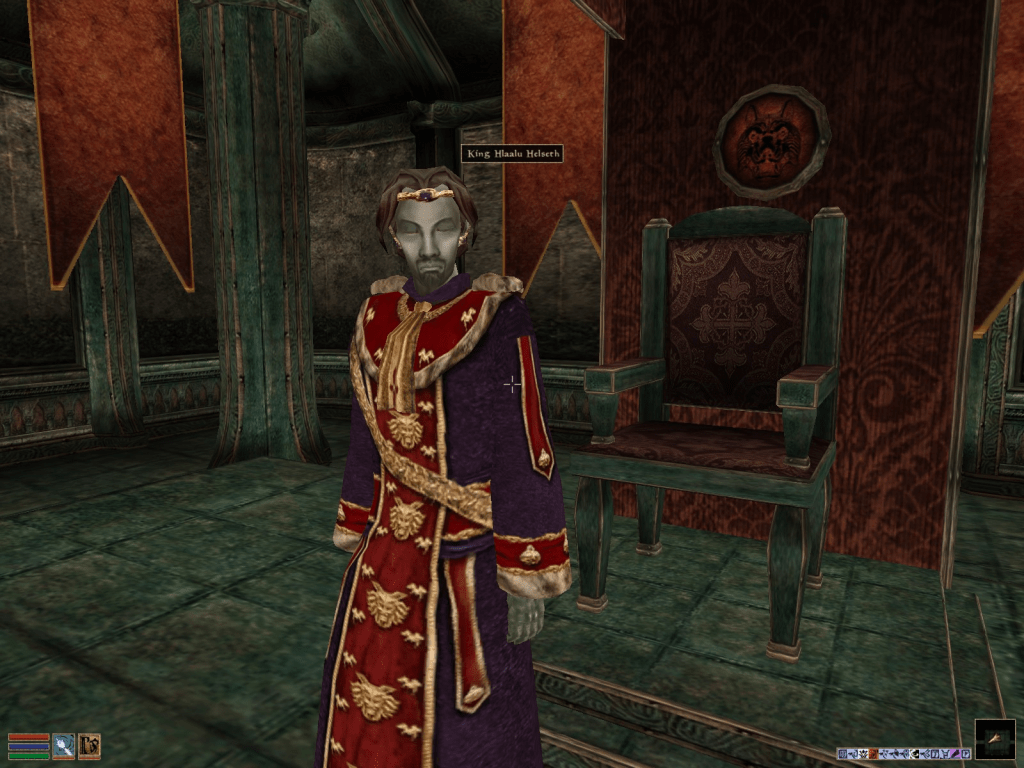

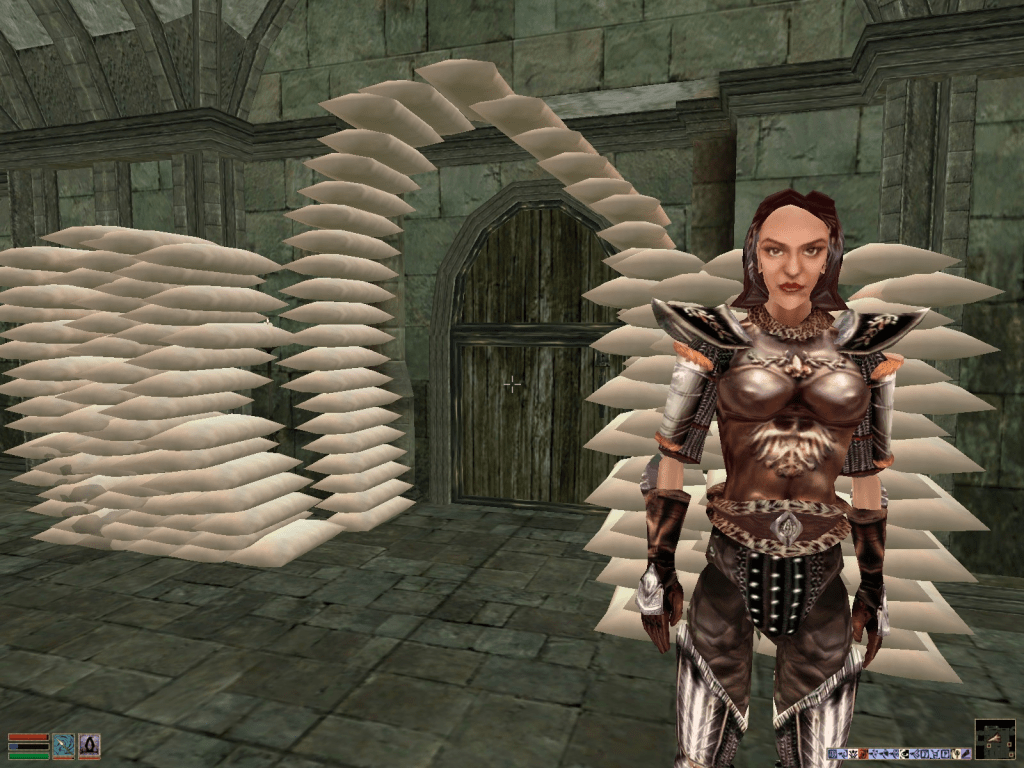










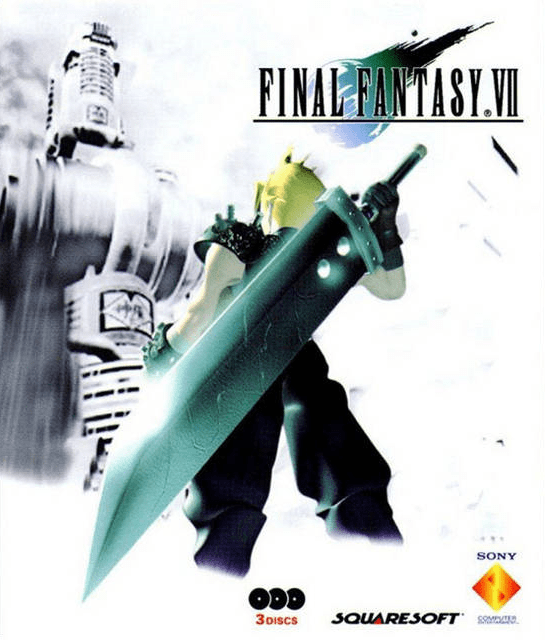
 Video Game Academy